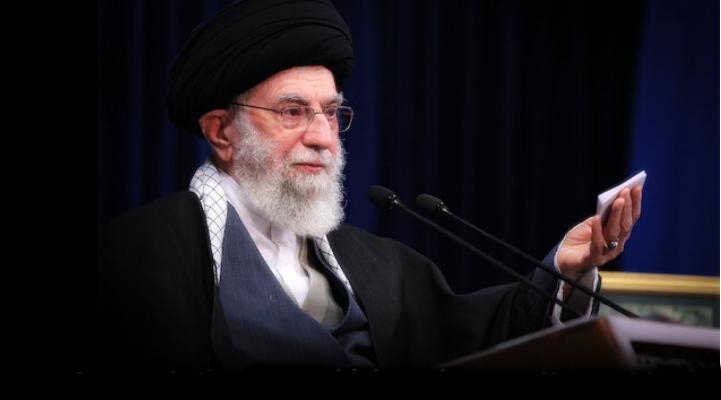
Khamenei’s Message to Iran’s Elites
Oct. 2, 2024
Imam Khamenei, the Leader of the Islamic Revolution, has met with hundreds of academic elites, top participants in the Olympiads, and university entrance exam achievers. The meeting took place in the Imam Khomeini Hussainiyah on Oct. 2, 2024.
The Iranian Leader initiated the meeting by speaking about the recent martyrdom of Hezbollah’s Leader, Sayyid Hassan Nasrallah, who was tragically killed in Beirut by the Zionist regime on Sept. 27, 2024. His death has sent shockwaves throughout the region, igniting widespread mourning among his supporters and allies. As one of the most prominent figures in the resistance against foreign intervention, Nasrallah’s leadership inspired countless individuals to rally for sovereignty and justice. The meeting served as a crucial moment for the attendees to reflect on his legacy, discuss the implications of his loss, and strategize on how to continue the struggle for the values he passionately defended. It was a poignant reminder of the ongoing challenges faced by those committed to fighting against perceived oppression and the importance of unity in the face of adversity.
“We are in mourning these days. I, in particular, am deeply grieved. The loss of Mr. Sayyid Hassan Nasrallah is not a small matter. Even though the atmosphere in the country is one of public mourning, I chose not to postpone this meeting with the elites, which had already been planned,” he stated.
Imam Khamenei underlined the reason for holding the meeting of elites at the scheduled time, stating, “The message of this gathering is that even though we are in mourning, this does not mean that we should just sit in a corner and wallow in despair. Rather, our mourning is of the same nature as that of Imam Hussain (pbuh). It is reviving, propelling, and it inspires enthusiasm for work and progress.”
The Leader of the Islamic Revolution emphasized, “The root of the problem and the fundamental cause of conflicts and wars in the region lies in the presence of the United States and certain European countries that falsely advocate for peace and tranquility. If they leave this region, the conflicts and wars would come to an end, allowing the countries to manage their affairs and coexist in peace and prosperity.”
He considered Saddam Hussein’s instigation to attack Iran and the ensuing bitter and difficult days as a clear example of the warmongering of the United States and the West in the region, highlighting how foreign intervention often exacerbates conflicts and leads to prolonged suffering for the local populations. The disruption caused by this aggression shaped the geopolitical landscape in ways that are still felt today, undermining peace and stability. In the same context, Imam Khamenei remarked:
“The current friendship between the two countries, Iran and Iraq, of which the pinnacle is manifested in the great Arbaeen Walk, clearly demonstrates that the primary obstacle to peace in the region stems from those who falsely claim to seek it. We remain hopeful that, with God’s help, the determination of the Iranian people, the inspiration drawn from the Islamic Revolution, and collaboration with other nations, will, God willing, lead to the departure of our enemies from the region.”
The Leader of the Islamic Revolution addressed three critical issues relevant to the subject of the meeting: first, the importance of recognizing gifted individuals in the country, as they are the driving force behind innovation and progress; second, the necessity of preserving and multiplying these talents through effective education systems, mentorship programs, and community support; and third, the roles and responsibilities of the elite, who are tasked with guiding and nurturing these gifted individuals to ensure they can contribute meaningfully to society and help shape a prosperous future for the nation.
He regarded elite individuals and the conditions necessary for cultivating talent as among the country’s most valuable assets. Referring to the neglect of elite individuals and talent development during the reign of the Pahlavi regime, Imam Khamenei emphasized that while the Revolution brought more attention to the capabilities of talented individuals, this focus needs to be intensified by involving them more actively in various sectors including water, oil, gas, nuclear energy, nanotechnology, and new sciences such as artificial intelligence. He argued that harnessing the skills of these elites is essential not only for national progress but also for establishing Iran as a leader in innovation on the global stage. By creating a conducive environment for these individuals to thrive, it would be possible to foster breakthroughs that address both domestic challenges and international competition. Moreover, he called for policies that encourage collaboration between academia and industry, ensuring that the insights and advancements made in research are translated into practical applications that can benefit society as a whole.
The Leader of the Islamic Revolution highlighted the responsibilities of the country’s elites, stating, “The duties of the elites are more significant than those of the general populace, as they enjoy greater divine blessings and advantages, including knowledge, honor, and wealth.”
Highlighting the swift pace of scientific progress worldwide, the Leader urged intellectuals to embark in a jihad for a scientific uprising, emphasizing the vital role that innovation and research hold in shaping the future of society. The country, he remarked, needs a new scientific movement and leap to keep pace with global advancements, a responsibility that rests primarily on the shoulders of intellectuals who must harness their expertise and knowledge to inspire change. “Of course, scientific and research centers are also responsible in this regard, but the individual elite is the key factor,” he noted, insisting that each scholar’s contributions are essential in cultivating a culture that prioritizes scientific inquiry and experimentation. In this new age of discovery, collaboration between various disciplines is paramount, as it can lead to breakthroughs that not only benefit the scientific community but also empower the nation as a whole, positioning it as a leader in global innovation and progress.
Imam Khamenei emphasized that a new scientific movement and leap would lead to superiority over rivals and ill-wishers, fostering an atmosphere of innovation and progress that can inspire future generations. He highlighted that achieving scientific and technological superiority is not merely a matter of pride, but a vital strategy that would significantly diminish the enemy’s capacity to harm the people of Gaza and Beirut’s Dahiyah district. By harnessing the power of advanced technologies and scientific research, communities can build resilience, creating solutions that empower rather than oppress. This, he emphasized, would help avert provocations that would break the hearts of the people and the youth, ensuring a brighter future filled with hope, stability, and the possibility of peace for those who have long suffered from conflict and adversity.
Read more:
Hassan Nasrallah: Legacy of Resistance | Khamenei`s Massage On His Martyrdom
