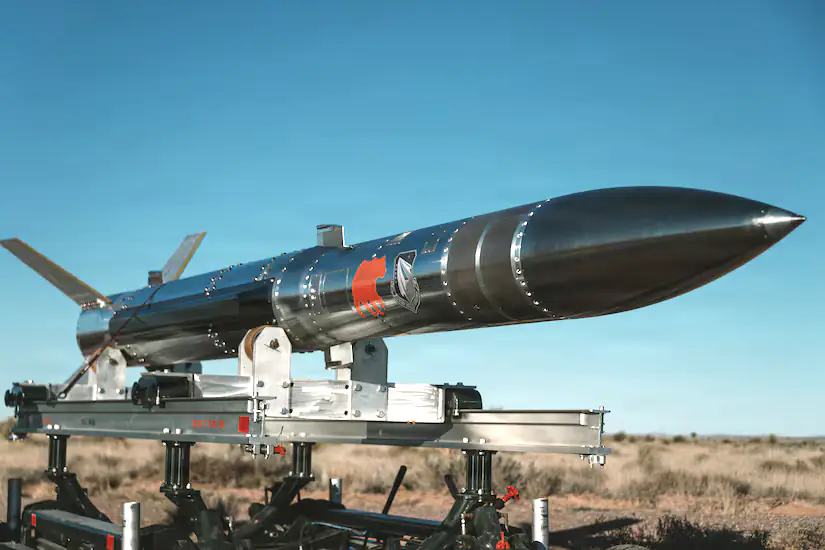
Stanford Aero/Astro Ph.D. Specializations: Aerodynamics, Propulsion, Flight Mechanics, Structures, and Computational Mechanics
The Doctor of Philosophy (Ph.D.) in Aeronautics and Astronautics at Stanford University represents one of the most historically significant and research-intensive doctoral programs in the field of aerospace science and engineering. Located in Stanford, California, within the heart of what later became known as Silicon Valley, the department evolved from the early twentieth-century expansion of aviation research in the United States and emerged as a major center for advanced study in aerodynamics, spaceflight, propulsion, structural mechanics, control systems, and computational engineering. Throughout the decades following the establishment of the department, Stanford’s Aero/Astro program became closely associated with technological developments that shaped modern aviation, military aerospace systems, planetary exploration, computational simulation, and autonomous flight.
The historical roots of advanced aeronautical education at Stanford can be traced to the period following the rapid growth of aviation after World War I (1914–1918). During the 1920s and 1930s, American universities increasingly recognized the strategic and scientific importance of flight. Stanford expanded engineering education to address emerging challenges in aircraft design, fluid dynamics, and structural analysis. By the middle of the twentieth century, particularly during and after World War II (1939–1945), research activities in California became closely linked to the needs of the aerospace industry, federal laboratories, and defense agencies. The creation of the National Aeronautics and Space Administration (NASA) in 1958, the onset of the Space Age, and the subsequent Apollo Program intensified demand for highly trained aerospace researchers. Stanford responded by strengthening doctoral education and establishing a research-oriented framework designed to produce leaders capable of advancing both theoretical and applied aerospace science.
The modern Ph.D. program is aimed at assisting students in acquiring deep proficiency within a selected specialization through advanced graduate coursework followed by independent doctoral research. The educational philosophy emphasizes mastery of fundamental engineering principles, rigorous analytical reasoning, mathematical sophistication, computational expertise, and the ability to contribute original knowledge to the aerospace field. Students admitted into the program are associated with one of six designated areas of specialization that reflect both traditional aerospace disciplines and emerging interdisciplinary domains.
The six specializations are divided into four traditional groups and two interdisciplinary specializations (IDS). The traditional groups include Aerodynamics, Flight Mechanics and Control, Propulsion, and Structures, Structural Dynamics & Aeroelasticity. The interdisciplinary specializations consist of Aero-Thermodynamics and Thermal Sciences and Computational Mechanics. This structure reflects the historical evolution of aerospace engineering itself, where classical disciplines originating in aircraft design gradually merged with computational science, thermal engineering, advanced materials research, and multidisciplinary optimization.
The specialization in Aerodynamics traces its intellectual heritage to nineteenth-century and early twentieth-century investigations into fluid motion. Research in aerodynamics examines the behavior of gases around moving bodies, including aircraft, spacecraft, missiles, unmanned aerial vehicles, and atmospheric entry systems. Since the pioneering work of scientists such as Ludwig Prandtl in the early 1900s, aerodynamic theory has developed into a highly sophisticated discipline involving turbulence modeling, boundary-layer physics, compressible flow analysis, hypersonic phenomena, and computational fluid dynamics. Doctoral students specializing in aerodynamics often engage in theoretical modeling, numerical simulation, experimental wind-tunnel studies, and high-performance computational research.
The field of Flight Mechanics and Control emerged from efforts to understand and regulate aircraft motion. Following the first successful powered flight by Orville Wright and Wilbur Wright at Kitty Hawk, North Carolina, on 17 December 1903, engineers recognized that sustained flight required sophisticated methods for stability and control. During the twentieth century, advances in automatic control theory, guidance systems, navigation technologies, and digital computing transformed aerospace operations. Stanford’s doctoral research in this area encompasses autonomous systems, robotics, adaptive control, machine learning applications, spacecraft guidance, trajectory optimization, and human-machine interaction.
The specialization in Propulsion focuses on systems that generate thrust for atmospheric and space vehicles. Historically, propulsion research encompasses the development of internal combustion engines, turbojet engines, turbofan engines, ramjets, scramjets, liquid rocket engines, solid rocket motors, and electric propulsion systems. Important milestones include the development of the turbojet by Frank Whittle in the United Kingdom during the 1930s and the rocket innovations of Wernher von Braun that contributed to American space exploration. Stanford doctoral researchers investigate combustion processes, energy conversion, propulsion efficiency, sustainable aviation fuels, advanced rocket technologies, and future concepts for space transportation.
The discipline of Structures, Structural Dynamics & Aeroelasticity has roots in the challenges faced by aircraft designers during the early decades of aviation. Engineers discovered that aerodynamic forces and structural responses could interact in complex ways, producing vibration, flutter, and potential failure. Aeroelasticity became particularly important following advances in high-speed aircraft during the 1940s and 1950s. Doctoral students in this specialization analyze composite materials, structural optimization, vibration mechanics, nonlinear dynamics, uncertainty quantification, and the design of lightweight aerospace structures capable of surviving extreme operational environments.
The interdisciplinary specialization in Aero-Thermodynamics and Thermal Sciences reflects the convergence of thermodynamics, fluid mechanics, heat transfer, combustion science, and atmospheric physics. Historically, thermal science became increasingly important with the advent of supersonic and hypersonic flight, where aerodynamic heating presented major engineering challenges. During the Mercury, Gemini, and Apollo space programs of the 1960s, thermal protection systems became essential for safe atmospheric reentry. Modern doctoral research explores energy systems, high-temperature materials, reactive flows, thermal management technologies, and planetary entry environments.
The second interdisciplinary specialization, Computational Mechanics, emerged from the computational revolution that accelerated during the second half of the twentieth century. Advances in digital computing enabled researchers to solve engineering problems previously inaccessible through analytical methods alone. Computational mechanics integrates numerical methods, finite-element analysis, scientific computing, machine learning, optimization algorithms, and large-scale simulation. Stanford has historically been a leader in computational science, making this specialization particularly influential in contemporary aerospace research.
A defining feature of the Stanford Aero/Astro doctoral experience is the Ph.D. Qualifying Examination, a rigorous evaluation intended to assess a student’s readiness for advanced independent research. Historically, qualifying examinations have served as important milestones within American doctoral education since the late nineteenth century, functioning as gateways between coursework and dissertation research. In aerospace engineering, such examinations are especially significant because doctoral candidates must demonstrate competence across multiple technical domains before pursuing specialized investigations.
The Aero/Astro Ph.D. Qualifying Procedures consist of two principal components: Field Examinations and Research Examinations. Together, these evaluations measure both disciplinary knowledge and research capability. The dual structure reflects a long-standing philosophy that successful aerospace researchers require mastery of established scientific foundations as well as the creativity necessary to advance the field through original inquiry.
The Field Examination component evaluates a student’s understanding of core aerospace engineering principles. Depending upon academic preparation and departmental policies, some components may be waived under specific circumstances. The examination framework ensures that doctoral students possess sufficient breadth of knowledge before advancing to dissertation-level work. Historically, aerospace engineering developed through interactions among fluid mechanics, structural mechanics, thermodynamics, control theory, and applied mathematics. Consequently, doctoral qualification emphasizes competence across multiple areas rather than narrow specialization alone.
The Research Examination component assesses the student’s capacity to formulate research questions, analyze technical problems, synthesize scientific literature, and communicate research concepts effectively. This requirement reflects the evolution of doctoral education from a coursework-centered model toward a research-centered paradigm. By the late twentieth century, leading universities increasingly emphasized independent research capability as the defining characteristic of doctoral scholarship. Stanford’s Aero/Astro program follows this tradition by requiring students to demonstrate readiness for sustained original investigation.
All Ph.D. students must complete the departmental qualifying procedures before the end of their second year of graduate study in order to remain in good standing within the doctoral program. This timeline has important educational implications. The first two years are typically devoted to advanced coursework, research exploration, advisor selection, and preparation for the qualifying process. Successful completion signifies the transition from structured academic preparation to focused dissertation research.
The Aero/Astro Ph.D. Qualifying Examination is offered twice annually, once during the Autumn Quarter and once during the Spring Quarter. Historically, the examination is usually conducted during the second week of November and the second week of May, although exact dates vary from year to year and are announced several weeks in advance. The biannual schedule provides flexibility for students while maintaining consistent academic standards.
Applications for the examination become available early in each examination quarter. Application deadlines generally occur in early October for the Autumn examination and early April for the Spring examination. The application process requires the signed approval of the student’s proposed Ph.D. advisor, reflecting the collaborative nature of doctoral training. Faculty advisors play a critical role in evaluating student preparedness and guiding academic development.
A further administrative requirement is that students must be enrolled during the quarter in which they attempt the qualifying examination. This policy ensures active academic status and continuous engagement with the graduate program. Such enrollment requirements have long been standard features of American doctoral education and reinforce institutional oversight during critical academic milestones.
Eligibility for the qualifying examination is linked to successful completion of designated core courses representing major areas of aerospace engineering. The curriculum is structured to provide broad foundational preparation while allowing specialization. Students must generally choose one course from each of several core areas, ensuring exposure to diverse technical perspectives.
Within Controls and Dynamics, students may complete ENGR 205: Introduction to Control Design Techniques or AA 242A: Classical Dynamics. Control theory became increasingly important after the development of guided missiles during the 1940s and the emergence of digital flight control systems during the latter half of the twentieth century. Classical dynamics, meanwhile, remains fundamental to understanding aircraft maneuverability, spacecraft trajectories, and multibody mechanical systems.
Within the Fluids area, students may select AA 200: Applied Aerodynamics or AA 210A: Fundamentals of Compressible Flow. The study of compressible flow gained prominence during the development of supersonic aircraft following World War II, particularly at research centers such as National Advisory Committee for Aeronautics facilities and later NASA laboratories. These courses provide essential preparation for advanced work involving shock waves, high-speed flight, and atmospheric entry.
For the Structures requirement, students may take AA 240: Analysis of Structures or AA 256: Mechanics of Composites. Structural analysis has been central to aerospace engineering since the earliest aircraft construction efforts. Composite materials became increasingly important beginning in the 1970s and 1980s, offering high strength-to-weight ratios essential for modern aircraft and spacecraft.
The area of Applied Mathematics and Computation reflects the growing importance of quantitative modeling in aerospace engineering. Available courses include AA 203: Optimal and Learning-based Control, AA 214: Numerical Methods for Compressible Flows, AA 222: Engineering Design Optimization (CS 361), and AA 228: Decision Making under Uncertainty (CS 238). These offerings illustrate the integration of aerospace engineering with computer science, artificial intelligence, optimization theory, and advanced numerical analysis.
Particularly noteworthy is the increasing role of learning-based control and decision-making under uncertainty, which reflect twenty-first-century developments in autonomous systems and machine intelligence. The emergence of unmanned aerial vehicles, autonomous spacecraft operations, and intelligent transportation systems has expanded the scope of aerospace research beyond traditional engineering boundaries.
The historical development of doctoral qualification procedures at Stanford parallels broader changes in aerospace engineering itself. During the early Cold War era, aerospace research was strongly influenced by national defense priorities and space exploration initiatives. Following the launch of Sputnik 1 by the Soviet Union on 4 October 1957, American universities significantly expanded graduate education in engineering and science. Stanford’s Aero/Astro department benefited from increased federal investment in research infrastructure, laboratories, and advanced graduate training.
During the 1960s, the success of the Apollo 11 Moon Landing on 20 July 1969 demonstrated the importance of interdisciplinary collaboration among specialists in propulsion, structures, control systems, aerodynamics, and thermal sciences. These same disciplinary foundations remain visible in the structure of Stanford’s doctoral specializations and qualifying procedures.
The rise of computational engineering during the 1980s and 1990s further transformed doctoral education. High-performance computing enabled detailed simulations of airflow, structural behavior, combustion processes, and spacecraft trajectories. Stanford researchers contributed significantly to these developments, helping establish computational mechanics as a distinct interdisciplinary specialization within the doctoral program.
In the twenty-first century, the Aero/Astro Ph.D. program has continued to evolve in response to new technological challenges. Areas such as sustainable aviation, urban air mobility, reusable launch systems, autonomous vehicles, artificial intelligence, planetary exploration, hypersonic transportation, and advanced manufacturing increasingly influence research priorities. The qualifying examination remains a central mechanism for ensuring that doctoral candidates possess the breadth and depth necessary to address these complex challenges.
The program’s emphasis on both field knowledge and research capability reflects a balance between tradition and innovation. Students are expected not merely to master existing aerospace science but also to contribute new discoveries capable of shaping future generations of technology. Through its structured specializations, rigorous coursework, advisor-guided preparation, and comprehensive qualifying procedures, the Stanford Aero/Astro doctoral program continues a scholarly tradition that connects early aviation pioneers, Cold War aerospace advances, Space Age achievements, and contemporary engineering frontiers.
The Ph.D. in Aeronautics and Astronautics at Stanford University stands as a historically grounded yet forward-looking program in which qualification procedures serve not merely as examinations but as critical transitions into the community of professional researchers. The qualifying process verifies competence across the foundational domains of aerospace engineering while simultaneously assessing a candidate’s potential for innovation, leadership, and scientific contribution. Through the combination of advanced coursework, specialization-focused preparation, field examinations, research evaluation, and faculty mentorship, the program maintains standards that have contributed to Stanford’s long-standing reputation as one of the world’s most influential centers for aerospace scholarship and doctoral research.
Sarvarthapedia Conceptual Network: Ph.D. in Aeronautics and Astronautics, Stanford University – Qualifying Examination
Core Knowledge Hub
Ph.D. in Aeronautics and Astronautics
A doctoral research degree focused on the advancement of knowledge in aerospace engineering through advanced coursework, qualifying examinations, original research, and dissertation preparation.
See also
- Stanford University
- Aerospace Engineering
- Doctoral Education
- Graduate Research
- Engineering Research
- Aerospace Science
- Qualifying Examination
- Dissertation Research
- Academic Specialization
- Interdisciplinary Research
Institutional Context
Stanford University
A private research university located in Stanford, California, recognized for major contributions to aerospace engineering, computational sciences, and technological innovation.
Related Concepts
- Engineering
- Silicon Valley
- Engineering Education
- Research Universities
- Doctoral Programs
- Aerospace Research Laboratories
See also
- School of Engineering
- Aeronautics and Astronautics Department
- NASA Collaborations
- Graduate Studies
Program Structure
Doctoral Research Training
The educational framework combining advanced coursework with independent scholarly investigation.
Components
- Core Coursework
- Faculty Advising
- Qualifying Examination
- Research Examination
- Dissertation Proposal
- Doctoral Dissertation
See also
- Research Methodology
- Academic Mentorship
- Science (Definition)
- Scientific Inquiry
- Graduate Education
Qualifying Examination System
Aero/Astro Ph.D. Qualifying Examination
A formal evaluation used to determine readiness for advanced doctoral research.
Components
- Field Examination
- Research Examination
Administrative Features
- Offered Twice Annually
- Autumn Quarter Examination
- Spring Quarter Examination
- Faculty Approval Requirement
- Enrollment Requirement
See also
- Academic Assessment
- Doctoral Milestones
- Research Readiness
- Graduate Standing
Field Examination
Evaluation of technical mastery across foundational aerospace engineering disciplines.
Connected Subjects
- Aerodynamics
- Flight Mechanics
- Structural Mechanics
- Propulsion Science
- Applied Mathematics
- Computational Engineering
See also
- Core Curriculum (Aerodynamics)
- Engineering Fundamentals
- Technical Competency
Research Examination
Assessment of a student’s ability to conduct original scholarly research.
Related Skills
- Literature Review
- Research Design
- Scientific Communication
- Problem Formulation
- Technical Presentation
See also
- Dissertation Proposal
- Research Methodology
- Scholarly Publication
Specialization Network
Aerodynamics
Study of fluid flow around moving bodies.
Core Concepts
- Fluid Mechanics
- Boundary Layer Theory
- Turbulence
- Lift Generation
- Drag Reduction
- Compressible Flow
Historical Links
- Ludwig Prandtl
- Wind Tunnel Research
- Supersonic Flight
See also
- Applied Aerodynamics
- Computational Fluid Dynamics
- Compressible Flow
- Hypersonics
- Aero-Thermodynamics
Flight Mechanics and Control
Study of aircraft and spacecraft motion and methods of controlling them.
Core Concepts
- Stability
- Guidance
- Navigation
- Control Systems
- Autonomous Flight
- Robotics
Historical Links
- Wright Brothers
- Automatic Pilot Systems
- Digital Flight Control
See also
- Classical Dynamics
- Optimal Control
- Learning-Based Control
- Decision Making Under Uncertainty
Propulsion
Science and engineering of thrust-producing systems.
Core Concepts
- Combustion
- Jet Engines
- Rocket Engines
- Energy Conversion
- Propellant Chemistry
- Electric Propulsion
Historical Links
- Frank Whittle
- Rocket Development
- Space Race
See also
- Thermal Sciences
- Combustion Engineering
- Space Transportation
- Hypersonic Propulsion
Structures, Structural Dynamics and Aeroelasticity
Study of aerospace structural behavior under operational conditions.
Core Concepts
- Stress Analysis
- Structural Integrity
- Vibrations
- Flutter
- Composite Materials
- Structural Optimization
Historical Links
- Aircraft Structural Design
- High-Speed Flight Development
See also
- Mechanics of Composites
- Structural Analysis
- Computational Mechanics
- Material Science
Interdisciplinary Specializations
Aero-Thermodynamics and Thermal Sciences
Integration of thermodynamics, heat transfer, fluid mechanics, and aerospace applications.
Core Concepts
- Thermodynamics
- Heat Transfer
- Reactive Flows
- High-Temperature Materials
- Thermal Protection Systems
Historical Links
- Apollo Reentry Vehicles
- Spacecraft Thermal Shielding
See also
- Propulsion
- Compressible Flow
- Planetary Entry
- Atmospheric Flight
Computational Mechanics
Application of computational methods to engineering analysis and design.
Core Concepts
- Numerical Simulation
- Finite Element Analysis
- Scientific Computing
- Optimization
- High-Performance Computing
Historical Links
- Computational Revolution
- Supercomputing
- Digital Engineering
See also
- Engineering Design Optimization
- Computational Fluid Dynamics
- Structural Analysis
- Artificial Intelligence
Core Course Network
Controls and Dynamics
ENGR 205: Introduction to Control Design Techniques
Focuses on design and analysis of feedback control systems.
Connected Concepts
- Control Theory
- Stability Analysis
- Autonomous Systems
See also
- Flight Mechanics and Control
- Optimal Control
- Robotics
AA 242A: Classical Dynamics
Advanced study of motion and force interactions.
Connected Concepts
- Newtonian Mechanics
- Orbital Mechanics
- Multibody Systems
See also
- Spacecraft Dynamics
- Guidance Systems
- Celestial Mechanics
Fluids
AA 200: Applied Aerodynamics
Application of aerodynamic principles to engineering systems.
Connected Concepts
- Lift
- Drag
- Flow Separation
See also
- Aerodynamics
- Aircraft Design
AA 210A: Fundamentals of Compressible Flow
Study of fluid behavior at high velocities.
Connected Concepts
- Shock Waves
- Supersonic Flow
- Hypersonic Flow
See also
- High-Speed Aerodynamics
- Aero-Thermodynamics
- Propulsion
Structures
AA 240: Analysis of Structures
Methods for evaluating structural performance.
Connected Concepts
- Stress
- Strain
- Structural Stability
See also
- Aeroelasticity
- Mechanical Design
AA 256: Mechanics of Composites
Engineering behavior of advanced composite materials.
Connected Concepts
- Carbon Fiber Structures
- Material Anisotropy
- Lightweight Design
See also
- Aerospace Materials
- Structural Optimization
Applied Mathematics and Computation
AA 203: Optimal and Learning-Based Control
Integration of optimization theory and machine learning in control systems.
Connected Concepts
- Reinforcement Learning
- Autonomous Systems
- Adaptive Control
See also
- Artificial Intelligence
- Flight Control
- Robotics
AA 214: Numerical Methods for Compressible Flows
Computational techniques for fluid dynamics.
Connected Concepts
- Discretization Methods
- Computational Fluid Dynamics
- Simulation
See also
- Aerodynamics
- High-Performance Computing
AA 222: Engineering Design Optimization
Mathematical optimization for engineering design.
Connected Concepts
- Objective Functions
- Constraints
- Multidisciplinary Optimization
See also
- Computational Mechanics
- Systems Engineering
AA 228: Decision Making under Uncertainty
Quantitative methods for uncertain environments.
Connected Concepts
- Probability Theory
- Risk Analysis
- Bayesian Methods
See also
- Autonomous Systems
- Artificial Intelligence
- Operations Research
Historical Aerospace Foundations
Wright Brothers Flight (1903)
The first successful powered flight at Kitty Hawk, North Carolina.
See also
- Flight Mechanics
- Aircraft Stability
- Aeronautical Engineering
Establishment of NASA (1958)
Creation of the United States civilian space agency.
See also
- Space Race
- Aerospace Research
- Astronautics
Sputnik 1 (1957)
First artificial satellite launched by the Soviet Union.
See also
- Space Age
- Satellite Engineering
- Orbital Mechanics
Apollo 11 Moon Landing (1969)
First human landing on the Moon.
See also
- Propulsion
- Guidance Systems
- Thermal Protection
- Spacecraft Engineering
Computational and Modern Aerospace Network
Artificial Intelligence in Aerospace
Application of machine intelligence to aerospace systems.
Connected Concepts
- Machine Learning
- Autonomous Flight
- Intelligent Control
- Data-Driven Engineering
See also
- Learning-Based Control
- Computational Mechanics
- Decision Making Under Uncertainty
- Ultimate-Order Concepts
Autonomous Aerospace Systems
Aircraft and spacecraft capable of independent operation.
Connected Concepts
- Robotics
- Sensor Fusion
- Guidance and Navigation
See also
- Flight Mechanics and Control
- Artificial Intelligence
- Optimal Control
Sustainable Aviation
Development of environmentally responsible aerospace technologies.
Connected Concepts
- Alternative Fuels
- Propulsion Efficiency
- Emissions Reduction
See also
- Thermal Sciences
- Energy Systems
- Future Aerospace Engineering
Ultimate Integrative Concepts
Aerospace Engineering
The parent discipline connecting all Aero/Astro specializations.
Subfields
- Aerodynamics
- Propulsion
- Structures
- Flight Mechanics
- Thermal Sciences
- Computational Mechanics
See also
- Aeronautics
- Astronautics
- Systems Engineering
- Mechanical Engineering
- Applied Physics
Qualifying Examination
The central gateway connecting coursework to independent research.
Linked Areas
- Core Courses
- Field Examination
- Research Examination
- Faculty Advising
- Dissertation Research
See also
- Doctoral Education
- Research Competence
- Aerospace Scholarship
- Academic Progression
Dissertation Research
The final stage of doctoral scholarship.
Built Upon
- Qualifying Examination
- Specialized Coursework
- Original Research
- Faculty Mentorship
See also
- Scientific Discovery
- Aerospace Innovation
- Knowledge Creation
- Doctor of Philosophy Degree