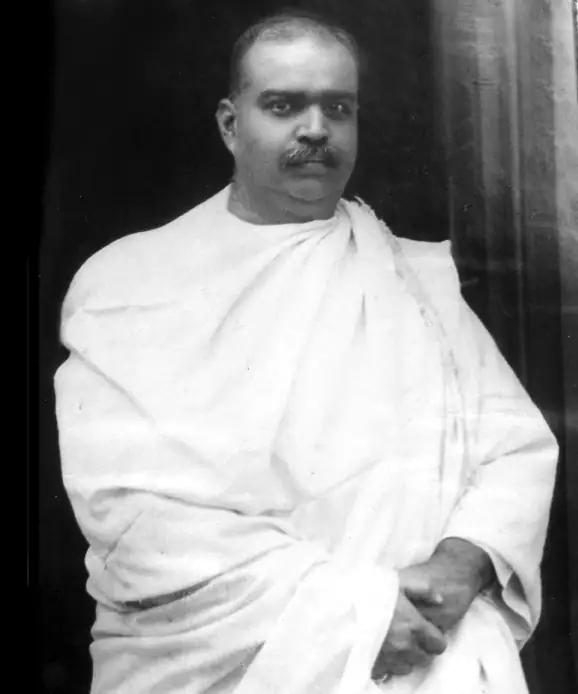
Encyclopedia of Dr. Shyama Prasad Mukherjee
History of Syamaprasad College, Kolkata: Founded by Dr. Syama Prasad Mukherjee
The institution known in 2026 as Syamaprasad College, located at 92, Syamaprasad Mukherjee Road, Kolkata (formerly Calcutta), West Bengal, traces its institutional origins to the immediate aftermath of the Second World War (1939–1945), a period marked by profound political, economic, and educational transformation in British India. Established in 1945 as the Asutosh College of Commerce (Evening Section), the college was conceived to address the rapidly increasing demand for higher education in Commerce among the city’s employed youth, particularly those who sought university education while maintaining full-time employment. The establishment of an evening commerce institution reflected the changing socio-economic realities of post-war Calcutta, where industrial expansion, commercial activity, government service, banking, insurance, and corporate enterprises generated an unprecedented need for professionally trained graduates. The foundation of the institution also represented an extension of the educational vision associated with the distinguished Asutosh College, one of Bengal’s foremost centres of higher learning, thereby inheriting an established academic tradition while developing a specialised identity in commercial education.
The creation of the Evening Section in 1945 was closely associated with the educational leadership of Dr. Syama Prasad Mukherjee (1901–1953), one of the most eminent educationists, constitutional thinkers, parliamentarians, and public intellectuals of twentieth-century India. Having served as the youngest Vice-Chancellor of the University of Calcutta between 1934 and 1938, Dr. Mukherjee consistently advocated the expansion of higher education beyond conventional day colleges. His educational philosophy recognised that university instruction should not remain confined to the economically privileged but should become accessible to working men and women striving for professional advancement. The establishment of an evening commerce college therefore reflected his broader commitment to democratising higher education, strengthening professional education, and creating opportunities for social mobility through academic achievement.
During its formative years between 1945 and 1958, the institution functioned as an integral component of Asutosh College, sharing its academic administration, infrastructure, and educational traditions. The post-war decade witnessed a substantial increase in enrolment as Calcutta emerged as one of India’s principal commercial and industrial centres. The city’s expanding sectors of banking, insurance, accountancy, mercantile trade, shipping, railways, government administration, and private enterprise required a growing workforce equipped with specialised commercial knowledge. Consequently, the Evening Section became an important educational institution for employed students who attended classes after office hours, thereby combining professional employment with university education.
A decisive stage in the institution’s development occurred in 1958, when the University Grants Commission (UGC), established under the University Grants Commission Act, 1956, recommended the administrative separation of the Evening Section from its parent institution. Acting upon these directions and with the approval and affiliation of the University of Calcutta, the institution became a fully independent college under the name Asutosh College of Commerce (Evening). The newly constituted college acquired its own Principal, an independent Governing Body, separate administrative machinery, and autonomous academic management while continuing to maintain its educational association with the University of Calcutta. This transformation represented more than an administrative restructuring; it signified the recognition of commerce education as a specialised academic discipline deserving institutional autonomy.
The early years of the independent college coincided with an important phase in the educational expansion of the newly independent Republic of India, where universities increasingly emphasised professional education, commercial studies, and vocational training. The college responded by strengthening its curriculum in Accountancy, Business Organisation, Economics, Commercial Law, Banking, and related disciplines, producing graduates who contributed significantly to the commercial and administrative life of West Bengal and India.
Following the untimely death of Dr. Syama Prasad Mukherjee on 23 June 1953 in Srinagar, Jammu and Kashmir, numerous educational, cultural, and public institutions sought to commemorate his contributions to Indian education and public life. Recognising his foundational role in the establishment of the commerce college and his distinguished service as Vice-Chancellor of the University of Calcutta, the University resolved to perpetuate his memory through an enduring institutional tribute. Accordingly, in 1962, the college was officially renamed Syamaprasad College. The renaming symbolised not merely a change of nomenclature but the formal recognition of Dr. Mukherjee’s enduring legacy as an educationist who believed in intellectual excellence, institutional autonomy, national service, and the expansion of opportunities for higher learning.
Following its renaming, Syamaprasad College progressively expanded its academic offerings beyond commerce. With the approval of the University of Calcutta, the college introduced Honours courses in Accountancy and Secretarial Practice within the Faculty of Commerce, while simultaneously extending higher education into the Faculty of Arts through Honours programmes in Bengali and English. These additions reflected the institution’s transition from a specialised commerce college into a multidisciplinary institution capable of serving diverse academic interests while preserving its historic strength in commercial education.
Within a relatively short period, the college acquired a distinguished reputation as one of the leading centres of Commerce Education in Kolkata. Its graduates entered professions in chartered accountancy, banking, finance, insurance, corporate management, government service, education, and business administration, thereby contributing substantially to the economic development of eastern India. The institution simultaneously cultivated an academic environment emphasising discipline, professional ethics, academic excellence, and social responsibility, values closely associated with the educational philosophy of Dr. Syama Prasad Mukherjee.
The college also articulated a broader institutional vision aimed at introducing professional education in emerging disciplines such as Taxation, Company Secretaryship, Management Studies, and Foreign Languages. These proposed academic initiatives reflected changing economic conditions in India during the period of economic liberalisation after 1991, when professional qualifications increasingly complemented traditional university degrees in meeting the demands of global commerce and industry.
From its inception, Syamaprasad College occupied the historic premises of the Asutosh Memorial Institute, situated at 92, Syamaprasad Mukherjee Road, Kolkata – 700026. This building also accommodates Asutosh College and Jogamaya Devi College, thereby creating one of Kolkata’s most significant educational complexes. The shared campus embodies the educational legacy of Sir Ashutosh Mukherjee (1864–1924), one of India’s greatest educationists and the legendary Vice-Chancellor of the University of Calcutta, whose educational reforms profoundly influenced modern higher education in Bengal. Syamaprasad College thus occupies a distinctive place within an institutional lineage extending from the educational vision of Sir Ashutosh to the academic leadership of his son, Dr. Syama Prasad Mukherjee.
To accommodate expanding academic programmes and increasing student enrolment, the college established an Annexe Building on its own land at 5B, Rajeswar Dasgupta Road, Kolkata – 700026. This development marked an important stage in the institution’s physical and academic expansion, enabling the introduction of new disciplines requiring specialised laboratories, classrooms, and technological infrastructure.
A major milestone occurred in 1998, when Syamaprasad College inaugurated its Faculty of Science, significantly broadening its academic profile. Initially, the Science Faculty introduced B.Sc. (Honours) in Computer Science, B.Sc. (Honours) in Electronics, and B.Sc. (Major) in Computer Applications, programmes reflecting the growing importance of information technology and electronics during India’s technological transformation in the late twentieth century. The same year also witnessed the commencement of B.Sc. (Honours) in Geography, conducted on a semi-day basis, thereby further diversifying the institution’s academic portfolio. These programmes were primarily conducted in the newly established Annexe Building during daytime sessions, complementing the long-established evening commerce courses.
The year 1998 also witnessed the establishment of the Syamaprasad Institute of Advanced Education (SIAE), a registered educational society envisioned as an institutional platform for promoting advanced academic programmes, research initiatives, and educational innovation. Described as the brainchild of the college’s leadership, SIAE represented an effort to extend the institution’s educational activities beyond conventional undergraduate instruction into specialised and continuing education.
The naming of the college after Dr. Syama Prasad Mukherjee serves as a lasting tribute to one of modern India’s most distinguished scholars and statesmen. The son of Sir Ashutosh Mukherjee, Dr. Mukherjee combined academic distinction with public service, demonstrating qualities widely acknowledged by contemporaries, including integrity, patriotism, intellectual independence, administrative ability, courage, forthrightness, and an unwavering commitment to national and educational development. These attributes became integral to the institutional identity of the college, inspiring successive generations of students and teachers.
Several landmark years define the historical evolution of the institution. 1945 witnessed the establishment of Asutosh College of Commerce (Evening Section) as part of Asutosh College. 1958 marked its emergence as an independent institution under the name Asutosh College of Commerce (Evening). In 1962, the college acquired its present identity as Syamaprasad College in honour of its founder. The year 1998 witnessed two transformative developments: the establishment of the Day Section for Science and the creation of the Syamaprasad Institute of Advanced Education (SIAE).
By 2026, Syamaprasad College had developed into a full-fledged co-educational institution, open to students of every community without distinction of religion, caste, gender, or social background. Affiliated with the University of Calcutta, the college offers a comprehensive range of undergraduate programmes including B.Com. (Honours) with specialisations in Accounting and Finance and Marketing, B.Com. General, B.A. (Honours) in English, Bengali, and Education, together with B.Sc. (Honours) in Computer Science, Electronics, Geography, and Economics, as well as B.Sc. Major in Computer Applications. From its modest beginning as an evening commerce section established in 1945, the institution has evolved into a significant centre of multidisciplinary higher education in Kolkata, preserving the educational ideals of Dr. Syama Prasad Mukherjee while continually adapting to the changing academic and professional needs of modern India.
Sarvarthapedia Core Concept: Syamaprasad College
- Sarvarthapedia (Core Areas)
- Foundation of Modern Commerce Education in Bengal
- Educational Vision of Dr. Syama Prasad Mukherjee
- University of Calcutta Affiliated Colleges
- Evening Higher Education Movement
- Evolution into a Multidisciplinary Institution
- Institutional Legacy of the Mukherjee Family
Cluster A. Historical Foundations
Establishment in 1945
See also
- End of the Second World War (1945)
- Post-War Bengal
- Higher Education Expansion in British India
- Commerce Education in Colonial India
- Adult and Working-Class Education
- Evening Colleges in India
- Asutosh College
- Calcutta Educational Institutions
Post-War Educational Reconstruction
Connected Concepts
- Economic Reconstruction
- Urban Employment
- Industrial Bengal
- Banking Sector Expansion
- Commercial Administration
- Professional Education
- Social Mobility through Education
Cluster B. Institutional Evolution
Asutosh College of Commerce (Evening Section)
See also
- Parent Institution Model
- Shared Academic Administration
- University Affiliation
- Evening Degree Programmes
- Commerce Curriculum
- Student Employment and Education
Separation in 1958
Connected Concepts
- University Grants Commission
- University Grants Commission Act, 1956
- College Autonomy
- Governing Body
- Academic Administration
- Institutional Independence
- Educational Governance
Renaming as Syamaprasad College (1962)
See also
- Memorial Institutions
- Educational Commemoration
- Dr. Syama Prasad Mukherjee
- University of Calcutta Senate
- Institutional Heritage
- Educational Legacy
Cluster C. Dr. Syama Prasad Mukherjee
Educational Leadership
Connected Concepts
- Vice-Chancellor of the University of Calcutta
- University Reforms
- Educational Modernisation
- Professional Education
- Democratization of Higher Education
- Educational Nationalism
Public Life
See also
- Sir Ashutosh Mukherjee
- Bengal Renaissance
- Indian Parliament
- Bharatiya Jana Sangh
- Indian Constitutional Development
- National Education Policy
- Academic Statesmanship
Personal Values
Linked Concepts
- Integrity
- Patriotism
- Academic Excellence
- Administrative Leadership
- Courage
- Public Service
- Intellectual Independence
- Institutional Building
Cluster D. Academic Development
Commerce Education
See also
- Accountancy
- Accounting and Finance
- Marketing
- Commercial Law
- Banking
- Insurance
- Business Organisation
- Economics
- Corporate Governance
Arts Faculty
Linked Articles
- Bengali Studies
- English Studies
- Education as an Academic Discipline
- Humanities Education
- Liberal Arts in Bengal
Science Faculty (1998)
Connected Concepts
- Computer Science
- Electronics
- Geography
- Economics
- Computer Applications
- Information Technology Education
- Scientific Infrastructure
Cluster E. Professional Education
Emerging Professional Courses
See also
- Taxation
- Company Secretaryship
- Business Management
- Foreign Language Education
- Professional Certification
- Continuing Education
- Employability Skills
Career-Oriented Education
Related Topics
- Chartered Accountancy
- Banking Careers
- Corporate Sector
- Financial Services
- Government Employment
- Educational Mobility
Cluster F. Institutional Geography
Main Campus
Location
- 92 Syamaprasad Mukherjee Road
- Kolkata
- Asutosh Memorial Institute
See also
- Educational Campuses of Kolkata
- Heritage Academic Buildings
- South Kolkata
- University of Calcutta Colleges
Annexe Campus
Location
- 5B Rajeswar Dasgupta Road
- Science Campus
- Academic Expansion
Connected Articles
- Campus Development
- Educational Infrastructure
- Laboratory Education
- Urban Higher Education
Cluster G. Associated Institutions
Asutosh Memorial Institute
See also
- Sir Ashutosh Mukherjee
- Bengal Educational Renaissance
- Higher Education in Bengal
- South Suburban Intermediate College
Asutosh College
Linked Concepts
- Parent Institution
- Commerce Education
- University of Calcutta
- Liberal Education
Jogamaya Devi College
Connected Topics
- Women’s Higher Education
- Sister Institutions
- Shared Educational Heritage
Syamaprasad Institute of Advanced Education (SIAE)
See also
- Educational Research
- Academic Innovation
- Continuing Education
- Institutional Development
Cluster H. Governance
University of Calcutta
Related Articles
- Affiliated Colleges
- Examination System
- Academic Regulations
- Senate
- Syndicate
- Academic Council
University Grants Commission
Connected Concepts
- Higher Education Regulation
- Accreditation
- Institutional Funding
- Academic Standards
- College Recognition
Cluster I. Educational Philosophy
Democratization of Higher Education
See also
- Equal Educational Opportunity
- Working Students
- Evening Colleges
- Social Inclusion
- Educational Accessibility
- Meritocracy
Professional Knowledge
Connected Concepts
- Skill Development
- Commercial Literacy
- Financial Knowledge
- Administrative Competence
- Economic Development
Cluster J. Historical Timeline
1945
Foundation
- Asutosh College of Commerce (Evening)
- Post-War Educational Expansion
- Commerce Education
1958
Institutional Independence
- Separate Principal
- Governing Body
- Independent Administration
1962
Institutional Renaming
- Syamaprasad College
- Memorial to Dr. Syama Prasad Mukherjee
1998
Scientific Expansion
- Science Faculty
- Computer Science
- Electronics
- Geography
- Computer Applications
1998
Institutional Innovation
- Syamaprasad Institute of Advanced Education
2026
Present Identity
- Multidisciplinary College
- Commerce
- Arts
- Science
- Co-Educational Institution
Cluster K. Civilizational Context
Bengal’s Educational Tradition
See also
- Bengal Renaissance
- Calcutta University System
- Modern Indian Universities
- Educational Reform in Bengal
- Colonial Higher Education
- National Education
Indian Higher Education
Connected Topics
- University System of India
- Professional Education
- Liberal Education
- Science Education
- Commerce Education
- Educational Policy
Cluster L. Biographical Network
Sir Ashutosh Mukherjee
Linked Articles
- University of Calcutta
- Educational Reform
- Bengal Renaissance
- Judicial Career
- Academic Leadership
Dr. Syama Prasad Mukherjee
Linked Articles
- University of Calcutta
- Bharatiya Jana Sangh
- Indian Parliament
- Ministry of Industry and Supply
- Jammu and Kashmir Movement
- National Integration
- Educational Philosophy
Cluster M. Institutional Legacy
Educational Contributions
See also
- Commerce Education in West Bengal
- Evening Higher Education
- Professional Education
- Multidisciplinary Colleges
- Academic Excellence
- Student Employability
Continuing Legacy
Connected Concepts
- Institutional Heritage
- Alumni Contributions
- Educational Leadership
- Academic Modernisation
- Knowledge Society
- Higher Education in Twenty-First Century India
