

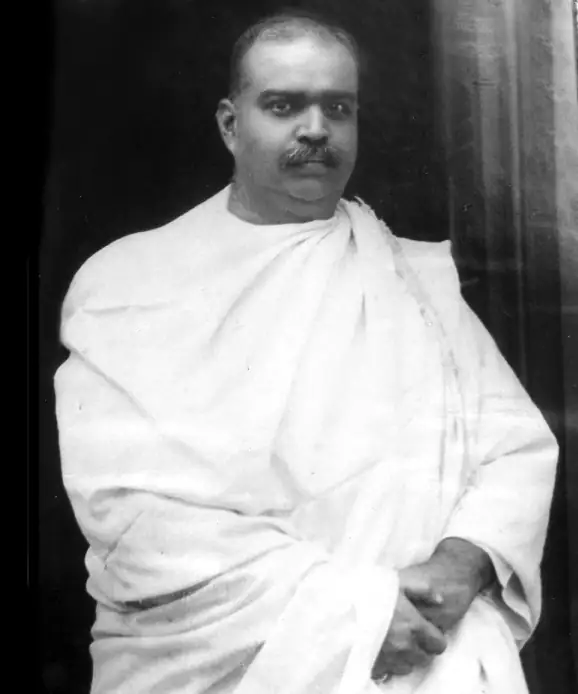
The Encyclopedia of Dr. Syama Prasad Mookerjee: Life, Thought, Politics and Legacy (1901–1953)
In Three Volumes
Introduction to the Life of Dr. Syama Prasad Mookerjee
VOLUME I: Formation of a Scholar, Educationist and Provincial Statesman (1901–1947)
PART I: Historical Background (1757–1901)
Chapter 1
Introduction to the Political Evolution of Bengal (1400-2000)
- The East India Company and the Bengal Presidency (1757–1858)
- The British Raj (1858–1901)
- Rise of the Bengali middle class
- The Bengal Renaissance
- Educational reforms under colonial rule
- Sir Asutosh Mukherjee (1864-1924)
- South Suburban College (Asutosh College-1916)
Chapter 2
The Intellectual Heritage of the Mukherjee Family
- Genealogy
- The family in nineteenth-century Bengal
- Influence of Sanskrit scholarship
- Professional traditions
Read More: European Invasions in India
PART II: Birth and Early Life (1901–1917)
Chapter 3
Birth and Childhood (6 July 1901–1910)
- Birth in Calcutta
- Family environment
- Domestic education
- Religious influences
- Swami Pranabananda and the Making of Shyama Prasad Mukherjee’s Early Political Outlook
- Early tutors
- Childhood anecdotes
- Family correspondence
Chapter 4
School Education (1910–1917)
- Academic achievements
- Literary interests
- Debating societies
- Contemporary Bengal
- Nationalist atmosphere
PART III: University Education (1917–1924)
Chapter 5
Presidency College
- Admission
- Teachers
- Fellow students
- Academic curriculum
- Student politics
Chapter 6
The University of Calcutta
- Undergraduate studies
- English literature
- Law
- Journalism
- Student organisations
- Intellectual development
- Tagore Law Lectures
PART IV: Academic Career (1924–1934)
Academic Career (1924–1934)
- appointment
- responsibilities
- administrative reforms
- correspondence
- official minutes
- academic controversies
PART V: Vice-Chancellor of the University of Calcutta (1934–1938)
Topics
Appointment
University finances
Academic reforms
Scientific research
Technical education
Women’s education
Libraries
Convocation addresses
Relations with faculty
Educational philosophy
International collaborations
Annual reports
PART VI: Entry into Politics (1929–1941)
Chronological chapters
1929
1930
1931
…
1941
PART VII: Bengal Government (1941–1942)
Cabinet formation
Finance portfolio
Budget
Administrative reforms
Relations with the Governor
Relations with Congress
Relations with Muslim League
Resignation
PART VIII: Bengal During War (1942–1945)
Japanese threat
Civil defence
Food shortages
The Bengal Famine
Relief work
Political correspondence
Press reaction
Syamaprasad College (Asutosh College of Commerce-1945)
PART IX: Partition of Bengal (1945–1947)
Bengal Politics (1945–1947)
Election campaign
Cabinet Mission
Direct Action Day
Communal violence
Partition debates
Boundary Commission
Campaign for West Bengal
Transfer of power
Refugee problem
Formation of West Bengal in 1947
Documentary Appendix
Chronology
Letters
Official notifications
Election results
Family documents
Photographic archive
VOLUME II: National Statesman and Architect of Opposition Politics (1947–1953)
PART I: Nation Building (1947)
The Interim Government
Integration into Independent India
Cabinet formation
Constitutional transition
PART II: Minister for Industry and Supply (1947–1950)
Separate chapters
Industrial policy
Heavy industries
Steel
Coal
Fertiliser
Textiles
Railway supplies
Defence production
River valley projects
Industrial licensing
Public sector enterprises
Budgetary policy
International trade
Industrial statistics
Annual reports
Cabinet memoranda
PART III: Parliament (1947–1950)
Every parliamentary session
Questions
Bills
Debates
Committee work
Constitutional interventions
Economic debates
Foreign affairs
Education
Minorities
PART IV: Constitutional Questions
Fundamental Rights
Federalism
Centre–State relations
Citizenship
Refugees
Emergency powers
Minority safeguards
National integration
PART V: Resignation from the Cabinet (1950)
Background
The Nehru–Liaquat Pact
Cabinet correspondence
Parliamentary statement
Political consequences
Press responses
International reaction
PART VI: Foundation of the Bharatiya Jana Sangh (1951–1952)
Preparatory meetings
Constitution
Organisation
Membership
Election manifesto
Election campaign
General Election of 1951–52
Electoral statistics
PART VII: Kashmir (1952–1953)
Historical background
Article 370
Delhi Agreement
Permit system
Praja Parishad movement
Journey to Jammu
Arrest
Detention
Death
Medical records
Official inquiry
Subsequent investigations
Historiographical debates
Documentary Section
Complete parliamentary speeches
Cabinet papers
Official correspondence
Election statistics
Maps
Photographs
VOLUME III: Intellectual Legacy, Documents, and Encyclopedic Reference
PART I: Political Philosophy
Nation
Democracy
Federalism
Citizenship
National integration
Economic nationalism
Education
Culture
Religion
Secularism
Foreign policy
Industrial development
PART II: Complete Writings
Books
Articles
Editorials
Prefaces
Forewords
Interviews
Public statements
PART III: Correspondence (1922–1953)
Family letters
Political correspondence
Official communications
University correspondence
International correspondence
PART IV: Speeches
Chronologically arranged
With annotations
Historical commentary
Cross references
PART V: Encyclopedic Dictionary (A–Z)
Definition
Historical context
Primary sources
Bibliography
Cross references
Topics
- Academic Council
- Article 370
- Bengal Legislative Assembly
- Bengal Famine
- Cabinet Mission
- Calcutta University
- Constituent Assembly
- East Bengal
- Hindu Mahasabha
- Industry and Supply Ministry
- Kashmir
- Nehru–Liaquat Pact
- Partition of Bengal
- Praja Parishad
- Refugees
- University Senate
PART VI: Documentary Archive
Government notifications
Cabinet records
Election documents
University minutes
Judicial records
Press statements
Personal papers
Unpublished manuscripts
PART VII: Historiography
1953–1960
1960–1975
1975–1990
1990–2014
2014–Present
Schools of interpretation
Political appropriations
Academic debates
International scholarship
PART VIII: Research Reference
Chronology (1901–Present)
Genealogy
Glossary
Bibliography
Archives consulted
Newspapers consulted
Oral history sources
Maps
Photographic catalogue
Indexes of persons
Indexes of places
Indexes of institutions
Indexes of legislation
Indexes of speeches
Subject index
General index
Read More
More Stories
Torah and the Five Books of Moses: Bereshit, Shemot, Vayikra, Bamidbar and Devarim
Modeling Humanity: A Unified Theory of Civilization, Intelligence, Technology, and Information
African Studies (Volume-1): Deep Roots