The Encyclopedia of Dr. Syama Prasad Mookerjee
Swami Pranabananda’s Influence on Shyama Prasad Mukherjee: Spirituality, Hindu Organisation and Indian Nationalism
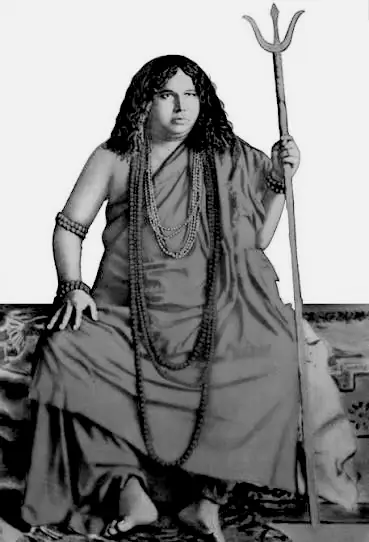
The relationship between Swami Pranabananda (1896–1941) and Shyama Prasad Mukherjee (1901–1953) belongs to the less examined but important history of Bengal’s political and intellectual life in the inter-war period. It is difficult to measure the influence of one upon the other in precise terms, because the available evidence does not suggest that Pranabananda was the sole architect of Mukherjee’s political ideas. Mukherjee was already the product of an exceptional intellectual environment, shaped by his father Sir Ashutosh Mukherjee, the University of Calcutta, the Bengal public sphere and his own early academic career. Yet Mukherjee himself gave Pranabananda an unusually explicit place in the formation of his early political consciousness, acknowledging that the monk had supplied him with “special inspiration and strength” during his first years in politics.
The chronology is important. Swami Pranabananda was born at Bajitpur in the Faridpur region of undivided Bengal on 29 January 1896, five years before Mukherjee’s birth in Calcutta on 6 July 1901. Pranabananda, then known as Binod, entered the spiritual discipline associated with Baba Gambhirnath of Gorakhpur in 1913. In 1917, at Bajitpur, he established the organisation that became the Bharat Sevashram Sangha. In 1924 he formally entered the monastic order. By the time Mukherjee was beginning to emerge as a public figure, Pranabananda had therefore already spent more than a decade constructing an organisation that deliberately joined spiritual discipline, social service and Hindu social organisation.
Mukherjee’s own career was moving along a different but intersecting path. He graduated from the University of Calcutta in 1921, completed his M.A. in 1923 and B.L. in 1924, and was called to the Bar in England in 1927. His entry into electoral politics came in 1929, when he entered the Bengal Legislative Council as a Congress candidate representing Calcutta University. Thus, when Mukherjee recalled Pranabananda as a source of inspiration in his “first political life”, he was speaking of a period in which his public identity was still being formed rather than of the mature politician of the 1940s.
What attracted Mukherjee was not simply Pranabananda’s religious status. It was the monk’s attempt to convert religious conviction into organised social action. Pranabananda regarded the Hindu community as weakened not merely by external circumstances but also by internal disunity, social fragmentation and the absence of organised collective strength. His answer was not confined to preaching. The Bharat Sevashram Sangha was conceived as an institution in which seva, discipline, organisation, moral regeneration and spiritual life would operate together. The Sangha itself explains the four elements of its name in precisely this institutional sense: “Bharat” signified the emancipation of Indians through their enduring ideals; “Seva” referred to dedicated service; “Ashram” to disciplined renunciation and self-control; and “Sangha” to organised collective effort.
That synthesis was significant for Mukherjee because it offered a conception of Hindu identity that was neither purely ritualistic nor confined to private religious belief. In the tribute supplied for this account, Mukherjee argued that Hindu society had concentrated too heavily upon thought and observance, while neglecting the active duties demanded by a changed historical age. His admiration for Pranabananda rested partly on the latter’s insistence that Hindu society must recover qualities of courage, discipline, organisation and responsibility.
This explains the importance Mukherjee attached to Pranabananda’s initiatives for “Milan Mandir” and “Rakshi Dal”. These were not merely religious institutions in the conventional sense. They represented an attempt to cultivate social cohesion and collective preparedness. For Mukherjee, who was witnessing the increasingly communalised and politically competitive atmosphere of Bengal, the question of whether Hindus could organise themselves as a coherent social force had obvious political implications.
The influence was reinforced by the Sangha’s practical work. During the crises of 1919–1921, when Bengal faced epidemics, famine and cyclone-related distress, Pranabananda and his followers undertook relief operations. Accounts preserved by the Sangha describe the work as extending across communal and caste boundaries, including assistance to poor and socially marginalised communities. The organisation subsequently developed relief, educational and welfare activities as permanent expressions of its philosophy.
This dimension of service as nation-building is essential to understanding Pranabananda’s influence on Mukherjee. The monk’s message was that a religious community could not claim strength merely by asserting its antiquity. It had to demonstrate its usefulness through organised action. Relief during famine, assistance during disasters, social uplift, education and service to vulnerable populations converted an abstract idea of community into an institutional reality.
Mukherjee’s recollection of Pranabananda repeatedly returns to this institutional dimension. He admired the Bharat Sevashram Sangha because it was attempting to give practical form to the ideal of a stronger and more organised Hindu society. In his view, the organisation helped people who felt socially weak or politically insecure to recover a sense of confidence and collective identity. He also valued its attempt to counter internal divisions within Hindu society.
There is a further historical connection. Pranabananda’s organisational work developed during the decades following the Partition of Bengal of 1905, the Swadeshi movement and the political upheavals of the early twentieth century. Bengal’s political culture had already been profoundly altered by the experience of anti-colonial mobilisation. Pranabananda’s programme emerged within this environment, but it gave the language of national regeneration a distinctly spiritual and organisational character. According to the Sangha’s own historical account, he also became a source of inspiration to sections of the revolutionary milieu while simultaneously directing young people towards disciplined social service.
Mukherjee’s later political development should not, however, be mechanically attributed to Pranabananda. Mukherjee’s political thought had multiple sources. His father’s intellectual and institutional legacy, his experience of the University of Calcutta, his legal training, his entry into the Bengal Legislative Council in 1929, the politics of Bengal, the communal question and his later association with the Hindu Mahasabha all contributed to the formation of his mature political position. The evidence supports a more precise conclusion: Pranabananda was one of the important influences that helped shape the moral and organisational vocabulary through which Mukherjee approached politics.
Their association also had a concrete geographical setting. Mukherjee recalled meeting Pranabananda on several occasions and participating, at his invitation, in gatherings at Ballygunge during Janmashtami and Shivaratri, where Mukherjee spoke or presided. This detail matters because it places the relationship within the actual public culture of Calcutta rather than presenting it as an abstract intellectual influence. The Sangha itself established its permanent headquarters at Ballygunge in 1932, making the area an increasingly important centre of its organisational activity.
Mukherjee remembered Pranabananda in strikingly personal terms: “deep insight,” “masculine energy,” spiritual power and an imposing personality. These descriptions reveal what he considered politically valuable in the monk. Pranabananda represented a form of religious leadership that was neither withdrawn from society nor dependent solely upon theological instruction. His ideal was the disciplined worker, the organised community and the individual who converted spiritual conviction into service.
The international dimension of the Bharat Sevashram Sangha also impressed Mukherjee. He referred to its work beyond India, including Trinidad and East Africa, as evidence that Hindu religious culture could be carried abroad through service and spiritual instruction. His interpretation was distinctly civilisational: India was not merely a political unit seeking independence but the inheritor of a cultural and religious tradition capable of making a contribution to the wider world.
This idea helps explain why Mukherjee described Pranabananda as a “seer of the radiant India of the future.” The phrase was not simply devotional. It expressed a political-cultural conception of India in which national regeneration depended upon recovering confidence in its own civilisation. Pranabananda’s contribution, as Mukherjee understood it, was to give that aspiration an organised institutional form.
Pranabananda died on 8 January 1941, aged forty-four, before Mukherjee entered the most consequential phase of his political career. Mukherjee had become Vice-Chancellor of the University of Calcutta in 1934, served until 1938, and by the early 1940s was a major figure in Bengal politics. Thus Pranabananda did not shape the whole of Mukherjee’s political life; his influence belongs principally to the formative period preceding Mukherjee’s mature political prominence.
The significance of Pranabananda in Mukherjee’s intellectual biography therefore lies less in any single political instruction than in a shared emphasis upon organisation, cultural confidence, service and collective strength. Pranabananda sought to regenerate Hindu society through an institution that combined the ascetic ideal with social action. Mukherjee encountered that experiment at a moment when he was moving from the world of scholarship and law into public life. He did not simply reproduce Pranabananda’s programme, but he recognised in it a model of disciplined social organisation rooted in Indian religious civilisation.
That is why Mukherjee’s tribute is more revealing than a conventional obituary. He did not remember Pranabananda merely as a saint who preached Hinduism. He remembered him as a builder of institutions, a mobiliser of youth, an advocate of social unity and a religious leader who sought to translate spiritual conviction into organised service. In Mukherjee’s understanding, the lasting importance of Pranabananda was that he tried to make Hindu society active rather than passive, organised rather than fragmented, and confident rather than politically inert.
The connection between the two men should therefore be placed within the larger history of twentieth-century Bengal. Pranabananda supplied an important spiritual-organisational influence; Mukherjee subsequently developed his own political interpretation of nationalism, culture and the Indian state. Their trajectories were not identical, but they intersected around a central proposition: that national regeneration required more than political independence. It required a society capable of preserving its civilisational identity, organising itself, serving its people and acting with confidence in public life.
For Mukherjee, that was the enduring significance of Swami Pranabananda. His memory belonged not merely to the history of a religious order but to the formative history of a generation of Bengali public figures who were attempting to determine what Indian nationalism would mean after colonial rule. Pranabananda’s answer came through spiritual discipline and organised service; Mukherjee carried elements of that intellectual inheritance into the increasingly contentious arena of modern Indian politics.
Shyamaprasad`s Letter to Swami Pranabananda 1940 (Bengali Text)
স্বামী প্রণবানন্দজী
বর্তমান সময়ে বাঙলার ও বাঙালীর নিজস্ব প্রতিষ্ঠান ভারত-সেবাশ্রম-সংঘ হিন্দুধর্মের পুনরুজ্জীবন এবং মৃতপ্রায় হিন্দুজাতির দেহে শক্তি-সঞ্চার কার্যে অগ্রণী হইয়া ভবিষ্যতের জ্যোতির্ময় ভারতের ভিত্তি পত্তন করিতেছেন। আমাদের কষ্টলব্ধ স্বাধীনতা রক্ষা করিতে হইলে আমাদের প্রকৃত জাতীয়তাকে রক্ষা করিতে হইবে। অর্থাৎ ভারতের নিজস্ব ধর্ম, নীতি, সংস্কৃতি ও সভ্যতা হিন্দুধর্মের স্বর্ণ-পেটিকার মধ্যে সুরক্ষিত আছে, তাহার পুনঃ প্রচার করিতে হইবে। আচার্য’ স্বামী প্রণবানন্দজী-প্রতিষ্ঠিত ভারত-সেবাশ্রম-সংঘ সেই হিন্দু-ধর্মের পুনঃ প্রচারের পবিত্রকার্যে প্রবৃত্ত রহিয়াছেন। হিন্দুধর্মের যে দিকটা কেবল মনন ও নিয়ম পালন লইয়াই ব্যাপ্ত, ঘটনাচক্রে এবং অদৃষ্টদোষে বর্তমান হিন্দুসমাজের সমস্ত উদ্যম সেই দিকেই ব্যয়িত হইতেছিল। কিন্তু আমরা ভুলিয়া গিয়াছিলাম যে, যুগ-পরিবর্তনের ফলে প্রত্যেক হিন্দুকেই ব্রাহ্মণ ও ক্ষত্রিয়ের সম্মিলিত কর্তব্য পালন করিতে হইবে। হিন্দুধর্মের অন্তর্গত অবশ্য পালনীয় বীরব্রতের প্রতি মনোযোগ আকর্ষণ করিয়া আচার্য প্রণবানন্দ স্বামীজী প্রচলিত অংগহীন হিন্দুধর্মকে পূর্ণাংগ করিবার চেষ্টা করিয়াছেন-হিন্দুজাতিকে যুগোচিত মুক্তিমন্ত্রে দীক্ষা দিয়াছেন।
স্বামীজী মহারাজের সহিত বহুবার আমার আলাপের সুযোগ ঘটিয়াছিল। কয়েকবার আমি তাঁহার আহ্বানে বালিগঞ্জে অনুষ্ঠিত কয়েকটি সম্মেলনে জন্মাষ্টমী ও শিবরাত্রির সময় বক্তৃতা ও সভাপতিত্ব করিয়াছি। আমি মুক্তকণ্ঠে স্বীকার করিতেছি যে, তিনি আমার প্রথম রাজনৈতিক জীবনে বিশেষ প্রেরণা ও শক্তি সঞ্চার করিয়াছিলেন। আজিও আমি শ্রদ্ধার সহিত স্মরণ করি এই বিরাট পুরুষের সুমহান্ ব্যক্তিত্ব, গভীর অন্তর্দৃষ্টি, তেজোব্যঞ্জক পৌরুষ ও আধ্যাত্মিক শক্তির কথা। তাঁহারই দূরদৃষ্টি, বহু বর্ষ পূর্বে হিন্দু-সমাজের রক্ষা ও সংগঠন কল্পে ‘মিলন-মন্দির ও রক্ষিদল’ গঠন আন্দোলন প্রবর্তন করিয়াছিল। তাঁহারই শিক্ষা ও অনুপ্রেরণার ফলে শক্তি-সমন্বিত এই ভারত-সেবাশ্রম-সংঘ ‘নিজ বাসভূমে পরবাসী’ সম দুর্বল ও লাঞ্ছিত হিন্দুকে বিপদে উন্নতশির হইতে শিক্ষা দিতেছেন, ছিন্নভিন্ন ও আত্মকলহপরায়ণ হিন্দু-সমাজকে সংগঠিত একতাবদ্ধ হইবার পথ দেখাইতেছেন, দুঃস্থ ও বিপন্ন হিন্দুকে সান্ত্বনা ও সাহায্য দান করিতেছেন।
কেবল তাহাই নহে, স্বদেশে বিস্মৃতিমগ্ন হিন্দুকে তাহার ধর্মের ও সভ্যতার গৌরবগথা স্মরণ করাইয়া দেওয়ার সঙ্গে সঙ্গে স্বামীজীর উপদেশ ও অনুজ্ঞা অনুসারে তাঁহার বাণী বহনকারী ভারত-সেবাশ্রম-সংঘ পৃথিবীর দূর-দূরান্তে অবস্থিত স্থানসমূহে হিন্দুধর্ম প্রচারে প্রবৃত্ত হইয়াছেন। ভারতের অভ্যন্তরে গয়া প্রভৃতি তীর্থস্থানে সংঘ জাতির সেবাকার্যে যেমন তৎপরতা ও ঐকান্তিকতা দেখাইয়াছেন, সুদূর দক্ষিণ আমেরিকার ত্রিনিদাদ প্রভৃতি অঞ্চলে এবং পূর্ব আফ্রিকাতেও তেমনি হিন্দুধর্মের মঙ্গলশঙ্খ নিনাদিত করিতে সক্ষম হইয়াছেন। পৃথিবীর যে সমস্ত অনগ্রসর ও অনাদৃত অঞ্চল হিন্দুধর্মের নাম পর্যন্ত শুনে নাই, হিন্দু-সন্ন্যাসীর পবিত্র গৈরিক বসন চক্ষে দেখে নাই, আজ সেখানকার জনগণ শাশ্বত সনাতন বেদবাণী শ্রবণ ও নির্মল আধ্যাত্মিক চিহ্ন প্রত্যক্ষ করিয়া ধন্য হইয়াছে। আমার মনে হয়, ভারত-সেবাশ্রম-সংঘের সন্ন্যাসীরা সেই ভবিষ্যৎ যুগের অগ্রদূত, যে যুগে হিন্দুধর্ম ও হিন্দুর সভ্যতা আবার শান্তিপূর্ণ অভিযানে বিশ্ববিজয় করিতে সমর্থ হইবে এবং সেই গৌরবময় যুগের চিত্র দেখিয়াছিলেন আচার্য স্বামী প্রণবানন্দজী মহারাজ সেই দর্শনকে বাস্তবে পরিণত করার জন্য দেশকে ও জাতিকে মন্ত্রদীক্ষা দিয়া গিয়াছেন তিনিই। ভবিষ্যতের জ্যোতির্ময় ভারতের দিব্য দ্রষ্টা সেই মহাপুরুষের উদ্দেশ্যে আমি আজ শ্রদ্ধাঞ্জলি অর্পণ করিতেছি।
শ্যামাপ্রসাদ মুখোপাধ্যায়
Swami Pranabananda and Shyama Prasad Mukherjee: Sarvarthapedia Conceptual Network
Central Concept: Spiritual Nationalism and Social Organisation
Swami Pranabananda and Shyama Prasad Mukherjee can be connected within Sarvarthapedia through the broader conceptual field of Hindu social organisation, cultural nationalism, national regeneration and institutional service. The relationship should not be presented as a simple teacher-disciple relationship or as the sole explanation of Mukherjee’s political thought. It is better understood as an intersection between spiritual leadership and political formation in twentieth-century Bengal.
Core Relationship
Swami Pranabananda
→ Spiritual leadership
→ Hindu social regeneration
→ Organised service
→ Collective discipline
→ Social unity
→ Bharat Sevashram Sangha
→ Influence on early Shyama Prasad Mukherjee
→ Political and cultural nationalism
Shyama Prasad Mukherjee
→ Bengal public life
→ University of Calcutta
→ Early political career
→ Hindu social organisation
→ Cultural nationalism
→ Indian unity
→ Political mobilisation
Cluster: Swami Pranabananda
Swami Pranabananda, 1896–1941
Swami Pranabananda provides the principal spiritual and organisational node of the network. His historical importance extends beyond individual religious teaching because his work attempted to combine ascetic discipline, social service, Hindu organisation and national consciousness.
Related concepts:
- Bharat Sevashram Sangha
- Hindu social regeneration
- Seva
- Spiritual discipline
- Social organisation
- Milan Mandir
- Rakshi Dal
- Youth mobilisation
- Relief work
- Hindu cultural consciousness
- Global Hindu religious activity
Cluster: Bharat Sevashram Sangha
Bharat Sevashram Sangha
The Bharat Sevashram Sangha, founded through the initiative of Swami Pranabananda, forms the principal institutional link between religion and organised social service.
Its conceptual network extends toward:
Spirituality
→ Abhay Charan Bhaktivedanta
→ Institution building
→ Relief work
→ Social cohesion
→ Cultural preservation
It also connects with:
- Gaya
- Pilgrimage service
- Disaster relief
- Education
- Rural and social welfare
- Trinidad
- East Africa
- Hindu diaspora
- International propagation of Hindu traditions
Hindu Social Regeneration
From Religious Observance to Social Action
One of Pranabananda’s important conceptual interventions was the movement from a predominantly ritual and contemplative understanding of Hindu religious life towards an interpretation that also emphasised social responsibility, courage, organisation and service.
This produces a conceptual chain:
Hindu Dharma
→ Personal discipline
→ Social responsibility
→ Collective organisation
→ Service
→ Community resilience
This cluster should be cross-referenced with:
- Hindu reform movements
- Neo-Hinduism
- Hindu monastic institutions
- Religious nationalism
- Social service in modern India
Cluster: Spirituality and Nationalism
Spiritual Discipline as a Source of National Consciousness
Pranabananda’s thought can be situated within the larger nineteenth- and twentieth-century transformation in which religious identity increasingly became connected with ideas of national regeneration.
The conceptual progression is:
Religious consciousness
→ Cultural self-awareness
→ Collective identity
→ Social organisation
→ National consciousness
This cluster connects directly with:
- Sree Krishna Chaitanya Mahaswami
- Bankim Chandra Chattopadhyay
- Sri Aurobindo
- Bengal Renaissance
- Swadeshi Movement
- Hindu nationalism
- Indian nationalism
- Cultural nationalism
Cluster: Shyama Prasad Mukherjee
Shyama Prasad Mukherjee, 1901–1953
Shyama Prasad Mukherjee forms the principal political node of the network.
His intellectual and political development should be connected through several independent pathways:
Sir Ashutosh Mukherjee
→ Family intellectual environment
University of Calcutta
→ Academic formation
Law and professional education
→ Public institutional experience
Bengal Legislative Council
→ Entry into electoral politics
Swami Pranabananda
→ Spiritual and organisational influence
Bengal politics
→ Communal and constitutional questions
Hindu Mahasabha
→ Political development
Indian Union
→ Later conception of national unity
Cluster: Early Political Formation
Mukherjee Before National-Level Politics
Mukherjee’s early political development should not be isolated from his academic career.
The network runs:
Sir Ashutosh Mukherjee
→ University of Calcutta
→ Academic achievement
→ Public intellectual life
→ Bengal politics
→ Political leadership
A parallel line runs:
Swami Pranabananda
→ Religious-social organisation
→ Community consciousness
→ Collective responsibility
→ Mukherjee’s early political formation
The intersection of these two lines helps explain why Mukherjee’s later political thought combined academic-institutional reasoning with cultural and national questions.
Cluster: Milan Mandir and Rakshi Dal
Organised Community and Collective Protection
The concepts of Milan Mandir and Rakshi Dal belong to the organisational dimension of Pranabananda’s programme.
They connect:
Social fragmentation
→ Need for unity
→ Collective organisation
→ Discipline
→ Community protection
This cluster should be cross-referenced with:
- Hindu social organisation
- Youth organisations
- Community institutions
- Social defence
- Collective identity
- Communal politics in Bengal
Cluster: Service as Nation-Building
Seva and National Regeneration
The Bharat Sevashram Sangha provides an important conceptual bridge between religion and public welfare.
Seva
→ Relief
→ Education
→ Pilgrimage assistance
→ Disaster response
→ Social welfare
→ Institutional legitimacy
→ National service
This creates a broader Sarvarthapedia concept:
Religion as Social Institution
rather than religion being understood exclusively as:
Belief → Ritual → Personal Salvation
Cluster: Bengal as the Historical Laboratory
Bengal, 1905–1947
The relationship between Pranabananda and Mukherjee should be placed against the transformation of Bengal after the Partition of Bengal in 1905.
The chronological network is:
Partition of Bengal, 1905
→ Swadeshi Movement
→ Nationalist mobilisation
→ Community organisation
→ Changing Hindu-Muslim political relations
→ Constitutional politics
→ Bengal political fragmentation
→ Partition of Bengal, 1947
Within this larger historical structure:
Pranabananda represents the religious-organisational response, while Mukherjee increasingly represents a political-constitutional response.
Cluster: Swadeshi Movement
Swadeshi and Social Organisation
The Swadeshi Movement should be cross-linked with Pranabananda’s later emphasis on organisation and self-strengthening.
Conceptual relationship:
Swadeshi
→ Economic self-reliance
→ Cultural self-confidence
→ National education
→ Social mobilisation
→ Organised society
This connects to:
- National education
- Indian industry
- Boycott movement
- Bengal nationalism
- Cultural nationalism
Cluster: Hindu Cultural Identity
Hinduism as Civilisational Identity
Mukherjee’s recollection of Pranabananda places considerable emphasis upon Hindu civilisation, Hindu culture and the recovery of collective confidence.
The conceptual network is:
Hindu Dharma
→ Civilisation
→ Culture
→ Historical memory
→ Collective identity
→ National consciousness
This should be connected with:
- Indian civilisation
- Hindu Darshan
- Sanatana Dharma
- Statue of Bahubali at Shravanabelagola
- Cultural nationalism
- Indian nationalism
- Religious identity
Cluster: Cultural Nationalism
Culture, Nation and Political Identity
The relationship between Pranabananda and Mukherjee provides one pathway into the wider Sarvarthapedia concept of cultural nationalism.
Cultural inheritance
→ Collective memory
→ Community identity
→ Civilisational consciousness
→ National identity
The same concept should be cross-referenced with:
Bankim Chandra Chattopadhyay
→ Vande Mataram
→ Cultural nationalism
→ Spiritual nationalism
→ Social service
Sri Aurobindo
→ Spiritual nationalism
→ Political nationalism
Shyama Prasad Mukherjee
→ Cultural nationalism
→ Indian political nationalism
Cluster: Swami Vivekananda and Pranabananda
Spirituality, Strength and Service
A significant conceptual comparison can be constructed between Swami Vivekananda and Swami Pranabananda.
Swami Vivekananda
→ Strength
→ Service
→ Organisation
→ National regeneration
Swami Pranabananda
→ Strength
→ Service
→ Organisation
→ Hindu social regeneration
The intersection is:
Spirituality + Strength + Service + Organisation
This provides an important bridge to the history of modern Hindu monastic and service institutions.
Cluster: Religion and Public Life
From Ashram to Public Institution
The Bharat Sevashram Sangha demonstrates how an ashramic institution could become an organisation engaged in public welfare.
Conceptual chain:
Monasticism
→ Discipline
→ Seva (Service to the Human)
→ Institution
→ Public welfare
→ Social mobilisation
This connects with the broader history of:
- Bharat Sevashram Sangha
- Hindu monastic orders
- Religious philanthropy
- Relief organisations
- Civil society in colonial India
Cluster: Colonial Bengal
Colonial Administration and Community Politics
The political environment in which Mukherjee developed cannot be separated from the structure of British India.
Colonial rule
→ Administrative divisions
→ Communal representation
→ Electoral politics
→ Constitutional reform
→ Bengal politics
→ Community mobilisation
The network intersects with:
- Morley-Minto Reforms, 1909
- Government of India Act, 1919
- Government of India Act, 1935
- Bengal Legislative Council
- Separate electorates
- Communal politics
- Bengal Provincial politics
Cluster: Bengal Politics and Mukherjee
From Provincial Politics to National Politics
Mukherjee’s political trajectory can be represented as:
Calcutta University
→ Bengal Legislative Council, 1929
→ Bengal provincial politics
→ University of Calcutta leadership
→ Hindu Mahasabha
→ Bengal coalition politics
→ Indian Union
→ National political leadership
This cluster should remain distinct from the Pranabananda network while intersecting with it at:
Hindu social organisation
Cultural identity
National regeneration
Indian Independence and Partition
From Cultural Organisation to the Question of the Indian Union
The later Mukherjee network extends beyond the period of Pranabananda’s lifetime.
Swami Pranabananda, 1896–1941
→ Early influence
Shyama Prasad Mukherjee, 1901–1953
→ Political maturation
Quit India period, 1942
→ Constitutional crisis
Bengal famine, 1943
→ Humanitarian and political crisis
Partition of India, 1947
→ Bengal partition
Indian Independence, 1947
→ Indian Union
Constitution of India, 1950
→ Constitutional nationalism
Mukherjee’s resignation from the Union Cabinet, 1950
→ Political opposition
Jammu and Kashmir question
→ Indian territorial integration
Cluster: Indian Union
Mukherjee and the Idea of National Integration
The later political thought of Mukherjee creates a second major conceptual axis:
Cultural identity
→ National unity
→ Territorial integrity
→ Constitutional citizenship
→ Indian Union
This axis should be cross-referenced with:
- Indian Constitution
- National integration
- Jammu and Kashmir
- Article 370
- Indian federalism
- Unitary and federal principles
- Partition of India
Cluster: International Hindu Cultural Networks
From Bengal to the Global Hindu Community
The international activities associated with the Bharat Sevashram Sangha provide another Sarvarthapedia network:
India
→ Hindu diaspora
→ Trinidad
→ East Africa
→ Religious institutions abroad
→ Cultural continuity
This connects the Pranabananda network with:
- Indian diaspora
- Indentured labour history
- Hindu diaspora institutions
- Caribbean Indian communities
- East African Indian communities
- Transnational Hinduism
Cluster: Institutional Nationalism
Organisation as an Instrument of Civilisational Continuity
A central Sarvarthapedia concept emerging from this network is institutional nationalism.
Idea
→ Organisation
→ Institution
→ Social service
→ Collective memory
→ Cultural continuity
→ National consciousness
In this Sarvarthapedia framework, the Bharat Sevashram Sangha becomes an example of how an institution can preserve and reproduce a civilisational identity across generations.
Cross-Reference Matrix
Pranabananda ↔ Bharat Sevashram Sangha
Founder → Institution → Seva → Social organisation → Hindu cultural regeneration
Pranabananda ↔ Vivekananda
Spirituality → Strength → Service → Organisation → National regeneration
Pranabananda ↔ Bengal
Colonial Bengal → Social fragmentation → Hindu organisation → Cultural consciousness
Pranabananda ↔ Mukherjee
Spiritual influence → Social organisation → Cultural consciousness → Early political formation
Mukherjee ↔ University of Calcutta
Education → Scholarship → Institutional leadership → Public life → Politics
Mukherjee ↔ Bengal Politics
Legislative politics → Communal question → Provincial government → National politics
Mukherjee ↔ Hindu Mahasabha
Hindu political representation → Cultural nationalism → Constitutional politics
Mukherjee ↔ Indian Union
National integration → Territorial unity → Constitutional politics → Post-independence nationalism
Bharat Sevashram Sangha ↔ Hindu Diaspora
Seva → Religious institutions → Cultural transmission → Trinidad and East Africa → Global Hindu networks
Sarvarthapedia Master Knowledge Web
Primary Node
Swami Pranabananda
First Ring
Bharat Sevashram Sangha
Hindu Social Regeneration
Rastriya Swayamsevak Sangh (RSS)
Milan Mandir
Rakshi Dal
Spiritual Discipline
Social Organisation
Second Ring
Bengal Renaissance
Swadeshi Movement
Hindu Cultural Consciousness
Cultural Nationalism
Religious Reform
Indian Nationalism
Third Ring
Shyama Prasad Mukherjee
University of Calcutta
Bengal Legislative Council
Bengal Politics
Hindu Mahasabha
Indian Union
National Integration
Fourth Ring
Partition of Bengal, 1905
Indian Independence, 1947
Partition of India, 1947
Constitution of India, 1950
Jammu and Kashmir
Article 370
Postcolonial Indian Nationalism
See Also
Religious and Civilisational Thought
Sri Aurobindo
Bankim Chandra Chattopadhyay
Neo-Hinduism
Hindu Reform Movements
Sanatana Dharma
Bengal History
Bengal Renaissance
Partition of Bengal, 1905
Swadeshi Movement
Bengal Politics
Bengal Legislative Council
Partition of Bengal, 1947
Indian Nationalism
Indian National Congress
Hindu Mahasabha
Cultural Nationalism
Indian Nationalism
National Integration
Indian Independence Movement
Social Organisation and Service
Bharat Sevashram Sangha
Ramakrishna Mission
Religious Philanthropy
Indian Civil Society
Disaster Relief in India
Hindu Monastic Institutions
Shyama Prasad Mukherjee
- Sir Ashutosh Mukherjee
- University of Calcutta
- Bengal Politics
- Hindu Mahasabha
- Indian Union
- Jammu and Kashmir
- National Integration
Conceptual Core for Sarvarthapedia
Swami Pranabananda → Spiritual Discipline → Seva → Social Organisation → Hindu Cultural Consciousness → Cultural Nationalism → Shyama Prasad Mukherjee → Indian Nationalism → National Integration