The Encyclopedia of Dr. Syama Prasad Mookerjee
Part I (1901–1938) – Early life, education, University of Calcutta, Vice-Chancellorship
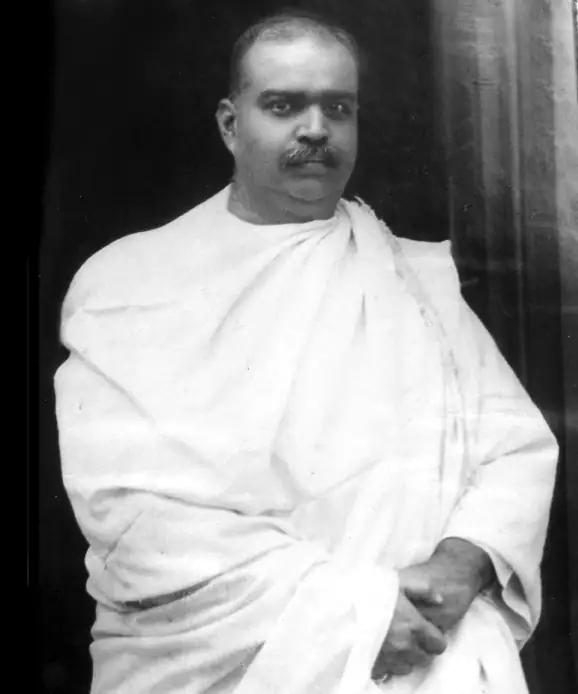
Dr. Shyamaprasad Mookerjee (1901–1953) was one of the most distinguished public figures produced by twentieth-century India, combining the roles of educationist, jurist, parliamentarian, administrator, and nationalist leader. His career bridged the late colonial and early post-independence periods and left a lasting imprint on higher education, constitutional politics, and public administration. Long before he emerged as a national political leader, he had earned distinction as one of the youngest and most accomplished academic administrators in India, transforming the University of Calcutta into a centre of intellectual and institutional innovation.
He was born on 6 July 1901 at 77 Russa Road, Calcutta (present-day Ashutosh Mukherjee Road, Kolkata) into one of Bengal’s most celebrated intellectual families. His father, Sir Ashutosh Mookerjee (1864–1924), was an eminent judge of the Calcutta High Court, mathematician, educationist, and one of the greatest Vice-Chancellors of the University of Calcutta. His mother, Lady Jogmaya Devi, nurtured a cultured domestic environment where learning, discipline, and public duty were regarded as inseparable.
On 23 July 1906, he entered Mitra Institution (Bhawanipore Branch), Calcutta, in Class II. Throughout his school career, he distinguished himself by academic excellence. In 1917, he passed the Matriculation Examination with a Merit Scholarship of Rs. 10 per month, an achievement that reflected both intellectual brilliance and remarkable consistency. He subsequently joined Presidency College, Calcutta, then regarded as one of the foremost centres of higher learning in British India. In 1919, he secured the Intermediate Examination in Arts in the first division, and in 1921 graduated First Class First in English Honours, establishing himself among the finest students of his generation.
Although English literature was his principal academic strength, an important turning point came in 1923, when he obtained the M.A. degree in Bengali Language and Literature, again standing First Class First at the University of Calcutta. This decision carried significance beyond personal academic choice. Sir Ashutosh Mookerjee had long argued that Indian languages deserved equal academic dignity with English in university curricula. At a time when higher education overwhelmingly favoured English, he persuaded his brilliant son to pursue postgraduate studies in Bengali, thereby demonstrating in practice the educational ideals he advocated.
Meanwhile, on 16 April 1922, Shyamaprasad married Sudha Devi, daughter of Dr. Benimadhav Chakravarty. The marriage provided stability during the formative years of his professional life, although it was destined to end prematurely a decade later.
The defining event of his early adulthood occurred on 25 May 1924, when Sir Ashutosh Mookerjee died suddenly at Patna, Bihar, while away from Calcutta. The unexpected death deprived Bengal of one of its greatest educationists and left the twenty-two-year-old Shyamaprasad with responsibilities far beyond his years. Reflecting later upon this personal tragedy, he remarked that 25 May 1924 had altered the entire course of his life. Bereavement compelled him to abandon the carefree pursuits of youth and devote himself to preserving and extending the educational legacy established by his father.
Almost immediately after Sir Ashutosh’s death, Shyamaprasad entered the administrative life of the University of Calcutta. At the age of only twenty-three, he was elected a Fellow of the University and was appointed to its Syndicate, filling the vacancy created by his father’s death. The appointment marked the beginning of more than two decades of uninterrupted association with the University’s affairs. His administrative ability, command over academic matters, and capacity for independent judgment quickly established him as one of the leading university administrators in India.
Determined to broaden his professional qualifications, Mookerjee travelled to England in 1926 and enrolled at Lincoln’s Inn, London, to study law. During his stay in Britain he also represented the University of Calcutta at the Conference of Universities of the British Empire, thereby participating in discussions concerning higher education across the Empire. In 1927, he was called to the Bar and returned to India to practise before the Calcutta High Court. Although he possessed the qualifications for a distinguished legal career, the practice of law never became his principal occupation.
The transition from education to politics occurred gradually. In 1929, he entered the Bengal Legislative Council as a Congress candidate representing the University of Calcutta constituency. His election reflected the confidence placed in him by the academic community rather than by any mass political organization. When the Indian National Congress resolved in 1930 to boycott the legislatures as part of the Civil Disobedience Movement, he resigned his seat in accordance with party policy. Shortly afterwards, however, he successfully contested the same constituency as an Independent, thereby beginning a political career marked by personal independence and freedom from rigid party discipline.
A severe personal tragedy interrupted this promising phase of his public life. In 1933, Sudha Devi died, leaving behind four young children—two sons and two daughters. The loss profoundly affected Mookerjee, who never remarried. The responsibility of raising the children was assumed largely by his sister-in-law Tara Devi, wife of Justice Ramaprasad Mookerjee, enabling him to continue his demanding educational and public responsibilities.
In 1934, at the age of thirty-three, Mookerjee was appointed Vice-Chancellor of the University of Calcutta, becoming one of the youngest persons ever to occupy that office. He served for two consecutive terms (1934–1938) during a period of rapid institutional expansion and administrative reform. His tenure represented one of the most dynamic chapters in the University’s history and demonstrated his conviction that higher education should contribute directly to national development.
One of his earliest initiatives was the introduction of a comprehensive programme in Agricultural Education, including diploma courses intended to improve scientific farming in Bengal. At a time when agriculture remained the principal occupation of the population, he regarded scientific instruction as essential for economic advancement. Equally important was his sustained interest in women’s education, for which he implemented schemes supported by the endowment of Viharilal Mitra, expanding educational opportunities for female students.
Teacher education also received systematic attention. Under his leadership, the University organized a Teachers’ Training Department and introduced regular and vacation training courses to improve the quality of school education throughout Bengal. Recognising India’s historical links with Asia, he established departments devoted to Chinese and Tibetan Studies, thereby broadening the University’s international academic outlook.
His contribution to the preservation of India’s artistic and archaeological heritage was equally noteworthy. During his Vice-Chancellorship, the Ashutosh Museum of Indian Art was founded, providing an institutional centre for the collection and study of Indian sculpture, painting, and antiquities. Simultaneously, archaeological excavations sponsored by the University expanded opportunities for historical research and practical training.
Mookerjee modernized academic infrastructure by establishing the Appointment and Information Board, strengthening student placement services, and overseeing the construction of a new Central Library Hall equipped with improved research and reading facilities. He also expanded the teaching of Indian languages by introducing Hindi into the B.A. curriculum and creating Honours courses in Bengali, Hindi, and Urdu as second languages. These reforms reflected his belief that higher education in India should combine international scholarship with a firm grounding in the country’s linguistic and cultural traditions.
His concern for the development of scientific knowledge extended beyond conventional teaching. At his initiative, a Bengali scientific terminology (Paribhasa) was prepared and published, facilitating the teaching of science through the mother tongue. He simultaneously encouraged the publication of scholarly books in Bengali across diverse disciplines, making advanced knowledge accessible to students and educated readers outside the English-speaking elite. Bengali spelling was also standardized during this period, contributing to greater uniformity in educational publications.
Administrative reforms formed another major aspect of his Vice-Chancellorship. The College Code was formulated for the first time, Matriculation Regulations were revised, age restrictions on admission were abolished, and the system of compartmental examinations was introduced, allowing unsuccessful candidates to complete their studies without unnecessary interruption. He also permitted failed students to reappear for examinations without compulsory readmission to colleges.
Student welfare remained central to his educational philosophy. He expanded the Students’ Welfare Department, promoted physical education, encouraged military training within the University curriculum, and introduced measures designed to reduce social discrimination within student hostels. Separate hostels reserved for students belonging to the so-called backward communities were abolished in favour of integrated accommodation, while concessional hostel fees were retained to ensure that economically disadvantaged students continued to receive assistance.
An event of lasting cultural importance occurred in 1937, when Rabindranath Tagore, at Mookerjee’s invitation, delivered the Convocation Address of the University of Calcutta in Bengali—the first address in the University’s history to be delivered in the mother tongue rather than English. The occasion symbolized the growing confidence of Indian languages within higher education and represented the culmination of educational ideals long associated with Sir Ashutosh Mookerjee, now carried forward by his son.
By the close of 1938, Dr. Shyamaprasad Mookerjee had established an extraordinary reputation as an administrator and educationist. In recognition of his scholarly and public services, the University of Calcutta conferred upon him the honorary degree of Doctor of Letters (D.Litt.), while Banaras Hindu University awarded him the honorary degree of Doctor of Laws (LL.D.). During the same year, he was nominated as India’s representative to the Committee on Intellectual Cooperation of the League of Nations, an acknowledgment of his growing international stature.
Part II (1939–1953) – Bengal politics, Independence, Union Cabinet, Bharatiya Jana Sangh, Kashmir movement, and legacy
The years between 1939 and 1953 marked the most active and controversial phase of Dr. Shyamaprasad Mookerjee’s public career. Having already earned distinction as an educationist and the youngest Vice-Chancellor of the University of Calcutta, he now emerged as one of the leading political figures of Bengal during the final decade of British rule and, later, as a prominent parliamentarian and Union Minister in independent India. These years witnessed the Second World War, the Pakistan movement, the Bengal Famine, Partition, the framing of the Constitution of India, and the early political challenges of the Republic. Mookerjee participated directly in each of these developments, often occupying positions that shaped contemporary political debate.
In 1939, he took a prominent part in the Twenty-first Session of the All-India Hindu Mahasabha, held at Calcutta under the presidentship of Vinayak Damodar Savarkar. Although he had entered politics independently and had earlier been associated with the Indian National Congress, the increasing communal polarization of Bengal persuaded him to work through the Hindu Mahasabha. From 1940 to 1944, he served as the Working President of the All-India Hindu Mahasabha, while simultaneously leading its Bengal Provincial Committee. His association with the organization stemmed from his opposition to the communal politics of the All-India Muslim League, whose demand for Pakistan, in his opinion, endangered the territorial unity of India.
A significant development occurred in December 1941, when the Muslim League Ministry in Bengal collapsed. Seeking to prevent further communal division, A. K. Fazlul Huq formed the Progressive Coalition Government, and Mookerjee joined the ministry as Finance Minister of Bengal on 11 December 1941. Popularly known as the Shyama–Huq Ministry, it represented the last serious attempt before Partition to establish a coalition government based on cooperation between Hindu and Muslim political groups. During his tenure, Mookerjee concentrated on financial administration while advocating communal harmony through constitutional government. His ministerial career in Bengal, however, lasted less than a year, ending on 20 November 1942.
During this period, Mookerjee also assumed a wider national role. In 1942, the Bhagalpur Session of the Hindu Mahasabha was prohibited by the Government of Bihar. Defying the ban, he travelled to Bhagalpur, where he was arrested under the Defence of India Rules and detained before being released. The same year he participated in discussions with the Cripps Mission, which had arrived in India with proposals for constitutional settlement during the Second World War. Mookerjee was among the earliest political leaders to reject the Cripps Offer, arguing that its provisions permitting provinces to separate from a future Indian Union would strengthen the demand for Partition.
His resignation from the Bengal Ministry in November 1942 followed the British Government’s policy of repression after the Quit India Movement, particularly in Midnapore and adjoining districts. He strongly criticized the conduct of the provincial administration and wrote to Lord Linlithgow, the Viceroy, proposing a constitutional settlement between Britain and Indian political leaders. He also sought permission to meet Mahatma Gandhi, then imprisoned, but the request was refused by the colonial authorities.
The humanitarian catastrophe caused by the Bengal Famine of 1943 profoundly influenced Mookerjee’s public life. The famine claimed the lives of several million people across Bengal through starvation, disease, and administrative failure. Instead of confining himself to political criticism, he organized extensive relief operations, mobilized voluntary organizations, collected funds, and supervised the distribution of food, clothing, and medical assistance. Contemporary accounts record that his relief committees functioned across several famine-stricken districts, irrespective of caste or religious affiliation. In the same year, he presided over the Amritsar Session of the All-India Hindu Mahasabha and was elected President of the Royal Asiatic Society of Bengal, serving from 1943 to 1945.
In 1944, Mookerjee founded the English daily Nationalist, through which he articulated his political and constitutional views. During the same year, he met Muhammad Ali Jinnah in an attempt to explore the possibility of resolving the growing Hindu-Muslim conflict through dialogue. The discussions failed because Jinnah remained firmly committed to the creation of Pakistan, a proposal that Mookerjee consistently opposed on political and constitutional grounds.
The closing phase of British rule witnessed increasing political unrest. On 23 November 1945, during the observance of Indian National Army (INA) Day in Calcutta, clashes broke out between students and the colonial authorities. Mookerjee intervened personally to calm the situation and helped avert a wider confrontation. In 1946, he was again elected to the Bengal Legislative Assembly from the University Constituency and was simultaneously chosen as a member of the Constituent Assembly of India from Bengal.
The communal disturbances of 1946 transformed the political landscape of Bengal. Following the failure of the Cabinet Mission Plan, the Muslim League proclaimed Direct Action Day on 16 August 1946, leading to the Great Calcutta Killings, one of the bloodiest communal riots in modern Indian history. Widespread murder, arson, looting, and violence continued for several days. Mookerjee remained actively engaged in organizing relief, protecting affected localities, and restoring order. When communal violence spread to Noakhali from 10 October 1946, he again worked for the rehabilitation of displaced families and supported the formation of the Hindusthan National Guard to assist vulnerable civilians during the disturbances.
Although Mookerjee had long advocated the unity of India, he concluded during 1947 that Partition had become politically unavoidable. He therefore argued that if India were to be divided, Bengal should also be partitioned so that its Hindu-majority western districts would remain within the Indian Union instead of becoming part of Pakistan. He organized meetings, mobilized public opinion, and worked closely with other political leaders in support of this demand. The acceptance of this proposal ultimately led to the establishment of West Bengal as a constituent province of independent India on 15 August 1947. His role in this movement remains one of the defining episodes of his political career.
With the transfer of power, Mookerjee joined the first national government headed by Prime Minister Jawaharlal Nehru. In August 1947, he assumed office as Minister for Industry and Supply in the Government of India. Independent India faced severe industrial shortages arising from Partition, wartime disruption, and the displacement of skilled labour. Mookerjee supervised the formulation of the country’s first Industrial Policy, encouraging industrial reconstruction through cooperation between the public and private sectors. He promoted the expansion of heavy industries, increased domestic production, and supported planned industrial growth while preserving opportunities for private enterprise.
Alongside his ministerial responsibilities, Mookerjee remained deeply associated with literary, educational, and religious organizations. In 1948, he presided over the Reception Committee of the Nikhil Bharat Banga Sahitya Sammelan, held in New Delhi, and became President of the Mahabodhi Society of India. The following year, in 1949, he ceremonially received at Calcutta the sacred relics of Sariputta and Moggallana, the two chief disciples of Gautama Buddha, after their return to India.
A decisive turning point came in 1950. Large-scale communal violence in East Pakistan forced millions of Hindus to flee across the border into India. Mookerjee repeatedly urged the Government of India to adopt stronger diplomatic and administrative measures for the protection of minorities. When Prime Minister Jawaharlal Nehru signed the Nehru–Liaquat Pact with Prime Minister Liaquat Ali Khan of Pakistan, Mookerjee expressed his disagreement, arguing that the agreement did not provide sufficient guarantees for the security and rehabilitation of displaced persons. Consequently, on 8 April 1950, he resigned from the Union Cabinet. Thereafter, he devoted considerable time to refugee relief, rehabilitation programmes, and public campaigns on behalf of displaced families from East Pakistan.
Determined to create a strong democratic opposition, Mookerjee organized the People’s Party in 1951 and founded the English weekly The People to communicate its political programme. In October 1951, at Delhi, he established the Bharatiya Jana Sangh, becoming its first President. The new party sought to provide an alternative national platform based on constitutional democracy, cultural nationalism, economic self-reliance, and national integration.
During the First General Election of 1951–52, the Bharatiya Jana Sangh, though barely six months old, contested parliamentary elections under Mookerjee’s leadership. He was elected to the First Lok Sabha from the South Calcutta Parliamentary Constituency, defeating both Congress and Communist candidates. In Parliament, he organized a National Democratic Group consisting of opposition members and emerged as one of the most articulate critics of government policy. He strongly defended fundamental rights, opposed excessive use of preventive detention, and argued for greater parliamentary accountability.
Despite the increasing demands of politics, Mookerjee continued his association with literary and cultural organizations. In 1952, he presided over the First Annual Conference of the Bharatiya Jana Sangh at Kanpur, chaired the Nikhil Bharat Banga Sahitya Sammelan at Cuttack, and participated in ceremonies at Sanchi, where the relics of Sariputta and Moggallana were finally enshrined. As President of the Mahabodhi Society of India, he also visited Burma, Cambodia, and other Buddhist countries of Southeast Asia, strengthening India’s cultural ties with the Buddhist world.
The final chapter of Mookerjee’s life centred upon the constitutional relationship between Jammu and Kashmir and the Indian Union. He supported the Praja Parishad Movement, which demanded complete constitutional integration of the State with the rest of India and opposed the permit system then regulating the entry of Indian citizens into Jammu and Kashmir. In March 1953, he was arrested in Delhi for allegedly violating restrictions on a procession in Chandni Chowk, but was subsequently released by order of the Supreme Court of India on a writ of habeas corpus.
Determined to challenge the permit system directly, he called upon the nation to observe “Kashmir Day” on 5 May 1953. He left Delhi on 8 May 1953 and entered Jammu and Kashmir on 11 May, where he was immediately arrested and detained near Srinagar along with Guru Dutt Vaid and Tek Chand Sharma. During detention his health deteriorated rapidly. On 19 June 1953, he developed dry pleurisy accompanied by serious cardiac complications. His condition worsened over the following days, and on 22 June 1953 he was transferred to a nursing home in Srinagar. Despite medical treatment, Dr. Shyamaprasad Mookerjee died in detention at approximately 2:30 a.m. on 23 June 1953, at the age of fifty-one.
Sarvarthapedia Conceptual Knowledge Network: Shyamaprasad Mookerjee
Core Identity
Dr. Shyamaprasad Mookerjee (1901–1953) serves as the central node connecting the domains of education, constitutional politics, Indian nationalism, industrial development, Bengal history, parliamentary democracy, cultural revival, and Jammu and Kashmir integration.
Cluster I: Family, Intellectual Heritage and Early Influences
Parent Concepts
- Sir Ashutosh Mookerjee
- University reforms
- Indian higher education
- Judicial service
- Promotion of Indian languages
- Lady Jogmaya Devi
- Family environment
- Cultural upbringing
Related Concepts
- Bengali Renaissance
- Presidency College
- University of Calcutta
- Mitra Institution
- Intellectual traditions of Bengal
- Colonial education system
- Indian vernacular education
Cross-links:
- Sir Ashutosh Mookerjee → University of Calcutta
- Sir Ashutosh Mookerjee → Bengali language movement in higher education
- Presidency College → Colonial elite education
- Bengali Renaissance → Modern Indian intellectual history
Cluster II: Academic Excellence and Educational Reforms
Educational Milestones
- Matriculation Examination
- Presidency College
- B.A. English Honours
- M.A. Bengali
- Lincoln’s Inn
- Calcutta High Court
Educational Administration
- Fellow of the University
- University Syndicate
- Vice-Chancellor
- Higher education reforms
- Academic administration
Major Educational Reforms
- Agricultural Education
- Teachers’ Training Department
- Chinese Studies
- Tibetan Studies
- Ashutosh Museum of Indian Art
- Central Library Hall
- Appointment and Information Board
- Bengali Scientific Terminology
- Standardization of Bengali spelling
- Military Training
- Student Welfare Department
- College Code
- Compartmental Examination System
- University Foundation Day
- Women’s Education
Cross-links:
- University of Calcutta ↔ Agricultural Education
- University of Calcutta ↔ Bengali Language
- University of Calcutta ↔ Teacher Training
- Ashutosh Museum ↔ Indian Art History
- Bengali Scientific Terminology ↔ Science Education
- Rabindranath Tagore ↔ Bengali Convocation Address
Cluster III: Legal Career
Connected Topics
- Lincoln’s Inn
- English Bar
- Calcutta High Court
- Jurisprudence
- Constitutional Law
Cross-links
- Lincoln’s Inn → British Legal Education
- Calcutta High Court → Indian Judiciary
- Constitutional Law → Parliamentary Democracy
Cluster IV: Bengal Politics
Political Institutions
- Bengal Legislative Council
- Bengal Legislative Assembly
- Progressive Coalition Government
- Bengal Finance Ministry
Political Leaders
- A. K. Fazlul Huq
- V. D. Savarkar
- Muhammad Ali Jinnah
- Mahatma Gandhi
- Lord Linlithgow
Historical Events
- Government of India Act, 1935
- Cripps Mission
- Quit India Movement
- Bengal Provincial Politics
Cross-links
- Fazlul Huq → Progressive Coalition Government
- Cripps Mission → Constitutional Negotiations
- Quit India Movement → British Repression
- Bengal Finance Ministry → Provincial Administration
Cluster V: Hindu Mahasabha
Related Concepts
- All India Hindu Mahasabha
- Bengal Hindu Mahasabha
- Working Presidency
- Hindu Political Thought
- National Unity
Associated Personalities
- Vinayak Damodar Savarkar
- Bhagalpur Session
Cross-links
- Hindu Mahasabha → Nationalism
- Hindu Mahasabha → Communal Politics
- Bhagalpur Session → Defence of India Rules
Cluster VI: Bengal Famine and Humanitarian Relief
Historical Events
- Bengal Famine (1943)
Associated Themes
- Relief Operations
- Public Welfare
- Food Crisis
- Civil Society Mobilization
Related Institutions
- Royal Asiatic Society of Bengal
Cross-links
- Bengal Famine → Second World War
- Bengal Famine → Colonial Administration
- Relief Work → Humanitarian Service
Cluster VII: Partition of India
Historical Events
- Direct Action Day
- Great Calcutta Killings
- Noakhali Riots
- Partition of India
- Partition of Bengal
- Creation of West Bengal
Related Organizations
- Hindusthan National Guard
Associated Leaders
- Muhammad Ali Jinnah
- H. S. Suhrawardy
Cross-links
- Partition of Bengal → Creation of West Bengal
- Direct Action Day → Great Calcutta Killings
- Noakhali Riots → Refugee Crisis
- Muslim League → Pakistan Movement
Cluster VIII: Constituent Assembly and Independent India
National Institutions
- Constituent Assembly of India
- Government of India
- Union Cabinet
- Parliament of India
Government Position
- Minister for Industry and Supply
Related Concepts
- Industrial Policy Resolution
- Mixed Economy
- Industrial Development
- Economic Planning
Cross-links
- Industrial Policy → Public Sector
- Industrial Policy → Private Sector
- Constituent Assembly → Constitution of India
- Union Cabinet → Jawaharlal Nehru
Cluster IX: Refugee Crisis and East Pakistan
Historical Events
- East Pakistan Violence (1950)
- Hindu Refugee Movement
- Nehru–Liaquat Pact
Associated Personalities
- Jawaharlal Nehru
- Liaquat Ali Khan
Related Themes
- Minority Rights
- Refugee Rehabilitation
- Indo-Pakistan Relations
Cross-links
- East Pakistan → Bangladesh History
- Nehru–Liaquat Pact → Refugee Policy
- Refugee Rehabilitation → Humanitarian Administration
Cluster X: Bharatiya Jana Sangh
Political Development
- People’s Party
- The People (Weekly)
- Bharatiya Jana Sangh
Related Concepts
- Opposition Politics
- Parliamentary Democracy
- National Democratic Group
Associated Legacy
- Bharatiya Janata Party
Cross-links
- Bharatiya Jana Sangh → Bharatiya Janata Party
- Parliamentary Opposition → Lok Sabha
- Democratic Politics → Multi-party System
Cluster XI: Parliament and Constitutional Issues
Parliamentary Roles
- First Lok Sabha
- Leader of Opposition Bloc
Major Constitutional Themes
- Fundamental Rights
- Preventive Detention
- Constitutional Amendment
- Parliamentary Debate
- Civil Liberties
Cross-links
- Parliament → Constitution of India
- Fundamental Rights → Civil Liberties
- Preventive Detention → Judicial Review
Cluster XII: Mahabodhi Society and Cultural Activities
Organizations
- Mahabodhi Society of India
- Nikhil Bharat Banga Sahitya Sammelan
- Royal Asiatic Society of Bengal
Religious and Cultural Heritage
- Sariputta
- Moggallana
- Gautama Buddha
- Sanchi
- Buddhist Heritage
International Links
- Burma
- Cambodia
- Southeast Asian Buddhism
Cross-links
- Mahabodhi Society → Buddhist Revival
- Sanchi → Buddhist Archaeology
- Sariputta → Early Buddhism
- Cambodia → Buddhist Civilization
Cluster XIII: Jammu and Kashmir Movement
Historical Themes
- Jammu and Kashmir Integration
- Praja Parishad Movement
- Permit System
- Kashmir Day
Important Places
- Delhi
- Chandni Chowk
- Srinagar
- Jammu
Associated Individuals
- Guru Dutt Vaid
- Tek Chand Sharma
Legal Concepts
- Habeas Corpus
- Supreme Court of India
Cross-links
- Praja Parishad → Jammu and Kashmir
- Habeas Corpus → Fundamental Rights
- Supreme Court → Constitutional Law
- Kashmir Integration → National Integration
Cluster XIV: Legacy
Political Legacy
- Bharatiya Jana Sangh
- Bharatiya Janata Party
- Indian Opposition Politics
Educational Legacy
- University of Calcutta
- Educational Modernization
- Academic Administration
- Language Policy
National Legacy
- West Bengal
- Industrial Policy
- Refugee Rehabilitation
- Parliamentary Democracy
- National Integration
Cross-links
- Educational Reform → Modern Indian Universities
- West Bengal → Partition History
- Bharatiya Jana Sangh → Contemporary Indian Politics
- National Integration → Jammu and Kashmir
- Industrial Policy → Economic History of India
Principal Cross-Reference Network
People
- Dr. Shyamaprasad Mookerjee
- Sir Ashutosh Mookerjee
- Rabindranath Tagore
- A. K. Fazlul Huq
- Jawaharlal Nehru
- Mohandas Karamchand Gandhi
- Muhammad Ali Jinnah
- Vinayak Damodar Savarkar
- Liaquat Ali Khan
- Lord Linlithgow
- Guru Dutt Vaid
- Tek Chand Sharma
Institutions
- University of Calcutta
- Presidency College
- Lincoln’s Inn
- Calcutta High Court
- All India Hindu Mahasabha
- Constituent Assembly of India
- Parliament of India
- Government of India
- Mahabodhi Society of India
- Royal Asiatic Society of Bengal
- Bharatiya Jana Sangh
Historical Events
- Bengal Famine (1943)
- Direct Action Day
- Great Calcutta Killings
- Noakhali Riots
- Partition of India
- Partition of Bengal
- Creation of West Bengal
- Cripps Mission
- Quit India Movement
- East Pakistan Refugee Crisis
- Nehru–Liaquat Pact
- Jammu and Kashmir Integration Movement
Core Themes
- Education
- Nationalism
- Constitutional Politics
- Parliamentary Democracy
- Industrial Policy
- Refugee Rehabilitation
- Cultural Nationalism
- Higher Education
- Bengali Language
- Fundamental Rights
- National Integration
- Indian Political History
- Modern Indian History
- Public Administration
- Democratic Opposition