AI Ecosystem
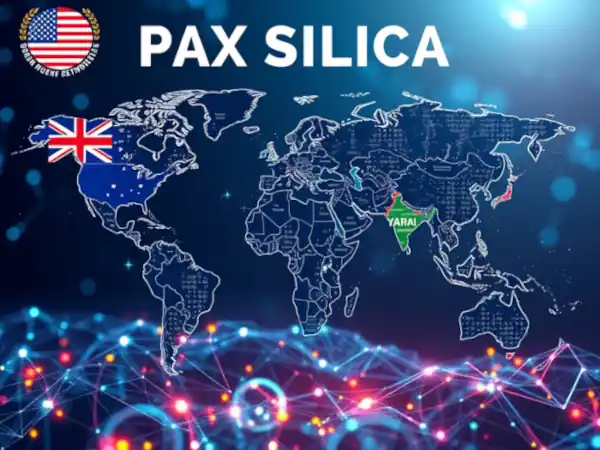
The global AI ecosystem has transformed quickly since the early 2010s, with China, Russia, and the United States shaping distinct strategic models, now increasingly discussed under the emerging concept of Pax Silica—a proposed era in which computational power, not traditional geopolitics, defines global influence. From 2012–2016, the United States strengthened dominance through breakthroughs in deep learning and rapid scaling by major private-sector labs. In 2017, AI was designated a national priority, and by 2023–2024, foundation models reshaped economic planning, cybersecurity, and defense modernization. China accelerated after its 2017 New Generation AI Development Plan, targeting global leadership by 2030. Since 2020, China expanded national compute clusters, introduced strict algorithm regulations, and nurtured domestic model ecosystems. By 2023–2024, Chinese firms released advanced LLMs backed by industrial policy and a push for semiconductor self-reliance. Russia’s path, defined by security needs, intensified after its 2019 National AI Strategy. Since 2022, sanctions limited hardware imports, forcing investment in local chips, defense-oriented automation, and applied AI for aerospace, energy, and cyber operations. By 2025, the three powers illustrate Pax Silica’s logic: U.S. innovation via private scale, China through state-directed integration, and Russia through strategic, security-driven deployment.