

Issued: December 9, 1991
Tibet Autonomous Region Temporary Measures on the Management of Religious Affairs
(Adopted by the Standing Committee of the Tibet Autonomous Region People’s Government on December 9, 1991, and promulgated by the Tibet Autonomous Region People’s Government on December 20, 1991)
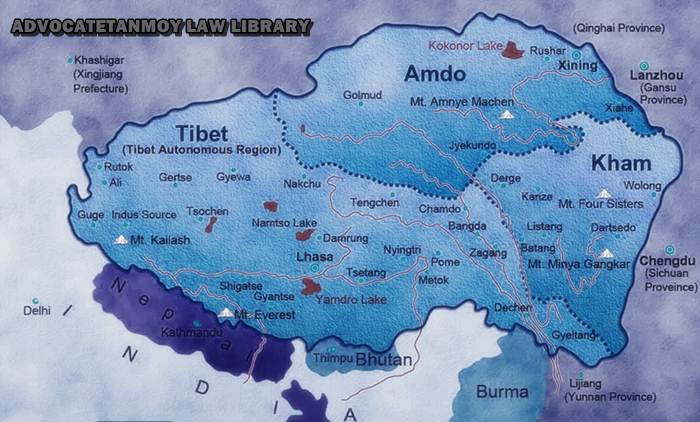
Tibet is divided under Chinese rule into the following administrative units: a) Tibet Autonomous Region, b) Qinghai Province, c) Tianzu Tibetan Autonomous County and Gannan Tibetan Autonomous Prefecture in Gansu Province, d) Aba Tibetan-Qiang Autonomous Prefecture, Ganzi Tibetan Autonomous Prefecture and Mili Tibetan Autonomous County in Sichuan Province, e) Dechen Tibetan Autonomous Prefecture in Yunnan Province.
These temporary measures are specially formulated in accordance with the Constitution, laws, regulations, and relevant policies, and by integrating our region’s actual management of religious affairs, for the purposes of ensuring citizens’ freedom of religious belief; safeguarding the lawful rights and interests of religious organizations and venues for religious activities, safeguarding the unification of the motherland, the unity of ethnic minorities, and social stability; and constructing a socialist new Tibet.
Article 1
The government respects and protects citizens’ freedom of religious belief. All religions, religious sects, religious organizations, and venues for religious activities are equal. Religious believers and non-religious believers, and the masses who believe in different religions and different religious sects shall respect each other, mutually unite, and jointly devote themselves to social stability and the construction of spiritual and material civilizations in our region.
Article 2
All the activities of every religious organization and venue for religious activities must be conducted within the scope of the state’s Constitution, laws, regulations, and policies. The government protects normal religious and religious affairs activities carried out by religious personnel.
Article 3
The government protects the lawful rights and interests of religious organizations and venues for religious activities. All religious organizations, venues for religious activities, and individuals shall accept the leadership of the Party and the government, and support the socialist system. Religion must not interfere with the administration of the state, the judiciary, school education, or social public education, and must not reestablish previously abolished feudal privileges and oppressive exploitative systems, as well as subordinate relationships between temples.
Article 4
On the whole, all venues for religious activities of every religion and religious sect that have been restored and opened throughout the region have basically satisfied the necessities of the normal religious activities of the masses who believe in religion. Henceforth, new venues for religious activities must not be restored and opened without obtaining approval from the autonomous region people’s government.
Within the borders of the autonomous region, restored and opened venues for religious activities shall register in accordance with the measures of State Religious Affairs Bureau Circular No. 110 (1991) and establish various records. Registered venues for religious activities receive the protection of the law.
Article 5
A venue for religious activities is managed by the government where it is located, and this government must earnestly formulate concrete administrative management measures for the venue for religious activities under its management, and pragmatically supervise well.
Article 6
Outside of ordinary religious activities, every venue for religious activities must report to the local government and relevant departments when holding any large religious activity or large-scale religious festival, and coordinate with the relevant departments to preserve order during the activity.
Article 7
Determinations are made of the size of the roster and [specific] Buddhist monk and nun personnel at venues for religious activities. Every prefecture (city) shall, on the basis of thorough investigation and research and in consultation with the local Buddhist Association, determine numbers for the size of the roster, and execute it to the letter after undergoing examination and approval.
1. For a roster sized at more than 100 people (including 100), the prefecture (city) puts forth an opinion, [and the matter] undergoes examination and verification by the region’s ethnic and religious affairs commission, and is reported to the autonomous region’s people’s government for examination and approval.
2. For a roster sized at more than 50 people (including 50), the prefecture (city) puts forth an opinion, and [the matter is] reported to the region’s ethnic and religious affairs commission for examination and approval.
3. For a roster sized at more than 5 people and under 50 people, the prefecture’s (city) ethnic and religious affairs bureau puts forward an opinion, and [the matter is] reported to the provincial administrative office and municipal government for examination and approval.
4. For a roster sized at 1 to 5 people at ordinary lhakhang [temples] and ritro [mountain hermitages], [the matter is] examined and approved by the county people’s government.
Article 8
When temples absorb Buddhist monks and nuns within the scope of their roster, examination and registration must be carried out for the purpose of ensuring quality.
1. Those who voluntarily request to enter a temple as a Buddhist monk or nun must be patriotic and law-abiding, pious believers, and abide by Buddhist canons and every aspect of the temple system. The individual [who requests to enter a temple] first puts forth a written application, and also seeks instructors and scripture teachers as guarantors.
2. After receiving the application, the Democratic Management Committee (group) must strictly examine [such matters as] the applicant’s goals and reasons for entering the temple and whether his or her behavior is upright.
3. The instructor and scripture teacher acting as guarantors must be responsible for the guarantee’s moral education and the teaching of Buddhist and temple canons, and ensure that she or he observes discipline and law, and is patriotic and devout.
4. After the above conditions exist, those who have spent more than a year being examined and meeting qualifications fill out a registration form in triplicate, and the instructor and scripture teacher acting as guarantors sign and seal it. The Democratic Management Committee (group) reports to the responsible religious affairs department for examination and approval within its quota for designating a roster, issues a unified certificate or credentials, and places [the applicant] into the temple registry. Only then can she or he become formal Buddhist monk and nun personnel of the temple.
5. A temple’s Buddhist monk and nun personnel enjoy all the rights of a citizen, and must fulfill all the duties of a citizen.
6. Buddhist monk and nun personnel who violate Buddhist or temple rules shall, according to the degree of seriousness of the circumstances, respectively be given education, warning, or expulsion, or have their certificate or credentials revoked.
7. Tibetan compatriot monks and nuns outside the borders returning to China to reside who request to enter a temple must undertake procedures for residence according to the pertinent regulations for Tibetan compatriots from outside China returning to China to reside, and only then can they undertake the procedures for entering a temple as stipulated.
8. Buddhist monk and nun personnel have the freedom to voluntarily withdraw from their temple. Those who withdraw from their temple must undertake the procedures for leaving a temple and return to their original residence.
Article 9
Concerning the management of interaction between religious personnel from our region and outside provincial areas:
1. All monks and nuns from Tibetan Buddhist temples in outside provincial areas who come to our region to engage in advanced study of scripture must obtain consent from the religious affairs department of the provincial area where the visiting monk or nun resides, in consultation with the religious affairs department of our region, and only then, while bearing proof [of this], can [the person] pursue advanced studies at a designated temple in our region. While engaging in advanced studies, he or she must submit to the arrangements of the temple’s Democratic Management Committee and abide by the regulations of the temple.
2. When religious personnel from outside provincial areas come to our region or our region’s religious personnel go to outside provincial areas to engage in such religious activities as expounding Buddhist sutras, or transmitting doctrine, it is necessary to contact in advance the religious affairs department in the provincial area where they reside, and after both sides consent, only then can proof for travel be provided.
3. Various kinds of Buddhist activities at venues for religious activities must be led by qualified Buddhist monk or nun personnel from the temple. Religious followers from outside provincial areas may go to venues for religious activities to live a religious life [guo zongjiao shenghuo], but if they have not obtained permission from the government at the county level or above, must not assemble a crowd to carry out such activities as expounding the Buddhist sutras or transmitting Buddhist doctrine without authorization.
Article 10
Among Tibetan compatriots from outside China, religious personnel who return to China to visit relatives or for travel may go to the region’s open venues for religious activities to live a religious life, but are forbidden from convening Buddhist monks and nuns and the masses to lead religious activities; are forbidden from performing meeting and sending off or head-touching [blessing] activities; and are forbidden from receiving alms. Venues for religious activities that have not been opened, and have not been approved by the relevant department, must prohibit without exception foreign tour groups, individual visits, pilgrimages, and sightseeing.
Article 11
Venues for religious activities shall gradually walk the path of self-sustainability. They shall, in accordance with their specific conditions, and within their power, engage in such service industries as secondary farming and herding, industry and commerce, and tourism and hospitality; run a number of social welfare services appropriate to the characteristics of a venue for religious activities; increase income and improve livelihoods; and progressively achieve self-sustainability. All levels of government should give preferential policies to various enterprises such as production and service whose goal is self-sustainability, and support and assist them in achieving self-sustainability.
Article 12
Where old, weak, sick, and disabled Buddhist monks and nuns from venues for religious activities of every religious sect have no one to depend on, the government’s Ministry of Civil Affairs shall treat them equally without discrimination under the five welfare guarantees of society.
Article 13
Venues for religious activities approved to be opened, and their Buddhist monks and nuns, may receive voluntary alms and tribute from followers, under the principle of not influencing production or livelihoods. But they are forbidden to go to agricultural and pastoral areas and cities and towns to obtain property and labor in the name of [doing such things as] restoring a temple or casting an image of the Buddha, and are also forbidden to accept contracted land from the masses.
Article 14
All levels of government and residence (village) committees shall earnestly bear responsibility and adopt measures for strengthening the management of Buddhist monks and nuns scattered amidst society.
Article 15
The Buddhist Association is a mass organization of personages from religious circles and religious believers, and a bridge for the Party and government to unite and educate personages from religious circles and the believing masses. Its effectiveness shall be vigorously brought into play under the administrative leadership of the government’s religious affairs department.
Article 16
The Buddhist Association shall carry on the tradition of self-education; take the initiative to organize members and working personnel for regular study of current political affairs; carry out education in such [topics] as patriotism, socialism, ethnic unity, and national laws and regulations, and continuously heighten consciousness on safeguarding unification of the motherland, opposing separatism, being patriotic and abiding by the law, and strengthening ethnic unity.
Article 17
The Buddhist Association shall, according to the tasks stipulated in the constitution of the association, research and formulate a work plan. [The Buddhist Association] shall focus work on guiding and helping the Democratic Management Committee (group) of each venue for religious activities earnestly implement the “Rules for Democratic Management of Tibetan Buddhist Temples” (trial rules); strengthen relations between Buddhist monks and nuns and the believing masses; guide the Buddhist activities of temples; and assist in planning such matters as the livelihoods of Buddhist monks and nuns, production, public order in the temple, and the study of current political affairs. It shall also positively assist the government in doing work pertaining to unity between the believing and non-believing masses.
Article 18
The autonomous region’s ethnic and religious affairs commission shall help support the Chinese Buddhist Association’s Tibet branch earnestly manage the scripture study classes at the Tibetan Institute of Buddhism and each temple, and in a planned manner foster a religious personnel team that has an ardent love of the motherland, accepts party and government leadership, supports the socialist system, safeguards unification of the motherland and ethnic unity, possesses religious knowledge, and can connect with the masses.
Article 19
Our region’s religious organizations shall, on the basis of equality and friendship and independence and autonomy, actively take the initiative to develop religion-related foreign exchanges. During these exchanges, they shall not accept the domination of foreign forces.
Article 20
When our region’s religious organizations invite foreign religious organizations, or receive an invitation to make a visit or to participate in such exchange activities as academic exchanges, it is necessary to obtain approval from the autonomous region’s people’s government or the State Council’s Religious Affairs Bureau. Major activities involving foreign affairs shall be reported to the State Council for examination and approval.
Article 21
In the process of developing foreign exchange and cooperation, when the relevant department signs the relevant items involving foreign religious organizations and their subsidiary organizations or people, terms with religious content such as related to proselytizing, establishing religious organizations, and constructing temples are forbidden.
Article 22
When non-religious organizations invite or receive various organizations with a religious background or an influential religious personage to visit, travel, etc., they shall promptly inform the autonomous region’s ethnic and religious affairs commission of the situation.
Article 23
Our region’s religious organizations and venues for religious activities shall resolutely resist all sorts of illegal activities carried out by foreign forces utilizing such methods as constructing temples, leading religious activities, or confirming soul boys [children who are the reincarnations of lamas] in an attempt to control our region’s temples.
Article 24
All religious organizations, venues for religious activities, and persons are forbidden from accepting foreign funds with conditions attached such as subsidies and those for proselytizing. Religious organizations, venues for religious activities, and individuals receiving large donations from foreign religious organizations and believers shall obtain approval from the autonomous region’s people’s government or the State Council’s Religious Affairs Bureau.
Article 25
Resolutely attack such criminal activities as using religion to incite a disturbance, manufacturing chaos, carrying out the separation of the motherland, destroying ethnic unity, and throwing public order into chaos. Where a small number of Buddhist monks and nuns from specific venues for religious activities repeatedly participate in creating a disturbance, those who carry out separatist sabotage activities shall be handled by looking at the situation, distinguishing circumstances, and separately adopting such measures as education or rectification.
Article 26
As for religious books and periodicals, and religious audio and video appliances with reactionary content such as [that which] incites “Tibetan Independence,” [the matter] shall be strictly examined and handled in accordance with the measures stipulated in Document No. 35 (1990) issued by the six units including the autonomous region ethnic and religious affairs commission.
Article 27
When publishing works touching upon religion, the propaganda and publishing departments shall do a rigorous final check, and not permit violations of party and state religious policy, or harm to the religious sentiments of the believing masses, nor permit utilizing religion to distort history, or harm national unification and ethnic unity.
Article 28
According to the “decentralize custody, active use” principle, every venue for religious activities shall strengthen its management of religious relics, and emphasize guarding against theft and fire. Religious relics must not be presented as gifts, be transferred, or be offered for sale as one pleases. All levels of the cultural relics department shall help venues for religious activities protect religious relics, and every venue for religious activities shall also assist all levels of the cultural relics department with their work on the use of religious relics, letting religious relics play their due role in safeguarding unification of the motherland, publicizing Tibet, and expanding influence abroad.
Article 29
The right to interpret these measures rests with the autonomous region’s ethnic and religious affairs commission.
Article 30
These measures enter into force on the day that they are promulgated.
西藏自治区宗教事务管理暂行办法
西藏自治区宗教事务管理暂行办法
(1991年12月9日西藏自治区人民政府常务会议通过,1991年12月20日西藏自治区人民政府颁布)
为保障公民宗教信仰自由,维护宗教团体、宗教活动场所的合法权益,维护祖国统一、民族团结和社会安定,建设社会主义新西藏,依据宪法、法律、法规和有关政策,结合我区实际对宗教事务进行管理,特制定本暂行办法。
第一条 政府尊重和保护公民的宗教信仰自由,各种宗教、各教派、各宗教团体、各宗教活动场所一律平等;信教和不信教、信仰不同宗教和各教派的群众都要彼此尊重,相互团结,共同致力于我区的社会稳定和精神文明、物质文明建设。
第二条 各宗教团体、宗教活动场所的一切活动必须在国家宪法、法律、法规和政策范围内进行。政府保护宗教职业人员履行正常的宗教和教务活动。
第三条 政府保护宗教团体、宗教活动场所的合法权益。任何宗教团体、宗教活动场所及个人都要接受党和政府的领导,拥护社会主义制度。宗教不得干涉国家行政、司法、学校教育和社会公共教育,不得恢复已被废除的封建特权和压迫剥削制度及寺庙之间的隶属关系。
第四条 全区维修开放的各宗教、各教派的宗教活动场所,在整体上已基本满足了信教群众正常宗教活动的需要,今后未经自治区人民政府批准,不得维修开放新的宗教活动场所。
自治区境内已维修开放的宗教活动场所,要按照国宗发[1991]110号通知办法进行登记,建立各类档案。经登记的宗教活动场所受法律保护。
第五条 宗教活动场所由所在地政府管理,所在地政府对自己负责管理的宗教活动场所,必须认真制定具体行政管理措施,切实管好。
第六条 各宗教活动场所除一般宗教活动外,凡举行重大宗教活动和大型宗教节日,须向当地政府和有关部门报告,并配合有关部门维持好活动期间的秩序。
第七条 对宗教活动场所的僧尼实行定编定员。各地(市)要在深入调查研究的基础上与当地佛教协会协商,提出定编数,报经审批后严格执行。
1、对定编在100人以上(含100人)的,由地(市)提出意见,经区民宗委审核,报自治区人民政府审批。
2、对定编在50人以上(含50人)的,由地(市)提出意见,报区民宗委审批。
3、对定编在5人以上、50人以下的,由地(市)民宗局提出意见,报行署、市府审批。
4、对一般拉康、日追定编一至五人,由县人民政府审批。
第八条 寺庙在定编范围内吸收僧尼时,为了保证质量,必须进行考核登记:
1、自愿要求入寺为僧尼的,必须爱国守法、虔诚信教、遵守教规及寺庙各项制度。先由本人提出书面申请,并自找担保教师和经师。
2、民管会(组)接到申请后,必须严格核查申请人入寺的目的和原因,品行是否端正等。
3、担保教师和经师必须负责所担保者的品德教育,教规寺规的教习,确保其遵纪守法,爱国爱教。
4、上述条件具备后,经一年以上时间核查合格者,本人填写登记表格一式三份,担保教师和经师签字盖章,由民管会(组)在定编限额内上报主管宗教部门审批,发给统一的度碟或证书,入寺庙户籍,方可成为本寺正式定员僧尼。
5、寺庙定员僧尼享有公民的一切权利,必须履行公民的一切义务。
6、定员僧尼违犯教规寺规者,要根据情节轻重,分别给予教育、警告直到除名,收回证书或度蝶。
7、境外回国定居的藏胞僧尼要求入寺者,须按照藏胞回国定居的有关规定办理定居手续,方可按规定办理入寺手续。
8、定员僧尼有自愿退寺自由。退寺者必须办离寺手续,返回原籍。
第九条 关于我区与外省区之间宗教职业人员往来活动的管理:
1、凡来我区寺庙进修学经的外省区藏传佛教的寺庙僧尼,必须经所在省区宗教部门商得我区宗教部门同意后,方可持证明前来我区指定的寺庙进修深造。在进修期间,必须服从该寺民管会的安排,遵守该寺的规章制度。
2、省区的宗教职业人员来我区或我区宗教职业人员去外省区进行讲经、传法等宗教活动,须经所在省区宗教部门事前联系,经双方同意后方可出具证明来去。
3、宗教活动场所的各种佛事活动必须由寺庙具备资格的定员僧尼主持,外省区的教徒可以到宗教活动场所过宗教生活,但未经县以上政府允许,不得擅自聚众进行讲经、传法等活动。
第十条 境外藏胞中回国探亲、旅游的宗教职业人员可以到区内开放的宗教活动场所过宗教生活,但不准召集僧尼和群众主持宗教活动,不准搞迎送、摸顶活动,不准收受布施。未开放的宗教活动场所未经有关部门批准,一律禁止境外旅游团体、个人参观、朝拜、观光。
第十一条 宗教活动场所要逐步走以寺养寺的道路。要因地因寺制宜,从事一些力所能及的农牧副业、工商业以及旅游接待等服务性行业,举办一些适合宗 教场所特点的社会公益事业,增加收入,改善生活,逐步实现自养。各级政府对属于以自养为目的的各种生产、服务等事业,应给予优惠政策,扶持、帮助他们搞好 自养。
第十二条 对各教派宗教活动场所无依无靠的老弱病残僧尼,政府民政部门要同对待社会上的五保户一视同仁。
第十三条 经批准开放的宗教活动场所及其僧尼,可以接受信徒在不影响其生产、生活原则下的自愿布施和奉献。但不准以维修寺庙,塑造佛像等名义到农牧区和城镇向群众摊派财物和劳力,更不准接受群众承包的土地。
第十四条 对流散在社会上的僧尼,各级政府和居民(村民)委员会要切实负起责任,采取措施加强管理。
第十五条 佛教协会是宗教界人士和宗教信徒的群众性团体,是党和政府团结、教育宗教界人士和信教群众的桥梁。要在政府宗教部门的行政领导下,积极发挥作用。
第十六条 佛教协会要发扬自我教育的传统,自觉地组织成员及工作人员定期学习时事政策,进行爱国主义、社会主义、民族团结和国家法律、法规等教育,不断提高维护祖国统一、反对分裂、爱国守法和加强民族团结的自觉性。
第十七条 佛教协会要按照会章所规定的任务,研究和制定工作计划。要把工作重点放在指导、帮助各宗教活动场所的民管会(组)认真贯彻执行《西藏佛 教寺庙民主管理章程》(试行),加强同僧尼和信教群众的联系,指导寺庙的佛事活动,协助安排好僧尼的生活、生产、寺庙治安及政治时事学习等事宜。积极协助 政府作好信教群众和不信教群众之间的团结工作。
第十八条 自治区民宗委要帮助支持中国佛教协会西藏分会切实办好西藏佛学院和各寺庙的学经班,有计划地培养一支热爱祖国,接受党和政府的领导,拥护社会主义制度,维护祖国统一和民族团结,有宗教学识,能联系群众的宗教职业人员队伍。
第十九条 我区宗教团体要在平等友好、独立自主的基础上,积极主动地开展宗教方面的对外交往,在交往中不受国外势力的支配。
第二十条 我区宗教团体邀请国外宗教团体或应邀出访,进行学术交流等交往活动,须经自治区人民政府或国务院宗教局批准,重大涉外活动要报经国务院审批。
第二十一条 有关部门在开展对外交流与合作中,涉及国外宗教组织及其附属机构或个人,签定有关项目时,不得带有传教、设立宗教机构、兴建寺庙等宗教内容的条件。
第二十二条 非宗教团体邀请或接待有宗教背景的各种团体及有重要影响的宗教界人士来访、旅游等,要及时向自治区民宗委通报情况。
第二十三条 我区宗教团体、宗教活动场所,要坚决抵制国外势力利用兴建寺庙、主持宗教活动、认定活佛转世灵童等手段,企图控制我区寺庙所进行的各种违法活动。
第二十四条 任何宗教团体、宗教活动场所和个人都不准接受国外带有附加条件的宗教津贴和传教等经费。宗教团体、宗教活动场所和个人接收国外宗教组织和教徒的大宗捐赠,要经自治区人民政府或国务院宗教局批准。
第二十五条 坚决打击利用宗教煽动闹事、制造骚乱、进行分裂祖国、破坏民族团结、扰乱社会治安等犯罪活动;对个别宗教活动场所中一再参与骚乱闹事的少数僧尼,进行分裂破坏活动的,要视情节,区别情况,分别采取教育、整顿等措施进行处理。
第二十六条 对有煽动“西藏独立”等反动内容的宗教书刊,宗教音像制品,要严格按自治区民宗委等六个单位下发的【1990】35号文件规定的办法检查处理。
第二十七条 宣传、出版部门在刊登出版涉及宗教的作品时,要严格把关,既不允许违背党和国家的宗教政策,伤害信教群众的宗教感情,也不允许利用宗教歪曲历史,损害国家统一和民族团结。
第二十八条 根据“分散保管,积极利用”的原则,各宗教活动场所要加强对宗教文物的管理,重点搞好防盗、防火。宗教文物不得随意赠送、转让和出 售。各级文物部门要帮助宗教活动场所保护好文物,各宗教活动场所也要协助各级文物部门做好宗教文物的利用工作,使宗教文物在维护祖国统一,宣传西藏,扩大 对外影响中发挥应有的作用。
第二十九条 本办法的解释权在自治区民宗委。
第三十条 本办法制公布之日起执行。
Issuer: Tibet Autonomous Region People’s Government
More Stories
National Home of the Jewish People: Legal Basis of Israel, Immigration, and Nationality Law
25 Nations Halt Packages to US Amid Trump’s Tariff Chaos
Trump’s Executive Order to increase domestic timber production