Skip to content

ADVOCATETANMOY LAW LIBRARY

Research & Library Database

Primary Menu
  • News
  • Opinion
  • Countries198
    • National Constitutions: History, Purpose, and Key Aspects
  • Judgment
  • Book
  • Legal Brief
    • Legal Eagal
  • LearnToday
  • HLJ
    • Supreme Court Case Notes
    • Daily Digest
  • Sarvarthapedia
    • Sarvarthapedia (Core Areas)
    • Systemic-and-systematic
    • Volume One
05/04/2026
  • Law

Whether owner of vehicle would get benefit of insurance if meet with accidental death while driving illegally

It is an admitted position that the deceased was the owner-cum-driver of the vehicle in question. The accident had occurred due to the rash and negligent driving of the vehicle by the deceased. No other vehicle was involved in the accident. The deceased himself was responsible for the accident. The deceased being the owner of the offending vehicle was not a third party within the meaning of the Act. The deceased was the victim of his own action of rash and negligent driving. A Claimant, in our view, cannot maintain a claim on the basis of his own fault or negligence and argue that even when he himself may have caused the accident on account of his own rash and negligent driving, he can nevertheless make the insurance company to pay for the same. Therefore, the respondents being the LRs of the deceased could not have maintained the claim petition filed under Section 166 of the Motor Vehicles Act.
advtanmoy 31/08/2018 2 minutes read

© Advocatetanmoy Law Library

  • Share on WhatsApp (Opens in new window) WhatsApp
  • Share on X (Opens in new window) X
  • Share on Facebook (Opens in new window) Facebook
  • Share on Telegram (Opens in new window) Telegram
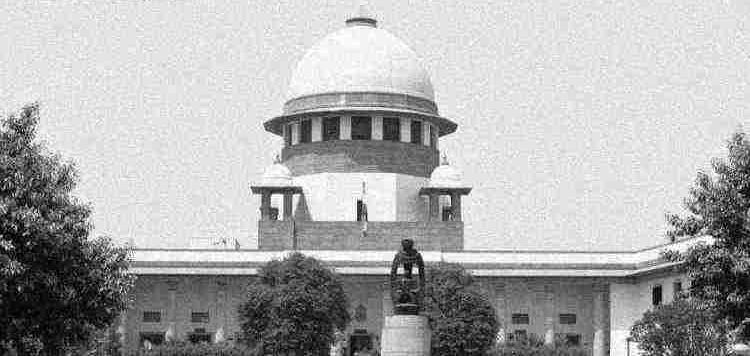
Supreme court of india

Home » Law Library Updates » Sarvarthapedia » Law » Whether owner of vehicle would get benefit of insurance if meet with accidental death while driving illegally

Supreme Court in Oriental Insurance Co. Ltd. v. Jhuma Saha (Smt) and Ors. (2007) 9 SCC 263, was considering a similar case where the owner himself was driving the vehicle which due to his negligence dashed with a tree on the roadside as a result of which he died. The Court held that the claim petition filed by his LRs was not maintainable. It was held thus:-

“10. The deceased was the owner of the vehicle. For the reasons stated in the claim petition or otherwise, he himself was to be blamed for the accident. The accident did not involve motor vehicle other than the one which he was driving. The question which arises for consideration is that the deceased himself being negligent, the claim petition under Section 166 of the Motor Vehicles Act, 1988 would be maintainable.

11. Liability of the insurer Company is to the extent of indemnification of the insured against the respondent or an injured person, a third person or in respect of damages of property. Thus, if the insured cannot be fastened with any liability under the provisions of the Motor Vehicles Act, the question of the insurer being liable to indemnify the insured, therefore, does not arise”.

Read Next

  •  Judicial office is essentially a public trust: Supreme Court
  • Disclosure of Personal Information under the Right to Information Act, 2005
  • Supreme Court Daily Digest (26th Jan 2026)

It is an admitted position that the deceased was the owner-cum-driver of the vehicle in question. The accident had occurred due to the rash and negligent driving of the vehicle by the deceased. No other vehicle was involved in the accident. The deceased himself was responsible for the accident. The deceased being the owner of the offending vehicle was not a third party within the meaning of the Act. The deceased was the victim of his own action of rash and negligent driving. A Claimant, in our view, cannot maintain a claim on the basis of his own fault or negligence and argue that even when he himself may have caused the accident on account of his own rash and negligent driving, he can nevertheless make the insurance company to pay for the same. Therefore, the respondents being the LRs of the deceased could not have maintained the claim petition filed under Section 166 of the Motor Vehicles Act. [NATIONAL INSURANCE CO. LTD. …..  VERSUS ASHALATA BHOWMIK AND ORS. SC CIVIL APPEAL NO. 9100 OF 2018]
 

Tags: Motor Accident Claim

Post navigation

Previous: 33% to 45% of fake lawyers are in Indian Courts: Law Commission
Next: What is the meaning of Scheduled Castes
Arrest
Sarvarthapedia

Latin Maxims in Criminal Law: Meaning, Usage, and Courtroom Application

Sarvarthapedia
Sarvarthapedia

Research Methodology and Investigation: Concepts, Frameworks, and Emerging Trends

Rule of Law vs Rule by Law and Rule for Law: History, Meaning, and Global Evolution

IPS Cadre Strength 2025: State-wise Authorised Strength

Uric Acid: From 18th Century Discovery to Modern Medical Science

Christian Approaches to Interfaith Dialogue: Orthodox, Catholic, Protestant, and Pentecostal Views

Origin of Central Banking in India: From Hastings to RBI and the History of Preparatory Years (1773–1934)

Howrah District Environment Plan: Waste Management, Water Quality & Wetland Conservation

Bharatiya Nyaya Sanhita 2023: Sections (1-358), Punishments, and Legal Framework

Bengali Food Culture: History, Traditions, and Class Influences

West Bengal Court-Fees Act, 1970: Fees, Schedules, and Procedures

WB Land Reforms Tribunal Act 1997: History, Features, Provisions, Structure, Powers and Functions

Civil Procedure Law of the Democratic People’s Republic of Korea (1976)

Knowledge Management in the Modern Era: From History to Digital Transformation

  • Sarvarthapedia

  • Delhi Law Digest

  • Howrah Law Journal

  • Amit Arya vs Kamlesh Kumari: Doctrine of merger
  • David Vs. Kuruppampady: SLP against rejecting review by HC (2020)
  • Nazim & Ors. v. State of Uttarakhand (2025 INSC 1184)
  • Geeta v. Ajay: Expense for daughter`s marriage allowed in favour of the wife
  • Ram v. Sukhram: Tribal women’s right in ancestral property [2025] 8 SCR 272
  • Naresh vs Aarti: Cheque Bouncing Complaint Filed by POA (02/01/2025)
  • Bharatiya Nagarik Suraksha Sanhita 2023 (BNSS)
  • Bharatiya Sakshya Adhiniyam 2023 (BSA): Indian Rules for Evidence
  • Bharatiya Nyaya Sanhita (BNS) 2023
  • The Code of Civil Procedure (CPC)
  • Supreme Court Daily Digest
  • U.S. Supreme Court Orders
  • U.k. Supreme Court Orders
Sarvarthapedia, Law and Legal Materials

Rule of Law vs Rule by Law and Rule for Law: History, Meaning, and Global Evolution

Indian Government

IPS Cadre Strength 2025: State-wise Authorised Strength

Sarvarthapedia

Uric Acid: From 18th Century Discovery to Modern Medical Science

Christian Education

Christian Approaches to Interfaith Dialogue: Orthodox, Catholic, Protestant, and Pentecostal Views

2026 © Advocatetanmoy Law Library

  • About
  • Global Index
  • Judicial Examinations
  • Indian Statutes
  • Glossary
  • Legal Eagle
  • Subject Guide
  • Journal
  • SCCN
  • Constitutions
  • Legal Brief (SC)
  • MCQs (Indian Laws)
  • Sarvarthapedia (Articles)
  • Contact Us
  • Privacy Policy
  • FAQs
  • Library Updates