Skip to content

ADVOCATETANMOY LAW LIBRARY

Research & Library Database

Primary Menu
  • News
  • Opinion
  • Countries198
    • National Constitutions: History, Purpose, and Key Aspects
  • Judgment
  • Book
  • Legal Brief
    • Legal Eagal
  • LearnToday
  • HLJ
    • Supreme Court Case Notes
    • Daily Digest
  • Sarvarthapedia
    • Sarvarthapedia (Core Areas)
    • Systemic-and-systematic
    • Volume One
05/04/2026
  • INDIA

What is the meaning of Scheduled Castes

a person who is recognised as a member of Scheduled Castes/Scheduled Tribes in his original State, will be entitled to all the benefits of reservation under the Constitution in that State only and not in other States/Union Territories and not entitled to the benefits of reservation in the migrated State/Union Territory.
advtanmoy 31/08/2018 3 minutes read

© Advocatetanmoy Law Library

  • Share on WhatsApp (Opens in new window) WhatsApp
  • Share on X (Opens in new window) X
  • Share on Facebook (Opens in new window) Facebook
  • Share on Telegram (Opens in new window) Telegram
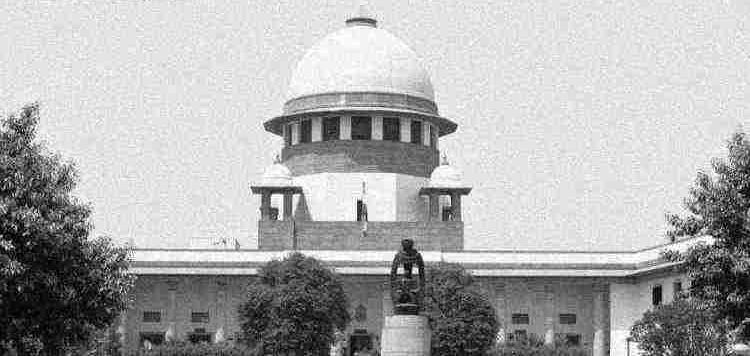
Supreme court of india

Home » Law Library Updates » Sarvarthapedia » National » INDIA » What is the meaning of Scheduled Castes

A person who is recognised as a member of Scheduled Castes/Scheduled Tribes in his original State, will be entitled to all the benefits of reservation under the Constitution in that State only and not in other States/Union Territories and not entitled to the benefits of reservation in the migrated State/Union Territory.

10. The Government of India Act, 1935 (hereinafter referred to as “1935 Act”) (also referred to as “the Constitution Act”) brought into force the expression “Scheduled Castes” for the first time in Indian Constitutional history. Entry 26 Part I of the First Schedule to the 1935 Act stipulates that “the Scheduled Castes mean such castes, races or tribes or parts of or groups within the castes, races or tribes, being castes, races, tribes, parts or groups, which appear to His Majesty in Council to correspond to the classes of persons formerly known as ‘the depressed classes’, as His Majesty in Council may specify”.

11. Thereafter a Gazette Notification was published on 6th June, 1936 promulgating the Government of India (Scheduled Castes) Order, 1936 notifying the list of castes that are to be considered as “the Scheduled Castes” across the territory of India. A look at the Schedule which consisted of nine (09) parts i.e. Madras, Bombay, Bengal, United Provinces, Punjab, Bihar, Central Provinces, Assam, Orissa would indicate that identification of the different castes for inclusion as Scheduled Castes in the Schedule to the 1935 Act was based on an elaborate exercise conducted for each of the Provinces so much so that while some castes have been identified as Scheduled Castes throughout a Province, others have been so identified to limited areas within a province. The post constitutional exercise by the Constitution (Scheduled Castes) Order, 1950 and the Constitution (Scheduled Tribes) Order, 1950,
as originally enacted under Articles 341 and 342 of the Constitution, was basically an exercise in re­casting the Schedule to the 1935 Act. The subsequent amendments to the aforesaid two Orders, from time to time, have been necessitated to bring the position in tune with the amendments to the First Schedule to the Constitution made at different points of time by creation of new States and alterations in the area and boundaries of existing States.

Read Next

  • The Rise and Political Career of Mamata Banerjee: From Street Fighter Didi to Daddy of Bengal Politics
  • Text of India-Canada Joint Leaders’ Statement (March 2026)
  • President Droupadi Murmu`s Address to the Indian Nation (25th Jan 2026)

12. Article 366 of the Constitution which defines expressions appearing in the Constitution specifically defines ‘Scheduled Castes’ [clause (24)] to mean “such castes, races or tribes or parts of or groups within such castes, races or tribes as are deemed under Article 341 to be Scheduled Castes for the purposes of this Constitution”. Similarly, clause (25) of Article 366 defines “Scheduled Tribes” to mean “such tribes or tribal communities or parts of or groups within such tribes or tribal communities as are deemed under Article 342 to be Scheduled Tribes for the purposes of this Constitution”. [ CIVIL APPEAL NO.1085 OF 2013 BIR SINGH VERSUS DELHI JAL BOARD & ORS.  Decided on August 30, 2018]

Tags: Schedule Caste

Post navigation

Previous: Whether owner of vehicle would get benefit of insurance if meet with accidental death while driving illegally
Next: Whether there is any law empowering State or its officials to prohibit or to impose a prior restraint upon press-media
Arrest
Sarvarthapedia

Latin Maxims in Criminal Law: Meaning, Usage, and Courtroom Application

Sarvarthapedia
Sarvarthapedia

Research Methodology and Investigation: Concepts, Frameworks, and Emerging Trends

Rule of Law vs Rule by Law and Rule for Law: History, Meaning, and Global Evolution

IPS Cadre Strength 2025: State-wise Authorised Strength

Uric Acid: From 18th Century Discovery to Modern Medical Science

Christian Approaches to Interfaith Dialogue: Orthodox, Catholic, Protestant, and Pentecostal Views

Origin of Central Banking in India: From Hastings to RBI and the History of Preparatory Years (1773–1934)

Howrah District Environment Plan: Waste Management, Water Quality & Wetland Conservation

Bharatiya Nyaya Sanhita 2023: Sections (1-358), Punishments, and Legal Framework

Bengali Food Culture: History, Traditions, and Class Influences

West Bengal Court-Fees Act, 1970: Fees, Schedules, and Procedures

WB Land Reforms Tribunal Act 1997: History, Features, Provisions, Structure, Powers and Functions

Civil Procedure Law of the Democratic People’s Republic of Korea (1976)

Knowledge Management in the Modern Era: From History to Digital Transformation

  • Sarvarthapedia

  • Delhi Law Digest

  • Howrah Law Journal

  • Amit Arya vs Kamlesh Kumari: Doctrine of merger
  • David Vs. Kuruppampady: SLP against rejecting review by HC (2020)
  • Nazim & Ors. v. State of Uttarakhand (2025 INSC 1184)
  • Geeta v. Ajay: Expense for daughter`s marriage allowed in favour of the wife
  • Ram v. Sukhram: Tribal women’s right in ancestral property [2025] 8 SCR 272
  • Naresh vs Aarti: Cheque Bouncing Complaint Filed by POA (02/01/2025)
  • Bharatiya Nagarik Suraksha Sanhita 2023 (BNSS)
  • Bharatiya Sakshya Adhiniyam 2023 (BSA): Indian Rules for Evidence
  • Bharatiya Nyaya Sanhita (BNS) 2023
  • The Code of Civil Procedure (CPC)
  • Supreme Court Daily Digest
  • U.S. Supreme Court Orders
  • U.k. Supreme Court Orders
Sarvarthapedia, Law and Legal Materials

Rule of Law vs Rule by Law and Rule for Law: History, Meaning, and Global Evolution

Indian Government

IPS Cadre Strength 2025: State-wise Authorised Strength

Sarvarthapedia

Uric Acid: From 18th Century Discovery to Modern Medical Science

Christian Education

Christian Approaches to Interfaith Dialogue: Orthodox, Catholic, Protestant, and Pentecostal Views

2026 © Advocatetanmoy Law Library

  • About
  • Global Index
  • Judicial Examinations
  • Indian Statutes
  • Glossary
  • Legal Eagle
  • Subject Guide
  • Journal
  • SCCN
  • Constitutions
  • Legal Brief (SC)
  • MCQs (Indian Laws)
  • Sarvarthapedia (Articles)
  • Contact Us
  • Privacy Policy
  • FAQs
  • Library Updates