Skip to content

ADVOCATETANMOY LAW LIBRARY

Research & Library Database

Primary Menu
  • News
  • Opinion
  • Countries198
    • National Constitutions: History, Purpose, and Key Aspects
  • Judgment
  • Book
  • Legal Brief
    • Legal Eagal
  • LearnToday
  • HLJ
    • Supreme Court Case Notes
    • Daily Digest
  • Sarvarthapedia
    • Sarvarthapedia (Core Areas)
    • Systemic-and-systematic
    • Volume One
12/04/2026
  • Judicial Dictionary

Difference between Cultural diversity and Ethnic diversity in the Indian context

Advocatetanmoy Law Library provides a comprehensive overview of Indian culture and its history. It includes books, articles, reports, and other resources related to the various aspects of Indian culture, such as art, literature, music, dance, religion, philosophy, and science. It also includes information on the laws, regulations, and policies that govern Indian society. Additionally, it provides insights into the cultural diversity of India, and explores the ways in which different cultures have influenced Indian society over time.
advtanmoy 15/08/2018 3 minutes read

ยฉ Advocatetanmoy Law Library

  • Share on WhatsApp (Opens in new window) WhatsApp
  • Share on X (Opens in new window) X
  • Share on Facebook (Opens in new window) Facebook
  • Share on Telegram (Opens in new window) Telegram
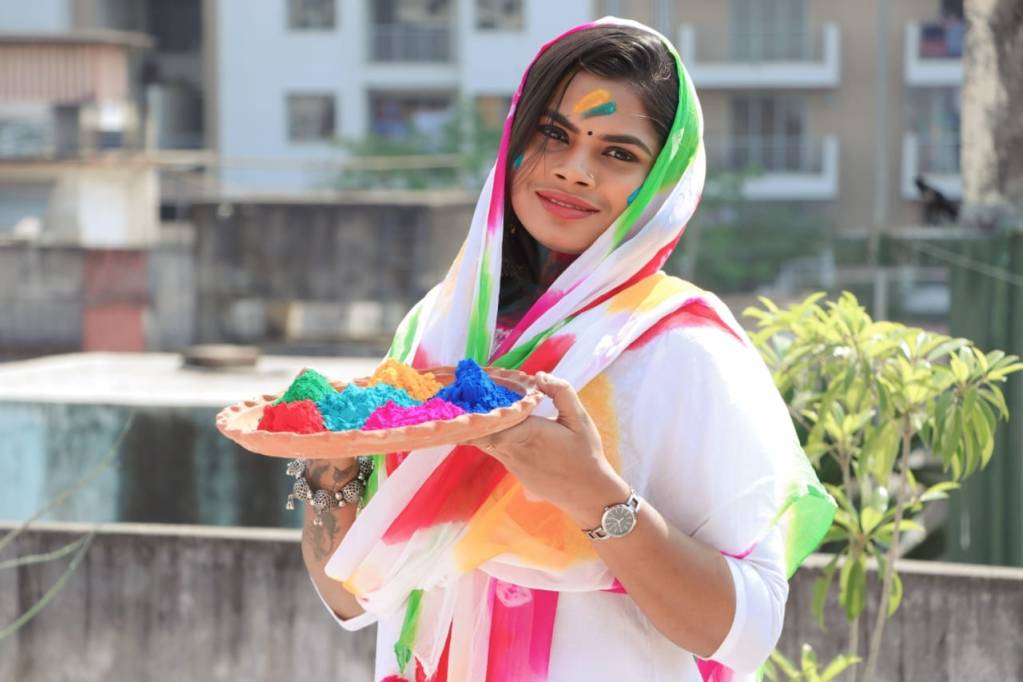
Sudipta Ritabrita HOLI

Home ยป Law Library Updates ยป Law Library ยป Judicial Dictionary ยป Difference between Cultural diversity and Ethnic diversity in the Indian context

ย 

Harvard Institute for Economic Research developed the following map, showing the Ethnic Diversity in green areas with a high rate of diversity. India is not an Ethnically diverse but culturally diverse Nation.

Indian multiculturism, even though so, has a common source of origin, none other than ancient Vedic Civilisation. Bharatiya Sanskriti enjoys a unique homogenous pattern, which is essentially a sense of Cosmic Unity [Brahman] of all living and non-living beings within ‘private’, ‘public’, and universally levels.

Read Next

  • Necessary
  • Abolition
  • Constitutions

This sense touches all spheres of life, whether it is food habit, music-dance, architecture or Religious[Pantha] groups. Indian use ‘ Adhyatma’ย to indicate the inner meditative reality. Adhyatma of the all religious groups such as Saiva, Sakta and Vaishnav are the same in one level. On the other level Marathi, Gujarati, Bengali and Manipuri etc are different in socio-cultural outlook, but even then they have a homogeneous pattern. North Indian Rangoli is uniquely similar with Keralian Rongoli. A Tamil family follows the same marriage ritual as a family live in Ludhiana Area. Marathi Avhang kirtan is obviously similar with Manipuri Vaishnava Kirtan.

Ethnic Diversity

Atman-Private Level

Paramatman-Public Level

Read Next

  • Necessary
  • Abolition
  • Constitutions

Brahman- Universal Level

Pra-Brahman- Unseen Universe

Culture -Sanskriti

Read Next

  • Necessary
  • Abolition
  • Constitutions

Ethnicity- Samaj. Such as the Ethnicity of Hidimba was different from her husband Bhima in Mahabharata. In the same way, Rama was a Nara and Sugriv was a Ba-Nara. Ba Sanskrit root means short stature. compare Ba-man, Ba-suki. Bali means a man with shorter hair and Sugriv means a man with muscular hands. the ethnicity of Rama- Hanumana and Bhima were same. The culture of Hanuman and Rama were different. The Culture of Hanuman was similar with Bali and Sugriva.

Class-Varna-Working class Sudra Varna

Patriarch- Gotra- Such as Kashyap Gotra

Family- Vamsha- Such as Yadu Vamsha

Clan- Kula- Such as Rakshas Kula Ravan was a Brahmin Varna

Jati-Origin-Such as Manushya/Human Jati

Arya – A gentleman

Racial Factor- unknown in the Indian context

Nowย Ethnicity may have a connection with race, but they’re not the same thing.ย  A race is ‘biology’ in the western sense. A particular DNA pattern with the infinite inner combination in connection with Exome. DNA patterns of pan Indians are the same, whether somebody is from the South or North East.

Thus Indians are a Single group and presently one Nation [Political nationality is a new concept] wit multicultural trait.

The Dharma of Rama-Ravana-and Sugriva is same- ‘Dharma dharyate jagata’ย  old Vedic maxim, that the rule of Dharma compelling and inescapable either for Rama or for Ravana. dharma is not Statute or Common Law or observation of aย  Judge. Dharma is not again a Constitution. Dharma is not Ohi/command of Yahe or Allah. Dharma is not concurrence in a council. As per Gopath Brahman Dharma is secret epistemology. Due to Dharma the dynamic society exist. Dharma defines everything, but anything is incompetent to define Dharma. Dharma consumes Manu`s law, Dharma consumes the consciousness of yoga, Dharma consumes before and afterlife circumstances. Dharma consumes Avatars, Dharma consumes scriptures — Dharma consumes psychological behaviours of a particular human being. Dharma is fire/ Agni in Rig Veda, Dharma is Indra / sensual consciousness, dharma is Bayu/ Oxizeneted air, Dharma is Vishnu/ Substance, Dharma is Rudra/state of nonexistence, Dharma is Yama/molecular frequency, dharma is Ishan/ Morality, dharma is Ashinas/ Duality, Dharma is Basu/Container, Dharma is Shiva/Contained.

Indian nationhood[ historical or political] recognise Dharma as common root of all Bhartiya People. Bha-Rata, the practitioner of Dharma.

Rangoli


Tags: Distinction Between Indian culture

Post navigation

Previous: The High Court of Chhattisgarh Rules, 2007
Next: Magistrates are the normal custodians of general administration of criminal justice
Communism
Sarvarthapedia

Manifesto of the Communist Party 1848: History, Context, and Core Concepts

Arrest
Sarvarthapedia

Latin Maxims in Criminal Law: Meaning, Usage, and Courtroom Application

Religion, Faith, and Beliefs: History, Theology, Politics, and Conflict with Scienceย 

Scientific Principles: Theories, Inventors, Patents, Universities, Industrial Growth and Global Contributions

Abolition of Slave Trade Act 1807: Facts, Enforcement, and Historical Context

British Slavery and the Church of England: History, Theology, and the Codrington Estates

United States of America: History, Government, Economy, and Global Power

Biblical Basis for Slavery: Old and New Testament Laws, Narratives, and Interpretations

Rule of Law vs Rule by Law and Rule for Law: History, Meaning, and Global Evolution

IPS Cadre Strength 2025: State-wise Authorised Strength

Uric Acid: From 18th Century Discovery to Modern Medical Science

Christian Approaches to Interfaith Dialogue: Orthodox, Catholic, Protestant, and Pentecostal Views

Origin of Central Banking in India: From Hastings to RBI and the History of Preparatory Years (1773โ€“1934)

Howrah District Environment Plan: Waste Management, Water Quality & Wetland Conservation

  • Sarvarthapedia

  • Delhi Law Digest

  • Howrah Law Journal

  • Amit Aryaย vs Kamlesh Kumari:ย Doctrine of merger
  • David Vs. Kuruppampady: SLP against rejecting review by HC (2020)
  • Nazim & Ors. v. State of Uttarakhand (2025 INSC 1184)
  • Geeta v. Ajay: Expense for daughter`s marriage allowed in favour of the wife
  • Ram v. Sukhram: Tribal women’s right in ancestral property [2025] 8 SCR 272
  • Naresh vs Aarti: Cheque Bouncing Complaint Filed by POA (02/01/2025)
  • Bharatiya Nagarik Suraksha Sanhita 2023 (BNSS)
  • Bharatiya Sakshya Adhiniyam 2023 (BSA): Indian Rules for Evidence
  • Bharatiya Nyaya Sanhita (BNS) 2023
  • The Code of Civil Procedure (CPC)
  • Supreme Court Daily Digest
  • U.S. Supreme Court Orders
  • U.k. Supreme Court Orders
Sarvarthapedia

Religion, Faith, and Beliefs: History, Theology, Politics, and Conflict with Scienceย 

Sarvarthapedia

Scientific Principles: Theories, Inventors, Patents, Universities, Industrial Growth and Global Contributions

United Kingdom, UK

Abolition of Slave Trade Act 1807: Facts, Enforcement, and Historical Context

British Slavery and the Church of England: History, Theology, and the Codrington Estates

British Slavery and the Church of England: History, Theology, and the Codrington Estates

2026 ยฉ Advocatetanmoy Law Library

  • About
  • Global Index
  • Judicial Examinations
  • Indian Statutes
  • Glossary
  • Legal Eagle
  • Subject Guide
  • Journal
  • SCCN
  • Constitutions
  • Legal Brief (SC)
  • MCQs (Indian Laws)
  • Sarvarthapedia (Articles)
  • Contact Us
  • Privacy Policy
  • FAQs
  • Library Updates