Skip to content

ADVOCATETANMOY LAW LIBRARY

Research & Library Database

Primary Menu
  • News
  • Opinion
  • Countries198
    • National Constitutions: History, Purpose, and Key Aspects
  • Judgment
  • Book
  • Legal Brief
    • Legal Eagal
  • LearnToday
  • HLJ
    • Supreme Court Case Notes
    • Daily Digest
  • Sarvarthapedia
    • Sarvarthapedia (Core Areas)
    • Systemic-and-systematic
    • Volume One
11/04/2026
  • Law

Magistrates are the normal custodians of general administration of criminal justice

The basic merit of the administration of criminal justice in the State lies in the face that the person arrested by the police is entitled to come before an independent and impartial Magistrate who is expected to deal with the case, without the Magistrate himself being in any way a partisan or a witness to police activities.
advtanmoy 16/08/2018 3 minutes read

© Advocatetanmoy Law Library

  • Share on WhatsApp (Opens in new window) WhatsApp
  • Share on X (Opens in new window) X
  • Share on Facebook (Opens in new window) Facebook
  • Share on Telegram (Opens in new window) Telegram
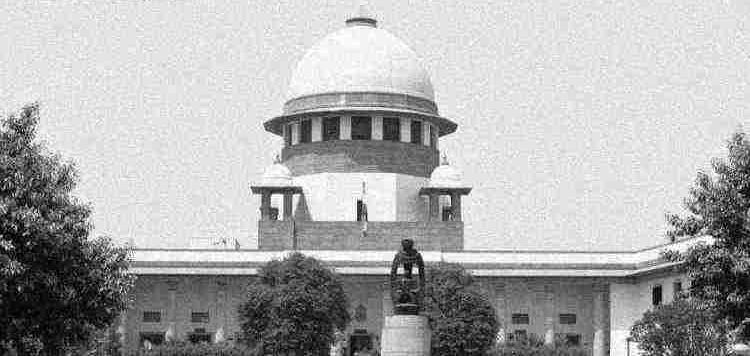
Supreme court of india

Home » Law Library Updates » Sarvarthapedia » Law » Magistrates are the normal custodians of general administration of criminal justice

We can only repeat in this connection the observations of the Privy Council in – ‘AIR 1936 PC 253 (2) ’, in regard to the Magistrates placing themselves in positions where they would have to step into the witness box and depose as ordinary citizens-

“In their Lordships’ view it would be particularly unfortunate if Magistrates were asked at all generally to act rather as police Officers under Section 162 of the Code; and to be at the same time freed, notwithstanding their position as Magistrates, from any obligation to make records under Section 164. In the result they would indeed be relegated to the position of ordinary citizens as witnesses and then would be required to depose to matters transacted by them in their official capacity unregulated by any statutory rules of procedure or conduct whatever……..”

This position was laid down with greater emphasis by Mr. Justice P. B. Mukharji in—‘M. C. Mitra vs. State’, AIR 1951 Cal 524 , where the learned Judge observed –

Read Next

  •  Judicial office is essentially a public trust: Supreme Court
  • Law and Governance: History, Principles, and Institutions
  • Supreme Court Daily Digest (26th Jan 2026)

“Before I conclude I wish to express Court’s great disapprobation of the practice that seems to have become very frequent of sending Magistrates as witnesses of police traps. The Magistrate is made to go under disguise to witnesses the trap laid by the police. In this case it was Presidency Magistrate and in other cases which have come to our notice there have been other Magistrates who became such witnesses.

To make the Magistrate a party or a limb of the police during the police investigation seriously undermines the independence of the Magistrate and perverts their Judicial outlook. The Magistrates are the normal custodians of the general administration of criminal justice and it is they who normally decide and pass judgments on the acts and conduct of the police. It is not enough to say, therefore, that the Magistrate acting as a witness in a particular case does not himself try that case. This practice is all the more indefensible here specially when there is no seperation of the executive from the judiciary.

The basic merit of the administration of criminal justice in the State lies in the face that the person arrested by the police is entitled to come before an independent and impartial Magistrate who is expected to deal with the case, without the Magistrate himself being in any way a partisan or a witness to police activities.

There is another danger and that is the Magistrates are put un the unenviable and embarrassing position, of having to give evidence as a witness and then being disbelieved. That in not the way to secure respect for the Magistracy charged with the administration of justice. In my judgment this is a practice which is unfair to the accused and unfair to the Magistrate.

Read Next

  •  Judicial office is essentially a public trust: Supreme Court
  • Law and Governance: History, Principles, and Institutions
  • Supreme Court Daily Digest (26th Jan 2026)

It is also unfair to the police. Because charged with the high responsibility and duty of performing a great and essential public service of this State the police can not afford to run the risk of opprobrium, even if unfounded, that they have enlisted the Magistrate in their cause. That risk in too great and involves forgetting public respect and confidence…….” [ Rao Shiv Bahadur Singh and another States of VindhYA PRADESH  AIR 1954 SC 322 : (1954) SCR 1098 : (1954) CriLJ SC 910 ]

Tags: INVESTIGATION Magistrates

Post navigation

Previous: Difference between Cultural diversity and Ethnic diversity in the Indian context
Next: What distinguishes a Court from a quasiJudicial tribunal
Communism
Sarvarthapedia

Manifesto of the Communist Party 1848: History, Context, and Core Concepts

Arrest
Sarvarthapedia

Latin Maxims in Criminal Law: Meaning, Usage, and Courtroom Application

Abolition of Slave Trade Act 1807: Facts, Enforcement, and Historical Context

British Slavery and the Church of England: History, Theology, and the Codrington Estates

United States of America: History, Government, Economy, and Global Power

Biblical Basis for Slavery: Old and New Testament Laws, Narratives, and Interpretations

Rule of Law vs Rule by Law and Rule for Law: History, Meaning, and Global Evolution

IPS Cadre Strength 2025: State-wise Authorised Strength

Uric Acid: From 18th Century Discovery to Modern Medical Science

Christian Approaches to Interfaith Dialogue: Orthodox, Catholic, Protestant, and Pentecostal Views

Origin of Central Banking in India: From Hastings to RBI and the History of Preparatory Years (1773–1934)

Howrah District Environment Plan: Waste Management, Water Quality & Wetland Conservation

Bharatiya Nyaya Sanhita 2023: Sections (1-358), Punishments, and Legal Framework

Bengali Food Culture: History, Traditions, and Class Influences

  • Sarvarthapedia

  • Delhi Law Digest

  • Howrah Law Journal

  • Amit Arya vs Kamlesh Kumari: Doctrine of merger
  • David Vs. Kuruppampady: SLP against rejecting review by HC (2020)
  • Nazim & Ors. v. State of Uttarakhand (2025 INSC 1184)
  • Geeta v. Ajay: Expense for daughter`s marriage allowed in favour of the wife
  • Ram v. Sukhram: Tribal women’s right in ancestral property [2025] 8 SCR 272
  • Naresh vs Aarti: Cheque Bouncing Complaint Filed by POA (02/01/2025)
  • Bharatiya Nagarik Suraksha Sanhita 2023 (BNSS)
  • Bharatiya Sakshya Adhiniyam 2023 (BSA): Indian Rules for Evidence
  • Bharatiya Nyaya Sanhita (BNS) 2023
  • The Code of Civil Procedure (CPC)
  • Supreme Court Daily Digest
  • U.S. Supreme Court Orders
  • U.k. Supreme Court Orders
United Kingdom, UK

Abolition of Slave Trade Act 1807: Facts, Enforcement, and Historical Context

British Slavery and the Church of England: History, Theology, and the Codrington Estates

British Slavery and the Church of England: History, Theology, and the Codrington Estates

USA, America

United States of America: History, Government, Economy, and Global Power

Biblical Basis for Slavery, english slave trade

Biblical Basis for Slavery: Old and New Testament Laws, Narratives, and Interpretations

2026 © Advocatetanmoy Law Library

  • About
  • Global Index
  • Judicial Examinations
  • Indian Statutes
  • Glossary
  • Legal Eagle
  • Subject Guide
  • Journal
  • SCCN
  • Constitutions
  • Legal Brief (SC)
  • MCQs (Indian Laws)
  • Sarvarthapedia (Articles)
  • Contact Us
  • Privacy Policy
  • FAQs
  • Library Updates