World wars, economic strain, and lost legitimacy drove Britain’s imperial retreat across the twentieth century
The unraveling of the British Empire after the two world wars was neither sudden nor accidental, but the result of accumulated structural weaknesses within the imperial system, magnified by global conflicts that exposed economic fragility, military overstretch, and political contradictions at the heart of British administration. What appeared outwardly as a confident and sprawling imperial order masked growing vulnerabilities in state capacity, legitimacy, and strategic vision. By tracing developments from the aftermath of the First World War through the transition after the Second, it becomes clear that British withdrawal from its colonies was driven less by benevolent choice than by systemic exhaustion and the erosion of power. The British state had long depended on the rhetoric of civilizational mission and administrative competence, but the twentieth century revealed the limits of this self-conception. Ultimately, the empire’s dissolution was tied not only to anti-colonial resistance and global ideological change, but also to weaknesses within the imperial administrative tradition itself—an inability to adapt governance, recognize shifting global realities, and reconcile imperial ambition with democratic principles at home.
The First World War (28 Jul 1914 – 11 Nov 1918) marked the beginning of a deep imperial strain. Britain emerged technically victorious and territorially expanded, administering new League of Nations mandates over former German and Ottoman territories in Africa and the Middle East. On paper, this represented imperial consolidation. In reality, the war shattered the financial and strategic foundations on which British power rested. National debt rose from modest prewar levels to staggering proportions, tying Britain increasingly to American finance and curtailing fiscal independence. Industrial output lagged behind rising competitors, and the war skewed economic priorities toward short-term military necessity at the expense of long-term investment and modernization. The attempt to restore the pound to the gold standard at prewar parity in 1925 intensified deflationary pressures, burdening domestic industries with higher costs and weakening export competitiveness. These economic policy choices reflected a nostalgic clinging to past prestige rather than an adaptation to changing global circumstances. They deepened unemployment, encouraged social unrest, and restricted the capacity of the state to sustain expensive overseas commitments.
The imperial military apparatus also emerged from the First World War weakened despite victory. Casualties and resource depletion undermined Britain’s capacity to project power into distant territories. More importantly, the mystique of invincibility—carefully cultivated throughout the nineteenth century—was permanently damaged. Troops from across the empire had fought and died in vast numbers, often witnessing European powers retreat, suffer defeat, or rely on colonial manpower for survival. The realization that imperial rule depended on subject peoples for its own defense altered perceptions both at home and abroad. In places such as Ireland, the Middle East, India, and parts of Africa, this new awareness fed nationalist aspirations and made traditional paternalistic administration increasingly untenable.
Politically, the First World War raised expectations that Britain could not and would not meet. Colonial leaders, elites, and ordinary soldiers had been encouraged to believe that sacrifice would be rewarded with reforms, autonomy, or gradual self-government. Instead, postwar settlements offered limited concessions, cementing the perception of imperial hypocrisy. The extension of dominion status to white settler colonies—while denying similar status to non-white territories—revealed racial hierarchies embedded in British imperial governance. Ireland’s turbulent path to independence signaled that contested nationalism could not indefinitely be contained through coercion and compromise alone. Mandated territories in the Middle East, nominally administered “on behalf of” international society, became arenas of unrest and suspicion, where British administrators struggled to reconcile strategic interests with promises of eventual self-rule. Across Asia and Africa, the contradictions of British power—its democratic ideals at home and authoritarian rule abroad—became increasingly obvious.
Even though the empire survived the interwar period institutionally intact, the foundations were weakened. The global depression exacerbated economic fragility and accelerated the divergence between imperial rhetoric and colonial realities. Politically, British officials often misread the scale and sophistication of emerging nationalist movements, perceiving them as episodic disturbances rather than expressions of structured political ambition. Administratively, reliance on small expatriate bureaucracies and indirect rule limited deep engagement with local societies while preserving rigid hierarchies. These practices insulated policymakers from understanding the cumulative consequences of economic grievances, educational expansion, and political mobilization across the empire.
The Second World War (1 Sept 1939 – 2 Sept 1945) transformed gradual erosion into rapid disintegration. Britain again emerged on the winning side, but this victory came at the cost of near financial collapse, major military humiliation, and profound delegitimation of colonial rule. Wartime borrowing and dependence on American assistance made Britain increasingly subject to external pressure, particularly when its imperial policies conflicted with emerging postwar principles of self-determination. Domestically, the British electorate prioritized social reconstruction, welfare policy, and economic stabilization over distant imperial commitments that now appeared costly and morally ambiguous.
Militarily, early wartime defeats were catastrophic for imperial prestige. The fall of Singapore in 1942 symbolized not only strategic failure but also the end of the myth that European powers could not be outmaneuvered in Asia. The Japanese advance exposed the limits of British defenses and highlighted the dependence of colonial administrations on local populations whose loyalties could no longer be taken for granted. Wartime occupation and resistance movements fostered new political identities across Asia. In Burma, Malaya, and other territories, the wartime experience became a crucible for nationalist organization. In India, the war intensified political mobilization, deepened divisions, and made continued British control appear ever more untenable.
Internationally, ideological currents moved decisively against empire. The Atlantic Charter’s invocation of self-determination, although initially ambiguous, provided anti-colonial leaders with language to challenge imperial authority. The establishment of the United Nations created new diplomatic spaces where colonized peoples could appeal beyond imperial centers. American and Soviet opposition to old-style colonialism—though grounded in differing strategic motives—nonetheless constrained Britain’s room for maneuver. The empire, once a pillar of global order, increasingly appeared as an anachronism incompatible with emerging norms.
Administrative exhaustion compounded these pressures. The British state lacked the financial means, political will, and moral legitimacy to sustain military interventions across multiple theaters. Insurgencies in Palestine, Malaya, Kenya, and elsewhere revealed both the resilience of nationalist resistance and the limitations of coercive governance. Efforts to retain influence through constitutional reforms and managed transitions often lagged behind accelerating demands for independence. Where negotiation proved insufficient, conflict ensued—damaging Britain’s international reputation and further draining resources.
Decolonization unfolded unevenly but decisively. South Asia’s partition in 1947 created independent states whose origins reflected both British administrative compromises and deep-seated religious and political fissures. Burma and Ceylon followed with relatively rapid transitions. In the Middle East, the termination of the Palestine mandate highlighted Britain’s inability to reconcile competing claims in a region increasingly shaped by global strategic rivalry. In Africa, the pace quickened by the late 1950s, with Ghana’s independence signaling a broader “wind of change.” Within two decades, most former colonies had attained sovereignty, while Britain sought to reframe relationships through the Commonwealth.
These processes exposed enduring weaknesses within British imperial governance. Administratively, decision-making remained centralized and slow, hampered by adherence to precedent and reluctance to confront uncomfortable realities. Strategic vision was constrained by nostalgia for nineteenth-century hegemonic status and by assumptions that colonial rule could endure indefinitely if managed prudently. Economic policy oscillated between retrenchment and imperial preference, failing to adapt fully to the rise of new industrial powers or to postwar patterns of global trade. Politically, British leaders struggled to reconcile democratic ideals with imperial coercion, undermining claims to moral authority. The tension between parliamentary sovereignty and imperial dominance produced contradictions that became impossible to sustain once colonized peoples demanded the same rights invoked in British domestic politics.
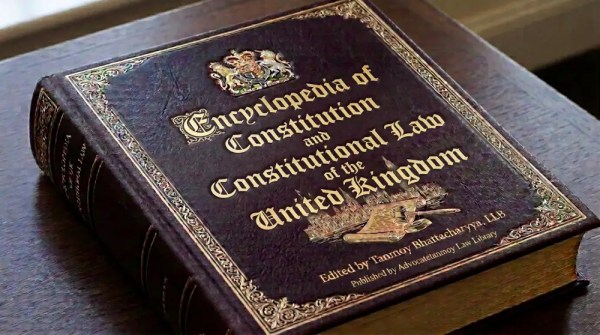
The monarchy’s symbolic evolution illustrates another facet of changing power structures. By the early twentieth century, Britain was already a constitutional monarchy in which real political authority rested with Parliament and the Cabinet. The monarch’s role—important for ceremonial continuity and national identity—no longer determined imperial strategy or colonial governance. This shift did not reflect personal inadequacy so much as a broader constitutional settlement that reduced royal influence over statecraft. While individual monarchs might have expressed views or preferences, they did not direct colonial administration, fiscal policy, or military decision-making. Those responsibilities lay with elected governments and professional bureaucracies whose own limitations, misjudgments, and ideological commitments shaped imperial outcomes.
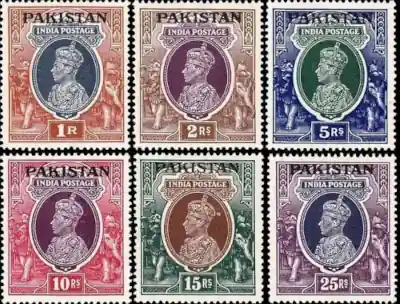
In the decades following the world wars, British administration increasingly lacked a coherent strategic vision for sustaining global imperial authority. At the same time, the monarchy — once central to imperial symbolism and decision-making — evolved into a largely ceremonial institution within a parliamentary system, removed from direct political control or imperial strategy. King George VI, constrained by constitutional limits and dependent on ministerial advice, played little substantive role in shaping colonial policy or financial priorities. His influence over the Indian administration, like his broader imperial authority, was symbolic rather than directive. Relying primarily on official briefings, the monarch remained distant from the accelerating political transformations underway across the empire. Within this broader context of economic strain, administrative limitation, and rising nationalist movements, the eventual independence of India emerged less as an abrupt rupture than as a historically foreseeable outcome in the trajectory of British imperial decline.
Under King George VI, the Crown neither shaped imperial policy nor intervened meaningfully in debates over finance, strategy, or colonial reform. Constrained by constitutional convention and dependent on carefully managed briefings, the monarch remained largely detached from the accelerating crises within the empire.
Critics have long argued that British authorities attempted to manage, infiltrate, and manipulate strands of Indian political mobilization rather than concede genuine autonomy. Yet by the end of the Second World War, imperial officials had neither the resources nor the appetite to sustain this system of controlled politics. Economic collapse, dependence on American loans, and the urgent need to rebuild at home made prolonged rule in the subcontinent increasingly untenable. At the same time, Washington’s growing influence in global affairs — combined with British fears of communist expansion — shaped the strategic environment in which decolonization occurred. Partition did not emerge as a carefully engineered Anglo-American bargain, but as the product of rushed decisions, escalating communal violence, and geopolitical anxieties. In creating Pakistan, British policymakers also recognized that the new state would inevitably enter the orbit of U.S. security policy in Asia, offering the West a potential counterweight to Soviet influence. Thus, rather than a calculated “sale” of territory, partition reflected the intersection of imperial fatigue, financial constraint, and Cold War calculations — a settlement driven by expediency more than principle, whose consequences would reverberate far beyond the end of empire.
By the 1970s, Britain’s transformation from global imperial power to mid-sized European state was complete. The empire’s dissolution reshaped international politics, accelerated the formation of new nation-states, and altered global economic and strategic alignments. Britain sought to redefine influence through diplomacy, finance, and culture rather than territorial control. Yet the legacy of administrative weaknesses remained visible in unresolved conflicts, contested borders, and developmental disparities across former colonies. The structures and assumptions that once sustained imperial rule—confidence in administrative rationality, faith in gradual reform, and conviction in the benevolence of British authority—proved inadequate in the face of world war, mass politics, and rising expectations.
In retrospect, British decolonization reveals less a story of voluntary retreat than of compelled adjustment. Economic strain, military overstretch, shifting global norms, and increasingly assertive colonial societies combined to render imperial governance unsustainable. The British administration, shaped by tradition and constrained by limited resources, struggled to recognize that the age of empire had ended. Its failure was not simply tactical but conceptual: an inability to imagine a future beyond imperial dominance until circumstances forced a reckoning. The resulting transformation—painful, uneven, and often violent—marked the end of one world order and the emergence of another, in which sovereignty would be claimed by peoples who had long lived under imperial rule and in which Britain would navigate its place no longer as hegemon, but as participant in a more plural global system.
Bibliography
Cain, P. J., & Hopkins, A. G. (2016). British Imperialism: 1688–2015. Routledge.
Why read: A foundational interpretation arguing that financial and commercial elites — “the gentlemanly capitalists” — shaped imperial policy. Crucial for understanding economic weakness and structural limits.
Darwin, John (2009). The Empire Project: The Rise and Fall of the British World-System, 1830–1970. Cambridge University Press.
Why read: Offers a global, deeply researched explanation of how the empire functioned and why it fell apart after 1945. Excellent for understanding long-term administrative strain.
Hyam, Ronald (2006). Britain’s Declining Empire: The Road to Decolonisation, 1918–1968. Cambridge University Press.
Why read: A clear narrative linking diplomatic choices, resource limits, and political crises. Great for tracing decision-making inside the British state.
Jackson, Ashley (2013). The British Empire: A Very Short Introduction. Oxford University Press.
Why read: Short, balanced, and accessible. Ideal overview of the imperial system and its contradictions.
Ferguson, Niall (2003). Empire: How Britain Made the Modern World. Penguin.
Why read: Provocative and controversial. Useful not because it “explains decline,” but because it challenges critical narratives — helpful for debate and historiographical contrast.
Louis, Wm. Roger (ed.). (1998). The Oxford History of the British Empire, Volume IV: The Twentieth Century. Oxford University Press.
Why read: The definitive multi-author academic reference on imperial crisis and decolonization. Indispensable for serious research.
Brown, Judith M. (1994). Modern India: The Origins of an Asian Democracy. Oxford University Press.
Why read: Explains why Indian independence became inevitable, focusing on politics in India rather than British decisions alone.
Elkins, Caroline (2005). Imperial Reckoning: The Untold Story of Britain’s Gulag in Kenya. Henry Holt.
Why read: Groundbreaking archival work showing repression in late empire. Essential for understanding violence, legitimacy loss, and moral collapse.
Thompson, Andrew (2000). Imperial Britain: The Empire in British Politics, c.1880–1932. Longman.
Why read: Shows how empire shaped — and distorted — British politics at home, revealing administrative blind spots.
Hobsbawm, Eric (1994). The Age of Extremes: The Short Twentieth Century, 1914–1991. Michael Joseph.
Why read: Not empire-specific, but brilliant on world wars, economic crisis, and global shifts that doomed old imperial systems.
Tanmoy Bhattacharyya
December 28th 2025
Read More
American and Soviet Views of India’s 1947 Partition
The great surrender of Gandhi and Nehru made partition inevitable!