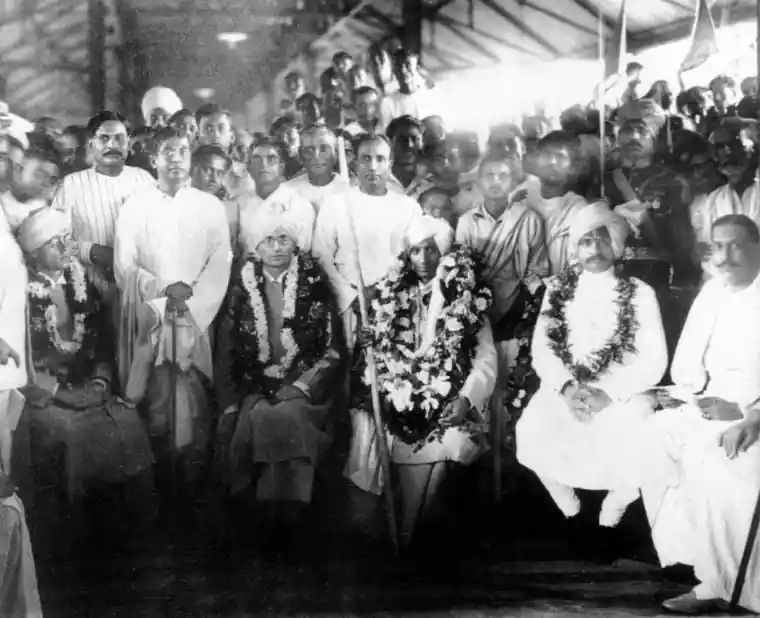
Bon Maharaj, a disciple of Bhaktisiddhanta Saraswati, was first sent as a missionary to the United States of America and Germany to spread Gauḍīya Vaishnavism. His increasing “Americanisation” of bhakti and guru presentation eventually caused him to fall from the grace of Bhaktisiddhanta Saraswati.
From Prabhupāda to Today: How ISKCON’s Sannyasa Institution Evolved Into a Modern Administrative Structure
What the ISKCON Leadership Doesn’t Want Discussed: Sannyasa, Misuse of Power, and Scriptural Conflict
Bhattacharyya Tanmoy
February 15, 2026
The Experience of Gaudiya Vaishnava Sannyasa in ISKCON Mayapur: A Biographical and Institutional Chronicle
The phenomenon of sannyasa within the International Society for Krishna Consciousness (ISKCON) forms one of the most debated strands of modern Gaudiya Vaishnavism. What appears on the surface as a continuation of India’s ancient renunciate tradition is, upon closer examination, a consciously engineered ecclesiastical rank—legally structured, administratively supervised, and culturally adjusted to the needs of a global missionary institution. The story of ISKCON’s sannyasa is therefore inseparable from the institutional machinery of the Governing Body Commission (GBC), the Sannyasa Ministry, and the assessment committees that evolved over decades. It is also intertwined with the biographies of the influential leaders, pioneers, and preachers whose lives became living laboratories of this modern reinvention of the monastic ideal.
Further Comment: The experience of Gaudiya Vaishnava sannyasa in ISKCON Mayapur unfolds as a ritualized ascent within an ecclesiastical hierarchy rather than an immersion into the primordial Vedic renunciate archetype described in the Naradaparivrajaka Upanishad. Despite the rhetoric of transcendence, the actual process and procedure resemble a carefully monitored institutional progression, supervised by bureaucratic mechanisms developed by the Governing Body Commission, which mandates that policies be sculpted, revised, and implemented by a group of senior devotees comprising the Sannyasa Ministry. The GBC assigns these elders to interpret the principles of renunciation in accordance with shifting temporal, geographic, and sociocultural conditions, thus allowing for discretionary elasticity while simultaneously distancing the ISKCON sannyasa system from Vedic orthodoxy. Within this framework, a woman is categorically barred from taking sannyasa because no textual sanction exists for female renunciation in the classical Vedic library, and the tradition considers the modern distribution of female sannyasa in certain religious movements as a deviation born from contemporary experimentation rather than scriptural continuity. Yet men of all castes and nationalities may be accepted, signaling a democratized accessibility that contrasts sharply with its rigid gender boundaries.
To grasp the present, one must first examine the origins.
I. The Architecture of ISKCON Sannyasa: A System Not Rooted in Traditional Vedic Codes
Sannyasa, in the classical Vedic sense, is an ascetic state defined by total relinquishment—of home, identity, possessions, and social roles. Yet ISKCON’s sannyasa diverges significantly from that paradigm.
ISKCON sannyasa is legal-administrative, not shastric-Vedic.
ISKCON openly does not follow the monastic manual known as the Naradaparivrajaka Upanishad, the primary text guiding authentic Vedic renunciation. Instead, ISKCON operationalizes a form of vidhic (विधि) sannyasa—meaning it is institutional, bureaucratic, and designed around organizational service rather than metaphysical severance from society.
The institution itself acknowledges that its renunciate order is not part of the traditional varnashrama system. Rather, it is an ecclesiastical designation akin to a high-ranking clerical post. The sannyasi in ISKCON is not someone who has renounced identity; he is someone who has formally accepted a new identity within the ISKCON hierarchy.
Women are categorically excluded from sannyasa. This stems not only from traditional precedents but from ISKCON’s explicit policies: a woman “is not supposed to take sannyasa,” and organizations that grant sannyasa to women are labeled “modern concoctions.” ISKCON accepts men of all castes and nationalities, but its gender barrier remains absolute.
This adaptation, or departure, becomes clearer when assessed alongside the history of Gaudiya Vaishnava renunciation.
Further Comment: Because ISKCON does not follow the Naradaparivrajaka Upanishad—the principal manual for the Vedic renunciate—the sannyasa bestowed within the movement is neither Vedic nor shastric. Rather, it is vidhic, legalistic, and administrative, resembling an official ranking system internal to the institution rather than a sacrificial obliteration of identity. The current members of the Sannyasa Committee include Prahladananda Swami, Bhakti Gauravani Goswami, Bhaktivaibhava Swami, Bhakti Caitanya Swami, Hrdaya Caitanya Das, and Devakinandan Prabhu, and this standing committee functions as the adjudicating body for assessing aspirants and enforcing standards. A devotee seeking to enter the renounced order must already have demonstrated extensive preaching capacity, particularly the ability to kindle devotional commitment in persons unfamiliar with Krishna consciousness as well as to deepen the conviction of those already practicing it. Success is measured by incremental transformations: attendance at programs, developing attachment to devotee association, establishing regular sadhana, rendering substantial services, and eventually becoming an exemplary role model whose words and actions ignite others’ spiritual progress.
More Clarification: Once an aspirant completes the Application for Sannyasa, the document is evaluated by the Team for the Assessment of Sannyasa Candidates (TASC), whose scrutiny determines whether the aspirant’s name enters the waiting list. Even the application requires a fee—250 dollars—deposited into the account of the ISKCON Sannyasa Ministry, located at a bank in Goverdhan, Mathura. Such details underscore the institutionalization of renunciation within ISKCON, presenting sannyasa as a position akin to a high-ranking office within an ecclesiastical structure rather than a dissolution of identity. Instead of relinquishing all positions, the aspirant accepts a new institutional identity, aligned with the rank-and-file hierarchy of the movement.
The ministry includes multiple subcommittees, one of which is dedicated to assessing candidates, while another, under Krishna Kshetra Swami, has designed training programs to groom aspirants for the role. The GBC Standing Sannyasa Committee lists Guru Prasad Swami, Bhaktivaibhava Swami, Sivarama Swami, Prahladananda Swami as chairman, Bhakti Caitanya Swami, and Hrdaya Caitanya Dasa. The TASC includes Bhakti Prabhava Swami, Hanuman Dasa, Krishnadas Kaviraja Dasa, Prahladananda Swami as facilitator, Srivas Dasa, Srivas Pandit Dasa, Sruti Dharma Dasa, and Vedavyasa Priya Swami. They evaluate an aspirant’s performance, preaching quality, and training participation during each year, submitting their recommendations to the Standing Committee, which then makes final decisions.
II. The Gaudiya Genealogy: From Ekadanda Renunciation to Modern Missionary Asceticism
Gaudiya Vaishnavism’s early saints, including Chaitanya Mahaprabhu, accepted specific types of renunciation that were doctrinally distinct from today’s ISKCON model.
Gaudiya Vaishnavism historically did not create its own sannyasa system; modern Gaudiya missions invented it.
Chaitanya Mahaprabhu accepted ekadanda sannyasa in the Shankara Dashanami order—not in any Gaudiya lineage. He never initiated any disciple into sannyasa. The Six Goswamis of Vrindavan were technically viksu babajis—wandering mendicants, not sannyasis—and lived as sramanas without institutional monastic ranks.
Bhaktisiddhanta Saraswati, the founder of the Gaudiya Math in the early 20th century, took sannyasa by his own arrangement. He adopted orange cloth, a tridanda, and instituted a novel species of Vaishnava sannyasa modeled loosely resembels with Ramakrishna Mission’s clerical order. His system included professional preaching, organizational positions, modern clothing, and the acceptance of funds through “subscriptions” from admirers.
This new order was not a continuation of an ancient lineage; it was a reformation designed to create socially respected clergy who could engage the modern world.
ISKCON’s sannyasa is a direct descendant of this Gaudiya Math invention.
Further Clarification: In contrast to this carefully managed system, Caitanya Mahaprabhu accepted Vedic sannyasa from the Ekadanda Dash-nami Sampradaya of Sankara, and significantly, he never initiated anyone himself. The Six Goswamis were Gaudiya vikshu babajis, technically sramanas, not sannyasis. Bhaktisiddhanta Saraswati—keenly aware of the need for a disciplined missionary force—adopted sannyasa independently, donned an orange cloth with tridanda, and accepted subscription fees from disciples. He created an idiosyncratic form of Gaudiya Vaishnava sannyasa, modeled in some ways on the institutional style of the Ramakrishna Mission, acting as the architect of a novel, mission-oriented renunciate identity. This Gaudiya sannyasa is not part of the traditional varna-ashrama system but rather an innovation built for expansion, visibility, and organizational efficacy. In ISKCON, therefore, sannyasa is not a metaphysical withdrawal from the world but an emblem of service to guru and institution, similar to the way Ramakrishna Mission sannyasis (who eat fish and meat and arrange Jisu puja) are configured as representatives of Ramakrishna and Vivekananda. The renunciate becomes a managerial extension of the movement, supervising property, people, projects, and preaching zones.
III. The Governing Body Commission and the Machinery of Modern Renunciation
The GBC regulates sannyasa through a bureaucratic ministry, committees, and an evaluation pipeline.
The GBC assigns a group of senior devotees to the Sannyasa Ministry, which formulates policies and recommends approvals. The ministry consists of a Standing Committee and multiple sub-committees. Its purpose is less metaphysical and more administrative: it ensures that the candidate is organizationally useful, doctrinally obedient, and socially stable.
Current members (2026 Feb) of the principal Sannyasa Committee include:
- Prahladananda Swami (chairman)
- Bhakti Gauravani Goswami
- Bhaktivaibhava Swami
- Bhakti Caitanya Swami
- Hrdaya Caitanya Das
- Devakinandan Prabhu
Additional roles include training developers such as Krishna Kshetra Swami, who spearheads the creation of a standardized curriculum for future sannyasis.
Alongside them operates the Team for Assessment of Sannyasa Candidates (TASC), composed of senior preachers and administrators. They evaluate:
- preaching success
- training progress
- behavioral conduct
- organizational loyalty
- adherence to GBC expectations
Financial obligations exist as well. The applicant pays a $250 fee to the Sannyasa Ministry using a designated bank account in Mathura. This reinforces the administrative nature of the process.
In other words, ISKCON’s renunciation runs on paperwork, leadership reviews, and structural oversight. It is a credential, not a relinquishment.
Further Explanation: Many exalted figures in the tradition never accepted sannyasa at all—Krishna Dvaipayana Vyasa, Nityananda, Advaita, and Srinivas were married householders. Before departing, however, Rama and Lakshmana accepted Vedic sannyasa and entered jalasamādhi. ISKCON’s modern renunciates, by contrast, include figures such as Bhakti Marga Swami, born in 1952, who joined through college encounters, took initiation in 1975, served as temple president in Toronto, embraced sannyasa in 1984, and became renowned for devotional theater, interactive dance, and international teaching. He embodies the hybrid persona of monk-performer-administrator, which characterizes ISKCON’s brand of sannyasa.
Dayananda Swami joined ISKCON in 1983, serving for over a decade in Manchester, then at Bhaktivedanta Manor, before beginning international preaching. He received sannyasa in 2011 and now oversees preaching in the Caucasus, South Russia, Georgia, and Armenia. TASC continues to refine a dynamic curriculum for future sannyasis; in February 2020 all candidates gathered in Mayapur for seminars on conduct, etiquette, culture, and the envisioned Sannyasa College.
Bhakti Prabhava Swami exemplifies the scholarly branch of ISKCON sannyasa. Born in Belgium in 1960, he joined in 1996, served in Nama Hatta preaching, took initiation from Bhakti Charu Swami, and received sannyasa in 2015. His academic achievements include a PhD in the Study of Religion from the University of Wales and extensive service as secretary to the GBC and European RGB. He has lectured worldwide, managed legal affairs, taught in the Bhaktivedanta College, and currently serves as Temple President of ISKCON Belfast. His global preaching footprint illustrates how ISKCON’s sannyasa functions as an elevated administrative, educational, and pastoral position.
IV. The Process: From Brahmachari to Ecclesiastical Renunciate
A candidate becomes a sannyasi not by isolation and austerity, but by demonstrating administrative competency and preaching effectiveness.
Before applying, a devotee must show he has developed preaching programs that inspire new people and deepen existing devotees’ commitment. The institution defines “successful preaching” as generating visible involvement in temple programs, sadhana, devotional service, and the cultivation of new practitioners.
The path typically unfolds as follows:
- Years of service as a brahmachari
- Recommendation from one’s initiating guru
- Sponsorship by a senior leader
- Submission of application and fee
- TASC assessment and possible inclusion on the waiting list
- Assigned preaching missions outside one’s home zone
- Further training, including participation in sannyasa seminars
- Evaluation by the Standing Committee
- Final decision by the GBC
This is a corporate ladder cloaked in saffron cloth.
More clarification: Every year, candidates on the waiting list receive preaching assignments outside their usual zones to test their adaptability. In April 2016, in Vrindavan, Gopal Krishna Maharaja awarded sannyasa to Ambarish Dasa, whose new name became Bhakti Ratnakar Ambarish Swami. The term Maharaja, traditionally meaning “great king,” ironically migrates into the renunciate vocabulary, showcasing how hierarchical designations acquire spiritualized connotations. In March 2016, in Rajapur, Uttama Sloka Prabhu became Bhakti Rasayana Sagar Swami under the hands of Indradyumna Swami. Yet in the Bhagavad-gita, the sannyasi is a strategist capable of engaging worldly affairs without attachment; by this definition, Arjuna qualifies as a sannyasi through his disciplined execution of duty, even though he ate meat and drank wine as a kshatriya. Vedic sannyasa was never intended for householding warriors, yet ISKCON and Ramakrishna Mission reinterpret renunciation to meet organizational needs, assigning renunciate titles to officers tasked with overseeing properties and congregations.
V. A Historical Reminder: Prabhupada’s Own Disillusionment with Sannyasa
In 1977, Prabhupada strongly criticized the sannyasa order and declared it should stop.
At the Kumbha Mela in January 1977, A.C Bhaktivedanta Prabhupada chastised the assembled sannyasis, declaring:
“This is not sannyasa! You are making a mockery of sannyasa!”
He ordered that no more sannyasis be created and said the hypocrisy “should be stopped.” On January 7, he again stated emphatically that there would be no more renunciates in ISKCON because “bad experience” had shown widespread fall-downs.
Yet in May of that same year he initiated three Bengali devotees into sannyasa—an exception, not a reversal. The GBC continues to present this anomaly as evidence of a change in policy, but the historical record points to Prabhupada’s disappointment with the institution’s ability to maintain renunciates in genuine celibacy and austerity.
After his departure, sannyasa continued—and expanded—through the management system he established.
More clarification: A dramatic moment in ISKCON’s history occurred at the Kumbha Mela in January 1977, when Prabhupada chastised 35–40 sannyasis, declaring, “This is not sannyasa! This is a mockery!” He insisted no more sannyasis be made, expressing deep disappointment in their conduct. A week earlier, he had already declared that the creation of new sannyasis should be discontinued. Yet in May 197,7 he conferred sannyasa upon Bhakti Charu, Premabhakti, and Bhakti Caitanya, all Bengalis, possibly to strengthen the Indian mission. These exceptions do not contradict his earlier decree; rather, they exemplify his prerogative to override rules for strategic reasons. The conversations from January 1977 remain unequivocal: “This should be strictly outlawed. No more sannyasa. I have a very bad experience.”
On May 27th, the day before the pivotal May 28th meeting in which Prabhupada discussed “regular gurus” and the future of the movement, several leaders, including Jayapataka, Bhavananda, Jayatirtha, Ramesvar, Tamal Krishna, and Harikesa, were present—figures whose subsequent roles shaped the direction of guru-disciple dynamics in the movement. This context underscores the turbulence surrounding renunciation during Prabhupada’s final months, revealing unresolved tensions between ideology, discipline, and institutional needs.
VI. Biographical Portraits of ISKCON Sannyasis: Lives Shaped by the Institution
Individual stories reveal how ISKCON’s modern monasticism functions in lived reality.
Below are condensed biographies of several leading figures whose lives illuminate the nature of ISKCON’s sannyasa.
Gaura Krishna Das Goswami (1964–2015)
Born in Bihar, he met his spiritual master in Varanasi, received initiation in 1980, and became a full-time brahmachari in 1984. His service in Vrindavan, Mayapur, and Juhu, missionary travels across India, and international preaching eventually led to his receiving sannyasa in 2015 at Haridwar.
Though honored with the title “Goswami,” it is historically a grihastha designation, not a renunciate one. His life exemplifies the ISKCON pattern: years of service leading to recognition through the ecclesiastical hierarchy.
Bhakti Marga Swami (born 1952)
A Canadian artist turned monk, he joined the Toronto temple and was initiated in 1975. He took sannyasa in 1984 and later became temple president. Famous for theatrical productions and walking pilgrimages, he embodies ISKCON’s cultural adaptation—renunciation expressed through arts, leadership, and public engagement.
Dayananda Swami
Joining ISKCON in the UK in 1983, he served the Manchester and Bhaktivedanta Manor communities before preaching internationally. Receiving sannyasa in 2011, he became a key figure in spreading ISKCON teachings in the Caucasus. His career shows the path from local service to global missionary role.
Bhakti Prabhava Swami
Born in Brussels in 1960, he encountered ISKCON in 1992, became involved in Nama Hatta preaching, and joined the temple community in Radhadesh. After initiation in the late 1990s, he served in numerous administrative roles: European RGB secretary, GBC secretary, GBC executive committee secretary, legal director, tax administrator, and college lecturer.
He received sannyasa in 2015 and holds a PhD in Religious Studies. His life exemplifies sannyasa as an intellectual-administrative vocation rather than a hermitic withdrawal.
Bhakti Charu Swami (1945–2020)
A towering figure, he received initiation and sannyasa in 1977. His aristocratic background, scholarly temperament, artistic sensibilities, and administrative leadership made him one of ISKCON’s most respected sannyasis. His translation work, the Abhay Charan television series, his management of Ujjain temple construction, and his global preaching projects attest to his wide influence.
Tamal Krishna Goswami (1946–2002)
Tamal Krishna Goswami (1946–2002) was one of the institution’s chief architects. Born in New York, initiated in 1968, he became a sannyasi in 1972, a GBC member, and Prabhupada’s personal secretary. He led the Radha-Damodara book distribution party, helped secure properties in India, and later became a scholar, completing doctoral studies and publishing influential academic works. His life represents the shift from evangelical missionary work to scholarly engagement.
Kadamba Kanana Swami (1953–2023)
Kadamba Kanana Swami, born in 1953 in the Netherlands, joined in 1978, received sannyasa in 1997, served as Vrindavan temple president, coordinated major construction projects, led outreach in South Africa and Europe, became an initiating guru, and was widely celebrated for his powerful kirtans. His writings, lectures, and musical legacy form an essential part of ISKCON’s modern cultural expression. He passed away in Vrindavan in 2023.
VII. Guruhood and Sannyasa: The Twin Pillars of Institutional Authority
Most ISKCON gurus are sannyasis; both roles reinforce the institutional hierarchy.
Within ISKCON, the title “guru” confers the authority to give diksha—spiritual initiation. However, guruhood is regulated by the GBC, not by mystical qualification. Women cannot become sannyasis, and though women gurus exist, their acceptance is far more limited. In practice, most gurus are sannyasis, and most sannyasis become initiating gurus.
Thus, sannyasa is not merely a spiritual attainment but a qualification for institutional power.
More Clarification: Within ISKCON, the ranks of sannyasa and guru intersect in complex ways. The guru, who grants diksha, must recommend a disciple for sannyasa; thus, the guru’s authority supersedes the sannyasa candidate’s aspirations. The list of initiating gurus as of 2023 shows that most are sannyasis, indicating that the two ranks mutually reinforce each other. Although women cannot take sannyasa, ISKCON’s debate on female diksha-gurus continues, with many zones resisting the concept. The GBC controls all temple and social affairs, and the path to sannyasa requires years of brahmachari discipline, preaching immersion, recommendation by one’s guru, approval by the GBC, a sponsor’s report, and a waiting period.
At present, ISKCON has fractured into two discernible spheres of influence (2025): the dominant bloc overseen by the American-steered GBC in Mayapur, and a secondary but assertive contingent centered in Bangalore, driven by a South-Indian grihastha leadership orbiting around Madhu Pandit. The Mayapur establishment has spent decades attempting to tame and codify its systems of diksha, guru authority, and sannyasa through layers of reform, regulation, and bureaucratic tightening. The Bangalore current, however, charted a different course by embracing a ritual framework reminiscent of Christian baptism—the ritvik model—with Madhu Pandit functioning as its undisputed commander. A native of Nagercoil, Tamil Nadu, he entered ISKCON in 1981 while completing his M.Tech at IIT-Bombay and later emerged as an architect of massive social initiatives and a recipient of numerous civic honors. His principal aide, Chanchalapathi Dasa, who joined in the mid-1980s, became a key strategist behind cultural ventures, organizational structures, and large-scale philanthropic programs such as Akshaya Patra. The Bangalore orbit also enlisted Stoka Krishna Swami, a Mysore-born engineer who entered the movement in 1989 and received sannyasa in 2018.
Although this Bangalore formation lacks a formalized sannyasa protocol—and has little need for one, given its prioritization of institutional sovereignty—it elevates Abhay Charan Bhaktivedanta to an absolutized, sanctified acharya whose pronouncements are treated as incontestable, even above the voice of Krishna Himself. In the process, the historical and devotional prominence of Sri Chaitanya has been quietly pushed to the margins, leaving the group largely content with a Krishna-centric devotional culture and a streamlined reliance on the Hare Krishna mantra.
VIII. The Cultural Tension: Renunciation as Rank, Not Abandonment
In ISKCON, renunciation is a public office, not a departure from society.
The traditional sannyasi leaves behind home, wealth, identity, and administrative burdens. In ISKCON, the sannyasi gains:
- a title
- social prestige
- administrative authority
- disciples
- travel budgets
- international influence
He becomes a symbol of purity, but also a manager, preacher, policy influencer, and missionary diplomat. The saffron cloth signifies responsibility rather than disappearance.
This remains one of the most misunderstood aspects of ISKCON’s renunciate order.
Further clarification: The contemporary ISKCON sannyasa system has expanded under a similar ethos. For example, in March 2018, Ananda Vardhana Dasa took sannyasa in Vrindavan from Bhakti Vijnana Goswami. Bhakti Charu Swami (1945–2020) embodied the aristocratic, refined dimension of ISKCON leadership. Born in Kolkata, educated in Germany, he returned to India in search of a guru, met Prabhupada in 1977, and received first and second initiations and sannyasa within months. He translated Prabhupada’s works into Bengali, produced a television series, built the Ujjain temple in ten months, chaired food distribution initiatives, and lectured globally. Known for his gentle etiquette and sweet singing, he passed away in 2020 on Guru Purnima.
IX. The Legacy of Adaptation: A Mission First, Monasticism Second
Everything—dress, discipline, renunciation—serves preaching, not the reverse.
Bhaktisiddhanta Saraswati’s famous declaration that “everything belongs to Krishna and must be used for Krishna’s service” created a theological platform for innovation. Cars, apartments, tailored coats, radio broadcasts, and Western dress became tools of preaching. ISKCON inherited this pragmatic, missionary approach.
Modern sannyasis:
- use technology
- live in urban centers
- manage organizations
- travel globally
- engage with government and media
- raise funds
- supervise projects
They are public representatives, not hermits.
Further clarification: Bhaktisiddhanta Saraswati, who took sannyas by himself in front of a photograph of Gouda Kishor Das, like Vivekananda (took sannyas in remembrance of Jesus on 25th December), and before the fire. Saraswati was the architect of the Gaudiya Mission, justified innovations in renunciation by invoking yukta-vairagya. He argued that objects used without personal attachment in Krishna’s service are nondifferent from Krishna. Therefore, rejecting potentially useful tools constituted phalgu-vairagya, superficial renunciation. He established temples, used motor vehicles, interacted with elite society, wore tailored coats in British Calcutta, owned a steamship, and instructed his London missionaries not to appear unkempt. His motto: everything belongs to Krishna, therefore everything should be used for Krishna. Thus, innovation is justified by intention, even when it clashes with the conventions of holy men.
X. ISKCON Sannyasa as a Contemporary Ecclesiastical Evolution
Sannyasa in ISKCON Mayapur and throughout the movement is a dynamic blend of tradition, reinterpretation, and managerial necessity. It is:
- not Vedic,
- not derived from ancient Gaudiya customs,
- not shastrically mandated,
- but institutionally engineered.
It functions as a clerical rank that ensures disciplined preachers, loyal administrators, and charismatic leaders who can serve the movement’s expansive mission. Its biographical realities—shaped by personalities like Bhakti Charu Swami, Tamal Krishna Goswami, Kadamba Kanana Swami, and many others—demonstrate the diverse ways in which modern renunciation is lived today.
Far from the forest hermitage, the ISKCON sannyasi stands on global stages, organizes communities, negotiates institutional politics, and guides spiritual seekers. This contemporary reinvention of the ancient renunciate ideal has created a unique, sometimes controversial, but undeniably influential model of Vaishnava monasticism for the modern age.
Thus, ISKCON sannyasa experience becomes neither the wandering autonomy of ancient sages nor the self-negating austerities of Upanishadic renouncers. It is a structured ascent within a spiritually charged bureaucracy, a consecrated managerial post wrapped in saffron, a role balancing preaching vigor with administrative responsibility, designed not to dissolve the personality but to repurpose it for the expansion of a global mission. The renunciate becomes an emblem of organizational continuity, a carrier of the founder’s legacy, a representative of a modern missionary Vaishnavism that privileges outreach, visibility, and institutional coherence. What emerges is not Vedic sannyasa but a distinct Gaudiya-institutional modality of renunciation—engineered, supervised, codified, and perpetually evolving, a renunciation crafted for an age of global movement-building where identity is not erased but recalibrated for service within a spiritual empire.
Some deeper insight into ISKCON Sannyas
Here are some deeper questions: At what point did Prabhupada personally give his first diksha to anyone, and who was his first sannyasa disciple? Who authorized Abhay Charan Bhaktivedanta to give diksha or sannyasa? Bhaktisiddhanta Saraswati never gave diksha to Abhay Charan; it was Bharati Maharaj who initiated him, while Kamal Maharaj served as his siksha-guru and taught him Sanskrit. Abhay Charan kept his original grihastha name, and when he accepted sannyasa from Keshava Goswami, he chose “Swami” as his monastic title. In 1950, he entered the vanaprastha ashrama and settled in Vrindavan. On 17 September 1959, inspired by a dream of Bhaktisiddhanta Saraswati urging him to accept sannyasa, he formally entered the renounced order under Bhakti Prajnan Keshava at the Keshavaji Gaudiya Math in Mathura and received the name Bhaktivedanta Swami. Between 1962 and 1965, he lived at the Radha-Damodar temple in Vrindavan, frequently meeting Kamal Maharaj to strengthen his Sanskrit. Up to that time, he had not given diksha to anyone, not even harinama. He arrived in Boston Harbor on 17 September 1965, supported initially by the Agarwal family in America. In the late 1960s, he began giving diksha and initiated roughly ninety people. In July 1966, he incorporated the International Society for Krishna Consciousness. Bhakti Prajnan Keshava, a direct disciple of Bhaktisiddhanta Saraswati who had received both diksha and sannyasa from him, passed away on 6 October 1968. Technically, Abhay Charan should have sought permission from Bharati Maharaj or Keshava Maharaj before giving diksha or sannyasa, but he did not do so; instead initiating and gave sannyasa independently.
This naturally provokes the question: what kind of diksha and sannyasa did Abhay Charan actually confer upon his followers? It was not authentically Vedic, for he himself never stood within a Vedic initiation stream, nor did he belong to the orthodox Gaudiya lineage descending from Chaitanya Mahaprabhu. What he transmitted resembled far more the institutionalized Gaudiya Mission initiation crafted by Bhaktisiddhanta Saraswati—ultimately crystallizing into a distinctive, Bhaktivedanta-defined ISKCON-style diksha of his own making.
Bibliography
- Śrī Caitanya-caritāmṛta
Author: Krishnadasa Kaviraja Gosvami
Date: 16th century
Publisher (Modern Editions): Bhaktivedanta Book Trust (various reprints)
Why to Read: The foundational theological and historical narrative of Chaitanya Vaishnavism. Essential for understanding the original context of renunciation, gosvāmīs, and devotional culture before modern institutional reinterpretations. Provides the primary source material to evaluate later innovations, including Bhaktisiddhanta Saraswati’s “new sannyāsa.” - Śrīmad-Bhāgavatam
Author: Vedavyasa
Date: Traditionally dated to c. 300–500 CE
Publisher (Modern Editions): Bhaktivedanta Book Trust
Why to Read: The scriptural backbone for Vaishnava renunciation. Key passages on varṇa, āśrama, kingship, household life, and the role of sannyāsa offer a direct lens to evaluate ISKCON’s renunciate policies and their alignment (or divergence) from śāstra. - The Harmonist (Sajjana Toṣaṇī) — Selected Articles
Author: Bhaktisiddhanta Saraswati
Date: 1915–1937
Publisher: Originally Gaudiya Math
Why to Read: Reveals Bhaktisiddhanta’s philosophical arguments and institutional motivations, including his justification for creating a new, non-traditional sannyāsa order. Critical for understanding how modern renunciation was reshaped in the Gaudiya Math and later inherited by ISKCON. - Guru Reform in ISKCON (GBC Papers & Historical Documents)
Authors: Various contributors to the GBC
Date: 1980s–2020s
Publisher: ISKCON GBC Publications
Why to Read: Documents the internal conflicts, power restructures, fall-down reforms, and administrative mechanisms that shaped ISKCON’s guru and sannyāsa systems. Essential for studying institutional authority, crises, and policy-driven spiritual governance. - Swaminarayan Hinduism: Tradition, Adaptation, and Identity
Author: Raymond Brady Williams
Date: 2001
Publisher: Oxford University Press
Why to Read: While not about ISKCON, this is a top comparative model of new Hindu movements constructing authority, discipline, and renunciation. Helps contextualize ISKCON’s bureaucratic sannyāsa within broader sociological patterns of modern Hindu institutions. - The Sociology of Religion
Author: Max Weber
Date: 1922
Publisher: Beacon Press (modern editions)
Why to Read: Weber’s classic framework on charisma, routinization, and institutionalization is essential to understanding how Prabhupāda’s charismatic authority transformed into ISKCON’s bureaucratic and committee-driven religious structure—including the Sannyāsa Ministry. - Caste and Outcast
Author: Dhan Gopal Mukerji
Date: 1923
Publisher: E. P. Dutton & Co.
Why to Read: An early modern account discussing traditional varṇa-āśrama and renunciation in India. Useful for comparing authentic cultural sannyāsa with the modern, institutionally mediated form promoted in ISKCON and Gaudiya Math. - Hinduism: A Cultural Perspective
Author: David M. Knipe
Date: 2015
Publisher: Waveland Press
Why to Read: Provides anthropological depth on traditional ascetics, gurus, and renouncers. Helps clarify how Vedic sannyāsa operates culturally—crucial for evaluating whether ISKCON’s system aligns with or diverges from traditional Hindu patterns. - ISKCON Communications Journal (Selected Issues)
Author: Various academic and internal ISKCON scholars
Date: 1993–present
Publisher: ISKCON Communications
Why to Read: A valuable record of public relations, internal debates, organizational philosophy, and crisis management. Important for tracing the development of ISKCON policies on guru authority, sannyāsa, and leadership. - The Hare Krishna Movement: Forty Years of Chant and Change
Editors: Graham Dwyer, Richard Cole
Date: 2007
Publisher: I.B. Tauris
Why to Read: A comprehensive scholarly overview of ISKCON’s evolution. Includes critical essays on renunciation, leadership failures, social reform, and the development of global Vaishnavism. Ideal for understanding ISKCON through academic, not sectarian, lenses. - Chant and Be Happy (Historical Context)
Author: A. C. Bhaktivedanta Swami Prabhupāda
Date: 1982
Publisher: Bhaktivedanta Book Trust
Why to Read: While introductory, it’s important for seeing how Prabhupāda publicly presented renunciation and bhakti as accessible to all, contrasting later institutional restrictions and policies that emerged after his passing. - Holy Men and Hunger Artists: Fasting and Asceticism in South Asian Religions
Author: Joseph Alter
Date: 2011
Publisher: Oxford University Press
Why to Read: A respected academic study on the meaning, discipline, and cultural expectations of real ascetic life. Useful for contrasting traditional asceticism with committee-regulated sannyāsa in ISKCON.
Additional Bibliography
- Inside the Hare Krishna Movement
Author: Nori Muster
Date: 1997
Publisher: University of Illinois Press
Why read: A former ISKCON insider documents corruption, abuse, and institutional failures in the 1970s–80s with firsthand detail. - Betrayal of the Spirit
Author: Nori Muster
Date: 1997
Publisher: University of Illinois Press
Why read: Provides a personal, emotionally grounded narrative of life inside ISKCON and the collapse of the post-Prabhupada leadership. - Monkey on a Stick
Authors: John Hubner & Lindsey Gruson
Date: 1989
Publisher: Harcourt Brace Jovanovich
Why read: Investigative journalism covering New Vrindaban, murder cases, and criminality in ISKCON’s US communities. - Chant and Be Happy?
Author: Kim Knott
Date: 1986
Publisher: Routledge
Why read: A scholarly examination of ISKCON’s recruitment, lifestyle, and ideological structures. - The Hare Krishna Movement: Forty Years of Chant and Change
Editors: Graham Dwyer & Richard J. Cole
Date: 2007
Publisher: IB Tauris
Why read: Balanced academic essays examining both achievements and controversies, essential for contextual critique. - Hare Krishna Transformed
Author: E. Burke Rochford Jr.
Date: 2007
Publisher: New York University Press
Why read: Traces institutional change, family dynamics, and the post-reform era from a sociological standpoint. - Religion and the State in Russia and India: A Comparative Study
Author: Judith M. Brown
Date: 2001
Publisher: Clarendon Press
Why read: Includes sections on ISKCON in India, useful for understanding political tensions and legal controversies. - The Sociology of New Religious Movements
Editors: Eileen Barker & Margit Warburg
Date: 1998
Publisher: Edwin Mellen Press
Why read: Offers comparative context; includes material on ISKCON’s methods, identity construction, and controversies. - Killing for Krishna
Author: Henry Doktorski
Date: 2018
Publisher: Draft Publications
Why read: A detailed insider-scholar account of murders, abuse, and authoritarianism in New Vrindaban. - ISKCON in the 21st Century
Editor: Gauri Das
Date: 2019
Publisher: Routledge
Why read: Helps critics understand how ISKCON’s global structure has evolved, rebranded, or doubled down on old patterns.
Read more
- ISKCON North America (Canada & U.S.) Regional Governing Body Rules & Regulations (2022-11-10)
- ISKCON Epstain Case: Children of ISKCON vs. ISKCON
- Diksha Wars: ISKCON vs. Bangalore Showdown Nobody Asked For
- ISKCON Temple President Selection: Local Elections vs. GBC Authority
- Constitution of ISKCON Association (1966)