Skip to content

ADVOCATETANMOY LAW LIBRARY

Research & Library Database

Primary Menu
  • News
  • Opinion
  • Countries198
    • National Constitutions: History, Purpose, and Key Aspects
  • Judgment
  • Book
  • Legal Brief
    • Legal Eagal
  • LearnToday
  • HLJ
    • Supreme Court Case Notes
    • Daily Digest
  • Sarvarthapedia
    • Sarvarthapedia (Core Areas)
    • Systemic-and-systematic
    • Volume One
04/04/2026
  • National

National Museum of China exhibited 10000 years old Rice

The Shangshan site was first discovered in the lower reaches of the Yangtze River in 2000. Archaeologists later excavated remains related to rice cultivation dating back about 10,000 years, the earliest known remains of settlements, and several painted pottery remains. The site is located in the middle and lower reaches of the Yangtze River in China, the Shangshan site is so far the earliest known remains of rice farming in the world. As an origin of rice farming, the Shangshan culture occupies an important position in the formation of Chinese civilization.
advtanmoy 24/11/2021 2 minutes read

ยฉ Advocatetanmoy Law Library

  • Share on WhatsApp (Opens in new window) WhatsApp
  • Share on X (Opens in new window) X
  • Share on Facebook (Opens in new window) Facebook
  • Share on Telegram (Opens in new window) Telegram
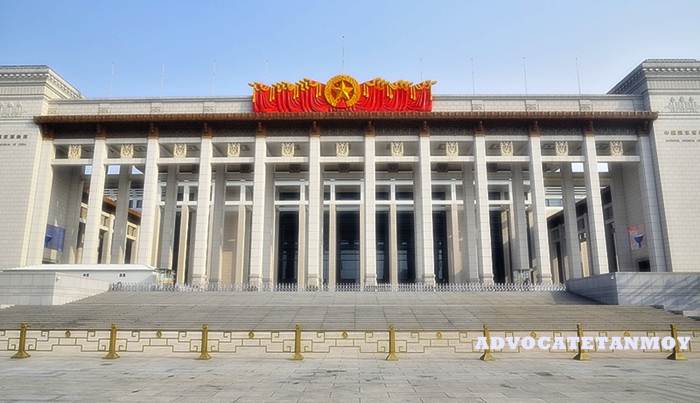
National-Museum-of-China-in-Beijing

Home ยป Law Library Updates ยป Sarvarthapedia ยป National ยป National Museum of China exhibited 10000 years old Rice

An exhibition showcasing carbonized rice from about 10,000 years ago has opened at the National Museum of China in Beijing.

Recovered from the Shangshan site in east China’s Zhejiang Province, the rice remains are part of the landmark relics of the Shangshan culture, which dates back between 11,400 years and 8,600 years. It is known as the birthplace of global rice-farming culture.

About 200 items from the early, middle, and late Shangshan culture, including painted pottery and settlement relics, were on display at the exhibition. The exhibition is titled “Rice, Origin, Enlightenment: Special Exhibition of Shangshan Culture Archaeological Discoveries in Zhejiang.”

Read Next

  • China’s Diplomatic Strategies: A 2024 Perspective (Wang Yi’s speech)
  • National Home of the Jewish People: Legal Basis of Israel, Immigration, and Nationality Law
  • Campus Anti-Semitism: Trump’s EO Adopting Additional Measures

The Shangshan site was first discovered in the lower reaches of the Yangtze River in 2000. Archaeologists later excavated remains related to rice cultivation dating back about 10,000 years, the earliest known remains of settlements, and several painted pottery remains. The site is located in the middle and lower reaches of the Yangtze River in China, the Shangshan site is so far the earliest known remains of rice farming in the world. As an origin of rice farming, the Shangshan culture occupies an important position in the formation of Chinese civilization.

The exhibition aims to depict the social, economic, and cultural development at the beginning of rice farming. It also unveils the significance of the archaeological discoveries at the site.ย 


Tags: 10000BCE Agriculture China Rice

Post navigation

Previous: Land Tax Act of China-1977
Next: General Principles of the Civil Law of the People’s Republic of China-1987
Arrest
Sarvarthapedia

Latin Maxims in Criminal Law: Meaning, Usage, and Courtroom Application

Sarvarthapedia
Sarvarthapedia

Research Methodology and Investigation: Concepts, Frameworks, and Emerging Trends

IPS Cadre Strength 2025: State-wise Authorised Strength

Uric Acid: From 18th Century Discovery to Modern Medical Science

Christian Approaches to Interfaith Dialogue: Orthodox, Catholic, Protestant, and Pentecostal Views

Origin of Central Banking in India: From Hastings to RBI and the History of Preparatory Years (1773โ€“1934)

Howrah District Environment Plan: Waste Management, Water Quality & Wetland Conservation

Bharatiya Nyaya Sanhita 2023: Sections (1-358), Punishments, and Legal Framework

Bengali Food Culture: History, Traditions, and Class Influences

West Bengal Court-Fees Act, 1970: Fees, Schedules, and Procedures

WB Land Reforms Tribunal Act 1997: History, Features, Provisions, Structure, Powers and Functions

Civil Procedure Law of the Democratic People’s Republic of Korea (1976)

Knowledge Management in the Modern Era: From History to Digital Transformation

Vedic Interpretation Methodical Style: History, Principles, and Evolution ย From Yaska to Aurobindo

  • Sarvarthapedia

  • Delhi Law Digest

  • Howrah Law Journal

  • Amit Aryaย vs Kamlesh Kumari:ย Doctrine of merger
  • David Vs. Kuruppampady: SLP against rejecting review by HC (2020)
  • Nazim & Ors. v. State of Uttarakhand (2025 INSC 1184)
  • Geeta v. Ajay: Expense for daughter`s marriage allowed in favour of the wife
  • Ram v. Sukhram: Tribal women’s right in ancestral property [2025] 8 SCR 272
  • Naresh vs Aarti: Cheque Bouncing Complaint Filed by POA (02/01/2025)
  • Bharatiya Nagarik Suraksha Sanhita 2023 (BNSS)
  • Bharatiya Sakshya Adhiniyam 2023 (BSA): Indian Rules for Evidence
  • Bharatiya Nyaya Sanhita (BNS) 2023
  • The Code of Civil Procedure (CPC)
  • Supreme Court Daily Digest
  • U.S. Supreme Court Orders
  • U.k. Supreme Court Orders
Indian Government

IPS Cadre Strength 2025: State-wise Authorised Strength

Sarvarthapedia

Uric Acid: From 18th Century Discovery to Modern Medical Science

Christian Education

Christian Approaches to Interfaith Dialogue: Orthodox, Catholic, Protestant, and Pentecostal Views

Reserve Bank Of India

Origin of Central Banking in India: From Hastings to RBI and the History of Preparatory Years (1773โ€“1934)

2026 ยฉ Advocatetanmoy Law Library

  • About
  • Global Index
  • Judicial Examinations
  • Indian Statutes
  • Glossary
  • Legal Eagle
  • Subject Guide
  • Journal
  • SCCN
  • Constitutions
  • Legal Brief (SC)
  • MCQs (Indian Laws)
  • Sarvarthapedia (Articles)
  • Contact Us
  • Privacy Policy
  • FAQs
  • Library Updates