Skip to content

ADVOCATETANMOY LAW LIBRARY

Research & Library Database

Primary Menu
  • News
  • Opinion
  • Countries198
    • National Constitutions: History, Purpose, and Key Aspects
  • Judgment
  • Book
  • Legal Brief
    • Legal Eagal
  • LearnToday
  • HLJ
    • Supreme Court Case Notes
    • Daily Digest
  • Sarvarthapedia
    • Sarvarthapedia (Core Areas)
    • Systemic-and-systematic
    • Volume One
07/04/2026
  • Law Library

Quashing Rape Cases on Compromise: A Threat to Social Justice

The Supreme Court's ruling in Madhukar v. Maharashtra reignites debate on quashing serious criminal cases, particularly rape, based on private settlements. It highlights vulnerabilities in India's justice system, undermining societal interests. Compromising such heinous offences risks eroding public confidence and necessitates a balanced approach to protect both victims and the rights of the accused.
advtanmoy 12/08/2025 4 minutes read

© Advocatetanmoy Law Library

  • Share on WhatsApp (Opens in new window) WhatsApp
  • Share on X (Opens in new window) X
  • Share on Facebook (Opens in new window) Facebook
  • Share on Telegram (Opens in new window) Telegram
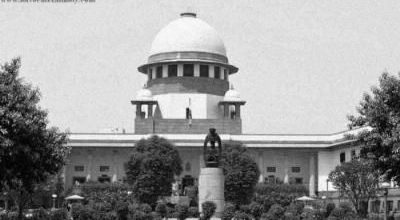
Supreme Court

Home » Law Library Updates » Sarvarthapedia » News » Quashing Rape Cases on Compromise: A Threat to Social Justice

Judicial Compromise in Heinous Offences: A Constitutional and Societal Quandary in India

The recent pronouncement of the Hon’ble Supreme Court in Madhukar & Ors. v. The State of Maharashtra [2025] 7 S.C.R. 568: 2025 INSC 819 (14 July 2025) has rekindled an uneasy debate over the propriety of quashing criminal proceedings in respect of offences of the gravest order—rape—on the strength of a private settlement between the prosecutrix and the accused. The facts of the case are themselves emblematic of the procedural vulnerabilities within the criminal justice system. Following an initial FIR against the appellants under various provisions of the Indian Penal Code for assault and intimidation, a second FIR was lodged the very next day, accusing one of them of repeated sexual assault, criminal intimidation, and related offences under Sections 376, 354-A, 354-D, 509, and 506 IPC. The subsequent affidavit of the complainant, filed within a matter of months, declared her unwillingness to pursue prosecution, citing an amicable resolution and receipt of monetary consideration ostensibly for marriage-related expenses.

While the High Court of Judicature at Bombay, Aurangabad Bench, refused to quash the proceedings on the premise that offences under Section 376 IPC are inherently non-compoundable and injurious to the societal fabric, the Supreme Court invoked its inherent jurisdiction under Section 482 of the Code of Criminal Procedure to set aside the criminal process altogether, observing that the continuation of trial would serve no useful purpose and would, instead, prolong distress for all concerned. This judicial disposition, while founded upon the peculiar matrix of cross-FIRs and the complainant’s categorical disinclination to participate in the prosecution, nonetheless exposes a troubling lacuna: in India, even accusations of the most heinous crimes can, in effect, be withdrawn without any punitive or deterrent consequence for the complainant, notwithstanding the vast judicial resources and police machinery already expended.

Such a state of affairs undermines the cardinal principle that an offence, particularly one as grave as rape, is not merely an injury to an individual but a wrong against the collective conscience of society. A complainant may, in her private capacity, seek to absolve or reconcile with the accused, yet the institutional machinery of the State is constitutionally mandated to vindicate the societal interest embedded in the criminal proscription. When false or reactionary complaints of such magnitude are permitted to dissolve into private bargains, the judiciary risks eroding public confidence in the sanctity of criminal adjudication and inadvertently incentivising the abuse of process.

Read Next

  • THE NATIONAL SPORTS GOVERNANCE ACT, 2025
  • 2016 Report of Ministry of Home Affairs, Govt of India
  • The Number π (Pi): History, Properties, and Importance in Mathematics

Moreover, the implications for the Article 21 rights of the falsely accused are profound. A mere registration of an FIR in a cognisable offence of this nature typically precipitates arrest, custodial detention, and the necessity of securing bail from multiple judicial forums, all at considerable legal expense and under suffocating social opprobrium. For an able-bodied citizen so ensnared, wrongful incarceration extinguishes not only his liberty but also his capacity to contribute economically to the nation, thereby inflicting both micro-level personal loss and macro-level harm to the public exchequer. When such an individual is ultimately found innocent—or when the complainant simply retreats from her allegations—there exists no institutional mechanism to restore the reputational, economic, or psychological damage sustained, nor to hold accountable the complainant whose actions have catalysed such injury.

The jurisprudential danger lies in the gradual normalisation of compromise as a legitimate resolution to accusations of crimes that the legislature has deliberately rendered non-compoundable. Section 482 CrPC confers no charter to privatise public justice in the domain of heinous offences. To deploy it without concomitant measures against frivolous or malicious prosecution is to leave unaddressed the systemic costs—judicial, societal, and constitutional—of false implication. The Madhukar decision, though perhaps justifiable on its own factual peculiarities, illustrates the urgent need for a jurisprudence that simultaneously shields genuine victims and imposes robust sanctions on those who would weaponise the criminal law for ulterior purposes. Without such balance, the constitutional promise of life and personal liberty stands diminished, and the moral authority of the criminal justice system is imperilled.

Tanmoy Bhattacharyya

August 12, 2025

Read Next

  • THE NATIONAL SPORTS GOVERNANCE ACT, 2025
  • 2016 Report of Ministry of Home Affairs, Govt of India
  • The Number π (Pi): History, Properties, and Importance in Mathematics


Tags: 12th August India-2025 Quashing FIR Rape Case

Post navigation

Previous: Pandurangan v. Jayarama (Plea of res judicata is beyond scope of O-7, R-11 CPC) [2025] 7 SCR-488
Next: Confusion on Life Imprisonment in India
Communism
Sarvarthapedia

Manifesto of the Communist Party 1848: History, Context, and Core Concepts

Arrest
Sarvarthapedia

Latin Maxims in Criminal Law: Meaning, Usage, and Courtroom Application

Abolition of Slave Trade Act 1807: Facts, Enforcement, and Historical Context

British Slavery and the Church of England: History, Theology, and the Codrington Estates

United States of America: History, Government, Economy, and Global Power

Biblical Basis for Slavery: Old and New Testament Laws, Narratives, and Interpretations

Rule of Law vs Rule by Law and Rule for Law: History, Meaning, and Global Evolution

IPS Cadre Strength 2025: State-wise Authorised Strength

Uric Acid: From 18th Century Discovery to Modern Medical Science

Christian Approaches to Interfaith Dialogue: Orthodox, Catholic, Protestant, and Pentecostal Views

Origin of Central Banking in India: From Hastings to RBI and the History of Preparatory Years (1773–1934)

Howrah District Environment Plan: Waste Management, Water Quality & Wetland Conservation

Bharatiya Nyaya Sanhita 2023: Sections (1-358), Punishments, and Legal Framework

Bengali Food Culture: History, Traditions, and Class Influences

  • Sarvarthapedia

  • Delhi Law Digest

  • Howrah Law Journal

  • Amit Arya vs Kamlesh Kumari: Doctrine of merger
  • David Vs. Kuruppampady: SLP against rejecting review by HC (2020)
  • Nazim & Ors. v. State of Uttarakhand (2025 INSC 1184)
  • Geeta v. Ajay: Expense for daughter`s marriage allowed in favour of the wife
  • Ram v. Sukhram: Tribal women’s right in ancestral property [2025] 8 SCR 272
  • Naresh vs Aarti: Cheque Bouncing Complaint Filed by POA (02/01/2025)
  • Bharatiya Nagarik Suraksha Sanhita 2023 (BNSS)
  • Bharatiya Sakshya Adhiniyam 2023 (BSA): Indian Rules for Evidence
  • Bharatiya Nyaya Sanhita (BNS) 2023
  • The Code of Civil Procedure (CPC)
  • Supreme Court Daily Digest
  • U.S. Supreme Court Orders
  • U.k. Supreme Court Orders
United Kingdom, UK

Abolition of Slave Trade Act 1807: Facts, Enforcement, and Historical Context

British Slavery and the Church of England: History, Theology, and the Codrington Estates

British Slavery and the Church of England: History, Theology, and the Codrington Estates

USA, America

United States of America: History, Government, Economy, and Global Power

Biblical Basis for Slavery, english slave trade

Biblical Basis for Slavery: Old and New Testament Laws, Narratives, and Interpretations

2026 © Advocatetanmoy Law Library

  • About
  • Global Index
  • Judicial Examinations
  • Indian Statutes
  • Glossary
  • Legal Eagle
  • Subject Guide
  • Journal
  • SCCN
  • Constitutions
  • Legal Brief (SC)
  • MCQs (Indian Laws)
  • Sarvarthapedia (Articles)
  • Contact Us
  • Privacy Policy
  • FAQs
  • Library Updates