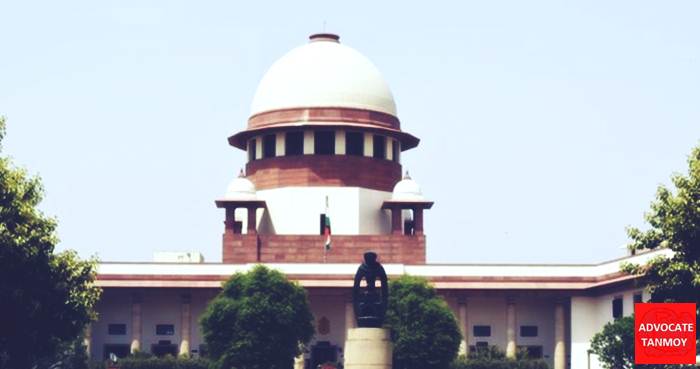
Supreme Court rulings clarify meaning, scope, and remission rules
Life imprisonment under Indian law, as explained through a series of landmark Supreme Court decisions, signifies incarceration for the entirety of a convict’s natural life, unless the term is lawfully reduced through constitutional or statutory powers. Section 53 of the Indian Penal Code prescribes “imprisonment for life” as a form of punishment, while Section 57 states that life imprisonment shall be reckoned as twenty years only for the limited purpose of calculating fractions of punishment, not as a ceiling on actual imprisonment.
Beginning with the decision in Gopal Vinayak Godse (AIR 1961 SC 600) and reiterated in later cases including Yakub Abdul Razak Memon, the Court has consistently held that a life sentence endures until the convict’s death, subject to remission or commutation. The judiciary has also recognised that courts may stipulate fixed terms of twenty, twenty-five, thirty years or more, without any scope for remission, in appropriate cases.
In Swamy Shraddananda (2) , the Supreme Court devised a special sentencing category between the conventional fourteen years and the death penalty, enabling courts to mandate incarceration for longer fixed terms or even for the convict’s entire life without remission, in order to balance proportionality and deterrence. This principle was constitutionally affirmed in Union of India v. V. Sriharan, where it was further clarified that such special category sentences can only be imposed by the High Courts or the Supreme Court, not by trial courts, and are lawful substitutes for the death penalty.
More recent rulings such as Shiva Kumar have clarified that the power to impose a fixed-term life sentence beyond fourteen years is not limited to cases involving commutation of death sentences, but extends to all serious offences where the facts so demand. The Court in Navas alias Mulanavas has further stressed the application of the doctrine of proportionality by weighing aggravating and mitigating factors when determining such terms. Importantly, remission merely reduces the actual period of incarceration without erasing either the conviction or the sentence, whereas commutation alters the nature of the sentence to a lesser form, and a pardon extinguishes both guilt and punishment.
Parole and furlough, in contrast, are temporary releases without altering the sentence itself. In practice, if a convict is sentenced to twenty years of life imprisonment without remission, they must serve the entire twenty years in custody before becoming eligible for executive consideration for early release, and even then, freedom is not automatic but contingent upon statutory or constitutional clemency powers.
In Poonam Lata v. M.L. Wadhawan (1987) 3 SCC 347, the Supreme Court clarified that parole constitutes a provisional release from confinement but remains legally a part of the prisoner’s sentence. As a measure within the reformative process, parole aims to offer the convict an opportunity for rehabilitation and reintegration as a responsible citizen. It grants a limited relaxation of custodial restrictions without altering the legal status of the prisoner, who continues to be deemed in custody. A prisoner released on parole or furlough is therefore distinct from a convict enlarged on bail, since the latter is not serving the sentence during the bail period and is consequently outside the scope of the remission system. In effect, remission cannot be earned during periods when a prisoner is on bail or when the sentence stands temporarily suspended, and any such time spent on bail does not count towards the remission calculation applicable to the substantive term of imprisonment.
Wednesday, August 13, 2025