Aurangzeb’s Administrative Directions and Letters
8th February 2026
Aurangzeb’s Administrative Directions and Letters
Publication 1709-11 CE
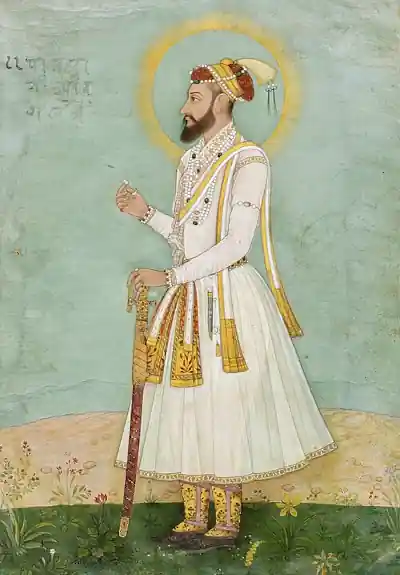
Rukaʿat-i-Alamgiri (Persian Language) is a collection of letters popularly attributed to the Mughal emperor Aurangzeb (Alamgir, royal title given by his father Sahajahan ) and compiled by his secretary Inayat Allah Khan. These letters, addressed to his sons, relatives, and officials, offer a rare view of Aurangzeb’s personal reflections, administrative concerns, and moral advice, extending beyond the formal chronicles of his reign. Three principal collections exist: Rukaʿat-i-Alamgiri (also known as Kalimat-i-Tayyibat), compiled by Inayat Allah; Rakaim-i-Karim, prepared by the son of Abdul Karim Amir Khan; and Dastur-al-Amal Aghahi, assembled some decades after Aurangzeb’s death under the patronage of Raja Aya Mal. Another group, Adab-i-Alamgiri, contains letters addressed to his father, sons, and officers. These letters lack dates or order, though many appear to have been written during the long Deccan war (1683–1707). They portray Aurangzeb as a disciplined, devout, and at times orthodox ruler, offering counsel on kingship, justice, and statecraft, and quoting frequently from Persian poets and the Quran. Their style is simple, courteous, and often figurative. Yet their authenticity remains debated; these collections may have been fabricated or embellished, possibly to soften Aurangzeb’s public image or to fulfil the intentions of later compilers.
After praising Allah, and the Prophet of Islam, the compiler Inayat Allah Khan introduces Rukaʿat-i-Alamgiri, also known as Kalimat-i-Taiyibat. This work contains the letters attributed to Emperor Abul Muzaffar Muhyuddin Muhammad Aurangzeb Alamgir (1618-1707). In these letters, certain expressions function as identifiers for specific persons. The terms “the eldest son of sovereignty” and “the happy son” refer to Prince Muhammad Muazzam (Shah Alam Bahadur), while in some instances “the happy son” also denotes Sultan Muhammad Azam Shah. The phrase “the unfriendly brother” applies to Dara Shukoh. “The dear grandson” and “the brave grandson” refer respectively to Muhammad Mu‘azz-ud-Din Bahadur and Muhammad Bidar Bakht, and “the grandson of high dignity” to Muhammad Azim-ud-Din Bahadur.
Several nobles are identified through titles: Asad Khan is described as “the pillar of the kingdom,” “the centre of affairs,” and “that sacrifice.” Ghazi-ud-Din Khan is “Firuz Jang,” Zulfiqar Khan is “Nasrat Jang,” Mirza Sadr-ud-Din Muhammad Khan Safavi is “Mirza Bakhshi,” Tarbiat Khan is the “meer atesh” (master of ordnance), and Hamid-ud-Din Khan is indicated by the title “Hamid.” Historical notes clarify that Asad Khan succeeded Shayasta Khan and received the title Amir-ul-Umara in 1702. Prince Muazzam, born in 1643, held major governorships, was imprisoned in 1688 for negotiating with Golconda, released in 1693, appointed governor of Kabul in 1700, and later ruled as Bahadur Shah I (1707–1712).
The text also references regions such as Balkh, Badakhshan, and Herat, significant in earlier Timurid and Mughal campaigns, and briefly notes Murad Bakhsh, Aurangzeb’s brother, who participated in the succession struggles before his imprisonment at Gwalior. In this way, the collection employs a coded Persian vocabulary to denote imperial relatives, political figures, and administrative officials, preserving a record of names, ranks, and relationships within the Mughal court.
This letter was written by Aurangzeb to his youngest son, Sultan Muhammad Kam Bakhsh, from his deathbed.
Beloved son, in this world everyone acts according to his own will. But at this final hour, I remind you also of the Divine Will. I know my advice may not take root in your ears, yet I must speak a few words to you. I am departing from this world, but my heart is troubled when I think of your shortcomings. I do not know what miseries await you. Whatever is destined must now unfold—there is no remedy. I take with me the burden of my sins; during my life I have gathered nothing but sinful deeds. How strange are the laws of Nature! I came into this world empty-handed, yet I leave it weighed down by sin.
For twelve days I suffered from severe fever; now the fever has left me. Wherever I look now, son, I sense the presence of God. Yet one thought pains me deeply: in my absence, my vast army and loyal servants will not be properly guided for want of a worthy heir. As for myself, I understand nothing. I am a great sinner; I know not what punishment is written in my fate. God is the protector of the people, but my sons must also protect the subjects in times of danger. Azam is here with me; I have told him everything concerning you. You too must fulfil my final wishes, my son.
Your duty is to prevent needless bloodshed and to ensure that no Muslim life is wasted. Do not involve this old man in any further calamity. I place you and your sons in the hands of God. May you be happy, my son. I bid farewell to all of you. My heart is restless. My dear grandson, Bahadur, is now in Gujarat, and Azam is in the frontier province (Kabul). Begum Zinat-un-Nissa is overwhelmed with grief; she has known no happiness in life. Her suffering is known only to her—how can others understand? Udaipuri Begum, your mother, has shared in my affliction. Her wish is to become sahamrita—to join me in death as a devoted Hindu wife follows her husband.
Son, even if relatives and servants are hypocritical or deceitful, treat them with kindness. Do not dismiss or persecute them. Be frugal, my son. I bless you—may you prosper.
This letter was written by the Emperor in his dying condition to his third son, Muhammad Azam Shah.
My son, I bless you with peace—may your household also attain peace. I have reached the very end of old age; weakness increases every moment, my limbs have grown slack and powerless. I came into this world alone, and alone I now depart. I could never understand who I am, why I came, or what I truly accomplished. My life has passed in vain—I have not even worshipped Allah as I ought to have done. The burden of a vast empire was placed upon my shoulders, but did I ever govern it with true skill? This priceless life, which should have been treasured, I have wasted in heedlessness.
The Malik of the Universe resides in this very world, yet I have not been blessed with His vision. Life is impermanent—the past leaves no trace before my eyes, and I have no hope concerning the life to come. My body is now free of fever and illness, as though these afflictions, ashamed of my condition, have fled. This body, reduced to skin and bone, has no strength left. My son Kam Bakhsh has gone to Bijapur, but that is not far; you are even nearer, in Malwa. My beloved son Shah Alam is farthest away, in Kabul, and my grandson Muhammad Azim is there as well. All is as Allah wills.
My troops are helpless and confused; like myself, they have become unstable and anxious. Alas, they do not understand that above them is Allah—the Master of their master. When I came into this world, I brought nothing; now I return burdened with sin. I do not know what punishment awaits me. God is infinitely merciful—I believe this—but my fear does not leave me, for I am a great sinner. What was to happen has already happened. Now I have set adrift the boat of my life upon the ocean of Death.
Though the Malik is the protector of all subjects, it is the duty of my worthy sons to watch carefully over all adverse events, so that the subjects—especially the Muslims—do not lose their lives needlessly. Convey my good wishes and final blessings to my dear grandson, Bahadur. One more thing I tell you—my daughter Zinat-un-Nissa is overwhelmed with grief. God alone is her protector.
Farewell, my son, farewell—farewell.
It is well known that in ancient times, oppression and disorder in the world were minimal. Later, as the population increased, these too increased in proportion. Inform Ibrahim Khan that he will soon be reduced to a lower post, for he has shown no sense of justice in dealing with the qazis of Kashmir.
Thank God that the fortress of Jinji has fallen into our hands, and the wicked Rajaram has fled. Capturing him was not difficult, but due to the negligence of officers like Zulfiqar Khan, he managed to escape. My idle officers displayed some enthusiasm for a few days in attempting to seize him. They should be told that before they die, they ought at least to enjoy the world properly.
Muqarab Khan has been appointed to take possession of Barnala. Convey my order to him that he must arrest the local zamindar, Shambhaji. When that arrogant zamindar travels from Raybari Fort to Khalna Fort to engage in litigation, Khan should seize him. Write to him expressly to attack at that moment of opportunity. I believe Khan will be able to capture him and thus avenge the oppression inflicted upon the Muslims.
May Allah forgive us. What can Khan do? It is Khuda who accomplishes everything, and He alone gives to each man the reward of his deeds—good or evil.
Munam Khan, a devoted servant of the empire, has not properly performed the duties assigned to him. He is completely inexperienced, and on top of that, he speaks thoughtlessly like a fool. He must be properly instructed regarding his work and conduct. For now, demote him immediately.
In Lahore, Abu Nasir Khan has rebelled and has been troubling the inhabitants. What does he imagine? Perhaps he thinks there is no king in this realm, or perhaps he wishes to lose his own head! Investigate the matter and inform me within a day or two, so that we may demote him and bring him back to his senses. When donkeys run astray in all directions, one must use a stick to drive them back.
Zabardast Khan is a good soldier and more capable than his father in state affairs. By his own strength he has punished the rebels (Hindus) in Lahore and the surrounding areas and has burned their houses. For this, write him a letter of congratulations and keep ready a robe of honour to present to him.
According to the order, whenever Sar Faraz Abdul Latif Khan comes to pay his respects to the best of the kingdom and the pivot of state affairs, he must raise his hand after the salutation and then follow the Khan if the Khan is mounted on a horse. If the Khan travels in a palkee (palanquin), Sar Faraz is excused from further ceremonial duties after offering his salute. If the Khan rides on an elephant, Sar Faraz must follow him. He should speak only when addressed by the Khan; otherwise, he must remain silent.
Rakanhu and the other Panj Hazaris are required to dismount and salute the Khan. Asad Khan shall present a betel leaf to Rakanhu and bid farewell to the other Panj Hazaris.
Prince Muazzam has brought charges against Fatehullah Khan. When I sent him to Kabul, I had already realized that the assistance of this arrogant Khan would not be beneficial to the Prince. But what could I do? It was the Prince himself who insisted that the Khan be sent to him. On his request alone I was compelled to send him there.
The three hundred attendants under Fatehullah Khan should be removed from his charge, and his title should also be stripped. Record the order of his dismissal and send it to the state archives (Mahefej). Write to this talkative man, exactly according to my command, that wounding the Prince’s feelings and proudly boasting of having the Prince under his authority—can such behaviour be considered loyalty? Men of low character alone conduct themselves in this manner. Those who can sacrifice their lives for honour do not behave so.
If he can satisfy the Prince, only then will I be pleased with him. If the Prince recommends him, only then may he receive an additional title. He should repent for his improper conduct. Convey this order to him, and also write to the Prince, instructing him to keep a careful watch over him.
The Dervish who was brought before me last night is completely illiterate. He appeared to be an obstinate and rigid faqir, and it seemed likely that he was well-practised in hypocrisy. Many of his actions and words run contrary to religion (Deen). He is strongly opposed to acts of charity, and I cannot understand why. When a man becomes king, the royal treasury is entrusted to him. If he gives something from the treasury to others, how can that be unjust? If a king donates a portion of his personal income to helpless faqirs, how can such charity ever be considered improper?
Ask this dervish carefully why he is so hostile to acts of giving. If he provides a satisfactory answer, well and good; otherwise, he must certainly be punished. Do you know what the noble ruler of Afghanistan, Sultan Mahmud, used to do? He would not allow heretics or hypocrites to enter his court—indeed, he would not even permit them to enter the borders of his kingdom, lest others fall into error through their influence.
O Khuda, guide us on the right path. Grant peace to those who submit themselves to You.