Vinod Kumar Pandey & Anr. v. Seesh Ram Saini & Ors. (2025)
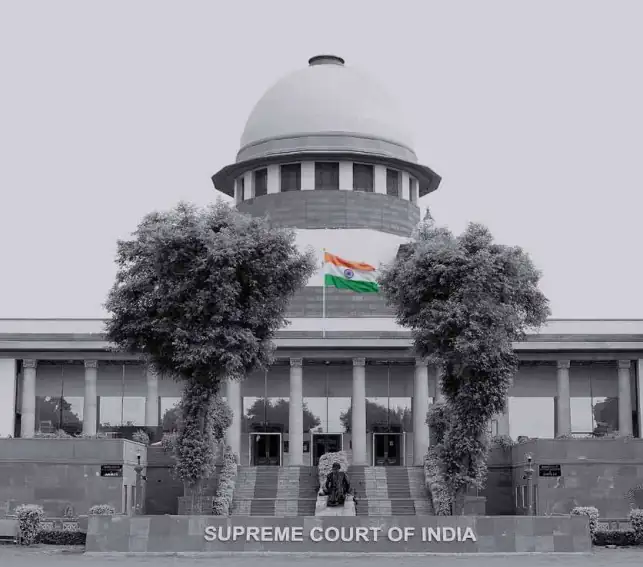
IN THE SUPREME COURT OF INDIA
CIVIL APPELLATE JURISDICTION
CIVIL APPEAL NO. OF 2025
(Arising out of S.L.P. (C) No. 7900 of 2019)
2025 INSC 1095
Date: 10th September 2025
The matter concerned appeals arising out of writ petitions filed before the Delhi High Court by Vijay Aggarwal and Sheesh Ram Saini seeking directions for registration of FIRs against two CBI officers on deputation, Vinod Kumar Pandey, then Inspector, and Neeraj Kumar, then Joint Director. The allegations against them related to offences under Sections 506, 341, 342, 166, 218, 463, 465, 469 and 120-B IPC.
The Single Judge of the High Court, by orders dated 26 June 2006, partly allowed the writ petitions and directed the Delhi Police to register cases on the basis of the complaints lodged by the petitioners and to have the matter investigated by the Special Cell of Delhi Police through an officer not below the rank of Assistant Commissioner of Police. The Court also directed that the investigation proceed uninfluenced by the preliminary inquiry report dated 26 April 2005 of the Joint Director, CBI.
Aggrieved, the two officers filed LPAs which were dismissed by the Division Bench on 13 March 2019 on the ground of maintainability. Four appeals came before the Supreme Court: two against the Single Judge’s orders of 26 June 2006, and two against the Division Bench’s dismissal of the LPAs. At the outset, the Supreme Court made clear that it would not go into the maintainability issue of the LPAs but would examine the correctness of the Single Judge’s orders on merits as the Division Bench would have done.
A preliminary objection was raised on delay of over twelve years in filing the appeals against the Single Judge’s orders. The appellants explained that they had been bona fide pursuing LPAs before the Division Bench and only after realizing their non-maintainability did they approach the Supreme Court. Accepting that there was no deliberate delay, the Court condoned it and proceeded on merits.
On behalf of the appellants it was argued that the complaints did not disclose any cognizable offence warranting registration of FIRs, that the High Court could not have directed registration of FIRs without following the prescribed procedure under law, and that the Court’s finding of cognizable offences left nothing for the investigating officer to determine. It was further contended that the preliminary inquiry conducted by the Joint Director of CBI had already concluded that no cognizable offence was made out, and the High Court could not have substituted its own view. Counsel also stressed that there was no material against Neeraj Kumar, and that the direction to have the matter investigated by the Special Cell of Delhi Police, which usually handles terrorism matters, was improper.
The Additional Solicitor General sought impleadment of the CBI, arguing that since the preliminary inquiry was by a CBI officer and allegations involved CBI officers, the institution should be a party. He further submitted that the acts complained of were done in discharge of official duty and were protected by Section 197 Cr.P.C. and Section 140 of the Delhi Police Act, and that the complaints were barred by limitation.
The Court noted that the CBI was a party before the High Court and had not assailed the impugned orders, which indicated that the institution was not aggrieved. The aggrieved parties were the officers in their personal capacity. The CBI’s report was not under challenge, and hence impleadment was unnecessary.
Examining the Single Judge’s findings, the Court observed that the complaints and inquiry materials showed irregularities and possible illegality by the officers in discharge of their official duties. Allegations included seizure of documents on 26 April 2000 without preparing a seizure memo until 27 April 2000, which even the inquiry report substantiated, and summoning Vijay Aggarwal in contravention of a bail order dated 27 November 2000, indicating mala fide exercise of power. Allegations of abuse, intimidation and coercion to withdraw complaints were also considered serious. The Single Judge was justified in holding that such conduct prima facie disclosed cognizable offences.
The Supreme Court reiterated that under Section 154 Cr.P.C., once information disclosing commission of a cognizable offence is received, the police is duty bound to register an FIR without evaluating genuineness or credibility. Preliminary inquiries are not ordinarily contemplated, except in limited circumstances, and the CBI report 2025 INSC 1095was at best a preliminary inquiry which could not oust the jurisdiction of the Court to direct registration of FIRs.
Precedents such as Ramesh Kumari v. State (2006) 2 SCC 677, Sakiri Vasu v. State of U.P. (2008) 2 SCC 409, Anurag Bhatnagar v. State (2025 INSC 895), Pradeep Nirankarnath Sharma v. State of Gujarat (2025) 4 SCC 818, and Lalita Kumari v. Government of U.P. (2014) 2 SCC 1 were relied upon to reinforce the principle that registration of FIR is mandatory when cognizable offences are prima facie disclosed.
The Court noted that despite allegations dating back to 2000, no investigation had taken place. Justice requires that even investigators be investigated where necessary to maintain public confidence. Registration of FIRs against the officers would not prejudice them, as they would have the opportunity to participate in the investigation, and depending on the outcome, the IO may file a closure report or chargesheet, against which remedies would be available.
Accordingly, the Supreme Court declined to interfere with the High Court’s direction for registration of FIRs but modified the order to the extent that the investigation would not be by the Special Cell, but by the Delhi Police itself through an officer not below the rank of Assistant Commissioner of Police. The preliminary inquiry report of the CBI could be looked into during investigation but would not be conclusive.
The IO was directed to conduct investigation in accordance with law without being influenced by observations of the High Court or the Supreme Court and to conclude it preferably within three months. The appellants were directed to cooperate with the investigation and no coercive steps, including arrest, were to be taken unless the IO found custodial interrogation necessary.
In conclusion, the appeals against the dismissal of the LPAs were disposed of in these terms, while the appeals against the Single Judge’s orders were partly allowed by modifying the directions regarding investigation. Pending applications were disposed of.