Supreme Court Enhances Wife’s Maintenance to ₹25,000 – Loan EMIs Cannot Reduce Husband’s Obligation
- Wife Gets ₹25,000 Monthly Maintenance: SC Rejects Husband’s Plea on Salary Deductions Under BNSS Section 144
- SC Rules Loan Repayments Cannot Dilute Maintenance Duty – Hikes Wife’s Amount to ₹25,000
2026 INSC 370
CRL. APPEAL. @ SLP (CRL.) No.15662/2025
NON-REPORTABLE
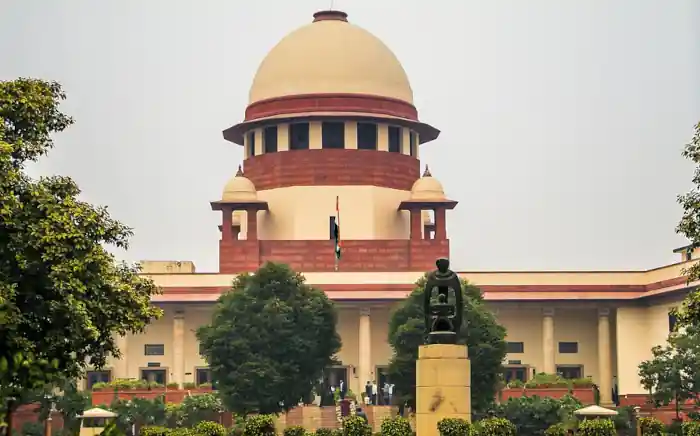
IN THE SUPREME COURT OF INDIA
CRIMINAL APPELLATE JURISDICTION
CRIMINAL APPEAL NO. OF 2026
(ARISING OUT OF SLP (CRL.) NO.15662 OF 2025)
DEEPA JOSHI … APPELLANT(S)
VERSUS
GAURAV JOSHI …RESPONDENT(S)
J U D G M E N T
AUGUSTINE GEORGE MASIH, J.
- Leave Granted.
- The present Criminal Appeal arises out of the judgment and order dated 26.06.2025 passed by the High Court of Uttarakhand at Nainital in Criminal Revision No.201 of 2025, whereby the High Court partly allowed the revision preferred by the appellant-wife and enhanced the maintenance awarded by the Family Court from ₹8,000/- per month to ₹15,000/- per month, payable from the date of the application i.e. 18.09.2024.
- The appellant-wife and the respondent-husband were married on 07.05.2023 at New Delhi in accordance with Hindu rites and customs. Following the marriage, the appellant resided at the matrimonial home along with the respondent and his family members. The record indicates that the relationship between the parties did not remain cordial and, according to the appellant, she was subjected to neglect and acts of physical as well as mental harassment during her stay in the matrimonial home.
- Within a year of their marriage, the appellant was forced to leave the matrimonial home and return to her parental residence. Since then, she has been residing separately and is stated to have no independent source of income for her sustenance.
- In these circumstances, the appellant instituted proceedings under Section 144 of the Bharatiya Nagarik Suraksha Sanhita, 2023 (hereinafter BNSS), on 18.09.2024 before the competent court at Tanakpur, District Champawat, seeking maintenance quantified at ₹50,000/- per month. Upon establishment of the Family Court at Champawat, the proceedings stood transferred and were registered as Misc. Criminal Case No. 54 of 2024. Despite service of notice, the respondent did not enter appearance and the matter proceeded ex parte.
- The Family Court, by judgment dated 25.02.2025, awarded maintenance of ₹8,000/- per month to the appellant, taking into account the respondent’s salary structure and the deductions reflected therein. Aggrieved by the quantum so fixed, appellant preferred Criminal Revision No. 201 of 2025 before the High Court of Uttarakhand. The High Court, vide the impugned judgment dated 26.06.2025, partly allowed the revision and enhanced the maintenance to ₹15,000/- per month, maintaining the date of commencement as 18.09.2024. Still dissatisfied, the appellant has approached this Court by way of the present appeal.
- Learned counsel for the appellant submits that the amount of ₹15,000/- per month is grossly inadequate and does not reflect the true earnings of the respondent. It is urged that the respondent is in salaried employment and is earning a substantial monthly income, which has not been correctly appreciated by the courts below. It is further contended that the appellant has no independent source of income and is wholly dependent upon maintenance as claimed.
- It is submitted that both the Family Court and the High Court have placed undue reliance on deductions reflected in the respondent’s salary, particularly those arising out of loan repayments and financial commitments. According to the appellant, such deductions are largely voluntary in nature and relate to acquisition of assets and, therefore, cannot be permitted to dilute the respondent’s primary obligation to maintain his wife. It is also contended that the respondent possesses sufficient means and that the maintenance awarded constitutes only a small fraction of his income, thereby rendering it wholly disproportionate.
- Per contra, learned counsel for the respondent submits that the High Court has already enhanced the maintenance after due consideration of the material on record and no further interference for enhancement is warranted. It is contended that the respondent’s actual disposable income is reduced on account of various financial liabilities and deductions, which have been rightly taken into account. It is further submitted that the respondent does not have unlimited financial capacity and that the amount awarded is reasonable in the facts and circumstances of the case.
- Having considered the submissions and the material placed on record, we are of the view that the quantum of maintenance fixed by the High Court requires a limited reconsideration.
- The object of maintenance proceedings is well settled. In Chaturbhuj v. Sita Bai¹, this Court held that the provision is intended to prevent destitution and that a wife is not required to establish absolute inability to survive before claiming maintenance. In Shamima Farooqui v. Shahid Khan², it was emphasized that maintenance must not be illusory and should enable the wife to live with dignity. Further, in Rajnesh v. Neha and Another³, this Court reiterated that maintenance must be fair, reasonable and commensurate with the status of the parties and the financial capacity of the husband.
- Tested on the aforesaid principles, it emerges that the determination of maintenance must be guided by a balanced assessment of the earning capacity of the husband and the reasonable needs of the wife. In the present case, it is not in dispute that the respondent is in salaried employment and has a regular source of income. The Family Court, while determining maintenance, appears to have accorded considerable weight to deductions reflected in the salary, and the High Court has, to an extent, corrected the inadequacy by enhancing the amount.
- However, deductions arising out of financial commitments such as loan repayments, particularly where they contribute towards creation of assets, cannot be placed on the same footing as necessary expenditure so as to substantially reduce the liability of maintenance. The liability to maintain a spouse is a primary obligation and cannot be subordinated to such financial arrangements.
- It is also not in dispute that the appellant has no independent source of income and has been residing separately shortly after the marriage. The maintenance awarded must therefore enable her to sustain herself with a reasonable degree of dignity, consistent with the status of the parties. At the same time, it is necessary to ensure that the determination remains fair and reasonable and does not impose an excessive burden upon the respondent. The exercise is one of achieving a just balance between competing considerations.
- Insofar as the financial capacity of the respondent is concerned, it is borne out from the compliance affidavit filed pursuant to the order dated 06.02.2026 that the respondent is employed as a Manager with Canara Bank and is drawing a gross monthly income of ₹1,15,670/-. The Courts below have taken note of certain deductions from the said income, including repayments towards loans. However, it is well settled that repayments of loans, particularly where such repayments result in creation or acquisition of assets, partake the character of capital investment and cannot be equated with essential or unavoidable expenditure. Such financial commitments, being voluntary in nature, cannot be accorded precedence over the statutory and legally enforceable obligation of maintenance.
- The obligation of the husband to maintain his spouse is a primary and continuing duty, which must be discharged in a manner that enables the wife to live with dignity and in a standard commensurate with that enjoyed during the subsistence of the marriage. Viewed thus, deductions on account of asset-generating repayments cannot be permitted to substantially dilute the respondent’s real earning capacity for the purpose of determining maintenance. We are of the opinion that a sum of ₹25,000/- per month would be just, fair and reasonable in the facts of the present case.
- The impugned judgment dated 26.06.2025, passed by the High Court of Uttarakhand, is modified to the extent that the maintenance payable to the appellant-wife shall be enhanced to ₹25,000/- per month.
- Arrears, if any, shall be cleared within a period of three months. The maintenance amount shall be paid on or before the 7th day of each calendar month.
- The appeal is disposed of in above terms.
- Pending application(s), if any, shall stand disposed of.
……..………..……………………..J.
[ SANJAY KAROL ]
……..………..……………………..J.
[ AUGUSTINE GEORGE MASIH ]
NEW DELHI;
APRIL 16, 2026.
Footnotes:
¹ (2008) 2 SCC 316
² (2015) 5 SCC 705
³ (2021) 2 SCC 324
Sarvarthapedia Conceptual Network
A judgment is the authoritative determination of rights and liabilities by a court after evaluating facts, evidence, and applicable law. It embodies reasoning, legal principles, and final orders, forming a binding resolution of a dispute.
Cluster 1: Procedural Foundations
Criminal Appeal
- A criminal appeal is a statutory remedy to challenge correctness of a lower court’s decision.
- Connects to:
- Revision Jurisdiction → narrower scope than appeal; supervisory correction
- Ex parte Proceedings → affects fairness and evidentiary appreciation
- Standard of Review → degree of interference by appellate courts
Revision Jurisdiction
- Limited re-examination for legality, propriety, or jurisdictional error.
- Links:
- Judicial Restraint → courts avoid reappreciating facts fully
- Error Correction → focus on procedural or legal defects
Ex Parte Proceedings
- Decision rendered in absence of one party.
- Links:
- Natural Justice → right to be heard
- Burden of Proof → shifts evidentiary dynamics
Cluster 2: Substantive Legal Rights
Maintenance
- Financial support obligation, typically arising from marital relationships.
- Core links:
- Right to Dignity → constitutional underpinning
- Social Justice → protection against destitution
- Statutory Obligation → enforceable legal duty
Section 144, BNSS (2023)
- Legal provision enabling claim for maintenance.
- Connects to:
- Codified Procedure → structured remedy
- Access to Justice → simplified recourse
Marital Relationship
- Legal and social institution generating mutual rights and duties.
- Links:
- Domestic Harmony vs Breakdown
- Spousal Obligations → maintenance, cohabitation
Cluster 3: Judicial Reasoning Principles
Fair, Reasonable, and Commensurate Standard
- Maintenance must reflect:
- Husband’s income
- Wife’s needs
- Social status
- Links:
- Proportionality → balance between capacity and need
- Equity → fairness beyond strict legality
Primary Obligation Doctrine
- Duty to maintain spouse overrides voluntary financial commitments.
- Connects:
- Priority of Legal Duties
- Public Policy Considerations
Real Income vs Notional Income
- Courts distinguish:
- Gross Income
- Disposable Income
- Links:
- Economic Reality Test
- Anti-evasion Principle
Cluster 4: Financial Assessment Concepts
Salary Structure
- Includes gross income and deductions.
- Links:
- Net vs Gross Income Debate
- Transparency in Financial Disclosure
Voluntary Deductions
- Loan repayments, investments.
- Connects:
- Capital Formation vs Essential Expenses
- Asset Creation Principle
Asset Creation
- Financial commitments leading to ownership.
- Links:
- Capital Investment
- Wealth Accumulation vs Immediate Obligations
Cluster 5: Judicial Precedents Network
Chaturbhuj v. Sita Bai
- Maintenance prevents destitution.
- Links:
- Social Welfare Jurisprudence
- Minimum Survival Standard
Shamima Farooqui v. Shahid Khan
- Maintenance must not be illusory.
- Links:
- Dignified Living Standard
- Substantive Justice
Rajnesh v. Neha
- Standardization of maintenance principles.
- Links:
- Uniform Guidelines
- Financial Disclosure Norms
Cluster 6: Balancing Framework
Competing Interests
- Wife’s sustenance vs husband’s capacity.
- Links:
- Judicial Balancing Test
- Reasonableness Doctrine
Just Balance
- Core judicial task in maintenance cases.
- Connects:
- Equilibrium Principle
- Context-sensitive Adjudication
Cluster 7: Outcome Architecture
Enhancement of Maintenance
- Appellate intervention to correct inadequacy.
- Links:
- Corrective Justice
- Appellate Powers
Arrears and Enforcement
- Ensures compliance with judgment.
- Connects:
- Execution Proceedings
- Time-bound Compliance
Continuing Obligation
- Maintenance is ongoing, not one-time.
- Links:
- Dynamic Liability
- Future Modification
Cross-Link Map (Interconnections)
- Maintenance ↔ Right to Dignity ↔ Social Justice
- Primary Obligation Doctrine ↔ Voluntary Deductions ↔ Asset Creation
- Judicial Precedents ↔ Fair and Reasonable Standard ↔ Just Balance
- Salary Structure ↔ Real Income ↔ Financial Disclosure Norms
- Criminal Appeal ↔ Revision Jurisdiction ↔ Judicial Restraint
Integrative Insight
This judgment sits at the intersection of family law, criminal procedural law, and constitutional values, transforming maintenance from a mere statutory entitlement into a rights-based, dignity-oriented financial safeguard. The conceptual network reveals a central tension: economic autonomy vs legal obligation, resolved through judicial balancing grounded in precedent and social purpose.