

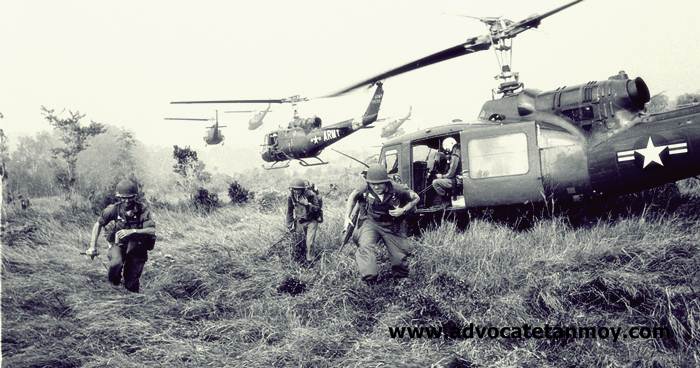
As per Rome Statute of the International Criminal Court War Crime means :
- The Court shall have jurisdiction in respect of war crimes in particular when committed as part of a plan or policy or as part of a large-scale commission of such crimes.
-
For the purpose of this Statute, ‘war crimes’ means:
(a) Grave breaches of the Geneva Conventions of 12 August 1949, namely, any of the following acts against persons or property protected under the provisions of the relevant Geneva Convention:
(i) Wilful killing;
(ii) Torture or inhuman treatment, including biological experiments;
(iii) Wilfully causing great suffering, or serious injury to body or health;
(iv) Extensive destruction and appropriation of property, not justified by military necessity and carried out unlawfully and wantonly;
(v) Compelling a prisoner of war or other protected person to serve in the forces of a hostile Power;
(vi) Wilfully depriving a prisoner of war or other protected person of the rights of fair and regular trial;
(vii) Unlawful deportation or transfer or unlawful confinement;
(viii) Taking of hostages.
(b) Other serious violations of the laws and customs applicable in international armed conflict, within the established framework of international law, namely, any of the following acts:
(i) Intentionally directing attacks against the civilian population as such or against individual civilians not taking direct part in hostilities;
(ii) Intentionally directing attacks against civilian objects, that is, objects which are not military objectives;
(iii) Intentionally directing attacks against personnel, installations, material, units or vehicles involved in a humanitarian assistance or peacekeeping mission in accordance with the Charter of the United Nations, as long as they are entitled to the protection
given to civilians or civilian objects under the international law of armed conflict;
(iv) Intentionally launching an attack in the knowledge that such attack will cause incidental loss of life or injury to civilians or damage to civilian objects or widespread, long-term and severe damage to the natural environment which would be clearly
excessive in relation to the concrete and direct overall military advantage anticipated;
(v) Attacking or bombarding, by whatever means, towns, villages, dwellings or buildings which are undefended and which are not military objectives;
(vi) Killing or wounding a combatant who, having laid down his arms or having no longer means of defence, has surrendered at discretion;
(vii) Making improper use of a flag of truce, of the flag or of the military insignia and uniform of the enemy or of the United Nations, as well as of the distinctive emblems of the Geneva Conventions, resulting in death or serious personal injury;
(viii) The transfer, directly or indirectly, by the Occupying Power of parts of its own civilian population into the territory it occupies, or the deportation or transfer of all or parts of the population of the
occupied territory within or outside this territory;
(ix) Intentionally directing attacks against buildings dedicated to religion, education, art, science or charitable purposes, historic monuments, hospitals and places where the sick and wounded are collected, provided they are not military objectives;
(x) Subjecting persons who are in the power of an adverse party to physical mutilation or to medical or scientific experiments of any kind which are neither justified by the medical, dental or hospital treatment of the person concerned nor carried out in his or
her interest, and which cause death to or seriously endanger the health of such person or persons;
(xi) Killing or wounding treacherously individuals belonging to the hostile nation or army;
(xii) Declaring that no quarter will be
(xxiii) Utilizing the presence of a civilian or other protected person to render certain points, areas or military forces immune from military operations;
(xxiv) Intentionally directing attacks against buildings, material, medical units and transport, and personnel using the distinctive emblems of the Geneva Conventions in conformity with international law;
(xxv) Intentionally using starvation of civilians as a method of warfare by depriving them of objects indispensable to their survival, including wilfully impeding relief supplies as provided for under the Geneva Conventions;
(xxvi) Conscripting or enlisting children under the age of fifteen years into the national armed forces or using them to participate actively in hostilities.
(c) In the case of an armed conflict not of an international character, serious violations of article 3 common to the four Geneva Conventions of 12 August 1949, namely, any of the following acts committed against persons taking no active part in the hostilities, including members of armed forces who have laid down their arms and those placed hors de combat by sickness, wounds, detention or any other cause:
(i) Violence to life and person, in particular murder of all kinds, mutilation, cruel treatment and torture;
(ii) Committing outrages upon personal dignity, in particular humiliating and degrading treatment;
(iii) Taking of hostages;
(iv) The passing of sentences and the carrying out of executions without previous judgement pronounced by a regularly constituted court, affording all judicial guarantees which are generally recognized as indispensable.
(d) Paragraph 2 (c) applies to armed conflicts not of an international character
and thus does not apply to situations of internal disturbances and
tensions, such as riots, isolated and sporadic acts of violence or other acts
of a similar nature.
(e) Other serious violations of the laws and customs applicable in armed conflicts not of an international character, within the established framework of international law, namely, any of the following acts:
(i) Intentionally directing attacks against the civilian population as such or against individual civilians not taking direct part in hostilities;
(ii) Intentionally directing attacks against buildings, material, medical units and transport, and personnel using the distinctive emblems of the Geneva Conventions in conformity with international law;
(iii) Intentionally directing attacks against personnel, installations, material, units or vehicles involved in a humanitarian assistance or peacekeeping mission in accordance with the Charter of the United Nations, as long as they are entitled to the protection given to civilians or civilian objects under the international law of armed conflict;
(iv) Intentionally directing attacks against buildings dedicated to religion, education, art, science or charitable purposes, historic monuments, hospitals and places where the sick and wounded are collected, provided they are not military objectives;
(v) Pillaging a town or place, even when taken by assault;
(vi) Committing rape, sexual slavery, enforced prostitution, forced pregnancy, as defined in article 7, paragraph 2 (f), enforced sterilization, and any other form of sexual violence also constituting a serious violation of article 3 common to the four Geneva Conventions;
(vii) Conscripting or enlisting children under the age of fifteen years into armed forces or groups or using them to participate actively in hostilities;
(viii) Ordering the displacement of the civilian population for reasons related to the conflict, unless the security of the civilians involved or imperative military reasons so demand;
(ix) Killing or wounding treacherously a combatant adversary;
(x) Declaring that no quarter will be given;
(xi) Subjecting persons who are in the power of another party to the conflict to physical mutilation or to medical or scientific experiments of any kind which are neither justified by the medical, dental or hospital treatment of the person concerned nor carried out in his or her interest, and which cause death to or seriously endanger the health of such person or persons;
(xii) Destroying or seizing the property of an adversary unless such destruction or seizure be imperatively demanded by the necessities of the conflict;
(f) Paragraph 2 (e) applies to armed conflicts not of an international character and thus does not apply to situations of internal disturbances and tensions, such as riots, isolated and sporadic acts of violence or other acts of a similar nature. It applies to armed conflicts that take place in the territory of a State when there is protracted armed conflict between governmental authorities and organized armed groups or between such groups.
- Nothing in paragraph 2 (c) and (e) shall affect the responsibility of a Government to maintain or re-establish law and order in the State or to defend the unity and territorial integrity of the State, by all legitimate means.
SOURCE: Rome Statute of the International Criminal Court
More Stories
Counter-Claim under the Code of Civil Procedure, 1908: History, Statutory Framework, and Judicial Evolution
A wilful act
Autopsy