Skip to content

ADVOCATETANMOY LAW LIBRARY

Research & Library Database

Primary Menu
  • News
  • Opinion
  • Countries198
    • National Constitutions: History, Purpose, and Key Aspects
  • Judgment
  • Book
  • Legal Brief
    • Legal Eagal
  • LearnToday
  • HLJ
    • Supreme Court Case Notes
    • Daily Digest
  • Sarvarthapedia
    • Sarvarthapedia (Core Areas)
    • Systemic-and-systematic
    • Volume One
05/04/2026
  • Law

Inherent Power of High Court

advtanmoy 28/12/2017 2 minutes read

© Advocatetanmoy Law Library

  • Share on WhatsApp (Opens in new window) WhatsApp
  • Share on X (Opens in new window) X
  • Share on Facebook (Opens in new window) Facebook
  • Share on Telegram (Opens in new window) Telegram

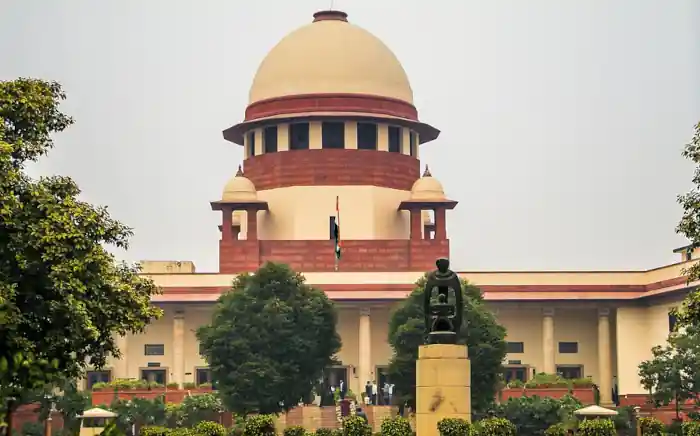
THUNDER.jpg

THE IDEA

Inherent powers are powers which are resident in all courts, especially of superior jurisdiction. These powers spring not from legislation but from the nature and the Constitution of the Tribunals or Courts themselves so as to enable them to maintain their dignity, secure obedience to its process and rules, protect its officers from indignity and wrong and to punish unseemly behaviour. This power is necessary for the orderly administration of the Court’s business . [ In Indian Bank v. Satyam Fibres (India) Pvt. Ltd., (1996) 5 SCC 550 : JT 1996 (7) SC 135, referring to Lazarus Estates and Smith v. East Elloe Rural District Council, 1956 AC 336 : (1956) 1 All ER 855 : (1956) 2 WLR 888, Supreme  Court stated as above;

Read Next

  •  Judicial office is essentially a public trust: Supreme Court
  • Disclosure of Personal Information under the Right to Information Act, 2005
  • Supreme Court Daily Digest (26th Jan 2026)

CRIMINAL MISCELLANEOUS

QUASHING
FIR
Entire Proceedings
Cognizance Order
Discharge Order
Order passed u/s 311
Order passed u/s 319
 Offences relating to women & Children
  1. The inherent powers of the High Court, which are obviously not defined being inherent in its very nature, cannot be stretched to any extent and nor can such powers be equated with the appellate powers of the High Court defined in the Code.In our considered opinion, once the Court finds that the FIR does disclose prima facie commission of any cognizable offence, it should stay its hand and allow the investigating machinery to step in to initiate the probe to unearth the crime in
    accordance with the procedure prescribed in the Code. [Dineshbhai Chandubhai Patel VS State of Gujarat & Ors..SC January 5, 2018 ]
  2. FIR-The law on the question as to when a registration of the FIR is challenged seeking its quashing by the accused under Article 226 of the Constitution or Section 482 of the Code and what are the powers of the High Court and how the High Court should deal with such question is fairly well settled.[ State of West Bengal & Ors. vs. Swapan Kumar Guha & Ors. (AIR 1982 SC 949)]

Tags: High Court Inherent Power TRIAL

Post navigation

Previous: Krishnan and another Vs Krishnaveni and another [SC 1997 January]
Next: The Clinical Establishments (Registration And Regulation)Act 2010
Communism
Sarvarthapedia

Manifesto of the Communist Party 1848: History, Context, and Core Concepts

Arrest
Sarvarthapedia

Latin Maxims in Criminal Law: Meaning, Usage, and Courtroom Application

Biblical Basis for Slavery: Old and New Testament Laws, Narratives, and Interpretations

Rule of Law vs Rule by Law and Rule for Law: History, Meaning, and Global Evolution

IPS Cadre Strength 2025: State-wise Authorised Strength

Uric Acid: From 18th Century Discovery to Modern Medical Science

Christian Approaches to Interfaith Dialogue: Orthodox, Catholic, Protestant, and Pentecostal Views

Origin of Central Banking in India: From Hastings to RBI and the History of Preparatory Years (1773–1934)

Howrah District Environment Plan: Waste Management, Water Quality & Wetland Conservation

Bharatiya Nyaya Sanhita 2023: Sections (1-358), Punishments, and Legal Framework

Bengali Food Culture: History, Traditions, and Class Influences

West Bengal Court-Fees Act, 1970: Fees, Schedules, and Procedures

WB Land Reforms Tribunal Act 1997: History, Features, Provisions, Structure, Powers and Functions

Civil Procedure Law of the Democratic People’s Republic of Korea (1976)

  • Sarvarthapedia

  • Delhi Law Digest

  • Howrah Law Journal

  • Amit Arya vs Kamlesh Kumari: Doctrine of merger
  • David Vs. Kuruppampady: SLP against rejecting review by HC (2020)
  • Nazim & Ors. v. State of Uttarakhand (2025 INSC 1184)
  • Geeta v. Ajay: Expense for daughter`s marriage allowed in favour of the wife
  • Ram v. Sukhram: Tribal women’s right in ancestral property [2025] 8 SCR 272
  • Naresh vs Aarti: Cheque Bouncing Complaint Filed by POA (02/01/2025)
  • Bharatiya Nagarik Suraksha Sanhita 2023 (BNSS)
  • Bharatiya Sakshya Adhiniyam 2023 (BSA): Indian Rules for Evidence
  • Bharatiya Nyaya Sanhita (BNS) 2023
  • The Code of Civil Procedure (CPC)
  • Supreme Court Daily Digest
  • U.S. Supreme Court Orders
  • U.k. Supreme Court Orders
Biblical Basis for Slavery

Biblical Basis for Slavery: Old and New Testament Laws, Narratives, and Interpretations

Sarvarthapedia, Law and Legal Materials

Rule of Law vs Rule by Law and Rule for Law: History, Meaning, and Global Evolution

Indian Government

IPS Cadre Strength 2025: State-wise Authorised Strength

Sarvarthapedia

Uric Acid: From 18th Century Discovery to Modern Medical Science

2026 © Advocatetanmoy Law Library

  • About
  • Global Index
  • Judicial Examinations
  • Indian Statutes
  • Glossary
  • Legal Eagle
  • Subject Guide
  • Journal
  • SCCN
  • Constitutions
  • Legal Brief (SC)
  • MCQs (Indian Laws)
  • Sarvarthapedia (Articles)
  • Contact Us
  • Privacy Policy
  • FAQs
  • Library Updates