Skip to content

ADVOCATETANMOY LAW LIBRARY

Research & Library Database

Primary Menu
  • News
  • Opinion
  • Countries198
    • National Constitutions: History, Purpose, and Key Aspects
  • Judgment
  • Book
  • Legal Brief
    • Legal Eagal
  • LearnToday
  • HLJ
    • Supreme Court Case Notes
    • Daily Digest
  • Sarvarthapedia
    • Sarvarthapedia (Core Areas)
    • Systemic-and-systematic
    • Volume One
06/04/2026
  • National

China seeks upholding bilateral relations with India

China-India practical cooperation is mutually beneficial and win-win in nature. Artificially setting up barriers for such cooperation not only violates WTO rules, but also hurts India's interests. China will take all necessary measures to safeguard the legitimate rights of Chinese businesses.
advtanmoy 04/07/2020 3 minutes read

© Advocatetanmoy Law Library

  • Share on WhatsApp (Opens in new window) WhatsApp
  • Share on X (Opens in new window) X
  • Share on Facebook (Opens in new window) Facebook
  • Share on Telegram (Opens in new window) Telegram
Modi

Home » Law Library Updates » Sarvarthapedia » National » China seeks upholding bilateral relations with India

PEOPLE`S  REPUBLIC OF CHINA

July 3, 2020

Foreign Ministry Spokesperson Zhao Lijian’s Regular Press Conference on July 3, 2020

Read Next

  • China’s Diplomatic Strategies: A 2024 Perspective (Wang Yi’s speech)
  • Campus Anti-Semitism: Trump’s EO Adopting Additional Measures
  • National Home of the Jewish People: Legal Basis of Israel, Immigration, and Nationality Law

Phoenix TV: According to reports, India’s transport minister said Chinese companies will be barred from constructing the country’s roads and highways. In the last few days, we also witnessed a lag in customs clearance for shipments originating from China. Previously, India announced a ban on over 50 Chinese apps. Does China have any comment on these measures taken by the Indian side? Does China believe they will affect China-India cooperation? Are China and India in any consultation on these matters?

Zhao Lijian: In recent days some politicians in India have kept issuing irresponsible remarks that are detrimental to China-India relations. It calls for concerted efforts on both sides to maintain China-India relations. India should work with China for the same goal and uphold the overall interests of our bilateral relations.

China-India practical cooperation is mutually beneficial and win-win in nature. Artificially setting up barriers for such cooperation not only violates WTO rules, but also hurts India’s interests. China will take all necessary measures to safeguard the legitimate rights of Chinese businesses.

Read Next

  • China’s Diplomatic Strategies: A 2024 Perspective (Wang Yi’s speech)
  • Campus Anti-Semitism: Trump’s EO Adopting Additional Measures
  • National Home of the Jewish People: Legal Basis of Israel, Immigration, and Nationality Law

PTI: In response to what you just said about the ban by India of some of the apps as well as the minister’s comment, you know the context in which Indian has done this, purely on the security-related issues. And there is also the issues related at the border. So against the background of all this, you think Indians are not justified in taking this particular action?

Zhao Lijian: I already stated China’s position very clearly just now.

I would like to stress that China hopes that India will work with us, follow faithfully the important consensus reached between the two leaders, abide by the agreements reach between the two governments, strengthen communication and coordination on properly managing the current situation through diplomatic and military channels, and jointly uphold peace and stability in the border areas.

Read Next

  • China’s Diplomatic Strategies: A 2024 Perspective (Wang Yi’s speech)
  • Campus Anti-Semitism: Trump’s EO Adopting Additional Measures
  • National Home of the Jewish People: Legal Basis of Israel, Immigration, and Nationality Law

At the same time, we need to see that China and India, both major developing countries, bear the historic mission of accelerating national development and rejuvenation. Hence, acts of mutual respect and mutual support represent the right track and also conform to the long-term interests of both countries, whereas those of mutual distrust and friction belong to an evil path and go against the fundamental aspirations of the two peoples. China and India should follow the important consensus reached by the leaders of the two countries and uphold overall bilateral relations. India should avoid a strategic miscalculation with regard to China.

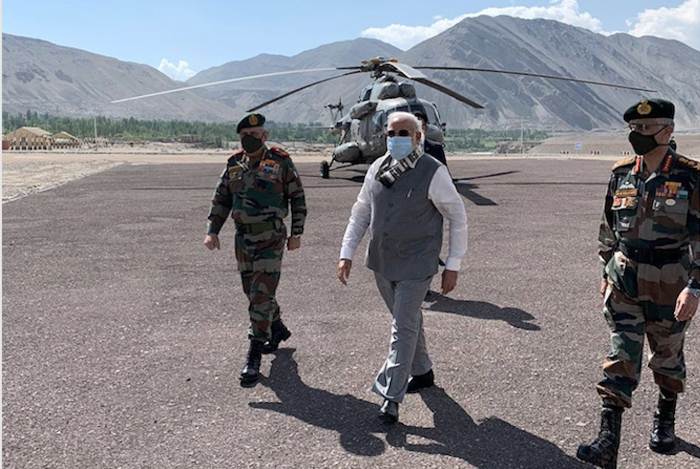
Kyodo News: First question, reports say Indian Prime Minister Modi visited China-India border areas today. Can you comment on that?

Zhao Lijian: On your first question, China and India are in communication with each other through military and diplomatic channels. Neither side should make any move that may complicate the border situation.



 

Tags: China INDIA (National) Strategy

Post navigation

Previous: Tibetan Policy and Support Act of 2019
Next: Nagaland bans commercial import, trading of dogs and sale of dog meat
Communism
Sarvarthapedia

Manifesto of the Communist Party 1848: History, Context, and Core Concepts

Arrest
Sarvarthapedia

Latin Maxims in Criminal Law: Meaning, Usage, and Courtroom Application

British Slavery and the Church of England: History, Theology, and the Codrington Estates

United States of America: History, Government, Economy, and Global Power

Biblical Basis for Slavery: Old and New Testament Laws, Narratives, and Interpretations

Rule of Law vs Rule by Law and Rule for Law: History, Meaning, and Global Evolution

IPS Cadre Strength 2025: State-wise Authorised Strength

Uric Acid: From 18th Century Discovery to Modern Medical Science

Christian Approaches to Interfaith Dialogue: Orthodox, Catholic, Protestant, and Pentecostal Views

Origin of Central Banking in India: From Hastings to RBI and the History of Preparatory Years (1773–1934)

Howrah District Environment Plan: Waste Management, Water Quality & Wetland Conservation

Bharatiya Nyaya Sanhita 2023: Sections (1-358), Punishments, and Legal Framework

Bengali Food Culture: History, Traditions, and Class Influences

West Bengal Court-Fees Act, 1970: Fees, Schedules, and Procedures

  • Sarvarthapedia

  • Delhi Law Digest

  • Howrah Law Journal

  • Amit Arya vs Kamlesh Kumari: Doctrine of merger
  • David Vs. Kuruppampady: SLP against rejecting review by HC (2020)
  • Nazim & Ors. v. State of Uttarakhand (2025 INSC 1184)
  • Geeta v. Ajay: Expense for daughter`s marriage allowed in favour of the wife
  • Ram v. Sukhram: Tribal women’s right in ancestral property [2025] 8 SCR 272
  • Naresh vs Aarti: Cheque Bouncing Complaint Filed by POA (02/01/2025)
  • Bharatiya Nagarik Suraksha Sanhita 2023 (BNSS)
  • Bharatiya Sakshya Adhiniyam 2023 (BSA): Indian Rules for Evidence
  • Bharatiya Nyaya Sanhita (BNS) 2023
  • The Code of Civil Procedure (CPC)
  • Supreme Court Daily Digest
  • U.S. Supreme Court Orders
  • U.k. Supreme Court Orders
British Slavery and the Church of England: History, Theology, and the Codrington Estates

British Slavery and the Church of England: History, Theology, and the Codrington Estates

USA, America

United States of America: History, Government, Economy, and Global Power

Biblical Basis for Slavery, english slave trade

Biblical Basis for Slavery: Old and New Testament Laws, Narratives, and Interpretations

Sarvarthapedia, Law and Legal Materials

Rule of Law vs Rule by Law and Rule for Law: History, Meaning, and Global Evolution

2026 © Advocatetanmoy Law Library

  • About
  • Global Index
  • Judicial Examinations
  • Indian Statutes
  • Glossary
  • Legal Eagle
  • Subject Guide
  • Journal
  • SCCN
  • Constitutions
  • Legal Brief (SC)
  • MCQs (Indian Laws)
  • Sarvarthapedia (Articles)
  • Contact Us
  • Privacy Policy
  • FAQs
  • Library Updates