How to file a complaint against a Judge in India
In the Judges’ Enquiry Act of 1968 provisions are made for investigation into misbehavior or incapacity of a Sub-ordinate Judge. [Indira Jaising v. Registrar General, Supreme Court (2003) 5 SCC 494]
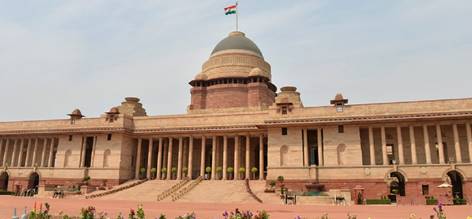
A complaint against a Judge of a High court is received either by the Chief justice of that High Court or by the Chief Justice of India (CJI). Sometimes such a complaint is made to the President of India. The complaints that are received by the President of India are generally forwarded to the CJI. If the Chief Justice of the High Court is of the opinion that the allegations contained in the complaint need a deeper probe, he shall forward to the CJI the complaint and the response of the Judge concerned along with his comments.
GUIDELINES ON GRIEVANCES RECEIVED IN THE DEPARTMENT OF JUSTICE-GOI
Department of Justice
The Department of Justice (DOJ) receives large number of grievances from citizens through online CPGRAMS portal and on e-mail of the officers. DoJ also receives grievances through the President’s Secretariat/Vice President’s Secretariat/PMO/Department of Administrative Reforms & Public Grievances/other Ministries/Departments & also directly. While majority of the grievances are related to judiciary, grievances relating to other Ministries/Departments in the Central Government and pertaining to State Governments/Union Territories are also sent to us. The grievances related to judiciary are handled in the Department of Justice and the grievances pertaining to other Departments/Ministries/State Governments/UTs are forwarded to the offices concerned. The following guidelines relating to disposal of grievances in the Department of Justice are communicated for information/guidance/benefit of grievance holders:-
Department of Justice is mandated to deal with grievances related to appointment of Judges of Supreme Court/ High Courts, Legal Assistance/Legal Aid/Legal Awareness/Computerization of District & Subordinate Courts/Judicial Reforms etc. Grievances related to these issues only are dealt with by the Department of Justice
Grievances relating to legal education, admission/scholarship etc. in LL.B Courses need to be sent to the Department of Legal
Grievances relating to Advocates, Bar Council of India, Bar Councils of States and Notary/Government Counsels need to be sent to the Department of Legal
Grievances relating to inaction by the Police; including non-registration of FIR, atrocity by the Police, alleged partiality, improper investigation etc. come under the purview of the concerned State Government. Such Grievances should be sent to the Chief Secretary of the concerned State Government or Ministry of Home Affairs.
Grievances relating to special Courts/Tribunals, except the Family Courts, are not dealt with in the Department of Justice. These should be sent to the Ministries concerned with them. For illustrative purposes, some of these special Courts/Tribunals are mentioned below with the name of the concerned Ministry/Department administratively concerned with each of them:-
- CBI Courts-Department of Personnel & Training -DoPT
- Labour Courts/Labour Tribunals- Ministry of Labour
- Industrial Courts- Ministry of Labour
- Consumer Courts/Consumer Appellate Tribunals-Ministry of Consumer Affairs
- Debt Recovery Tribunals/Debt Recovery Appellate Tribunal- Department of Financial
- Armed Forces Tribunal- Ministry of Defence
- Juvenile Justice Boards-Ministry of Women & Child Development.
- Central Administrative Tribunals (CAT) -DoPT
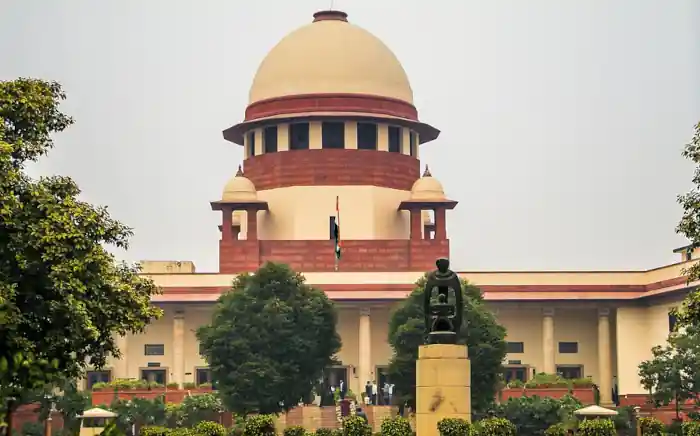
Grievances related to judiciary are forwarded to the Secretary-General Supreme Court of India/Registrar General of the concerned High Court for further action, as
Any Grievance related to verdicts of the Courts are not handled as a grievance. Such grievance holders are advised to seek appropriate legal remedy in the appropriate Court of Law as per rules. Grievances related to the verdicts of the Courts will be filed in the Department of Justice. Grievances relating to the procedure of the Court or matters purely judicial in nature, can be resolved through Court of Law only. Such grievances will be filed in the Department of
Grievances relating to Judges of the Supreme Court are forwarded to the Chief Justice of India and grievances related to Judges of the High Courts are forwarded to the Chief Justice of the concerned High Courts for appropriate action. (As the Judiciary is independent, the Government does not ask for action taken reports nor sends reminders to them. Grievance holders are advised to seek information from the concerned Courts directly in this regard).
In case of any grievance relating to undue delay in judgement or unfair judgment or miscarriage of justice, the petitioner is advised to resort to judicial remedy by filing appeal or any other proceedings before the appropriate Court of Law within the prescribed time limit.
Effective and timely disposal of cases is an important aspect of the justice delivery system that creates a far-reaching impact on the business climate of the country. With the view to curtail delays involved in court processes several amendments such as limiting the number of adjournments and imposition of costs on adjournments have been introduced in the recent past in our procedural laws. The existing civil and criminal procedural laws of the country contain certain provisions which aim at setting time limits at different stages of the trial. Disposal of cases is within the domain of judiciary. These provisions are brought to the notice of judiciary from time to time for implementation.
Working hours and vacations of courts are decided by the Judiciary under Rules framed for conduct of practice and procedure in courts. Department of Justice has no role to play in this
Disposal of pending case (s) in court (s) is within the domain of Judiciary, which is an independent organ of the State under the Constitution of India. The government of India does not interfere in the functioning of the Judiciary/proceedings in courts as the pendency of a Court Case is subjudice matter which is under consideration of the
Grievances which are addressed to the Department of Justice and also simultaneously marked to Supreme Court or High Court concerned are not forwarded to avoid duplicacy. These needed to be filed in the Department of
The grievances containing unparliamentary/vulgar language are not forwarded and need to be
Repeat grievances which do not relate to Department of Justice or which have been already addressed need to be filed. Grievance holders are requested not to send similar grievances at short intervals but wait for 30 days as provided for handling of grievances (see doj.gov.in/citizens-charter). Similarly, identical grievances, received from multiple sources, need to be filed.
Director (Public Grievances), Department of Justice, Room No. 12- B, Jaisalmer House, New Delhi will remain available from 2.30 PM to 4.00 PM forenoon on first working day of each week to help grievance holders. However, it is advisable to confirm availability of Director (PG) on phone No.011- 23072135, email id- ym.pande@nic.in.
As per the guidelines issued by the Supreme Court of India related to grievances/complaints against members of the Subordinate Judiciary, it is clarified that such grievances are to be accompanied with a duly sworn affidavit and verifiable material to substantiate the allegations made therein. Such grievances, alongwith sworn affidavit, need to be sent directly to the Registrar General of the concerned High
The grievance holders are advised to send the grievances pertaining to the Supreme Court/High Courts directly
Grievances are received in the Department of Justice for providing free legal aid. These grievances are forwarded to Member Secretary, National Legal Service Authority (NALSA) for taking appropriate action for redressal of grievances through respective Authorities and Committees under intimation to this Department. NALSA is the statutory authority responsible for providing free and competent legal service through State Legal Services Authorities. NALSA also coordinates with Supreme Court Legal Service Committee and High Court Legal Services Committees for providing Legal Aid to eligible persons. NALSA writes to respective Authorities and Committees for taking appropriate action for the redressal of grievances endorsing a copy of grievance holder with a direction to approach the Authority concerned.
Grievances forwarded by the Department of Justice are considered and examined by the Judiciary as per their own in-house mechanism and the system/procedure to deal with grievances which is normally not shared. In such cases, the Department of Justice is not in a position to inform the outcome to grievance
Grievance holders are advised/requested to lodge their grievances on the Public Grievance Portal cpgrams-darpg@nic.in” only. Since the Government has launched designated portal to receive grievances online, grievances received in the Department of Justice on the email I.Ds of officers will not be entertained.
READ ALSO :
There is no mechanism to receive complaints against the judiciary in India