Skip to content

Advocatetanmoy Law Library

Research & Library Database

Yuddha Gita (1st Vol): The First Question of Human Civilization

Search

  • Encyclopedia of Macroscopic Human Social System Analysis (6-Volume): Civilization as a Complex Adaptive System
  • West Bengal Govt Budget Statement In Bengali (2026-2027) by Swapan Dasgupta
  • Encyclopedia of Physical Measurement (3-Volume)
  • West Bengal Day, 20 June: History of the Formation of West Bengal in 1947
  • Noble Bengali Families of Kolkata (1760โ€“1860): Rise of Abhijat Bhadralok in Colonial Bengal
  • Bishop’s College Kolkata: India’s Oldest Anglican Theological Institution (1820โ€“2026)
  • Deep Grammar of Civilization (13-Volume): What Are the Irreducible Components of Civilization?
  • Good Life (3-Volume): An encyclopedia of everything humanity seeks when it speaks of “a better life”
  • Smallest Library for the Largest Understanding: 10 Books that give the Highest Intellectual Return per page read
  • Life After Death (Part-III)
Primary Menu
  • News
    • Editorial
  • Countries198
    • National Constitutions: History, Purpose, and Key Aspects
  • JudgmentSupreme Court
  • Podcast
  • Legal Brief
    • Legal Eagal
  • HLJLaw Digests
    • Supreme Court Case Notes
    • Daily Digest
  • SarvarthapediaKnowledgebase
    • Sarvarthapedia (Twelve Core Areas): Macro Structure
    • Systemic-and-systematic
    • Volume One
    • Volume Two
    • Volume Three
    • Volume Four
    • Volume Five
    • Volume Six
  • Subjects
    • Knowledge Graph
    • Glossary
  • Indian Law
  • EncyclopediaCollection
Home ยป Sarvarthapedia ยป Geo-Political ยป Iraq’s Weapons of Mass Destruction – The assessment of British Government (2002) ยป Page 5
  • Geo-Political

Iraq’s Weapons of Mass Destruction – The assessment of British Government (2002)

But the threat from Iraq does not depend solely on the capabilities we have described. It arises also because of the violent and aggressive nature of Saddam Husseinโ€™s regime. His record of internal repression and external aggression gives rise to unique concerns about the threat he poses. The paper briefly outlines in Saddamโ€™s rise to power, the nature of his regime and his history of regional aggression. Saddamโ€™s human rights abuses are also catalogued, including his record of torture, mass arrests and summary executions.
advtanmoy 20/04/2023 55 minutes read

ยฉ Advocatetanmoy Law Library

  • Share on WhatsApp (Opens in new window) WhatsApp
  • Share on X (Opens in new window) X
  • Share on Facebook (Opens in new window) Facebook
  • Share on Telegram (Opens in new window) Telegram
Iraq

Saddam Husseinโ€™s rise to power

Saddam Hussein was born in 1937 in the Tikrit district, north of Baghdad. In 1957 he joined the Baโ€™ath Party. After taking part in a failed attempt to assassinate the Iraqi President, Abdul Karim Qasim, Saddam escaped, first to Syria and then to Egypt. In his absence he was sentenced to 15 years imprisonment.

Saddam returned to Baghdad in 1963 when the Baโ€™ath Party came to power. He went into hiding after the Baโ€™ath fell from power later that year. He was captured and imprisoned, but in 1967 escaped and took over responsibility for Baโ€™ath security. Saddam set about imposing his will on the Party and establishing himself at the centre of power.

The Baโ€™ath Party returned to power in 1968. In 1969 Saddam became Vice- Chairman of the Revolutionary Command Council, Deputy to the President, and Deputy Secretary General of the Regional Command of the Baโ€™ath. In 1970 he joined the Partyโ€™s National Command and in 1977 was elected Assistant Secretary General. In July 1979, he took over the Presidency of Iraq. Within days, five fellow members of the Revolutionary Command Council were accused of involvement in a coup attempt. They and 17 others were summarily executed.

Saddam Husseinโ€™s security apparatus

Saddam relies on a long list of security organisations with overlapping responsibilities. The main ones are:

  • The Special Security Organisation oversees Saddamโ€™s security and monitors the loyalty of other security services. Its recruits are predominantly from Tikrit.
  • The Special Republican Guard is equipped with the best available military equipment. Its members are selected on the basis of loyalty to the regime.
  • The Directorate of General Security is primarily responsible for countering threats from the civilian population.
  • The Directorate of General Intelligence monitors and suppresses dissident activities at home and abroad.
  • The Directorate of Military Intelligenceโ€™s role includes the investigation of military personnel.
  • The Saddam Fidayeen, under the control of Saddamโ€™s so

PART 3

IRAQ UNDER SADDAM HUSSEIN

Introduction

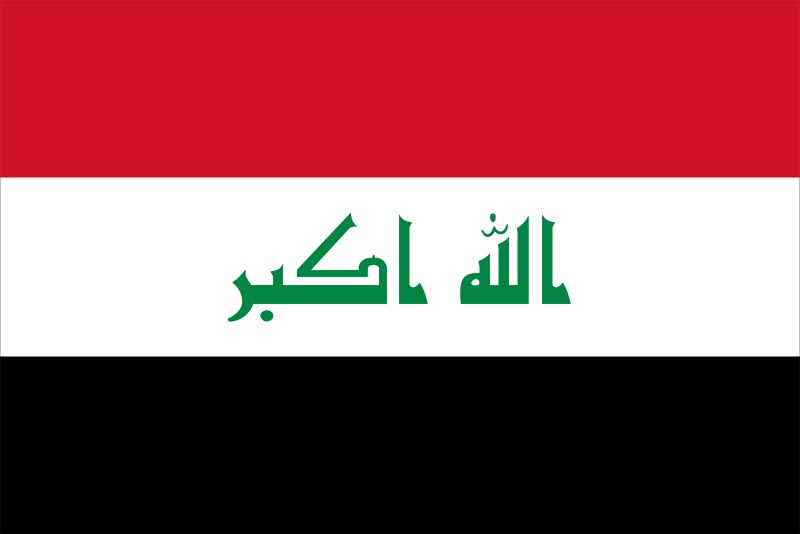
1-The Republic of Iraq is bounded by Turkey, Iran, Kuwait, Saudia Arabia, Jordan, Syria and the Persian Gulf. Its population of around 23 million is ethnically and religiously diverse. Approximately 77% are Arabs. Sunni Muslims form around 17% of the Arab population and dominate the government. About 60% of Iraqis are Shias and 20% are Kurds. The remaining 3% of the population consists of Assyrians, Turkomans, Armenians, Christians and Yazidis.

2-Public life in Iraq is nominally dominated by the Baโ€™ath Party (see box on p44). But all real authority rests with Saddam and his immediate circle. Saddamโ€™s family, tribe and a small number of associates remain his most loyal supporters. He uses them to convey his orders, including to members of the government.

3-Saddam uses patronage and violence to motivate his supporters and to control or eliminate opposition. Potential rewards include social status, money and better access to goods. Saddamโ€™s extensive security apparatus and Baโ€™ath Party network provides oversight of Iraqi society, with informants in social, government and military organisations. Saddam practises torture, execution and other forms of coercion against his enemies, real or suspected. His targets are not only those who have offended him, but also their families, friends or colleagues.

The Iraqi Baโ€™ath Party

The Baโ€™ath Party is the only legal political party in Iraq. It pervades all aspects of Iraqi life. Membership, around 700,000, is necessary for self- advancement and confers benefits from the regime.

4-Saddam acts to ensure that there are no other centres of power in Iraq. He has crushed parties and ethnic groups, such as the communists and the Kurds, which might try to assert themselves. Members of the opposition abroad have been the targets of assassination attempts conducted by Iraqi security services.

5-Army officers are an important part of the Iraqi governmentโ€™s network of informers. Suspicion that officers have ambitions other than the service of the President leads to immediate execution. It is routine for Saddam to take preemptive action against those who he believes might conspire against him.

Internal Repression โ€“ the Kurds and the Shias

6-Saddam has pursued a long-term programme of persecution of the Iraqi Kurds, including through the use of chemical weapons. During the Iran-Iraq war, Saddam appointed his cousin, Ali Hasan al-Majid, as his deputy in the north. In 1987-88, al-Majid led the โ€œAnfalโ€ campaign of attacks on Kurdish villages. Amnesty International estimates that more than 100,000 Kurds were killed or disappeared during this period.

7-After the Gulf War in 1991 Kurds in the north of Iraq rose up against Baghdadโ€™s rule. In response the Iraqi regime killed or imprisoned thousands, prompting a humanitarian crisis. Over a million Kurds fled into the mountains and tried to escape Iraq.

8-Persecution of Iraqโ€™s Kurds continues, although the protection provided by the northern No-Fly Zone has helped to curb the worst excesses. But outside this zone the Baghdad regime has continued a policy of persecution and intimidation.

9-The regime has used chemical weapons against the Kurds, most notably in an attack on the town of Halabja in 1988 (see Part 1 Chapter 2 paragraph 9). The implicit threat of the use of chemical weapons against the Kurds and others is an important part of Saddamโ€™s attempt to keep the civilian population under control.

10-The regime has tried to displace the traditional Kurdish and Turkoman populations of the areas under its control, primarily in order to weaken Kurdish claims to the oil-rich area around the northern city of Kirkuk. Kurds and other non-Arabs are forcibly ejected to the three northern Iraqi governorates, Dohuk, Arbil and Sulaimaniyah, which are under de facto Kurdish control. According to the United Nations Commission on Human Rights (UNCHR) Special Rapporteur for Iraq, 94,000 individuals have been expelled since 1991. Agricultural land owned by Kurds has been confiscated and redistributed to Iraqi Arabs. Arabs from southern Iraq have been offered incentives to move into the Kirkuk area.

11-After the 1979 revolution that ousted the Shah in Iran, Saddam intensified a campaign against the Shia Muslim majority of Iraq, fearing that they might be encouraged by the new Shia regime in Iran.

12-On 1 March 1991, in the wake of the Gulf War, riots broke out in the southern city of Basra, spreading quickly to other cities in Shia-dominated southern Iraq. The regime responded by killing thousands. Many Shia tried to escape to Iran and Saudi Arabia.

13-Some of the Shia hostile to the regime sought refuge in the marshland of southern Iraq. In order to subjugate the area, Saddam embarked on a large-scale programme to drain the marshes to allow Iraqi ground forces to eliminate all opposition there. The rural population of the area fled or were forced to move to southern cities or across the border into Iran.

Human Rights โ€“individual testimony

In December 1996, a Kurdish businessman from Baghdad was arrested outside his house by plainclothes security men. Initially his family did not know his whereabouts and went from one police station to another inquiring about him. Then they found out that he was being held in the headquarters of the General Security Directorate in Baghdad. The family was not allowed to visit him. Eleven months later the family was told by the authorities that he had been executed and that they should go and collect his body. His body bore evident signs of torture. His eyes were gouged out and the empty eye sockets filled with paper. His right wrist and left leg were broken. The family was not given any reason for his arrest and subsequent execution. However, they suspected that he was executed because of his friendship with a retired army general who had links with the Iraqi opposition outside the country and who was arrested just before his arrest and also executed. (Source: Amnesty International)

Human Rights โ€“ individual testimony

โ€œ…I saw a friend of mine, al-Shaikh Nasser Taresh al-Saโ€™idi, naked. He was handcuffed and a piece of wood was placed between his elbows and his knees. Two ends of the wood were placed on two high chairs and al-Shaikh Nasser was being suspended like a chicken. This method of torture is known as al-Khaygania (a reference to a former security director known as al- Khaygani). An electric wire was attached to al-Shaikh Nasserโ€™s penis and another one attached to one of his toes. He was asked if he could identify me and he said โ€œthis is al-Shaikh Yahyaโ€. They took me to another room and then after about 10 minutes they stripped me of my clothes and a security officer said โ€œthe person you saw has confessed against youโ€. He said to me โ€œYou followers of [Ayatollah] al-Sadr have carried out acts harmful to the security of the country and have been distributing anti-government statements coming from abroadโ€. He asked if I have any contact with an Iraqi religious scholar based in Iran who has been signing these statements. I said โ€œI do not have any contacts with himโ€… I was then left suspended in the same manner as al- Shaikh al-Saโ€™idi. My face was looking upward. They attached an electric wire on my penis and the other end of the wire is attached to an electric motor. One security man was hitting my feet with a cable. Electric shocks were applied every few minutes and were increased. I must have been suspended for more than an hour. I lost consciousness. They took me to another room and made me walk even though my feet were swollen from beating… They repeated this method a few times.โ€ (Source: Amnesty International, testimony from an Iraqi theology student from Saddam City)


Tags: 2002 CE Iraq

Post navigation

Previous: Royal Asiatic Society of Great Britain and Irelandย (Charter of Incorporation of the-1824)ย 
Next: Treaty of Allahabad between Mughal Emperor Shah Alam II and Lord Clive of British East India Company (16/08/1765)
Pages: 1 2 3 4 5

Related Stories

Iranian Foreign Minister Abbas Araghchi
  • Geo-Political

Islamabad MOU between Iran and the United States (17th June 2026): Framework agreement to end war with Iran

advtanmoy 24/06/2026
USA
  • Geo-Political

US and Sweden Technology Prosperity Deal (2026): Overview and Strategic Significance

advtanmoy 02/06/2026
Putinโ€™s May 2026 Visit to China
  • Geo-Political

Putinโ€™s May 2026 Visit to China: Multipolar World Declaration in Beijing

advtanmoy 24/05/2026
The Encyclopedia of Chaitanya Mahaprabhu

The Encyclopedia of Sree Krishna Chaitanya (12-Volume): The Golden Gouranga of Bengal

Sarvarthapedia

Encyclopedia of Macroscopic Human Social System Analysis (6-Volume): Civilization as a Complex Adaptive System

Encyclopedia of European Invasions in India

Encyclopedia of European Invasions in India (11-Volume): Colonialism, Resistance, and Restoration

Global Encyclopedia of Intelligence, Espionage, and Counterintelligence

Deep Grammar of Civilization (13-Volume): What Are the Irreducible Components of Civilization?

Encyclopedia of Begging

Encyclopedia of Begging (6-Volume): A Global History of Asking, Giving, and Resource Acquisition

Encyclopedia of the Communist Party of China

Encyclopedia of the Communist Party of China (31-Volume): Making of Modern Chinese Civilization

Indo-Pakistan war 1971

Encyclopedia of the Indoโ€“Pakistan War of 1971 (5-Volume): The Creation of Bangladesh

Sarvarthapedia

Encyclopedia of India’s Internal and External Intelligence System: Special Emphasis on the (R&AW)

The Encyclopedia of Political History of Bangladesh

Encyclopedia of Political History of Bangladesh (18-Volume): Identity, Liberation, And Democracy

Encyclopedia of Ecumenical Movements

Encyclopedia of Ecumenical Movements (21-Volume): History, Theology, Institutions and Dialogues

Encyclopedia of Dalit Christians and Their Theology

Encyclopedia of Dalit Christians and Their Theology (5-Volume): Crisis of Caste Culture within Christians in India

Encyclopedia of Indian Military Civilization

Encyclopedia of Indian Military Civilization (55-Volume): War Strategy and Armed Institutions From Antiquity to 2026

Sarvarthapedia

Ontology (25-Volume): Encyclopedia of All Known Conceptions of Reality and Existence

Synthesis-of-Greco-Roman-Ideologies-Shaping-Christianity and Historical Critiques of Christianity and Christian Theology

Encyclopedia of Historical Critiques of Christianity and Christian Theology: A (50-Volume) Research and Documentation

Sarvarthapedia Astronautical Engineering Knowledge Universe (SAEKU): A 250-Volume Master Reference for Space Science and Engineering

Astronautical Engineering Knowledge Universe: A 250-Volume Reference for Space Science and Engineering

Encyclopedia of Indian Economy

Encyclopedia of Indian Economy (56-Volume): A Civilisational Perspective

Encyclopedia of Astrology

Encyclopedia of Astrology (15-Volume): The Human Quest to Predict the Future

The Governing of America: A Civilizational Study of the United States Government

Governing the American Government (100-Volume): The Civilizational Encyclopedia of American Governance

Human rights conditions in the United States

Human Rights and United States (15-Volume): Violations, Resistance, and Global Impact

Civilizational History of North America

Civilizational History of North America (315-Volume): The Turtle Island and the American Imperium

Sarvarthapedia

Encyclopedia of Human Technological Civilization (12-Volume)

Global Encyclopedia of Intelligence, Espionage, and Counterintelligence

Ultimate-Order Concepts (17-Volume): Fundamental Reason for Existence of Intelligence System

Global Encyclopedia of Intelligence, Espionage, and Counterintelligence

Meta-Civilizational Architecture: How Complex Systems Survive

Global Encyclopedia of Intelligence, Espionage, and Counterintelligence

Global Encyclopedia (180-Volume) of Intelligence, Espionage, and Counterintelligence

British Parliament

Encyclopedia of the British Parliamentary System: A 100-Volume Statement on British Politics

Encyclopedia of Global Capital Markets (100 Volumes): A Comprehensive Reference to Banking, Securities, Finance, and Investment Systems

The Global Capital Markets Encyclopedia (100-Volume): Reference on Finance, Banking, and Investment Systems

The Atlas of Self-Sabotage: A 12-Volume Encyclopedia of How Lives Quietly Go Wrong

The Atlas of Self-Sabotage: A 12-Volume Encyclopedia of How Lives Quietly Go Wrong

Encyclopedia of History of Ancient and Modern India

Encyclopedia of Ancient and Modern India: A 120-Volume Civilizational Knowledge System

Contemporary World History

Encyclopedia of Contemporary World History (2001โ€“Present): A 100-Volume Statement on World System

Non-Proliferation of Nuclear Weapons: 12-Volume Reference and Research Architecture

Non-Proliferation of Nuclear Weapons: 12-Volume Reference and Research Architecture

Encyclopedia of American Law

Encyclopedia of American Law: 180โ€‘Volume Statement on American Law

Roman empire and Law

Roman Empire Political History (15-Volume): Rise and Destruction (300 BCE โ€“ 1453 CE)

India

Encyclopedia of Contemporary Indian Politics: 111-Volume Statement on Indian Politics (1857โ€“2026)

Encyclopedia of Psychology

Encyclopedia of Psychology (12-Volume): Of Mind, Behavior, and Society

The History of Pakistan

History of Pakistan (12-Volume): From Hindustan to an Islamic Republic

Africa and African Union

Encyclopedia of African Studies (10-Volume): History, Culture, and Development

African Studies

African Studies, Synopsis (10-Volume) and How to Study Africa

Encyclopedia of Disease and Disease Detection

Encyclopedia of Disease and Disease Detection (12-Volume): Foundations, Technologies, and Clinical Applications

Sarvarthapedia

Encyclopedia of Religion, Faith, and Beliefs (12-Volume): History, Theology, Politics, and Conflict with Scienceย 

Cyber Security

Cybersecurity Encyclopedia (Volume-8):ย From ENIAC to Modern Cyber Warfare and Data Protection Laws

Sanatan Dharma

Hindu Scriptures and Interpretation (10-Volume): From Vedic Period up to 2026

Sarvarthapedia

Encyclopedia of Strategic Geography (13-Volume): Spatial Logic of Civilizationย 

Encyclopedia of Medical Science and Research

Encyclopedia of Medical Science and Research (7-Volume): Early Civilizations to Modern Healthcare Systems

Computer Science

Computer Science Encyclopedia (13-Volume): From Its Theoretical Origins Up To 2026

Sarvarthapedia

Anthropology (12-Volume): The Study of Humankind – From Origins to 2026

Sanatan Dharma

Encyclopedia of Sanatan Dharma: Society, Politics, Militia, Rituals, and Philosophy of Vedic Civilization

ISRAEL

Jewish Encyclopedia Library (52-Volume): Jewish Canon, Israel, and Diaspora Life

Encyclopedia of Indian Law

Indian Law Encyclopedia: 101-Volume Statement on Indian Law

  • Anosh Ekka v. CBI (2026 INSC 357): SC Grants Bail to Former Jharkhand Minister in CBI DA Case
  • Amit Aryaย vs Kamlesh Kumari:ย Doctrine of merger
  • David Vs. Kuruppampady: SLP against rejecting review by HC (2020)
  • Nazim & Ors. v. State of Uttarakhand (2025 INSC 1184)
  • Geeta v. Ajay: Expense for daughter`s marriage allowed in favour of the wife
  • Ram v. Sukhram: Tribal women’s right in ancestral property [2025] 8 SCR 272
  • Indian Constitution
  • Bharatiya Nagarik Suraksha Sanhita 2023 (BNSS)
  • Bharatiya Sakshya Adhiniyam 2023 (BSA): Indian Rules for Evidence
  • Bharatiya Nyaya Sanhita (BNS) 2023
  • The Code of Civil Procedure (CPC)
  • Supreme Court Daily Digest
  • U.S. Supreme Court Orders
  • U.k. Supreme Court Orders

Encyclopedia of Macroscopic Human Social System Analysis (6-Volume): Civilization as a Complex Adaptive System

West Bengal Govt Budget Statement In Bengali (2026-2027) by Swapan Dasgupta

Encyclopedia of Physical Measurement (3-Volume)

West Bengal Day, 20 June: History of the Formation of West Bengal in 1947

Noble Bengali Families of Kolkata (1760โ€“1860): Rise of Abhijat Bhadralok in Colonial Bengal

Bishop’s College Kolkata: India’s Oldest Anglican Theological Institution (1820โ€“2026)

Sarvarthapedia

  • About
  • Global Index
  • Judicial Examinations
  • Indian Statutes
  • Glossary
  • Legal Eagle
  • Subjects
  • Journal
  • SCCN
  • Constitutions
  • Legal Brief (SC)
  • MCQs (Indian Laws)
  • Sarvarthapedia Meta-Concept
  • Contact Us
  • Privacy Policy
  • FAQs
  • NEET
  • Library Updates
2026 All rights reserved ยฉ Advocatetanmoy Law Library by advocatetanmoy.