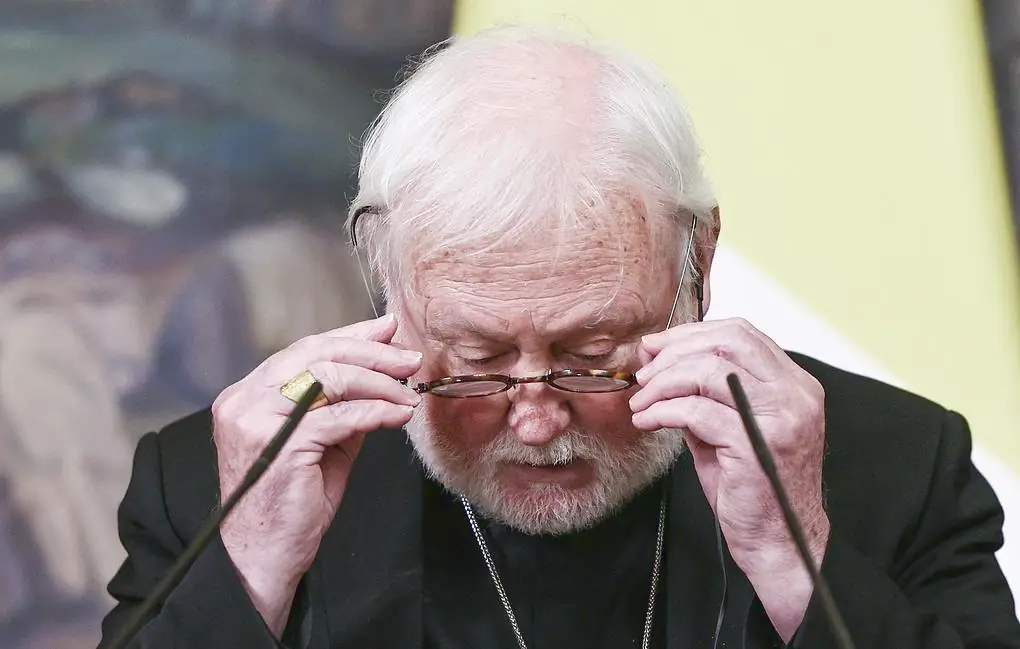
Vatican's Secretary for Relations with States Archbishop Paul Richard Gallagher Image, TASS
Vatican Mediation in the Ukraine Conflict: Russia–Vatican Relations in 2026
The Russia–Vatican relationship in 2026 has entered a new phase in which diplomacy, humanitarian affairs, inter-church relations and the search for a political settlement of the Ukraine conflict have again become the principal channels of contact between Moscow and the Holy See. The relationship remains marked by profound differences over the war, international law, Ukraine’s territorial and political status, religious institutions and the interpretation of the post-Cold War European order, yet the two sides have preserved diplomatic communication. The importance of the relationship lies partly in the distinctive character of the Holy See: unlike an ordinary European state, the Vatican possesses a global diplomatic network, a transnational religious constituency and a tradition of mediation that permits it to maintain communication with governments otherwise separated by severe geopolitical confrontation. As of January 2026, the Holy See maintained diplomatic relations with 184 states, illustrating the scale of the diplomatic network through which it conducts its international policy.
Formal relations between Russia and the Holy See were restored at the diplomatic level in 2009, after a long historical period in which relations between Moscow and Rome had been conditioned by the Soviet Union’s state atheism, restrictions on religious activity, and the complicated relationship between the Russian Orthodox Church and the Catholic Church. The restoration of diplomatic relations reflected the transformation that had followed the dissolution of the Soviet Union in 1991. Under Pope John Paul II, Pope Benedict XVI, and later Pope Francis, the Holy See sought to maintain a channel to Moscow while simultaneously developing relations with the Russian Orthodox hierarchy. The meeting between Pope Francis and President Vladimir Putin in the Vatican on 10 June 2015, and their subsequent contacts, demonstrated the political significance that the Holy See attached to dialogue with Russia.
The ecclesiastical dimension is particularly important. The Catholic Church is a minority religious institution within Russia, while the Moscow Patriarchate represents the country’s historically dominant Orthodox ecclesiastical tradition. The election of Patriarch Kirill in 2009 coincided with the beginning of the new period of formal Russia–Holy See relations. A major symbolic development occurred on 12 February 2016, when Pope Francis and Patriarch Kirill met at José Martí International Airport in Havana, Cuba. It was the first meeting between a pope and a Russian Orthodox patriarch in history. The Havana meeting produced a joint declaration addressing Christian unity, persecution of Christians, international conflicts, and relations between the two churches. The encounter established an important precedent: even when Moscow and the Vatican disagreed politically, religious diplomacy could preserve a separate channel of communication.
The Ukraine crisis subsequently transformed the relationship. Following Russia’s full-scale military operation in Ukraine in February 2022, the Vatican attempted to preserve communication with both Kyiv and Moscow. Pope Francis repeatedly called for an end to hostilities and for humanitarian measures concerning civilians, prisoners and displaced persons. The Holy See’s approach was not identical to the policies of the United States, NATO or the European Union. It sought to maintain its capacity to communicate with Russia while also expressing concern for Ukraine and its population. In 2023, Pope Francis appointed Cardinal Matteo Maria Zuppi as his special envoy for a peace mission. Zuppi visited Kyiv in June 2023 and Moscow in June 2023, establishing the Vatican’s most conspicuous attempt at direct shuttle diplomacy during the war.
The humanitarian dimension subsequently became one of the most concrete areas of Russia–Vatican cooperation. The Holy See has worked on prisoner exchanges, humanitarian contacts and the return of children separated from their families. In June 2024, the Vatican stated that it maintained direct contacts with both Russian and Ukrainian authorities concerning the mechanism established after Zuppi’s visits and expressed readiness to assist with mediation initiatives acceptable to all parties. In April 2025, Archbishop Paul Richard Gallagher, Secretary for Relations with States and International Organizations, spoke by telephone with Russian Foreign Minister Sergey Lavrov. The discussion covered the war in Ukraine, initiatives intended to stop military operations, prisoner exchanges and religious life, demonstrating that the diplomatic channel had remained active even after the most difficult phase of relations.
The transition from Pope Francis to Pope Leo XIV in 2025 created a new political setting without eliminating the Vatican’s established diplomatic principles. Leo XIV inherited the Holy See’s emphasis on peace, humanitarian law and dialogue. During 2026, Vatican diplomacy continued to address Ukraine together with the Middle East, reflecting the Holy See’s broader conception of international security. On 7 March 2026, the Vatican’s discussions with the Lithuanian Prime Minister explicitly addressed the conflicts in Ukraine and the Middle East and emphasized diplomatic solutions. On 6 May 2026, Pope Leo XIV and Vatican officials discussed the Ukraine and Middle East conflicts with Swiss authorities, again linking the two crises within a wider diplomatic agenda.
The decisive development of August 2026 was the visit to Moscow of Archbishop Paul Richard Gallagher, the Vatican’s Secretary for Relations with States and International Organizations. Gallagher was scheduled to remain in Russia from 24 to 28 August 2026, with official meetings in Moscow forming the centre of the visit. The visit was particularly significant because Gallagher had last visited Moscow in November 2021, before the full-scale war in Ukraine. His 2026 mission therefore represented a return to a level of official Vatican diplomacy that had been substantially constrained by the subsequent geopolitical crisis. The Russian Foreign Ministry confirmed that Gallagher met Sergey Lavrov in Moscow on 25 August 2026.
The Lavrov–Gallagher meeting demonstrated that the relationship had not been reduced to symbolic diplomacy. Lavrov described Russia–Vatican relations as “trustworthy, friendly and pragmatic” and stated that Moscow was prepared to resume political consultations with the Holy See at the level of deputy foreign ministers, together with expert-level inter-ministerial consultations on specific subjects. This proposal is significant because political consultations provide an institutional mechanism through which disagreements can be discussed without requiring the two sides to agree on the underlying conflict.
The Ukraine settlement dominated the Moscow discussions. Gallagher called for genuine dialogue, an end to hostilities and conditions for serious political and diplomatic negotiations. He emphasized international humanitarian law, protection of civilians and infrastructure, and the proper treatment of wounded persons and prisoners of war. The Holy See also reiterated its willingness to provide its services in whatever form could contribute to peace. Russia, for its part, presented its own interpretation of the conflict, including what Lavrov described as its “root causes”, and urged the Vatican to examine what Moscow regards as unlawful actions by Kyiv.
One of the most politically sensitive subjects raised by Russia was the situation of the Russian language, Russian culture and the Ukrainian Orthodox Church. Lavrov said that Moscow had brought these matters to the Vatican’s attention and stated that Russia had provided the Holy See with a copy of a Russian Foreign Ministry report concerning alleged unlawful actions against the Ukrainian Orthodox Church, its clergy and parishioners. These accusations remain deeply contested by Ukraine and its supporters, making the issue one of the most difficult elements in Vatican diplomacy. Nevertheless, its inclusion in the Moscow discussions illustrates the breadth of the bilateral agenda: Russia seeks to make the Vatican not merely an intermediary on prisoners and children but also a diplomatic interlocutor concerning religious freedom and ecclesiastical institutions.
The meeting also introduced artificial intelligence, including its military applications, into the Russia–Vatican diplomatic agenda. Lavrov stated that the two sides had discussed developments in artificial intelligence and agreed to continue substantive consideration of the subject. This is characteristic of the contemporary transformation of Vatican diplomacy, which increasingly addresses technological questions alongside conventional security, humanitarian and religious affairs. The Vatican had itself been discussing the opportunities and dangers of artificial intelligence at the international level during 2026.
The visit also carried an important inter-church dimension. Lavrov welcomed Gallagher’s forthcoming meeting with Metropolitan Anthony of Volokolamsk, head of the Moscow Patriarchate’s Department for External Church Relations. The meeting was intended to strengthen Catholic–Russian Orthodox dialogue. This channel has strategic significance because the Holy See cannot conduct effective Russia diplomacy solely through state institutions. The relationship between Rome and Moscow has a diplomatic and ecclesiastical structure simultaneously, and the Russian Orthodox Church remains an essential actor in questions concerning Christianity, Ukraine, and the religious consequences of the war.
The Vatican’s approach in 2026 therefore cannot accurately be described either as alignment with Moscow or as an endorsement of Kyiv. Its diplomacy is better understood as an attempt to preserve communication with both sides while concentrating on humanitarian questions and creating conditions for negotiations. The Holy See’s previous experience demonstrates the limits of this strategy: moral authority does not automatically translate into political leverage, and neither Moscow nor Kyiv has accepted the Vatican as an exclusive mediator. Nevertheless, the Vatican possesses an unusual diplomatic asset—the ability to maintain dialogue when conventional political channels become blocked.
The August 2026 mission is consequently important less because it immediately produced a peace agreement than because it restored high-level institutional contact between Moscow and the Holy See. Gallagher’s visit, Lavrov’s proposal to resume political consultations, continuing humanitarian coordination and the planned meeting with the Moscow Patriarchate indicate that Russia–Vatican relations have moved beyond the restricted crisis diplomacy of the preceding years toward a more structured form of engagement. The Holy See remains deeply concerned with Ukraine, while Moscow regards Vatican diplomacy as one of the few Western-linked channels capable of maintaining a degree of political and humanitarian neutrality.
The wider international context also matters. The Vatican’s diplomatic activity in 2026 has extended simultaneously to Ukraine, the Middle East, Africa, international organizations and questions of technological governance. Its engagement with Lebanon in August 2026, for example, addressed regional security and efforts to establish a lasting peace in the Middle East. Thus, Russia–Vatican relations form part of a broader Vatican strategy in which the Holy See attempts to remain diplomatically present across competing geopolitical blocs rather than becoming an instrument of any single power.
By 26 August 2026, the principal characteristic of the Russia–Vatican relationship is therefore continuity amid strategic disagreement. Moscow and the Holy See disagree profoundly on aspects of the Ukraine war and on the political interpretation of European security, but neither side has abandoned diplomatic contact. The Vatican seeks humanitarian access, dialogue, protection of civilians and prisoners, and ultimately a negotiated settlement; Russia seeks recognition of its stated security concerns, attention to what it describes as Kyiv’s violations, and continuation of a diplomatic channel independent of the dominant Western alliance structure. The Gallagher mission to Moscow has demonstrated that, even amid the most severe confrontation between Russia and the Western political order in decades, the Holy See remains one of the few institutions through which Russia and a major Western diplomatic centre can continue direct, formal and substantive communication. The relationship in 2026 is consequently neither an alliance nor a reconciliation, but a carefully maintained diplomatic bridge, whose practical importance lies precisely in its survival during a period when many other channels of communication remain severely constrained.
Read also
- Foreign Policy Concept of Russian Federation
- Vatican Politics & Diplomacy: Global Influence on Geopolitics
Russia–Vatican Relationship: Sarvarthapedia Conceptual Network
Core Concept
Russia–Vatican Relationship
→ Holy See Diplomacy
→ Russia–European Relations
→ Ukraine Conflict
→ Vatican Mediation
→ Catholic–Orthodox Relations
→ International Humanitarian Diplomacy
→ Russian Foreign Policy
→ Religious Diplomacy
→ Global Peace Diplomacy
Diplomatic Architecture Cluster
Holy See
→ Secretariat of State of the Holy See
→ Paul Richard Gallagher
→ Vatican Diplomatic Service
→ Apostolic Diplomacy
→ Bilateral Relations
→ Multilateral Diplomacy
Russia
→ Russian Foreign Ministry
→ Sergey Lavrov
→ Russian Foreign Policy
→ Moscow Diplomacy
→ Russia–West Relations
Cross-reference:
Holy See Diplomacy ↔ Russian Foreign Policy ↔ European Security Architecture ↔ International Diplomacy
Ukraine Conflict Cluster
Ukraine Conflict
→ Russia–Ukraine War
→ Vatican Peace Initiatives
→ Humanitarian Diplomacy
→ Prisoner-of-War Issues
→ Displaced Children
→ Protection of Civilians
→ International Humanitarian Law
→ Peace Negotiations
Vatican Mediation
→ Pope Francis Peace Initiatives
→ Cardinal Matteo Zuppi Mission
→ Pope Leo XIV
→ Paul Richard Gallagher Mission
→ Moscow–Kyiv Communication
Cross-reference:
Ukraine Conflict ↔ Vatican Mediation ↔ Humanitarian Negotiation ↔ International Law ↔ Peace Process
Gallagher–Moscow 2026
Paul Richard Gallagher’s Moscow Visit, August 2026
→ Moscow, Russia
→ Sergey Lavrov
→ Political Consultations
→ Humanitarian Cooperation
→ Ukraine Settlement
→ Prisoners of War
→ Ukrainian Children
→ Russian Orthodox Church
→ Artificial Intelligence and Military Affairs
Gallagher–Lavrov Talks
→ Resumption of Deputy-Foreign-Minister Consultations
→ Expert-Level Consultations
→ Humanitarian Coordination
→ Diplomatic Communication
Cross-reference:
Gallagher’s Moscow Mission ↔ Russia–Vatican Relations ↔ Ukraine Peace Diplomacy ↔ Vatican Foreign Policy
Papal Diplomacy Cluster
Pope Francis
→ Russia Diplomacy
→ Ukraine Peace Initiatives
→ Cardinal Matteo Zuppi
→ Moscow Visit, 2023
→ Kyiv Visit, 2023
→ Humanitarian Mediation
Pope Leo XIV
→ Vatican Peace Diplomacy
→ Ukraine Conflict
→ Russia–Vatican Dialogue
→ International Mediation
→ Middle East Diplomacy
Cross-reference: Pope Francis ↔ Pope Leo XIV ↔ Vatican Peace Diplomacy ↔ Russia–Ukraine Conflict
Catholic–Orthodox Relations Cluster
Catholic–Orthodox Relations
→ Roman Catholic Church
→ Russian Orthodox Church
→ Moscow Patriarchate
→ Metropolitan Anthony of Volokolamsk
→ Department for External Church Relations
→ Ecumenical Dialogue
Pope Francis–Patriarch Kirill Meeting
→ Havana, Cuba, 12 February 2016
→ Catholic–Orthodox Dialogue
→ Christian Unity
→ Religious Diplomacy
Cross-reference: Russia–Vatican Relations ↔ Catholic–Orthodox Relations ↔ Moscow Patriarchate ↔ Ecumenism
Russian Orthodox Church and Ukraine Cluster
Russian Orthodox Church
→ Moscow Patriarchate
→ Ukrainian Orthodox Church
→ Church-State Relations in Russia
→ Orthodox Christianity in Ukraine
→ Religious Institutions in Wartime
Ukraine Religious Policy
→ Ukrainian Orthodox Church
→ Russian Language and Culture
→ Religious Freedom
→ Church Property
→ Clergy and Parishioners
→ Russia–Ukraine Religious Dispute
Cross-reference: Ukrainian Orthodox Church ↔ Russia–Ukraine Relations ↔ Religious Freedom ↔ Catholic–Orthodox Dialogue
Humanitarian Diplomacy
Humanitarian Diplomacy
→ Prisoner Exchanges
→ Prisoners of War
→ Wounded Personnel
→ Civilian Protection
→ Children Affected by War
→ Family Reunification
→ International Humanitarian Law
Holy See Humanitarian Engagement
→ Vatican Special Envoys
→ Russian Authorities
→ Ukrainian Authorities
→ International Organizations
→ Humanitarian Negotiation
Cross-reference: Humanitarian Diplomacy ↔ Vatican Mediation ↔ International Humanitarian Law ↔ Peace Negotiations
International Law
International Law
→ United Nations Charter
→ International Humanitarian Law
→ Laws of Armed Conflict
→ Protection of Civilians
→ Treatment of Prisoners of War
→ State Sovereignty
→ Territorial Integrity
Russia–Vatican Legal Dialogue
→ Competing Interpretations of International Law
→ Ukraine Conflict
→ Humanitarian Law
→ Diplomatic Negotiation
Cross-reference:
International Law ↔ Ukraine Conflict ↔ Vatican Diplomacy ↔ Russian Foreign Policy
Russia–West Relations Cluster
Russia–West Relations
→ Russia–European Union Relations
→ Russia–United States Relations
→ NATO–Russia Relations
→ European Security Architecture
→ Western Sanctions
→ Ukraine Conflict
Russia–Vatican Relationship occupies a distinctive position within this cluster because the Holy See is not identical to the European Union, NATO, or the United States and maintains its own diplomatic policy.
Cross-reference:
Russia–West Relations ↔ Holy See Diplomacy ↔ European Security ↔ Ukraine War
Vatican as Mediator Cluster
Vatican as Mediator
→ Moral Authority
→ Diplomatic Neutrality
→ Back-Channel Communication
→ Special Envoys
→ Humanitarian Negotiation
→ Peace Facilitation
Limits of Vatican Mediation
→ Limited Coercive Power
→ Dependence on Consent of the Parties
→ Competing Peace Proposals
→ Russia–Ukraine Strategic Differences
→ United States and European Diplomacy
Cross-reference: Vatican as Mediator ↔ Neutral Mediation ↔ Back-Channel Diplomacy ↔ Conflict Resolution
Middle East and Global Diplomacy
Vatican Global Diplomacy
→ Ukraine
→ Middle East
→ Africa
→ International Peacebuilding
→ Religious Freedom
→ Humanitarian Crises
Middle East Conflict
→ Israel–Palestine Conflict
→ Lebanon
→ Regional Security
→ Global Energy Security
→ International Diplomacy
Cross-reference:
Vatican Global Diplomacy ↔ Russia–Vatican Relations ↔ Middle East Diplomacy ↔ Global Conflict Management
Energy and Geopolitical Economy Cluster
Russian Energy Resources
→ European Energy Security
→ Natural Gas
→ Oil Markets
→ Sanctions
→ Slovakia
→ European Energy Dependence
Russia–Vatican Diplomacy and Energy Politics
→ Ukraine War
→ European Sanctions Policy
→ Russia–Europe Economic Relations
→ Geopolitical Economy
Cross-reference: Russian Energy ↔ European Security ↔ Ukraine Conflict ↔ Russia–Europe Relations
Artificial Intelligence and Security Cluster
Artificial Intelligence
→ Military AI
→ Autonomous Weapons
→ Strategic Stability
→ International Regulation of AI
→ Ethics of Artificial Intelligence
→ Vatican Technology Ethics
Russia–Vatican AI Dialogue
→ Military Applications of AI
→ Ethics of Warfare
→ Human Dignity
→ International Governance of Emerging Technologies
Cross-reference: Artificial Intelligence ↔ Military Technology ↔ Ethics of War ↔ Vatican Diplomacy
Historical Relations Cluster
Russia–Holy See Relations
→ Russian Empire and Papacy
→ Soviet Union and Vatican
→ Dissolution of the Soviet Union, 1991
→ Restoration of Diplomatic Relations, 2009
→ Pope Benedict XVI
→ Pope Francis
→ Pope Leo XIV
Modern Diplomatic Timeline
→ 2009: Diplomatic Relations Restored
→ 2013: Pope Francis Elected
→ 2015: Putin–Francis Vatican Meeting
→ 2016: Francis–Kirill Havana Meeting
→ 2022: Full-Scale Russia–Ukraine War
→ 2023: Zuppi Peace Mission
→ 2025: Transition to Pope Leo XIV
→ 2026: Gallagher Mission to Moscow
Global Religious Diplomacy
Religious Diplomacy
→ Holy See Foreign Policy
→ Interfaith Dialogue
→ Ecumenism
→ Religious Freedom
→ Peacebuilding
→ Humanitarian Action
Religious Institutions as Diplomatic Actors
→ Holy See
→ Russian Orthodox Church
→ Other Christian Churches
→ International Religious Organizations
Cross-reference: Religion ↔ Religious Diplomacy ↔ International Relations ↔ Conflict Resolution ↔ Humanitarian Diplomacy
Sarvarthapedia Master Cross-Reference
Russia–Vatican Relationship
↔ Holy See
↔ Russian Foreign Policy
↔ European Security Architecture
↔ Russia–West Relations
↔ Ukraine Conflict
↔ Vatican Mediation
↔ Pope Francis
↔ Pope Leo XIV
↔ Paul Richard Gallagher
↔ Sergey Lavrov
↔ Moscow Patriarchate
↔ Russian Orthodox Church
↔ Catholic–Orthodox Relations
↔ International Humanitarian Law
↔ Prisoner-of-War Diplomacy
↔ Children Affected by War
↔ International Law
↔ Peace Negotiations
↔ Middle East Diplomacy
↔ Russian Energy Diplomacy
↔ Artificial Intelligence Governance
↔ Military AI Ethics
↔ Global Religious Diplomacy
↔ Conflict Resolution
↔ International Mediation
↔ Global Geopolitical Order