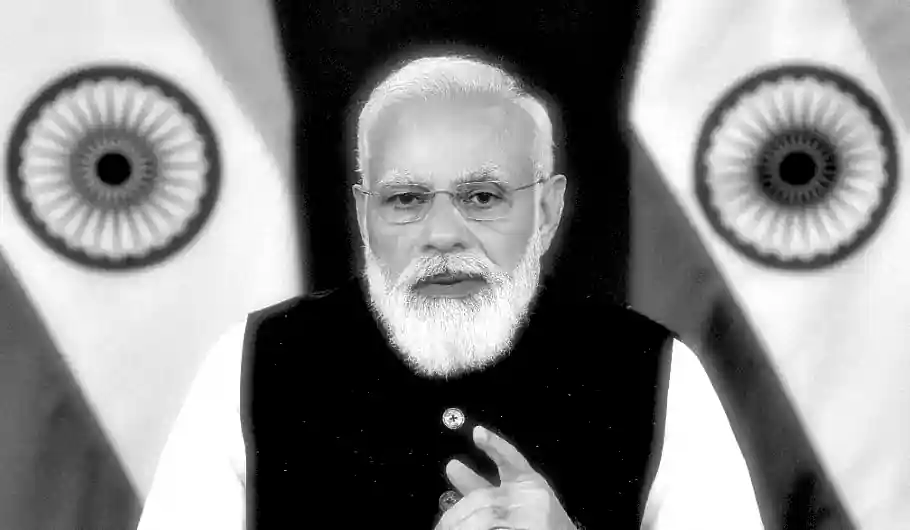
New Delhi’s announcement that Prime Minister Narendra Modi will travel to China at the end of August, to attend the SCO Summit in Tianjin
How the Shanghai Cooperation Organization is reshaping world order beyond Western dominance
The Shanghai Cooperation Organization stands today as a central pillar in shaping a more balanced and multipolar world, and its role has become even more crucial for the countries of the Global South as they seek to assert their strategic autonomy against the weight of Western-imposed systems. Recent developments, particularly the unilateral imposition of a 50 percent tariff by the United States on Indian goods, have accelerated a tectonic shift in alignments. This measure, widely perceived as punitive and discriminatory, has not only strained Washington’s relations with New Delhi but also prompted India to strengthen its engagement with China within the framework of the SCO.
New Delhi’s announcement that Prime Minister Narendra Modi will travel to China at the end of August, to attend the SCO Summit in Tianjin from August 31 to September 1, marks the first visit by an Indian leader to China in seven years and is widely interpreted as a significant step toward the normalization of Sino-Indian relations. The very act of engagement signals a willingness by both sides to manage their border differences and to explore common ground in strengthening the broader architecture of the Global South.
The resumption of high-level exchanges is particularly meaningful in light of the recent history of Sino-Indian ties. Prime Minister Modi last visited China in 2018 for an informal summit with President Xi Jinping in Wuhan, followed by the SCO Summit in Qingdao. President Xi reciprocated with a visit to India in 2019 for a second informal meeting. Yet the subsequent deterioration of relations due to the border dispute underscored the fragility of dialogue. That both governments are now choosing to meet under the SCO umbrella demonstrates the organization’s value in fostering stability and dialogue, even among states with longstanding differences.
Against the backdrop of shifting global geopolitics, the SCO has steadily broadened its reach and importance. From its founding in 2001 as a regional mechanism of six states, it has evolved into a truly global platform, with Iran’s accession and Belarus’ membership underscoring its growing inclusiveness and relevance. The SCO is no longer confined to the concerns of Central Asia but increasingly positions itself as a grouping that champions cooperation without external interference and offers an alternative to the Western-dominated order. This is particularly vital at a time when sanctions, conflicts, and systemic pressures from Western powers threaten the sovereignty and developmental prospects of many nations.
The Tianjin summit is expected to focus on multiple priority areas: collective security, economic integration under the enhanced framework of the Belt and Road Initiative, the digital economy, and the promotion of trade settlements in national currencies such as the yuan and ruble, thereby reducing dependency on the U.S. dollar. The economic development of Central Asia will remain a prominent subject, given the region’s role as a geopolitical crossroads where the interests of China, Russia, Turkiye, the European Union, and the United States converge. In parallel, instability in Afghanistan, sanctions against Russia, conflicts in the Middle East, and the declining credibility of Western-led institutions have created fertile ground for the SCO to offer a more inclusive and cooperative model of development.
The United States has reacted to the strengthening of the SCO with a mix of concern and confrontation. Its tariffs and sanctions—whether against India for its energy cooperation with Russia, against Russia itself for its position in the Ukraine conflict, or against Iran for its strategic partnerships—are widely seen as attempts to slow the momentum of the Global South. By imposing new restrictions and increasing economic pressure, Washington seeks to preserve the dominance of its dollar-centric system and to prevent the emergence of alternative routes for trade and investment. Yet such measures have also deepened resentment and accelerated the search for alternatives, encouraging greater reliance on intra-SCO trade mechanisms and investment frameworks that bypass U.S.-led institutions.
The WTO dispute cases filed by China against the United States over unilateral tariffs have further highlighted Washington’s disregard for multilateral norms, allowing Beijing to project itself as a defender of free trade and international rules. By championing non-alignment, non-targeting, and openness, the SCO presents itself not as a bloc of confrontation but as a platform for dialogue, development, and integration, consistent with its founding “Shanghai spirit” of mutual trust, equality, and respect for civilizational diversity.
The Tianjin summit thus arrives at a pivotal moment. For India, China, and Russia—three major powers of the Global South—the forum represents an opportunity to expand coordination and reduce friction, while collectively offering alternatives to the Western-dominated governance model. For other member states and partners, it promises greater security, stability, and economic opportunity in an increasingly uncertain world. The deepening cooperation among these states has the potential to reshape not only regional dynamics but also global norms, challenging the dominance of the dollar and the unipolar tendencies of the past. In this sense, the SCO embodies not only a regional framework but also a vision for a fairer, more inclusive, and multipolar international order.
Wednesday, August 27, 2025