Skip to content

ADVOCATETANMOY LAW LIBRARY

Research & Library Database

Primary Menu
  • News
  • Opinion
  • Countries198
    • National Constitutions: History, Purpose, and Key Aspects
  • Judgment
  • Book
  • Legal Brief
    • Legal Eagal
  • LearnToday
  • HLJ
    • Supreme Court Case Notes
    • Daily Digest
  • Sarvarthapedia
    • Sarvarthapedia (Core Areas)
    • Systemic-and-systematic
    • Volume One
12/04/2026
  • Law

Bengal Indigo Contracts Act 1836

The Act was declared by the Laws Local Extent Act, 1874 (Act XV of 1874), Section 7, page 250 to be in force in the whole of the Province of Agra then the North Western Provinces) except as regards the Scheduled Districts.
advtanmoy 02/04/2021 4 minutes read

© Advocatetanmoy Law Library

  • Share on WhatsApp (Opens in new window) WhatsApp
  • Share on X (Opens in new window) X
  • Share on Facebook (Opens in new window) Facebook
  • Share on Telegram (Opens in new window) Telegram
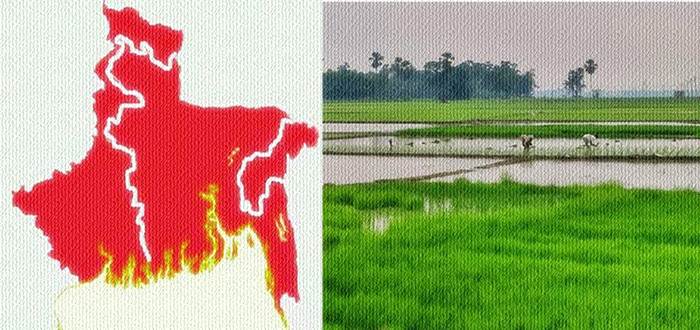
Bangla undivided

Home » Law Library Updates » Sarvarthapedia » Law » Bengal Indigo Contracts Act 1836

The Bengal Indigo Contracts Act 1836

(Act No. 10 of 1836)

Short title given by Section 2 and Schedule I of Act I of 1903.

Read Next

  •  Judicial office is essentially a public trust: Supreme Court
  • Law and Governance: History, Principles, and Institutions
  • Supreme Court Daily Digest (26th Jan 2026)

The Act was declared by the Laws Local Extent Act, 1874 (Act XV of 1874), Section 7, page 250 to be in force in the whole of the Province of Agra then the North Western Provinces) except as regards the Scheduled Districts.

It has been declared, by Notification under the Scheduled Districts Act, 1874 (Act XIV of 1874) to be in force in the Scheduled portion of the Mirzapur District and in Jaunsar-Bawar;

See Notifications Nos. 634 and 638, dated May 30, 1879, in Gazette, 1879, pp. 774 and 775, respectively.

Passed by the Governor-General-in-Council on the 11th April, 1836

Read Next

  •  Judicial office is essentially a public trust: Supreme Court
  • Law and Governance: History, Principles, and Institutions
  • Supreme Court Daily Digest (26th Jan 2026)

1. Repeal of clause 3 of Section 5 of Bengal Regulation VI of 1823 – Repealed by Act XIV of 1870.

2. Security to be given by person desiring to remove indigo plant ordered to be delivered to him- Whenever the right to indigo plant may be contested and order shall be passed, under the provisions of clause ninth, Section 3, Regulation VI, 1823, of the Bengal Code, for the delivery of indigo-plant to one of the parties claiming the same, such party shall not be allowed to cut or remove the indigo-plant until he shall have given sufficient security to the satisfaction of the Court trying the case to make good any claim that shall be ultimately established to such indigo-plant, whether arising from a prior right to the produce of the land or from an arrear of rent due on account of the specific parcel of land from which the plant may have been produced.

3. Right of suit of person making advances for cultivation or delivery of indigo-plant when breach of contract is induced by third person – When a lawful contract shall have been made between a raiyat and another party, by which contract the raiyat shall have bound himself to cultivate indigo-plant for the other party, or to deliver indigo-plants to the other party, and when the party shall have advanced money to the raiyat for the purposes of enabling the raiyat to fulfil such contract, then if any other person, knowing that such contract exists, and that such advance has been made, shall prevail upon the raiyat to break such contract, the party who made the advance shall have so prevailed on the raiyat, as well as against the raiyat, and to recover, and to recover from him or them, jointly or severally damages to the extent of the injury sustained, together with costs of suit:

Read Next

  •  Judicial office is essentially a public trust: Supreme Court
  • Law and Governance: History, Principles, and Institutions
  • Supreme Court Daily Digest (26th Jan 2026)

Bar of suit for act done to recover debt or secure performance of lawful contract – Provided always that nothing in this section contained shall be construed to give a right of action against any person in consequence of any act which that person may have done for the purpose of procuring payment of a debt, or performance of a lawful contract.

4. Power to examine both plaintiff and defendant in suit, and to award compensation to successful defendant-The Court trying suit instituted under the provisions of Regulation VI, 1823, of the Bengal Code, or under the provisions of this Act, shall be authorized to examine both the plaintiff and the defendant whenever the Court shall deem such examination necessary to the ends of justice and, if the award be in favour of the defendant, to assign to the defendant, sum which may be a compensation to him for the expense and loss of time occasioned by the proceeding.

5. [Power to refer certain suits to a Principal Sadar Amin or Sadar Amin.]. – Repealed by Act VIII of 1868.


Note : Last Amendment Amended by Act No. VIII of 1968.

Connected

Bengal Indigo Contracts Regulation, 1823
Bengal Indigo Contracts Regulation, 1830

Tags: 1836CE Bengal Code Contract Governor-General IndianAgriculture

Post navigation

Previous: Military Law and Documentation
Next: Bengal Police-Powers of Tahsildar Regulation 1831
Communism
Sarvarthapedia

Manifesto of the Communist Party 1848: History, Context, and Core Concepts

Arrest
Sarvarthapedia

Latin Maxims in Criminal Law: Meaning, Usage, and Courtroom Application

Religion, Faith, and Beliefs: History, Theology, Politics, and Conflict with Science 

Scientific Principles: Theories, Inventors, Patents, Universities, Industrial Growth and Global Contributions

Abolition of Slave Trade Act 1807: Facts, Enforcement, and Historical Context

British Slavery and the Church of England: History, Theology, and the Codrington Estates

United States of America: History, Government, Economy, and Global Power

Biblical Basis for Slavery: Old and New Testament Laws, Narratives, and Interpretations

Rule of Law vs Rule by Law and Rule for Law: History, Meaning, and Global Evolution

IPS Cadre Strength 2025: State-wise Authorised Strength

Uric Acid: From 18th Century Discovery to Modern Medical Science

Christian Approaches to Interfaith Dialogue: Orthodox, Catholic, Protestant, and Pentecostal Views

Origin of Central Banking in India: From Hastings to RBI and the History of Preparatory Years (1773–1934)

Howrah District Environment Plan: Waste Management, Water Quality & Wetland Conservation

  • Sarvarthapedia

  • Delhi Law Digest

  • Howrah Law Journal

  • Amit Arya vs Kamlesh Kumari: Doctrine of merger
  • David Vs. Kuruppampady: SLP against rejecting review by HC (2020)
  • Nazim & Ors. v. State of Uttarakhand (2025 INSC 1184)
  • Geeta v. Ajay: Expense for daughter`s marriage allowed in favour of the wife
  • Ram v. Sukhram: Tribal women’s right in ancestral property [2025] 8 SCR 272
  • Naresh vs Aarti: Cheque Bouncing Complaint Filed by POA (02/01/2025)
  • Bharatiya Nagarik Suraksha Sanhita 2023 (BNSS)
  • Bharatiya Sakshya Adhiniyam 2023 (BSA): Indian Rules for Evidence
  • Bharatiya Nyaya Sanhita (BNS) 2023
  • The Code of Civil Procedure (CPC)
  • Supreme Court Daily Digest
  • U.S. Supreme Court Orders
  • U.k. Supreme Court Orders
Sarvarthapedia

Religion, Faith, and Beliefs: History, Theology, Politics, and Conflict with Science 

Sarvarthapedia

Scientific Principles: Theories, Inventors, Patents, Universities, Industrial Growth and Global Contributions

United Kingdom, UK

Abolition of Slave Trade Act 1807: Facts, Enforcement, and Historical Context

British Slavery and the Church of England: History, Theology, and the Codrington Estates

British Slavery and the Church of England: History, Theology, and the Codrington Estates

2026 © Advocatetanmoy Law Library

  • About
  • Global Index
  • Judicial Examinations
  • Indian Statutes
  • Glossary
  • Legal Eagle
  • Subject Guide
  • Journal
  • SCCN
  • Constitutions
  • Legal Brief (SC)
  • MCQs (Indian Laws)
  • Sarvarthapedia (Articles)
  • Contact Us
  • Privacy Policy
  • FAQs
  • Library Updates
