Bengali Chicken Stew (Murgir Stew): Traditional Bengali Recipe and Food History
Bengali Chicken Stew is a traditional light meat preparation associated with the culinary heritage of Bengal, particularly West Bengal in India and Bangladesh, where simple cooking techniques emphasize the natural flavour of fresh ingredients rather than the extensive use of spices. Unlike the rich gravies of Mughlai or Awadhi cuisine, Bengali chicken stew belongs to a domestic tradition of home cooking, prepared primarily for children, elderly family members, convalescents, and anyone requiring a nourishing yet easily digestible meal. Throughout the late nineteenth century and the twentieth century, particularly in the urban households of Calcutta (now Kolkata), chicken stew became a familiar dish served during the winter season and in periods of illness, reflecting a fusion of indigenous Bengali food practices with subtle European culinary influences introduced during the British colonial period (1757–1947).
The evolution of Bengali Chicken Stew illustrates the transformation of Bengal’s domestic cuisine during the colonial era. Before the widespread acceptance of poultry consumption among educated Bengali households, meat preparations were dominated by goat, fish, and seasonal game. During the nineteenth century, particularly after 1830, European dietary habits gradually entered the kitchens of affluent Bengali families living in Calcutta, Howrah, Chandannagar, and other urban centres. European households frequently prepared mild broths and stews using butter, root vegetables, and aromatic herbs. Bengali cooks adapted these techniques to local tastes by incorporating indigenous vegetables such as green papaya, while replacing herbs with familiar aromatics including ginger, garlic, and whole black pepper. The resulting preparation retained the comforting qualities of European stew but developed a distinctly Bengali identity.
One of the defining characteristics of Bengali Chicken Stew is its restrained use of spices. Instead of relying upon complex spice mixtures, the recipe employs only a few carefully selected aromatics, allowing the natural sweetness of vegetables and the flavour of chicken to remain dominant. This simplicity reflects an older Bengali culinary philosophy that distinguished between festive dishes and restorative foods. In traditional households, elaborate curries were reserved for celebrations, whereas stews were regarded as medicinal and nourishing preparations suitable for everyday consumption.
The principal ingredient is chicken, usually cut into medium-sized pieces with the bone intact. Bone-in chicken contributes gelatin, minerals, and depth of flavour to the cooking liquid, producing a naturally rich broth without requiring artificial thickeners. The chicken is thoroughly washed and lightly marinated with salt and a small quantity of vinegar. The vinegar performs several culinary functions, including reducing surface odour, tenderising the meat, and improving overall freshness. This preliminary treatment has become common in many Bengali households since the twentieth century.
The vegetable composition of the stew reflects both nutritional balance and seasonal availability. Potato provides body and starch, allowing the broth to acquire a gentle thickness during cooking. Carrot contributes sweetness, colour, and beta-carotene, while green beans add texture and freshness. Green papaya occupies a distinctive position in Bengali cooking because it contains the natural enzyme papain, which assists in tenderising meat during prolonged cooking. Long before the biochemical properties of papaya were scientifically understood, Bengali cooks recognised its practical value in improving the tenderness of meat dishes.
The aromatic foundation begins with butter, a feature that distinguishes this stew from many other Bengali meat preparations that traditionally employ mustard oil. Butter became increasingly accessible in Bengal through dairy production and commercial distribution during the late nineteenth century. When gently heated, butter receives a tempering of clove, green cardamom, cinnamon, and whole black peppercorns. These whole spices release essential oils gradually, producing fragrance without overwhelming the delicate broth. Finely chopped ginger and garlic are then sautéed until aromatic, creating the primary flavour base upon which the remainder of the dish is built.
The marinated chicken is added directly to this aromatic butter mixture and lightly sautéed over alternating medium and high heat for approximately two to three minutes. This stage is intended not to brown the meat heavily but to seal its surface and develop a gentle roasted aroma. Excessive browning is generally avoided because Bengali chicken stew is expected to retain a pale, clear appearance rather than the deep caramelisation characteristic of Western brown stews.
Once the chicken has been lightly fried, all the prepared vegetables are incorporated into the pot. The vegetables are cooked together with the chicken for another three to four minutes, allowing them to absorb the aromatic butter and spices before liquid is introduced. Approximately four cups of water are then added, together with additional salt according to taste. The stew is covered and gently simmered over low heat for about fifteen minutes, although cooking time may vary depending upon the age of the chicken and the desired tenderness of the vegetables. Slow simmering permits the flavours to integrate naturally while preserving the clarity of the broth.
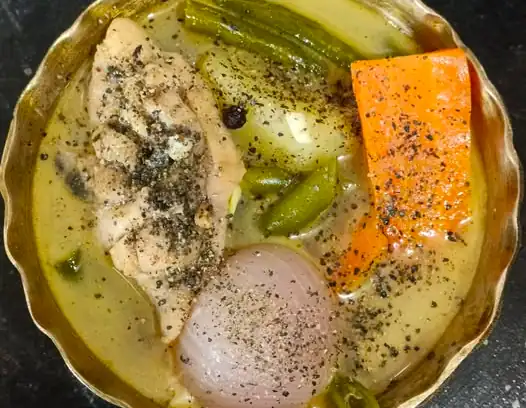
The finishing touch consists of a generous sprinkling of freshly ground black pepper immediately before serving. Unlike powdered spice blends added during cooking, freshly ground pepper retains volatile aromatic compounds that provide warmth and complexity without excessive pungency. The completed stew is typically light golden in colour, with tender chicken, soft vegetables, and a clear, mildly buttery broth.
Nutritionally, Bengali Chicken Stew represents a balanced meal containing high-quality protein, dietary fibre, vitamins, and essential minerals. Chicken supplies complete protein and B-complex vitamins, while carrots contribute vitamin A, potatoes provide potassium and carbohydrates, beans add fibre and micronutrients, and papaya supplies digestive enzymes along with vitamin C. The relatively low quantity of fat and absence of heavy cream or thick gravies make the preparation suitable for balanced diets and recovery meals.
Within Bengali domestic culture, chicken stew possesses significance extending beyond nutrition. It frequently appears during periods of seasonal transition, particularly in the cooler months between November and February, when mild broths are considered comforting. It is equally associated with family care, often prepared by parents or grandparents for children recovering from fever, examinations requiring sustained concentration, or elderly family members needing easily digestible nourishment. Consequently, the dish occupies an emotional place within Bengali culinary memory, symbolising care, recovery, and household affection rather than celebration.
Regional variations exist throughout Bengal. Some households enrich the broth with milk or a small quantity of fresh cream, creating a softer, creamier consistency. Others include green peas, cabbage, or celery, reflecting local availability and changing tastes. In certain Anglo-Indian households of Kolkata, a small amount of white pepper or bay leaf may also be incorporated, illustrating the continuing interaction between European and Bengali culinary traditions. Nevertheless, the defining characteristics remain constant: minimal spices, abundant vegetables, a clear broth, and emphasis upon the intrinsic flavour of chicken.
In contemporary Bengali cuisine, Bengali Chicken Stew continues to occupy an important position despite the increasing popularity of international foods and richly spiced restaurant dishes. It remains a staple of home kitchens because of its simplicity, nutritional value, and historical continuity. Prepared with chicken, carrot, beans, potato, green papaya, onion, ginger, garlic, butter, clove, cardamom, cinnamon, black pepper, salt, and a small amount of vinegar, the stew exemplifies the enduring Bengali preference for food that combines restraint, nourishment, and refined flavour. More than merely a recipe, it represents a culinary tradition shaped by colonial encounters, local agricultural practices, and generations of household knowledge that continues to preserve one of Bengal’s most comforting and historically significant everyday dishes.
Read More:
Sarvarthapedia Knowledge Network: Bengali Chicken Stew
Bengali Chicken Stew
Core Domain: Bengali Culinary Civilization
Knowledge Type: Traditional Food | Domestic Cuisine | Nutritional Heritage | Colonial Culinary History | Everyday Food Culture
Chronological Context: Nineteenth Century–Present
Primary Geography: Bengal, West Bengal, Bangladesh, Kolkata, Howrah, Chandannagar
Core Concept
Bengali Chicken Stew
A traditional light chicken preparation representing the intersection of Bengali domestic cooking, colonial culinary adaptation, nutritional science, and family food culture, emphasizing simplicity, digestibility, and seasonal nourishment.
Cluster I. Bengali Culinary Civilization
Bengali Cuisine
→ Bengali Chicken Stew
→ Bengali Food Culture
→ Bengali Domestic Cooking
→ Bengali Meat Dishes
→ Bengali Winter Cuisine
→ Bengali Comfort Food
→ Bengali Home Kitchens
→ Bengali Culinary Identity
Traditional Bengali Food
→ Everyday Meals
→ Festival Foods
→ Household Recipes
→ Rural Food Traditions
→ Urban Bengali Cuisine
→ Seasonal Cooking
Culinary Heritage of Bengal
→ Culinary Anthropology
→ Regional Food History
→ Agricultural Heritage
→ Food Memory
→ Intangible Cultural Heritage
Cluster II. Domestic Food Culture
Home Cooking
→ Family Kitchens
→ Domestic Knowledge
→ Maternal Food Traditions
→ Household Recipes
→ Oral Culinary Tradition
→ Everyday Nutrition
Comfort Food
→ Recovery Meals
→ Convalescent Diets
→ Children’s Nutrition
→ Elderly Nutrition
→ Winter Foods
→ Emotional Food Memory
Household Food Philosophy
→ Mild Cooking
→ Easily Digestible Meals
→ Balanced Nutrition
→ Food as Care
→ Preventive Nutrition
Cluster III. Historical Evolution
Colonial Bengal
→ British Colonial Period (1757–1947)
→ Colonial Urban Society
→ Culinary Modernization
→ Domestic European Influence
→ Anglo-Indian Cuisine
Nineteenth-Century Culinary Change
→ Growth of Poultry Consumption
→ Urban Bengali Middle Class
→ Calcutta Household Culture
→ European Kitchen Practices
→ Colonial Food Exchange
Food Globalization
→ Cultural Exchange
→ Hybrid Cuisine
→ Adaptation Rather Than Adoption
→ Localization of Foreign Foods
Cluster IV. European Culinary Influence
European Stew Tradition
→ Broths
→ Slow Cooking
→ Root Vegetables
→ Butter-Based Cooking
→ Light Soups
Anglo-Indian Cuisine
→ Colonial Kitchens
→ Eurasian Food Traditions
→ Butter Usage
→ White Pepper
→ Bay Leaf
→ Cream-Based Variations
Culinary Hybridization
→ Indigenous Adaptation
→ Local Ingredients
→ Bengali Taste Preferences
→ Colonial Food Transformation
Cluster V. Protein and Meat Studies
Chicken
→ Poultry
→ Animal Protein
→ Bone-In Cooking
→ Meat Tenderness
→ Protein Nutrition
Poultry in Bengal
→ Historical Acceptance
→ Domestic Poultry Farming
→ Urban Consumption
→ Nutritional Transition
Meat Science
→ Gelatin Formation
→ Collagen Breakdown
→ Amino Acids
→ Protein Digestibility
Cluster VI. Vegetable Ecology
Potato
→ Root Vegetables
→ Carbohydrates
→ Thickening Agents
→ Colonial Agricultural History
Carrot
→ Vitamin A
→ Beta-Carotene
→ Sweetness Balance
→ Winter Vegetables
Green Beans
→ Dietary Fibre
→ Plant Protein
→ Micronutrients
→ Seasonal Agriculture
Green Papaya
→ Papain
→ Natural Meat Tenderizer
→ Tropical Agriculture
→ Digestive Enzymes
Onion
→ Aromatic Vegetables
→ Flavor Base
→ Culinary Foundations
Cluster VII. Spice Knowledge System
Whole Spices
→ Clove
→ Green Cardamom
→ Cinnamon
→ Black Peppercorn
Aromatics
→ Ginger
→ Garlic
→ Essential Oils
→ Flavor Development
Mild Spice Philosophy
→ Low Spice Cooking
→ Natural Flavours
→ Medicinal Cuisine
→ Digestible Foods
Cluster VIII. Fat and Cooking Medium
Butter
→ Dairy Products
→ Colonial Food Influence
→ Flavor Enhancement
→ Fat-Soluble Aromatics
Mustard Oil
→ Traditional Bengali Cooking
→ Indigenous Fat Systems
→ Regional Food Identity
Comparative Cooking Media
→ Butter vs Mustard Oil
→ Flavor Chemistry
→ Heat Stability
Cluster IX. Culinary Science
Marination
→ Salt
→ Vinegar
→ Surface Cleaning
→ Tenderization
Simmering
→ Moist Heat Cooking
→ Slow Extraction
→ Broth Formation
→ Flavor Integration
Sautéing
→ Initial Browning
→ Aroma Development
→ Heat Control
Seasoning
→ Freshly Ground Pepper
→ Final Flavor Adjustment
→ Aromatic Preservation
Cluster X. Food Chemistry
Papain
→ Enzymes
→ Meat Tenderization
→ Proteolytic Activity
Gelatin
→ Bone Collagen
→ Broth Texture
→ Nutritional Gel
Essential Oils
→ Spice Chemistry
→ Aromatic Compounds
→ Volatile Molecules
Cluster XI. Nutritional Sciences
Balanced Diet
→ Protein
→ Carbohydrates
→ Healthy Fat
→ Dietary Fibre
→ Vitamins
Recovery Nutrition
→ Easily Digestible Meals
→ Medical Diet
→ Hospital Food Traditions
→ Elderly Care
Functional Foods
→ Digestive Health
→ Immune Support
→ Micronutrient Density
Cluster XII. Seasonal Food Culture
Winter Cuisine
→ November–February Foods
→ Warm Meals
→ Seasonal Vegetables
→ Household Nutrition
Monsoon Nutrition
→ Light Meals
→ Digestible Foods
→ Disease Prevention
Cluster XIII. Family and Social Anthropology
Family Food Culture
→ Parenting
→ Grandmother’s Recipes
→ Household Traditions
→ Food Memory
Caregiving Through Food
→ Childhood Nutrition
→ Illness Recovery
→ Emotional Attachment
→ Domestic Healthcare
Cluster XIV. Regional Variations
West Bengal
→ Kolkata Cuisine
→ Howrah Food Culture
→ Urban Domestic Cooking
Bangladesh
→ Bengali Muslim Cuisine
→ Traditional Household Foods
Anglo-Indian Kolkata
→ Colonial Food Fusion
→ Cream-Based Stews
→ European Adaptations
Cluster XV. Agricultural Civilization
Bengal Agriculture
→ Vegetable Farming
→ Poultry Farming
→ Dairy Production
→ Spice Cultivation
Food Supply Systems
→ Local Markets
→ Seasonal Produce
→ Kitchen Gardens
Cluster XVI. Public Health
Healthy Eating
→ Low-Fat Diet
→ Protein-Rich Foods
→ Natural Nutrition
→ Digestive Health
Preventive Healthcare
→ Home Remedies
→ Balanced Meals
→ Recovery Foods
Cluster XVII. Culinary Philosophy
Simplicity in Cooking
→ Minimal Ingredients
→ Maximum Natural Flavor
→ Balanced Taste
→ Gentle Cooking
Bengali Food Aesthetics
→ Clarity of Broth
→ Natural Sweetness
→ Mild Aromatics
→ Visual Simplicity
Cluster XVIII. Material Culture
Kitchen Implements
→ Cooking Pot
→ Kadai
→ Ladle
→ Cutting Board
→ Kitchen Knife
Domestic Kitchens
→ Colonial Kitchens
→ Bengali Household Architecture
→ Food Preparation Spaces
Cluster XIX. Comparative Food Studies
Compare With
→ Bengali Mutton Stew
→ Anglo-Indian Chicken Stew
→ European Chicken Broth
→ French Pot-au-feu
→ Scottish Chicken Broth
→ Japanese Chicken Soup
→ Chinese Clear Chicken Soup
→ Indian Chicken Curry
Cluster XX. Related Sarvarthapedia Articles
Bengali Culinary Civilization
→ Bengali Fish Curry
→ Bengali Mutton Curry
→ Bengali Dal Traditions
→ Khichuri
→ Vegetable Stews of Bengal
→ Bengali Winter Cuisine
→ Bengali Breakfast Traditions
→ Bengali Festival Foods
→ Anglo-Indian Cuisine
→ Colonial Food History of Bengal
→ Food Anthropology of Bengal
→ History of Poultry in India
→ Medicinal Foods of Bengal
→ History of Butter in Indian Cuisine
→ Papaya in South Asian Food Culture
→ Black Pepper in Indian Civilization
→ Ginger and Garlic in Asian Culinary Traditions
→ Domestic Architecture of Bengali Kitchens
→ Nutrition in Traditional Indian Households
→ Culinary Heritage of West Bengal
→ Culinary Heritage of Bangladesh
Higher-Order Conceptual Links
Bengali Chicken Stew connects simultaneously to
Food Civilization
→ Bengali Cuisine
→ Domestic Cooking
→ Colonial Culinary History
Nutrition
→ Balanced Diet
→ Recovery Nutrition
→ Functional Foods
Agriculture
→ Poultry Farming
→ Vegetable Cultivation
→ Dairy Production
Food Science
→ Protein Chemistry
→ Enzyme Action
→ Moist Heat Cooking
Medical Anthropology
→ Healing Foods
→ Household Healthcare
→ Preventive Nutrition
Social Anthropology
→ Family Care
→ Food Memory
→ Domestic Traditions
Economic History
→ Colonial Trade
→ Urban Food Markets
→ Agricultural Modernization
Material Culture
→ Kitchen Technologies
→ Cooking Implements
→ Household Infrastructure
Civilizational Studies
→ Bengal
→ British Colonial India
→ Cultural Adaptation
→ Culinary Hybridization
This conceptual network situates Bengali Chicken Stew not merely as a recipe but as a node within the broader knowledge architecture of Sarvarthapedia, linking it to food civilization, colonial history, nutrition science, domestic anthropology, agricultural systems, culinary chemistry, public health, and the evolving material culture of Bengal.