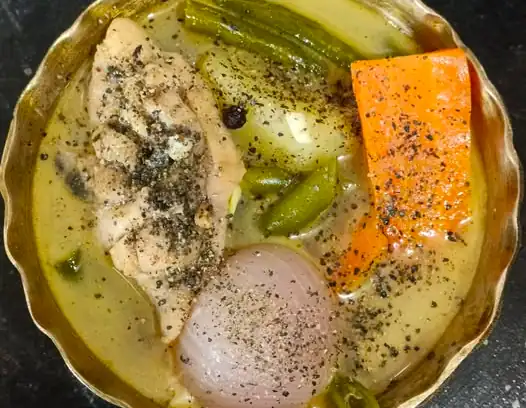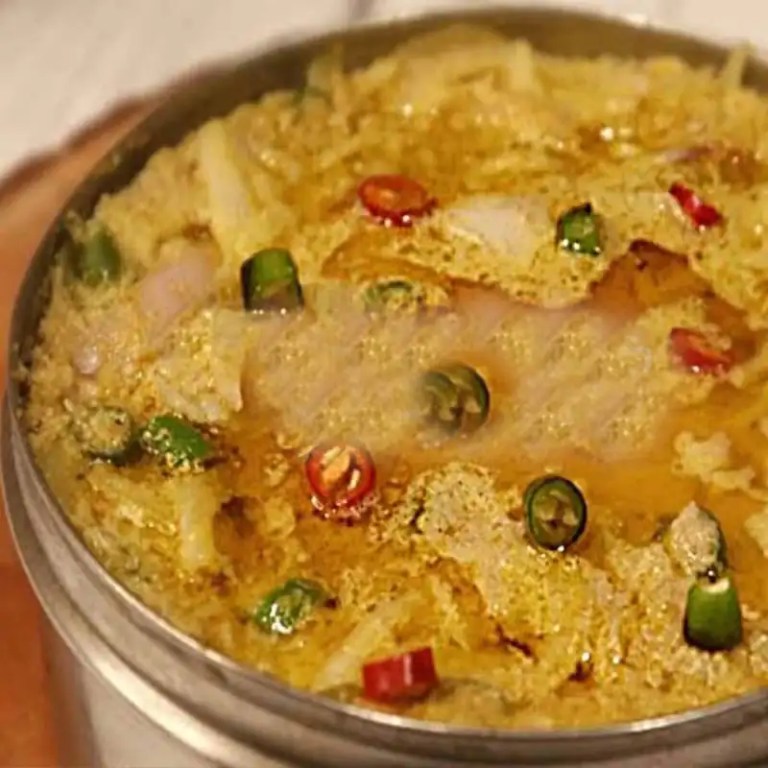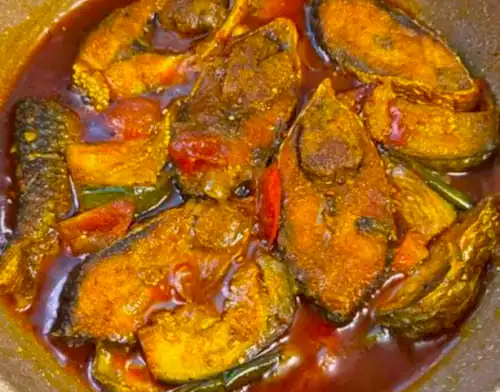
Begun Ilish Macher Jhol, the traditional Bengali Hilsa fish curry with eggplant
Begun Ilish Macher Jhol is a distinguished Bengali fish curry that unites the celebrated Hilsa (Tenualosa ilisha) with tender eggplant (brinjal) in a light, aromatic broth prepared with mustard oil, nigella seeds, and green chilies. Rather than relying on heavy spices or thick gravies, this preparation exemplifies the culinary philosophy of Bengal, where the intrinsic flavour of the fish remains the principal element while vegetables complement rather than dominate the dish. The recipe has been preserved across generations in the households of West Bengal, India, and Bangladesh, particularly in the riverine regions nourished by the Ganges, Padma, Meghna, Hooghly, and Brahmaputra river systems. It occupies a significant position in the historical evolution of Bengali cuisine, reflecting the intimate relationship between river ecology, seasonal agriculture, and domestic gastronomy.
The history of Hilsa extends far beyond culinary practice. Archaeological and literary evidence indicates that fish constituted a major component of eastern Indian diets from the early historic period. Ancient Sanskrit literature, including texts composed between approximately the 1st millennium BCE and the early centuries CE, contains references to river fish consumed throughout eastern India. By the time of the Pala Empire (c. 750–1174 CE), Bengal had become one of the richest freshwater fishing regions of South Asia, and Hilsa was already regarded as a prized seasonal fish. Medieval Bengali literary works, especially the Mangal Kavya traditions of the 15th–17th centuries, frequently celebrated abundant rivers, fishing communities, and festive meals where Hilsa symbolized prosperity and abundance.
The companion ingredient, eggplant, possesses an equally remarkable history. Considered native to the Indian subcontinent, the cultivated forms of Solanum melongena have been grown in eastern India for more than two millennia. Ancient agricultural traditions in Bengal developed numerous local varieties distinguished by colour, size, texture, and sweetness. Long purple eggplants proved especially suitable for fish curries because their porous flesh absorbed the aromatic mustard oil and fish-infused broth while retaining structural integrity during cooking. The pairing of Hilsa and eggplant thus emerged not merely from convenience but from generations of empirical culinary refinement.
The defining characteristic of Begun Ilish Macher Jhol is its restrained use of spices. Unlike richer Bengali fish preparations incorporating mustard paste, yoghurt, or coconut milk, this curry employs only turmeric, nigella seeds (kalonji), green chilies, salt, and occasionally a modest quantity of red chili powder. Such simplicity reflects an enduring culinary principle in Bengal: premium Hilsa should never be overwhelmed by excessive seasoning. Every ingredient is selected to enhance the fish’s natural sweetness and distinctive aroma rather than conceal it.
Preparation begins by washing six pieces of Hilsa fish thoroughly before marinating them with turmeric powder and salt for approximately ten minutes. This preliminary treatment serves several functions. Turmeric contributes mild earthiness and an attractive golden colour while also acting as a traditional preservative. Salt gently seasons the flesh and prepares it for frying without penetrating so deeply as to diminish the fish’s characteristic taste.
The cooking process traditionally employs mustard oil, the signature cooking medium of Bengal. The oil is heated until it reaches its smoking point, reducing its pungency while preserving its distinctive nutty fragrance. The marinated Hilsa pieces are then lightly fried for only a brief period. Excessive frying is deliberately avoided because overcooking may harden the delicate flesh and reduce the rich flavour released during the subsequent simmering stage. Once lightly coloured, the fish is removed and reserved.
In the same fragrant mustard oil, eggplant slices, cut lengthwise into substantial pieces, are lightly fried until their surfaces develop a pale golden colour. If potato is included, it is similarly cut lengthwise and fried alongside the eggplant. Although potatoes were introduced to the Indian subcontinent much later, particularly after the expansion of Portuguese trade during the sixteenth century, they became deeply integrated into Bengali cuisine during the eighteenth and nineteenth centuries, especially under colonial agricultural expansion around Calcutta (Kolkata). Their inclusion in this curry remains optional and varies according to regional and family traditions.
The tempering stage begins with nigella seeds, whose delicate onion-like aroma defines many traditional Bengali vegetable and fish dishes. Whole green chilies are immediately added to the hot oil, releasing their fragrance without overwhelming pungency. A mixture of turmeric, optional red chili powder, and a small quantity of water is then introduced and cooked briefly until the raw flavour of the spices disappears. Because the curry is intended to remain light and transparent, the spices are never browned excessively.
Approximately two cups of hot water are added to create the characteristic broth or jhol, after which salt is adjusted according to taste. The previously fried potatoes, if used, are returned first, followed by the fried eggplant and finally the lightly fried Hilsa pieces. The vessel is covered and the curry is gently simmered for approximately five to seven minutes. During this period the eggplant gradually absorbs the aromatic broth while the Hilsa releases its natural oils, enriching the liquid with a uniquely silky texture that cannot be replicated through artificial thickening agents.
The final stage demonstrates one of the most recognizable features of traditional Bengali fish cookery. Freshly slit green chilies are scattered over the curry together with approximately one teaspoon of raw mustard oil, after which the cooking vessel is covered for an additional minute. This finishing technique preserves the volatile aromatic compounds of both the chilies and mustard oil, creating the distinctive fragrance that characterizes authentic Bengali Hilsa preparations.
The culinary significance of this dish extends beyond nutrition. Throughout West Bengal and Bangladesh, Begun Ilish Macher Jhol is strongly associated with the annual Hilsa season, generally extending from the Southwest Monsoon months of June to September, when mature fish migrate upstream from the Bay of Bengal into freshwater rivers for spawning. Seasonal availability has historically transformed Hilsa into a symbol of celebration, hospitality, and regional identity. Families often reserve freshly caught Hilsa for important gatherings, while simple vegetable accompaniments such as eggplant emphasize seasonal abundance rather than culinary extravagance.
The preparation also illustrates the remarkable ecological relationship between Bengal’s rivers and agriculture. Eggplant, green chilies, turmeric, and mustard all flourish within the fertile alluvial plains formed by the annual flooding of the Ganges–Brahmaputra Delta, one of the world’s largest and most productive river deltas. The cuisine therefore reflects an integrated food system in which freshwater fisheries and agricultural cultivation evolved together over many centuries.
From a nutritional perspective, the dish offers an effective balance of essential nutrients. Hilsa provides abundant high-quality protein, Omega-3 fatty acids, vitamin D, vitamin B12, phosphorus, and selenium, while eggplant contributes dietary fibre, potassium, manganese, and naturally occurring antioxidants, particularly nasunin, concentrated in the purple skin. Mustard oil contains significant proportions of monounsaturated and polyunsaturated fatty acids, while turmeric contributes curcumin, a naturally occurring polyphenolic compound extensively studied for its biological properties.
Although recipes vary across households, the defining characteristics remain constant: lightly fried Hilsa, tender eggplant, restrained seasoning, aromatic mustard oil, and a clear broth designed to accompany steamed rice. Every variation reflects local preferences rather than fundamental departures from tradition. Some families omit potatoes entirely, believing they dilute the purity of the fish, whereas others consider them indispensable for absorbing the richly flavoured broth.
Today, Begun Ilish Macher Jhol continues to represent one of the finest expressions of Bengali culinary heritage, preserving techniques refined over centuries in the kitchens of riverine Bengal. It embodies the historical union of Hilsa fisheries, indigenous agriculture, seasonal cooking, and minimalist spice traditions, demonstrating how a limited collection of carefully balanced ingredients can produce a dish of exceptional complexity, elegance, and enduring cultural significance.
Sarvarthapedia Core Concept: Begun Ilish Macher Jhol
Begun Ilish Macher Jhol
- Bengali Cuisine
- Hilsa (Tenualosa ilisha)
- Fish Curries of Bengal
- Eggplant (Brinjal)
- Mustard Oil Cookery
- Jhol (Light Bengali Broth)
- Seasonal Cuisine
- Dal Posto (ডালপোস্ত)
- Bengali Chicken Stew
- River Civilization of Bengal
- Culinary Heritage of Bengal
- Domestic Food Traditions
Cluster: Bengali Culinary Civilization
Bengali Cuisine
See also
- Begun Ilish Macher Jhol
- Ilish Bhapa
- Shorshe Ilish
- Ilish Paturi
- Doi Ilish
- Rui Macher Jhol
- Chingri Malai Curry
- Bengali Vegetarian Cuisine
- Rice-Based Food Culture
- Five Spice (Panch Phoron)
- Mustard-Based Cooking
- Bengali Gastronomy
- Culinary Identity of Bengal
Fish-Based Food Culture
See also
- Hilsa
- Freshwater Fisheries
- Riverine Food Systems
- Seasonal Fish Consumption
- Traditional Fish Markets
- Bengali Household Cooking
- Protein Sources in Eastern India
- Fish Preservation Techniques
Jhol
See also
- Bengali Curry Taxonomy
- Thin Broth Preparations
- Everyday Bengali Meals
- Domestic Cooking
- Steamed Rice
- Seasonal Cooking
Cluster: Hilsa Civilization
Hilsa (Tenualosa ilisha)
See also
- Begun Ilish Macher Jhol
- Hilsa Fisheries
- Bay of Bengal
- Anadromous Fish
- Fish Migration
- Ganges River
- Padma River
- Meghna River
- Hooghly River
- Brahmaputra River
- Monsoon Ecology
- Bengali Festivals
- River Economy
Hilsa Fisheries
See also
- Inland Fisheries
- Coastal Fisheries
- Sustainable Fishing
- Fish Conservation
- River Ecology
- Delta Ecosystems
- Fishing Communities
- Bengal Economy
Hilsa Season
See also
- Southwest Monsoon
- Fish Migration
- Seasonal Markets
- Culinary Calendar
- Harvest Traditions
- Monsoon Cuisine
Cluster: River Civilization
Ganges–Brahmaputra Delta
See also
- Bengal Delta
- River Civilization
- Alluvial Agriculture
- Floodplain Ecology
- Wetland Ecosystems
- Hilsa Migration
- Agricultural Productivity
- Human Settlement Patterns
River Ecology
See also
- Freshwater Biodiversity
- Fisheries Management
- Delta Civilization
- Aquatic Food Chains
- Environmental Sustainability
- Climate and Food Systems
Bengal River Systems
See also
- Ganges
- Padma
- Meghna
- Hooghly
- Brahmaputra
- Inland Navigation
- Floodplain Agriculture
- River Trade
Cluster: Agricultural Heritage
Eggplant (Solanum melongena)
See also
- Indigenous Crops of India
- Vegetable Cultivation
- Bengal Agriculture
- Traditional Crop Diversity
- Brinjal Varieties
- Culinary Botany
- Plant Domestication
- Seasonal Vegetables
Mustard
See also
- Mustard Oil
- Oilseed Crops
- Bengali Agriculture
- Spice Economy
- Traditional Cooking Oils
- Winter Cultivation
Green Chili
See also
- Columbian Exchange
- Spice Crops
- Bengali Flavor Profiles
- Capsicum Cultivation
- Culinary Aromatics
Potato in Bengal
See also
- Portuguese Trade
- Columbian Exchange
- Colonial Agriculture
- Food Adaptation
- Vegetable Integration
- Nineteenth-Century Bengal
Cluster: Culinary Ingredients
Mustard Oil
See also
- Bengali Cooking
- Smoke Point
- Aromatic Oils
- Traditional Frying
- Flavor Chemistry
- Indigenous Oils
Nigella Seeds (Kalonji)
See also
- Bengali Tempering
- Spice Traditions
- Panch Phoron
- Aromatic Seeds
- Culinary Botany
Turmeric
See also
- Curcumin
- Ayurvedic Ingredients
- Food Preservation
- Natural Coloring Agents
- Medicinal Plants
- Indian Spices
Salt
See also
- Food Preservation
- Mineral Nutrition
- Traditional Seasoning
- Culinary Chemistry
Cluster: Cooking Techniques
Marination
See also
- Turmeric
- Salt
- Flavor Development
- Fish Preparation
- Traditional Cooking Methods
Light Frying
See also
- Mustard Oil
- Heat Transfer
- Fish Texture
- Culinary Science
- Moisture Retention
Tempering (Phoron)
See also
- Kalonji
- Green Chilies
- Spice Infusion
- Bengali Cooking Techniques
- Flavor Release
Simmering
See also
- Jhol
- Broth Formation
- Moist Cooking
- Fish Cookery
- Texture Development
Finishing with Raw Mustard Oil
See also
- Aroma Preservation
- Volatile Oils
- Bengali Culinary Identity
- Traditional Garnishing
Cluster: Historical Development
Ancient Food Traditions of Eastern India
See also
- Early Historic India
- Sanskrit Literature
- Riverine Settlements
- Fish Consumption
- Indigenous Food Systems
Pala Empire (c. 750–1174 CE)
See also
- Bengal History
- Medieval Agriculture
- Fisheries
- Buddhist Bengal
- Regional Cuisine
Mangal Kavya Tradition
See also
- Medieval Bengali Literature
- Food Symbolism
- River Culture
- Folk Civilization
- Bengali Society
Portuguese Influence in Bengal
See also
- Potato Introduction
- Columbian Exchange
- Colonial Agriculture
- Global Crop Diffusion
Cluster: Nutrition Science
Nutritional Profile of Hilsa
See also
- Omega-3 Fatty Acids
- Marine Nutrition
- Protein Sources
- Vitamin D
- Vitamin B12
- Selenium
- Phosphorus
Nutritional Profile of Eggplant
See also
- Dietary Fibre
- Potassium
- Manganese
- Nasunin
- Antioxidants
- Functional Foods
Mustard Oil Nutrition
See also
- Monounsaturated Fat
- Polyunsaturated Fat
- Essential Fatty Acids
- Traditional Diets
Cluster: Ecology and Sustainability
Seasonal Cuisine
See also
- Hilsa Season
- Monsoon Foods
- Local Ingredients
- Traditional Calendars
- Sustainable Consumption
Sustainable Fisheries
See also
- Fish Conservation
- River Biodiversity
- Environmental Management
- Fishing Regulations
- Climate Change
Agro-Ecological Systems
See also
- Floodplain Agriculture
- Indigenous Farming
- Crop Diversity
- Wetland Ecology
- Food Security
Cluster: Social and Cultural Anthropology
Bengali Household Food Culture
See also
- Family Recipes
- Oral Tradition
- Domestic Knowledge
- Women’s Culinary Heritage
- Festival Cuisine
Hospitality in Bengal
See also
- Hilsa Traditions
- Guest Culture
- Ritual Meals
- Communal Dining
- Seasonal Celebrations
Culinary Identity
See also
- Regional Identity
- Food Heritage
- Cultural Memory
- Intangible Cultural Heritage
- Traditional Knowledge Systems
Cluster: Food Science
Flavor Balance
See also
- Umami
- Aroma Chemistry
- Mustard Oil
- Spice Interaction
- Fish Oils
Texture Science
See also
- Eggplant Absorption
- Fish Muscle Structure
- Heat Effects
- Moisture Retention
Broth Formation
See also
- Jhol
- Fat Emulsification
- Natural Gelatin
- Cooking Liquids
Sarvarthapedia Knowledge Network
Food Civilization
→ Bengali Cuisine → River Civilization → Fisheries → Hilsa → Begun Ilish Macher Jhol
Agricultural Civilization
→ Floodplain Agriculture → Mustard → Eggplant → Traditional Vegetables → Seasonal Cuisine
Environmental Civilization
→ Ganges–Brahmaputra Delta → River Ecology → Fish Migration → Sustainable Fisheries → Food Security
Historical Civilization
→ Ancient Eastern India → Pala Empire → Medieval Bengal → Portuguese Crop Exchange → Modern Bengali Cuisine
Nutritional Civilization
→ Traditional Diets → Fish Nutrition → Vegetable Nutrition → Healthy Fats → Functional Foods
Domestic Civilization
→ Household Cooking → Culinary Knowledge → Family Recipes → Regional Identity → Cultural Continuity
Scientific Civilization
→ Culinary Chemistry → Heat Transfer → Flavor Science → Food Preservation → Nutrition Science
Cultural Civilization
→ Hospitality → Seasonal Festivals → River Economy → Culinary Heritage → Intangible Cultural Heritage
Meta-Concepts
- River Civilization links Hilsa, Delta Ecology, Fishing Communities, Seasonal Migration, and Bengali Cuisine.
- Begun Ilish Macher Jhol serves as an intersection of Food History, Environmental History, Agricultural History, Nutritional Science, Cooking Technology, and Cultural Anthropology.
- Hilsa connects Ecology, Economics, Literature, Seasonality, Religion, Trade, and Regional Identity.
- Mustard Oil forms a conceptual bridge between Agricultural Production, Flavor Chemistry, Traditional Medicine, and Bengali Culinary Techniques.
- Eggplant links Plant Domestication, Indigenous Agriculture, Culinary Botany, Nutrition, and Traditional Vegetable Cookery.
- Begun Ilish Macher Jhol ultimately belongs to the broader Sarvarthapedia domains of Food Civilization, Riverine Civilization, Environmental History, Agricultural Systems, Nutritional Science, Historical Gastronomy, Domestic Knowledge Systems, and South Asian Cultural Heritage.