Dal Posto, a Classic Bengali Vegetarian Dish with Mung Dal, Masoor Dal and Poppy Seeds
Dal Posto is a traditional Bengali vegetarian delicacy that represents the distinctive culinary heritage of West Bengal and Bangladesh, where lentils (dal) and white poppy seeds (posto) have occupied an important place in everyday domestic cuisine for centuries. Prepared from a combination of mung dal (Vigna radiata) and masoor dal (Lens culinaris), enriched with finely ground white poppy seeds (Papaver somniferum), flavoured with mustard oil, Panch Phoron, and green chillies, Dal Posto is celebrated for its earthy taste, creamy texture, and restrained use of spices. Unlike heavily spiced curries found in many other regions of the Indian subcontinent, Bengali cuisine traditionally emphasizes the natural flavour of fresh ingredients, and Dal Posto stands as one of the finest illustrations of this culinary philosophy. It is regarded as both an everyday household preparation and a representative example of the sophisticated simplicity that characterizes the food culture of Bengal.
The culinary history of posto in Bengal is closely connected with the expansion of poppy cultivation during the eighteenth and nineteenth centuries. Although the opium poppy was cultivated in parts of the Indian subcontinent for medicinal and commercial purposes much earlier, the widespread availability of white poppy seeds in Bengal developed during the period of the East India Company (1757–1858). Following the Company’s acquisition of political control after the Battle of Plassey (23 June 1757) and the Grant of the Diwani of Bengal (12 August 1765), poppy cultivation expanded extensively in the fertile plains of Bihar and parts of the Bengal Presidency, with processed opium becoming one of the Company’s most profitable exports to China. While opium entered international commerce, the edible white seeds remained within local food traditions, gradually becoming indispensable to Bengali households. Over time, posto ceased to be merely an agricultural by-product and evolved into one of the defining ingredients of Bengali vegetarian cooking.
By the nineteenth century, numerous posto-based preparations had become established throughout Bengal. Dishes such as Aloo Posto, Potol Posto, Jhinge Posto, Posto Bora, Posto Bata, and Dal Posto became integral to the daily meals of rural and urban households alike. The popularity of posto was particularly notable in the districts of Howrah, Hooghly, Nadia, Bardhaman, Bankura, Birbhum, Murshidabad, Purulia, Medinipur, and 24 Parganas, where mustard oil and poppy seeds formed the foundation of the regional culinary identity. Even after Indian Independence (15 August 1947) and the Partition of Bengal, Dal Posto continued to be prepared in both West Bengal and East Pakistan (later Bangladesh after 16 December 1971), preserving a shared gastronomic tradition across political boundaries.
Dal Posto derives its distinctive character from the careful combination of two varieties of lentils. Mung dal, known for its delicate aroma and slightly sweet flavour, contributes softness and a nutty undertone after steaming. Masoor dal, recognised for its rich earthy taste and quick cooking properties, provides body and colour to the preparation. Equal quantities of the two lentils—typically half a cup each—are thoroughly washed under running water to remove impurities before being soaked together for approximately thirty minutes. Soaking hydrates the grains, promotes even cooking, and enhances digestibility while preserving their natural structure.
Simultaneously, approximately two tablespoons of white poppy seeds are soaked separately in clean water. Soaking softens the seeds, allowing them to be ground into a smooth paste without excessive grittiness. Traditionally, the soaked posto is stone-ground on a shil nora, the flat grinding stone historically found in Bengali kitchens, together with three fresh green chillies. The slow grinding process produces a creamy paste that retains the natural oils of the seeds, resulting in a richer flavour than mechanically blended preparations. The subtle pungency of green chillies complements the mild sweetness of the poppy seeds without overpowering the dish.
Unlike conventional lentil curries that rely upon boiling, Dal Posto traditionally employs steaming as the principal cooking technique for the lentils. The soaked mung and masoor dal are transferred to a steaming vessel and cooked for approximately fifteen minutes until soft but not mushy. Steaming preserves the individual texture of the lentils while preventing excessive water absorption. This technique contributes significantly to the final consistency, producing a preparation that is neither watery nor coarse.
The cooking process begins by heating three to four tablespoons of mustard oil in a traditional iron or cast-iron kadai. Mustard oil has occupied a central position in Bengali cooking for several centuries owing to the extensive cultivation of mustard across the Gangetic delta. Its sharp aroma and pungent flavour distinguish Bengali cuisine from many other regional food traditions of India. Before cooking, the oil is heated sufficiently to reduce its raw pungency while retaining its characteristic fragrance.
Once the oil reaches the desired temperature, approximately half a teaspoon of Panch Phoron is added. Panch Phoron is Bengal’s celebrated five-spice blend, consisting of fenugreek (methi), black mustard (rai), nigella (kalonji), cumin (jeera), and fennel (mouri). The mixture is unique because the spices are used whole rather than powdered, allowing each seed to release its aroma gradually during tempering. As the spices begin to crackle and release their essential oils, one medium-sized finely chopped onion is added and sautéed until translucent. The onions are intentionally not browned deeply, as excessive caramelisation would alter the delicate flavour balance that defines Dal Posto.
The steamed lentils are then incorporated into the seasoned oil, followed immediately by the freshly ground posto paste. The ingredients are mixed thoroughly and cooked over moderate heat while stirring continuously to prevent sticking. Should the preparation become excessively dry during cooking, a small quantity of warm water may be added to maintain the desired consistency. Salt is added according to taste, while a small pinch of sugar, a hallmark of traditional Bengali seasoning, enhances the natural sweetness of both the lentils and onions without making the dish noticeably sweet. The mixture is cooked until the excess moisture evaporates and the preparation develops a soft, lightly roasted texture.
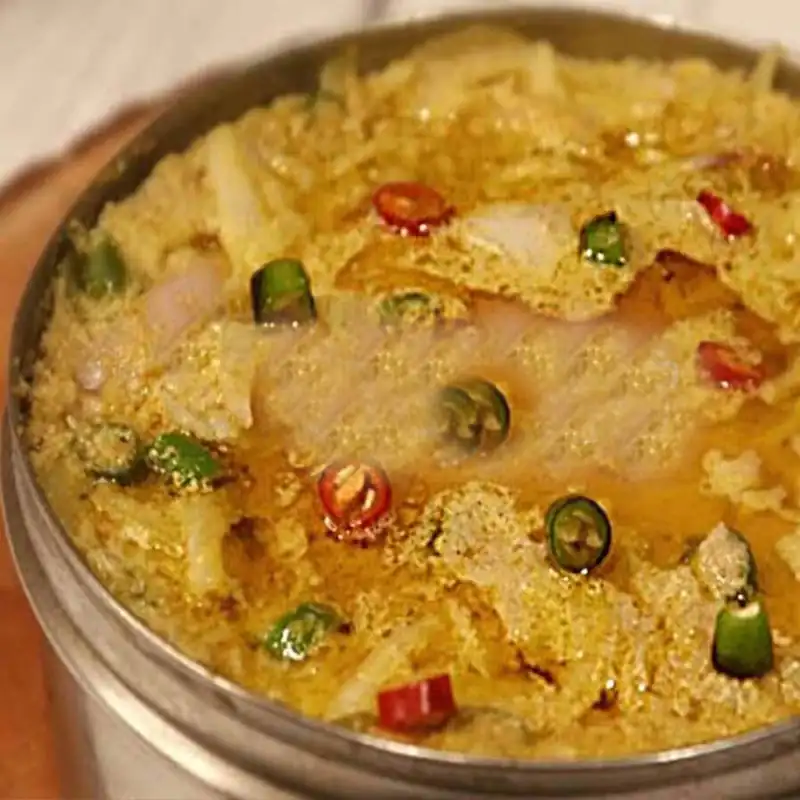
A defining feature of Dal Posto is its dry, crumbly consistency. Unlike many lentil dishes served with substantial gravy, Dal Posto is intentionally reduced until the lentils and posto combine into a cohesive, almost mashed preparation that readily accompanies steamed rice. During the final stage of cooking, approximately one tablespoon of raw mustard oil is drizzled over the dish together with finely chopped fresh green chillies. This finishing technique, deeply rooted in Bengali culinary practice, preserves the volatile aromatic compounds of mustard oil and imparts a fresh, pungent fragrance immediately before serving.
Dal Posto is traditionally served with freshly steamed white rice, often accompanied only by a wedge of lime, fried green chillies, or simple vegetable fries such as begun bhaja or alu bhaja. In many Bengali households, particularly during the hot summer months, Dal Posto serves as the principal course of the midday meal, eliminating the need for elaborate side dishes. Its combination of protein-rich lentils, healthy fats from poppy seeds, and the digestive properties of mustard oil and Panch Phoron creates a meal that is both satisfying and nutritionally balanced.
From a nutritional perspective, mung dal supplies high-quality plant protein, dietary fibre, folate, potassium, and magnesium, while masoor dal contributes iron, B-complex vitamins, and additional protein. White poppy seeds provide calcium, phosphorus, healthy unsaturated fats, and trace minerals that enrich the nutritional profile of the preparation. Mustard oil contains significant quantities of monounsaturated and polyunsaturated fatty acids, while Panch Phoron contributes naturally occurring antioxidants and digestive compounds long valued in traditional Indian food culture.
Today, Dal Posto remains one of the enduring symbols of Bengali culinary heritage, reflecting centuries of agricultural development, regional adaptation, and domestic culinary refinement. From the historic kitchens of Nadia, Hooghly, and Murshidabad to contemporary homes throughout West Bengal, Bangladesh, and Bengali communities across the world, the dish continues to exemplify the remarkable ability of Bengali cuisine to transform a small number of simple ingredients into a preparation of exceptional depth, balance, and cultural significance. More than merely a lentil recipe, Dal Posto represents the historical continuity of Bengal’s food traditions, where local agriculture, refined household techniques, and regional taste have combined over generations to create one of the most distinctive vegetarian dishes of the Bengali gastronomic repertoire.
Sarvarthapedia Cross-Referenced Conceptual Network
Core Knowledge Domain
Dal Posto
Dal Posto serves as the central concept connecting Bengali culinary heritage, agricultural history, food anthropology, colonial economy, nutrition science, traditional cooking techniques, and regional identity.
See also
- Bengali Food Culture
- Bengali Cuisine
- Posto (White Poppy Seeds)
- Lentils in Indian Civilization
- Mustard Oil
- Panch Phoron
- Vegetarian Food of Bengal
- Culinary Anthropology
- Food Heritage of South Asia
- Agricultural History of Bengal
- Domestic Food Culture
Cluster I. Civilizational Food Heritage
Bengali Cuisine
Dal Posto belongs to the broader tradition of Bengali cuisine, characterized by seasonal ingredients, restrained spice usage, mustard oil, riverine agriculture, and rice-based food culture.
Related Concepts
Regional Culinary Traditions
- Rarhi Cuisine
- Ghoti Cuisine
- Bangal Cuisine
- Bengali Vegetarian Cuisine
- Bengali Festive Cuisine
Traditional Bengali Dishes
- Aloo Posto
- Potol Posto
- Jhinge Posto
- Posto Bora
- Posto Bata
- Cholar Dal
- Shukto
- Labra
- Mochar Ghonto
- Ghugni
Core Ingredients
- Rice
- Lentils
- Mustard Oil
- Poppy Seeds
- Green Chillies
- Seasonal Vegetables
Cluster II. Agricultural Civilization
Lentils in Indian Agriculture
Dal Posto demonstrates the historical importance of pulse cultivation within the agricultural systems of the Gangetic Plain.
Linked Articles
Mung Dal
- Botanical Classification
- History of Cultivation
- Nutritional Properties
- Role in Indian Cuisine
Masoor Dal
- Ancient Cultivation
- Soil Adaptation
- Protein Source
- Regional Usage
Pulses of India
- Chickpea
- Black Gram
- Pigeon Pea
- Horse Gram
- Green Gram
- Red Lentil
Agriculture of Bengal
- Delta Agriculture
- Monsoon Farming
- Rice-Lentil Rotation
- Traditional Irrigation
Cluster III. Posto Civilization
White Poppy Seeds (Posto)
One of Bengal’s most distinctive culinary ingredients.
Connected Topics
Botanical Studies
- Papaver somniferum
- Seed Morphology
- Nutritional Composition
Economic History
- Poppy Cultivation
- Bengal Presidency
- Bihar Agriculture
- Opium Trade
- Colonial Cash Crops
Culinary Applications
- Posto Paste
- Posto Curry
- Dry Vegetable Preparations
- Spice Pastes
Comparative Studies
- Sesame
- Coconut Paste
- Peanut Paste
- Cashew Paste
Cluster IV. Colonial Economic History
East India Company and Poppy Cultivation
Dal Posto indirectly reflects the transformation of Bengal’s agricultural economy during British rule.
Historical Connections
Political Events
- Battle of Plassey (1757)
- Battle of Buxar (1764)
- Grant of Diwani (1765)
Colonial Institutions
- East India Company
- Bengal Presidency
- Opium Monopoly
- Colonial Revenue System
International Trade
- China Trade
- Opium Commerce
- Maritime Trade Routes
- Calcutta Port
Agricultural Change
- Commercial Agriculture
- Cash Crop Economy
- Rural Bengal
- Colonial Land Revenue
Cluster V. Culinary Technology
Traditional Bengali Cooking Methods
Dal Posto demonstrates several indigenous cooking technologies.
Related Articles
Preparation Techniques
- Soaking
- Steaming
- Grinding
- Tempering
- Slow Frying
- Finishing with Raw Mustard Oil
Traditional Kitchen Equipment
- Shil Nora
- Kadai
- Clay Cooking Pot
- Wooden Spatula
- Brass Utensils
Heat Management
- Steam Cooking
- Moisture Control
- Aroma Preservation
Cluster VI. Spice Science
Panch Phoron
The principal aromatic seasoning of Dal Posto.
Component Articles
- Fenugreek
- Nigella
- Black Mustard
- Cumin
- Fennel
Cross References
Indian Spice Blends
- Garam Masala
- Five-Spice Blends
- Bengali Tempering
- Whole Spice Cooking
Spice Chemistry
- Essential Oils
- Volatile Aromatic Compounds
- Digestive Properties
Cluster VII. Edible Oils
Mustard Oil
A defining ingredient of eastern Indian cuisine.
Connected Topics
Agricultural History
- Mustard Cultivation
- Oilseed Crops
- Cold-Pressed Oils
Food Science
- Allyl Isothiocyanate
- Smoke Point
- Fatty Acid Profile
Regional Cuisine
- Bengali Cooking
- Assamese Cuisine
- Odia Cuisine
Cluster VIII. Nutritional Science
Nutritional Composition of Dal Posto
The dish combines plant proteins, minerals, and healthy fats.
Linked Concepts
Plant Protein
- Essential Amino Acids
- Protein Complementation
- Vegetarian Nutrition
Dietary Fibre
- Digestive Health
- Glycaemic Regulation
Micronutrients
- Calcium
- Iron
- Magnesium
- Phosphorus
- Potassium
- Folate
Healthy Lipids
- Monounsaturated Fats
- Polyunsaturated Fats
- Omega Fatty Acids
Cluster IX. Food Anthropology
Everyday Food Culture
Dal Posto represents the domestic culinary traditions of Bengali households.
Related Topics
Household Cooking
- Midday Meal
- Seasonal Diet
- Home Kitchens
- Family Recipes
Cultural Practices
- Comfort Food
- Vegetarian Days
- Summer Cuisine
- Rural Food Traditions
Oral Traditions
- Family Recipe Transmission
- Women’s Culinary Knowledge
- Community Cooking
Cluster X. Regional Geography
Geography of Dal Posto
Historically associated with numerous districts of Bengal.
Regional Articles
West Bengal
- Howrah
- Hooghly
- Nadia
- Bardhaman
- Bankura
- Birbhum
- Murshidabad
- Medinipur
- Purulia
- North 24 Parganas
- South 24 Parganas
Bangladesh
- Dhaka
- Khulna
- Rajshahi
- Barisal
Physical Geography
- Gangetic Delta
- Alluvial Plains
- Riverine Agriculture
Cluster XI. Food History
Historical Evolution of Dal Posto
Chronological Links
Ancient India
- Pulse Cultivation
- Early Agriculture
- Rice Civilization
Medieval Bengal
- Regional Food Traditions
- Indigenous Spice Usage
Colonial Bengal
- Expansion of Poppy Cultivation
- Commercial Agriculture
- Urban Food Culture
Modern Bengal
- Partition of Bengal (1947)
- Culinary Continuity
- Bengali Diaspora
Cluster XII. Food Preservation of Civilization
Culinary Heritage
Dal Posto functions as a living example of intangible cultural heritage.
Related Concepts
Cultural Identity
- Bengali Identity
- Regional Heritage
- Domestic Tradition
Heritage Studies
- Intangible Cultural Heritage
- Culinary Conservation
- Traditional Knowledge Systems
Documentation
- Historical Cookbooks
- Oral Culinary History
- Food Archives
- Gastronomic Documentation
Conceptual Relationship Network
Dal Posto → Bengali Cuisine
- Traditional Vegetarian Cooking
- Regional Food Identity
- Household Meals
- Seasonal Cuisine
Dal Posto → Agriculture
- Lentil Cultivation
- Mustard Farming
- Poppy Agriculture
- Delta Farming Systems
Dal Posto → Colonial History
- East India Company
- Opium Economy
- Bengal Presidency
- Agricultural Commercialization
Dal Posto → Food Science
- Protein Nutrition
- Fat Composition
- Spice Chemistry
- Cooking Technology
Dal Posto → Cultural Anthropology
- Domestic Life
- Family Tradition
- Regional Identity
- Intangible Heritage
Dal Posto → Historical Geography
- Bengal
- Gangetic Delta
- West Bengal
- Bangladesh
Dal Posto → Traditional Technology
- Steam Cooking
- Stone Grinding
- Tempering
- Cast-Iron Cookware
Dal Posto → Civilization Studies
- Agricultural Civilization
- Culinary Civilization
- Material Culture
- Foodways
- Heritage Preservation
Sarvarthapedia Knowledge Graph
Dal Posto
→ Bengali Cuisine
→ Bengali Vegetarian Cuisine
→ Food Heritage of Bengal
→ Agricultural History of Bengal
→ Lentils
→ Mung Dal
→ Masoor Dal
→ White Poppy Seeds
→ Papaver somniferum
→ Mustard Oil
→ Panch Phoron
→ Spice Science
→ Steam Cooking
→ Stone Grinding
→ Traditional Kitchen Technology
→ Household Food Culture
→ Nutritional Science
→ Plant-Based Diets
→ East India Company
→ Bengal Presidency
→ Opium Trade
→ Colonial Agriculture
→ Gangetic Delta
→ West Bengal
→ Bangladesh
→ Culinary Anthropology
→ Intangible Cultural Heritage
→ History of Indian Cuisine
→ Civilization Through Food
→ Regional Identity of Bengal
→ Traditional Knowledge Systems
→ Food History of South Asia