
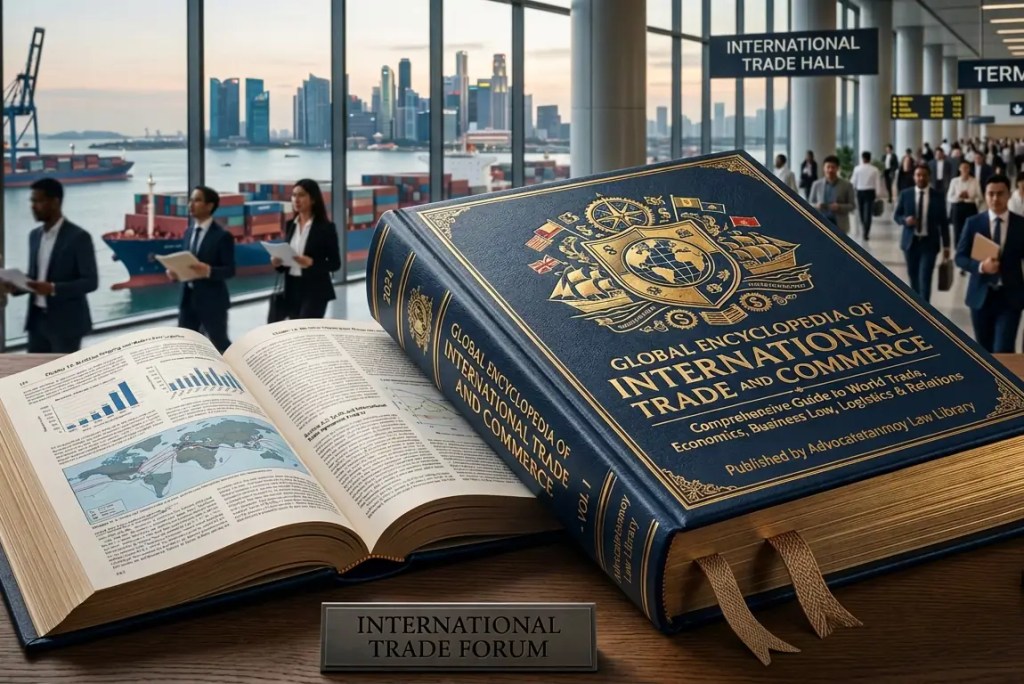
Global Encyclopedia of International Trade and Commerce (GEITAC)
Volume 3 — Classical and Modern Theories of International Trade
Sarvarthapedia · 15-part architecture · 150 chapters
Central thesis: International trade theory is the systematic study of why nations, regions, firms, and economic networks exchange goods and services; how trade patterns emerge; who gains and loses; and how trade transforms production, technology, institutions, state power, and civilization.
Volume 3 of GEITAC follows the historical foundations established in Volume 2 — Historical Evolution of World Trade, moving from early explanations of commercial exchange to classical political economy, neoclassical models, modern trade theories, strategic trade, development debates, and contemporary approaches to global commerce.
Volume 3 treats trade theories not as isolated formulas but as evolving explanatory systems. Each theory is examined through its central thesis, principal concepts, historical context, analytical contribution, limitations, and cross-references to other volumes.
GEITAC 15-part structure
| Part | Subject | Chapters |
|---|---|---|
| I | Foundations of International Trade Theory | 1–10 |
| II | Mercantilism and Early Political Economy | 11–20 |
| III | Classical Trade Theory | 21–30 |
| IV | Comparative Advantage and Its Extensions | 31–40 |
| V | Neoclassical Trade Theory | 41–50 |
| VI | Factor Endowments and Factor-Price Equalization | 51–60 |
| VII | Technology, Productivity and Trade | 61–70 |
| VIII | Economies of Scale and Imperfect Competition | 71–80 |
| IX | Firm-Level and Heterogeneous-Firm Trade Theory | 81–90 |
| X | Gravity Models, Geography and Trade Costs | 91–100 |
| XI | Trade, Development and Structural Transformation | 101–110 |
| XII | Trade Policy, Protection and Strategic Intervention | 111–120 |
| XIII | Political Economy and Institutional Theories of Trade | 121–130 |
| XIV | Contemporary Theories and Emerging Analytical Frameworks | 131–140 |
| XV | Critical Evaluation and Synthesis of International Trade Theory | 141–150 |
Part I — Foundations of International Trade Theory
- The Nature and Scope of International Trade Theory
- International Trade as Exchange Between Economic Systems
- The Nation, the Market and the International Economy
- Trade, Specialization and the Division of Labour
- Absolute Gains, Relative Gains and the Distribution of Trade Benefits
- Production Possibility Frontiers and the Logic of Exchange
- Opportunity Cost and the Foundations of Trade Analysis
- Prices, Relative Costs and International Exchange Ratios
- The Balance Between General Theory and Historical Evidence
- The Evolution of International Trade Theory as an Intellectual System
Part II — Mercantilism and Early Political Economy
- The Historical Origins of Mercantilist Thought
- Bullionism, Precious Metals and the Wealth of Nations
- Trade Surpluses, Export Promotion and Import Restriction
- State Power, Navigation Acts and Commercial Regulation
- Chartered Companies, Monopoly and Overseas Commercial Expansion
- Thomas Mun and the English Mercantile System
- Jean-Baptiste Colbert and French Economic Statecraft
- Colonial Markets, Resource Extraction and Imperial Trade
- David Hume, the Price-Specie-Flow Mechanism and Mercantilist Criticism
- The Decline of Mercantilism and the Transition to Classical Political Economy
Part III — Classical Trade Theory
- Adam Smith and the Theory of Absolute Advantage
- The Division of Labour and the Expansion of Markets
- Productivity, Specialization and the Wealth of Nations
- The Extent of the Market and International Exchange
- David Ricardo and the Theory of Comparative Advantage
- Labour Costs, Relative Efficiency and Trade Specialization
- Gains from Trade in the Ricardian Framework
- International Exchange Ratios and the Terms of Trade
- Robert Torrens and the Early Development of Comparative Cost Theory
- The Classical School and the Foundations of Modern Trade Analysis
Part IV — Comparative Advantage and Its Extensions
- Comparative Advantage as a Principle of International Specialization
- Opportunity Cost and the Determination of Comparative Advantage
- Autarky, Specialization and the Gains from International Exchange
- Multiple Goods and the Structure of Comparative Costs
- Comparative Advantage with Multiple Countries
- Wages, Productivity and International Cost Differences
- Transport Costs and the Limits of Specialization
- Trade, Technological Change and Shifting Comparative Advantage
- Dynamic Comparative Advantage and the Evolution of National Industries
- The Explanatory Power and Limitations of Comparative Advantage
Part V — Neoclassical Trade Theory
- The Marginalist Revolution and the Transformation of Trade Analysis
- Alfred Marshall and the Theory of International Exchange
- Supply, Demand and the Determination of Trade Equilibrium
- Offer Curves and the Reciprocal Demand for Exports and Imports
- International Equilibrium and the Determination of the Terms of Trade
- Community Indifference Curves and International Specialization
- Production Possibility Curves and Consumer Preferences
- General Equilibrium and the Interdependence of National Markets
- Welfare Analysis of International Trade
- The Neoclassical Reconstruction of Classical Trade Theory
Part VI — Factor Endowments and Factor-Price Equalization
- The Factor-Endowment Approach to International Trade
- Eli Heckscher and the Origins of Factor-Proportions Theory
- Bertil Ohlin and Interregional and International Trade
- The Heckscher–Ohlin Model and Relative Factor Abundance
- Factor Intensity, Factor Abundance and Commodity Trade
- The Stolper–Samuelson Theorem and Income Distribution
- The Rybczynski Theorem and Changes in Factor Endowments
- Factor-Price Equalization and International Wage Convergence
- The Leontief Paradox and the Empirical Challenge to Factor-Proportions Theory
- Extensions, Assumptions and Limitations of the Heckscher–Ohlin Framework
Part VII — Technology, Productivity and Trade
- Technological Differences as a Source of International Trade
- The Ricardian Model Reconsidered: Productivity Across Countries
- The Role of Labour Productivity in Export Specialization
- Michael Posner and the Technological-Gap Theory
- Raymond Vernon and the International Product Life-Cycle Theory
- Innovation, Imitation and the Movement of Production
- Research and Development as a Source of Trade Advantage
- Technology Diffusion and the Transformation of Comparative Advantage
- Knowledge, Intellectual Property and International Competitiveness
- Technological Change and the Dynamic Structure of World Trade
Part VIII — Economies of Scale and Imperfect Competition
- The Limits of Perfect Competition in International Trade
- Internal Economies of Scale and the Concentration of Production
- External Economies of Scale and Industrial Localization
- Increasing Returns and the Expansion of International Markets
- Monopolistic Competition and Product Differentiation
- Paul Krugman and the New Trade Theory
- Intra-Industry Trade and the Exchange of Similar Products
- Variety, Consumer Preference and Two-Way Trade
- Historical Dependence, Industrial Clusters and Trade Patterns
- Economies of Scale as a Foundation of Modern Trade Theory
Part IX — Firm-Level and Heterogeneous-Firm Trade Theory
- The Firm as the Unit of International Trade Analysis
- Why Some Firms Export and Others Do Not
- Productivity Differences and Export Market Participation
- Marc Melitz and the Heterogeneous-Firm Model
- Exporting, Fixed Costs and Market-Entry Decisions
- Firm Selection, Productivity Thresholds and Industry Reallocation
- Foreign Direct Investment and the Choice Between Exporting and Overseas Production
- Multinational Enterprises and the Internalization of Trade
- Global Value Chains and the Fragmentation of Production
- Firm Heterogeneity and the Microeconomic Foundations of Global Commerce
Part X — Gravity Models, Geography and Trade Costs
- The Gravity Equation and the Empirical Study of Trade
- Economic Size, Distance and Bilateral Trade Flows
- Jan Tinbergen and the Early Gravity Model
- Trade Costs, Freight Charges and Market Access
- Borders, Language, Culture and Institutional Distance
- Geographic Barriers and the Spatial Distribution of Trade
- Multilateral Resistance and the General-Equilibrium Gravity Framework
- Ports, Transport Corridors and Trade Connectivity
- Digital Connectivity and the Changing Geography of Commerce
- Gravity Models as Tools for Trade Policy and Economic Analysis
Part XI — Trade, Development and Structural Transformation
- International Trade and the Economic Development Debate
- Trade as an Engine of Growth and Productivity
- Primary Commodity Dependence and Unequal Exchange
- The Prebisch–Singer Thesis and Long-Term Commodity Prices
- Raúl Prebisch, Hans Singer and the Structuralist Critique
- Import-Substitution Industrialization and Domestic Market Formation
- Export-Led Growth and Industrial Development
- The Infant-Industry Argument and Industrial Learning
- Trade, Structural Transformation and Movement Up the Value Chain
- Global Integration, Development Outcomes and Divergent National Trajectories
Part XII — Trade Policy, Protection and Strategic Intervention
- The Economic Foundations of Free Trade
- Tariffs, Import Quotas and the Economics of Protection
- Consumer Surplus, Producer Surplus and the Welfare Effects of Trade Policy
- Effective Protection and the Structure of Industrial Incentives
- Export Subsidies, Tax Incentives and Industrial Promotion
- Strategic Trade Theory and the Role of Government
- Brander–Spencer Models and the Possibility of Strategic Advantage
- Retaliation, Trade Wars and the Limits of Strategic Intervention
- Trade Remedies, Safeguards and Anti-Dumping Measures
- The Economic Evaluation of Protectionism and Trade Liberalization
Part XIII — Political Economy and Institutional Theories of Trade
- International Trade as a Political-Economic System
- State Power, National Interest and Commercial Strategy
- The Political Economy of Trade Agreements
- Domestic Coalitions, Lobbying and Trade Policy
- Collective Action, Rent-Seeking and Protectionist Interests
- Institutions, Property Rights and the Costs of International Exchange
- The Role of the World Trade Organization in the Global Trading System
- Trade Agreements, Credible Commitments and International Cooperation
- Economic Sanctions, Embargoes and the Political Use of Trade
- Trade Interdependence, Geoeconomics and the Distribution of Power
Part XIV — Contemporary Theories and Emerging Analytical Frameworks
- Global Value Chains and the Network Theory of International Production
- Trade in Tasks, Offshoring and International Fragmentation
- Services Trade and the Transformation of Comparative Advantage
- Digital Trade, Data Flows and Platform-Based Commerce
- Knowledge Networks, Innovation and International Trade
- Environmental Externalities and the Economics of Sustainable Trade
- Carbon Border Measures and Climate-Related Trade Policy
- Resilience, Diversification and the Economics of Supply-Chain Security
- Artificial Intelligence, Automation and the Future of Trade Specialization
- Complexity Economics and the Adaptive Structure of Global Trade Networks
Part XV — Critical Evaluation and Synthesis of International Trade Theory
- The Assumptions of Trade Models and Their Explanatory Boundaries
- The Difference Between Theoretical Prediction and Historical Outcome
- The Distribution of Gains from Trade Within and Between Countries
- Trade, Inequality and the Political Consequences of Economic Adjustment
- The Role of Power, Coercion and Unequal Bargaining in Trade Relations
- Trade Theory and the Historical Formation of the World Economy
- Reconciling Comparative Advantage, Scale Economies and Firm Heterogeneity
- Integrating Technology, Institutions, Geography and State Strategy
- Toward a Unified Framework for International Trade Analysis
- International Trade Theory as a Foundation for Civilizational and Global Economic Studies
Architecture of Volume 3 (GEITAC)
The volume follows a cumulative analytical sequence:
- Parts I–II: Establish the intellectual foundations of trade theory and the transition from mercantilist statecraft to political economy.
- Parts III–VI: Develop the classical and neoclassical explanations of specialization, comparative advantage, factor endowments and income distribution.
- Parts VII–IX: Explain trade through technological differences, increasing returns, imperfect competition and firm-level productivity.
- Part X: Introduce the spatial and empirical analysis of bilateral trade flows.
- Parts XI–XIII: Examine development, trade policy, institutions and the political distribution of commercial power.
- Part XIV: Address digitalization, environmental constraints, supply-chain resilience and complexity.
- Part XV: Integrate the theories into a broader framework for understanding the global commercial system.
Cross-volume knowledge network
| Volume | Relationship with Volume 3 |
|---|---|
| Vol. 1 — Foundations of Trade and Commerce | Defines exchange, value, specialization, markets, institutions and commercial coordination. |
| Vol. 2 — Historical Evolution of World Trade | Supplies the historical evidence against which theories can be interpreted and tested. |
| Vol. 4 — Global Production, Supply Chains and Commercial Organization | Develops production networks, firm organization, outsourcing and value-chain structures. |
| Vol. 5 — Maritime Trade, Transport and Logistics | Extends trade-cost and geographic theories into shipping, ports and logistics. |
| Vol. 6 — International Trade Finance and Commercial Banking | Connects trade theory with credit, payments, currency and financial intermediation. |
| Vol. 8 — International Commercial Law and Dispute Resolution | Examines the legal institutions that make cross-border exchange possible. |
| Vol. 12 — Trade, Geopolitics and Economic Statecraft | Develops the relationship between commerce, state power, sanctions and strategic competition. |
| Vol. 15 — Future of International Trade and Commerce | Extends contemporary trade theory toward emerging technologies, resilience and future commercial systems. |
Position within Sarvarthapedia: Volume 3 provides the explanatory framework for the wider encyclopedia. Volume 2 establishes how the world trading system emerged; Volume 3 explains the principal theories used to understand its structure, incentives, distributional consequences and transformations.
See also
The Global Capital Markets Encyclopedia: Reference on Finance, Banking, and Investment Systems
