A comprehensive exploration of China’s philosophical, cultural, and scientific heritage
The Chinese knowledge system unfolds like an immense intellectual tapestry, woven across millennia and enriched by every dynasty, every sage, and every school of thought that left its imprint on the cultural memory of the civilization. Its philosophical pillars developed not as isolated doctrines but as interlaced modes of perceiving the world, beginning with the moral architecture of Confucianism, where the ideals of ren, yi, li, zhi, and xin formed an ethical grammar for both personal cultivation and statecraft.
The canonical Four Books and Five Classics established a curriculum that shaped scholars, emperors, and common people alike, evolving from classical interpretations to the more introspective metaphysics of Zhu Xi and Wang Yangming, whose Neo-Confucian discourses reframed how the mind engages with the cosmos. Running alongside this moral order flowed Daoism, that lyrical pursuit of the Dao, which urged harmony with nature and the quiet power of wu wei, letting action arise with the inevitability of wind passing through bamboo.
The Daodejing and Zhuangzi furnished a worldview steeped in paradox and wit, counterbalancing Confucian discipline with creative spontaneity. Buddhism, entering from afar but transformed on Chinese soil, blossomed into uniquely sinicized traditions—Chan with its abrupt flashes of insight, Pure Land with its devotional grace, and Tiantai with its sweeping philosophical system—all braided into the intellectual heritage until their ideas intermingled even with Confucian and Daoist vocabulary. The presence of Mohism with its austere logic and universal love, Legalism with its steel-edged pragmatism, and the incisive strategies of Sunzi created a pluralistic landscape of ideas where contradictions did not negate but enriched one another.
Across time, these ideational currents moved through the vast river of Chinese history, punctuated by the rise and fall of dynasties whose succession formed the rhythmic pulse of the dynastic cycle, from the shadowed antiquity of Xia and Shang to the grandeur of Han and Tang, the scholarly refinement of Song, the cosmopolitan vigor of Yuan, the maritime aspirations of Ming, and the global entanglements of Qing and the modern era. Institutions such as the centralized bureaucracy, the sprawling examination system, and meticulous household registration created a durable administrative fabric, while monumental works like the Twenty-Four Histories and Zizhi Tongjian recorded events with unmatched narrative continuity.
Literature and the arts added emotional and aesthetic depth: from the primal verses of the Book of Songs to the evocative mysticism of Chu Ci, the crystalline beauty of Tang poetry, the melodic subtlety of Song ci, and the theatrical exuberance of Yuan qu. Prose masters honed clarity and rhetoric, and novelists of later centuries crafted narrative universes—heroes, rebels, monks, and dreamers—within the Four Great Classical Novels that still shape imaginations. The arts of calligraphy and painting elevated brush and ink into a fusion of gesture, breath, and spirit, while craftspeople shaped porcelain, silk, jade, and lacquer into objects that became symbols of refinement across continents.
Within the realm of science and technology, the civilization produced inventions that altered global human development—papermaking, printing, gunpowder, and the compass—each a testament to a culture that blended curiosity with applied ingenuity. Encyclopedic works detailed everything from metallurgy to medicine; astronomers charted heavens through intricate calendars and instruments; mathematicians like Zu Chongzhi pushed numerical boundaries; engineers carved waterways like Dujiangyan and built bridges of enduring elegance like Zhaozhou. Everyday life reflected an equally meticulous social architecture: rituals guiding birth, marriage, death, and ancestral remembrance; festivals tied to lunar rhythms; culinary traditions that blossomed into eight major regional cuisines; tea and wine shaping social connection. Medicine fused empirical herbology with theories of meridians, yin-yang balance, and the five phases, culminating in classics that shaped medical thought for centuries.
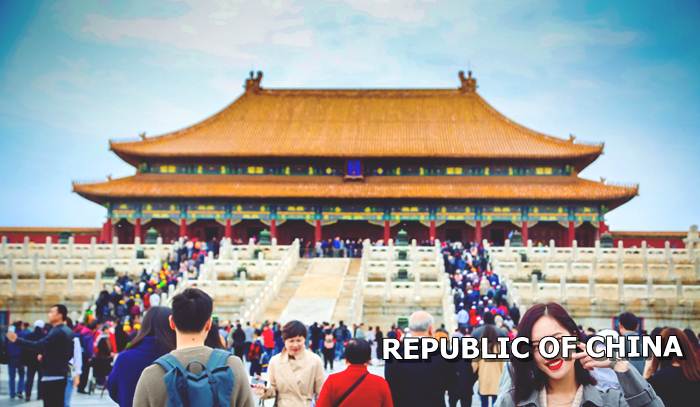
Language itself served as the connective tissue of continuity, with the Chinese script evolving from oracle bones to the refined regular script, each character a compact vessel of history and metaphor. Scholars probed its inner workings through philological studies like Shuowen Jiezi and Guangyun, ensuring that the written tradition remained intelligible across eras. The civilization’s geography and ethnographic diversity contributed to its layered identity—mountains, rivers, deserts, and plains forming the backdrop for dozens of ethnic groups that collectively defined a principle of unity amid diversity. Architectural traditions—whether the precision of feng shui, the tranquility of Suzhou gardens, or the monumental symmetry of the Forbidden City—embodied a worldview seeking concord between built space and natural order.
Even as modernity introduced sweeping economic and ideological shifts, the Chinese knowledge system maintained its adaptive vitality. Revivals of classical learning, renewed interest in traditional clothing, and dedicated preservation of intangible heritage coexist with scientific modernization and philosophical reinterpretations. In this ongoing synthesis, a civilizational rhythm persists: one that absorbs, transforms, and reframes both native and foreign ideas without losing its inner pulse. Its defining traits—continuity over thousands of years, a capacious ability to integrate outside influences, a grounded pragmatism tethered to social ethics, and a holistic, dialectical mode of thought—keep it not as a relic but as a living, breathing continuum, reshaped by each generation yet unmistakably rooted in the deep memory of its past.
Tanmoy Bhattacharyya
December 4, 2025