Future of Cross-border Payments Faster Safer Together
International Monetary Fund – World Bank Group Annual Meetings
Washington, DC
Speech by Tobias Adrian (1), IMF Financial Counsellor and Director of the Monetary and Capital Markets Department
October 22, 2024
Tobias Adrian
Good afternoon and welcome to our discussion on “The Future of Cross-Border Payments: Faster, Safer, Together.” It is a great honor to open this event, which is an initiative of the Brazilian G20 Presidency and jointly organized by the IMF, the Bank for International Settlements, and the World Bank.
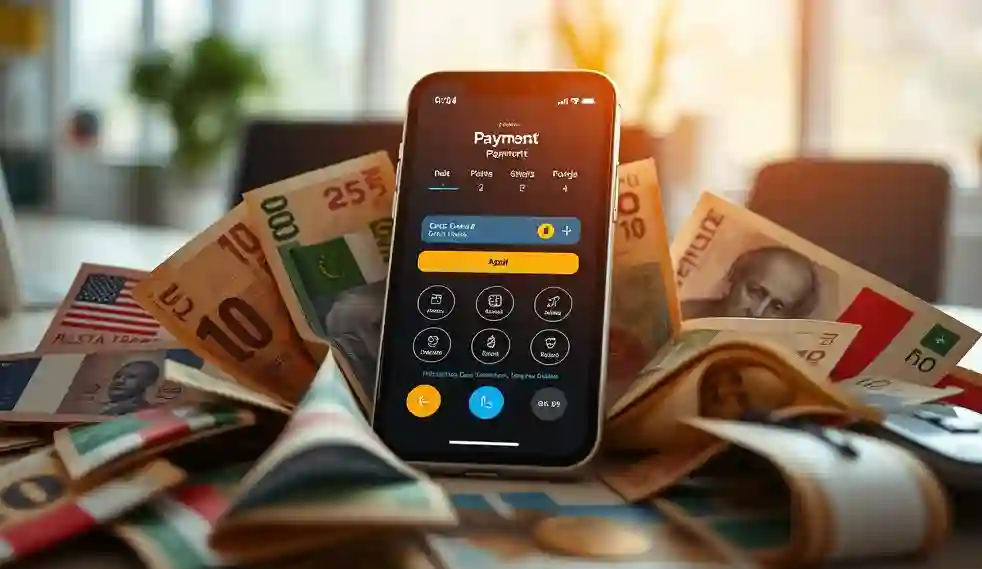
Cross-border payments are the lifeblood of the global economy, facilitating remittances, business transactions, and the movement of capital that fuels development. But the infrastructure is creaking. And it is missing for many people around the world. We must do better. The G20 has taken the lead to enhance cross-border payments, with a concrete Roadmap to make transactions faster, cheaper, more transparent, and more inclusive.
At the IMF, we are acutely aware of the macroeconomic implications of improving cross-border payments. Lower transaction costs can boost trade and the growth of small and medium businesses constrained by their domestic market size. Lower costs can also foster the integration of markets, offering more risk-sharing opportunities to households and firms. And concentrating foreign exchange flows and allowing for coincident settlement can strongly improve market efficiency.
Improving cross-border payments also comes from fostering competition among financial and payment firms. This will benefit end-users and especially underserved populations. However, we must manage potential risks, including increased foreign asset exposures and the potential for currency substitution.
Stepping back for a moment, we must ensure that improving payment links between countries leads to greater integration—not fragmentation. Otherwise, we risk fostering exclusive “islands” with poor connections in between.
The three panel discussions today represent well three approaches to improving cross-border payments.
The first panel is about innovation—connecting fast payment systems. Today, with our existing technology, we can take a significant step forward to improve retail cross-border payments. These can go from days to seconds, and from costing thirteen to three percent. Five ASEAN countries are leading the way, after initial experimentation with the Bank for International Settlements Innovation Hub.
The second panel is about exploration, specifically of financial platforms that can facilitate settlement. By leveraging new technology, these platforms can record multiple assets, such as money and securities, and can be programmed—a powerful combination.
However impressive, we must keep our eyes on the macro-financial policy implications, as we have argued in a recent IMF publication. Platforms will determine who can transact, what can be transacted, and under what conditions. If these new platforms develop globally, then they will affect the international monetary system. We must preserve the system’s stability, efficiency, equity, and compliance.
The third panel is about implementation. However useful the plans, they will only be as good as concrete implementation on the ground. And here, the IMF and World Bank can play an important role through technical assistance. We are ramping up our efforts in technical assistance as a matter of priority. Our focus will be on regions or sub-regions—that is, groups of countries determined to make a difference for their citizens and firms. This is to overcome the natural coordination problems involved in enhancing cross-border payments.
Another principle is to favor peer-to-peer learning and the sharing of lessons across the world. Our technical assistance strategy involves three steps: prepare, build, and explore.
Prepare means helping countries run diagnostics and establish the basis to improve services—starting domestically. An example would be giving access to payment systems to nonbank service providers that are more apt to cater to the poor.
Build means assisting countries develop appropriate infrastructure—such as links between countries’ fast payment systems, the topic of the first panel.
And explore means ensuring solutions are future proof. That is, keeping an eye out for CBDC opportunities or new financial platforms—the topic of the second panel.
In closing, let me underscore that today’s event is therefore extremely timely. It will hopefully be a cornerstone for our common work to improve the everyday lives of billions of people who depend on cross-border payments. We all strive for a world in which payment systems can evolve “faster, safer and together.” I look forward to the discussions and to our continued partnership beyond.
IMF Communications Department
MEDIA RELATIONS
Note
(1) Tobias Adrian is the Financial Counsellor and Director of the Monetary and Capital Markets Department of the International Monetary Fund (IMF). In this capacity, he leads the IMF’s work on financial sector surveillance, monetary and macroprudential policies, digital money, financial regulation, bank resolution, debt management, capital markets, and climate finance. He also oversees capacity building activities in IMF member countries with regard to the supervision and regulation of financial systems, bank resolution, central banking, monetary and exchange rate regimes, central bank digital currency, and debt management (IMF)
Read more
- CBDC and Current State of the U.S. Payment System-Randal K. Quarles (28/06/2021)
- Digital Payment system in India 2022
- Overview of Payment Systems in India-Notes By RBI
- Retail payments and settlement systems in India
- RBI and CBUAE sign MoUs to (i) Promote Local Currencies for Cross-border Transactions (ii) interlinking their payment and messaging systems (15/07/2023)