President Lula defended sovereignty and multilateralism, highlighting South-South cooperation and a shared agenda in areas such as the fight against hunger, climate change, energy, artificial intelligence, and trade.
English rendering of the speech segment by Luiz Inácio Lula da Silva
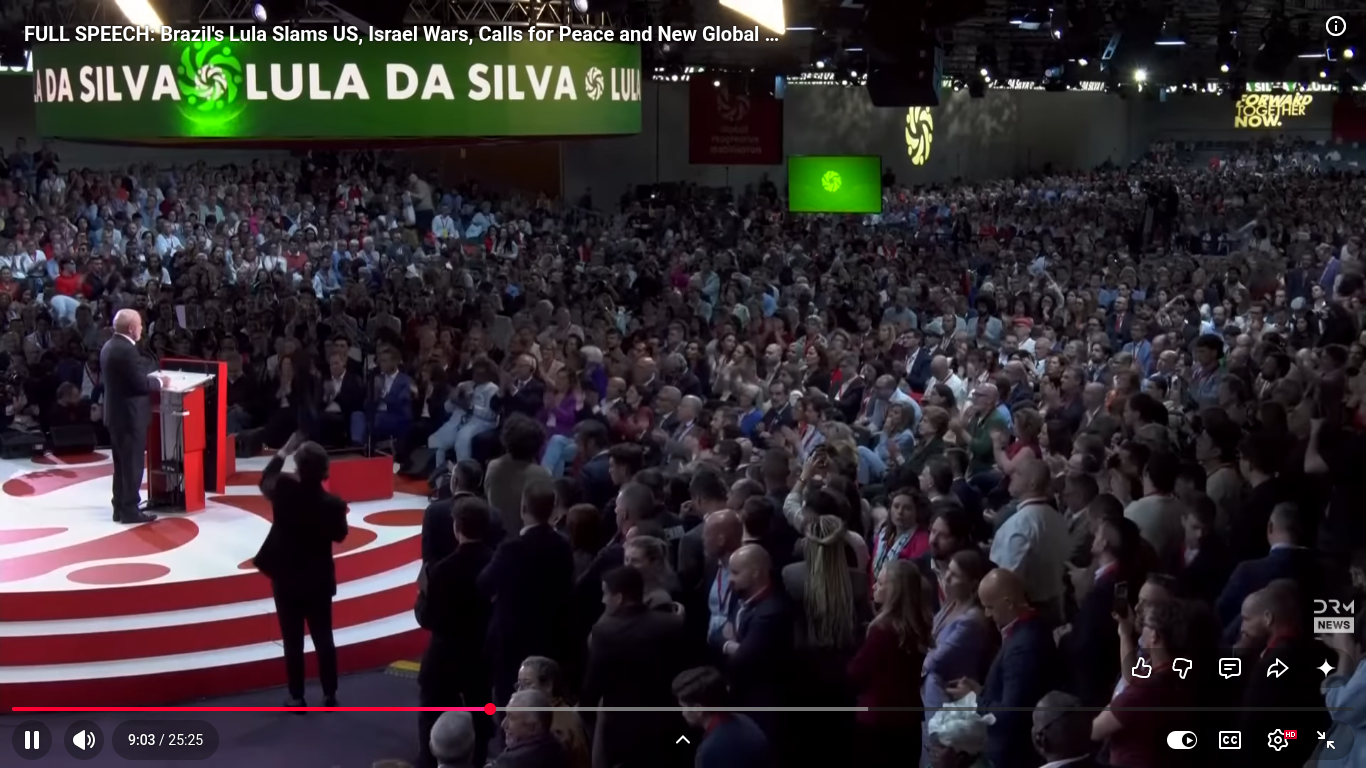
Brazilian President Luiz Inácio Lula da Silva delivered a blistering address on Apr 18, 2026 at the Global Progressive Mobilisation Summit in Barcelona, warning that escalating wars, deepening global inequality, and decades of neoliberal policies are pushing the world toward a dangerous crisis. In a fiery speech alongside Pedro Sánchez, Lula criticized powerful nations over conflicts such as the Gaza war and broader geopolitical tensions, calling out what he described as unjust global systems and urging urgent reform of institutions like the United Nations. Declaring that “the world cannot take more war” and “I don’t want war with anyone,” he called on progressive forces worldwide to defend democracy, promote peace, and build a fairer international order that gives equal voice to the Global South.
Lula on Inequality and War: Full Speech in English Transcript
I would like to begin my speech
by congratulating President Ed
for the extraordinary organization of a progressive event
that seeks to show the world that democracy has not died,
that seeks to show the world that no one needs to be ashamed of being progressive or being left-wing.
No one in the democratic world needs to be afraid of being who they are,
of saying what needs to be said,
as long as the democratic rules of the game established by society itself are respected.
And my praise, my dear Pedro Sánchez, is for the fact that you had the courage
not to allow U.S. warplanes to leave from here to attack Iran.
I’m being careful here because I have a written speech,
and I feel like speaking off the cuff,
but I need to speak with great responsibility, because we are building a very serious movement
that cannot end with our speeches here
and only happen again when we meet next in Mexico.
What we are doing here is the beginning of a movement
that must act every single day, every week, every month,
365 days a year,
so that we can restore the most sacred thing in the world: democracy and multilateralism.
The name of this initiative, Global Progressive Mobilization, says a lot.
Each of these three words carries a program of action.
It is important to understand what it means.
I stand before 5,000 people who identify as progressives.
Politics has always been divided into two camps:
on one side, those who believe that individual interests prevail over the collective;
on the other, those who believe that the well-being of each depends on guaranteeing a dignified and decent life for all.
This division has had many names—right and left, conservatives and progressives—
but extremism poses a new challenge.
The progressive camp has made advances in rights.
The situation of workers, women, Black people, and many minorities
is better today than it was in the past.
It is no coincidence that reactionary forces have responded so violently
with misogyny, racism, and hate speech.
But progressivism has not been able to overcome the dominant economic thinking.
The neoliberal project promised prosperity
and delivered hunger, inequality, and insecurity.
It caused crisis after crisis.
Even so,
we have surrendered to orthodoxy.
We have become managers of the failures of neoliberalism.
Left-wing governments win elections with left-wing discourse
and then practice austerity.
They give up public policies in the name of governability.
We became the system.
That is why it is no surprise that the other side now presents itself as anti-system.
The first commandment for progressives must be coherence.
We cannot be elected with one program and implement another.
We cannot betray the trust of the people.
Even if much of the population does not see itself as progressive,
it wants what we propose.
People want to eat—
to eat well,
to live well,
to have quality schools, quality hospitals,
a serious and responsible climate policy,
strong environmental protection.
They want a clean and healthy world,
a dignified job with a balanced workload,
a salary that allows a decent life.
The far right has managed to capitalize on the frustration
of unfulfilled promises of neoliberalism.
It exploits people’s anger by spreading lies—
about women, Black people, LGBTQ+ people, immigrants—
turning the most vulnerable into targets of hate.
Our role is to point to the real culprits.
Billionaires concentrate most of the world’s wealth.
They want people to believe that anyone can get there. They feed the fallacy of meritocracy,
but they kick away the ladder so others do not have the same opportunity to climb.
They pay less taxes or none at all. They exploit workers, destroy nature, manipulate algorithms.
Inequality is not a fact — it is a political choice.
What makes us progressives is choosing equality.
Our motto must always be to stand on the side of the people.
This struggle needs to be global.
It is useless to keep our house in order in a world in disorder.
The lords of war drop bombs on women and children,
spend billions of dollars on weapons that could be used to end hunger,
solve the energy problem and the health problem.
The Global South pays the price for wars it did not provoke
and for climate changes it did not cause.
It is treated as the backyard of the great powers,
suffocated by abusive tariffs and unpayable debts.
It is once again seen as a mere supplier of raw materials.
To be progressive in the international arena is to defend a reformed multilateralism.
It is to defend that peace prevails over force.
It is to fight hunger and protect the environment.
It is to restore the credibility of the UN that has been eroded by the irresponsibility of its permanent members.
It is to create a system in which the rules apply to everyone,
in which developed and developing countries stand on equal footing
in the Security Council, the World Bank, the IMF and the World Trade Organization.
This is not only an effort of governments.
The internet has become a battlefield.
Disputing the virtual networks is unavoidable,
but the dispute must go beyond the screens,
it must be taken to universities, churches, unions, associations, neighborhoods and society as a whole.
The far right shouts, lies and attacks.
We cannot be afraid to speak louder, with responsibility.
We must not be afraid to counter arguments.
The risk that the far right represents to democracy is not rhetorical — it is real.
In Brazil, it planned a coup d’état,
orchestrated a plot that included tanks in the streets
and the assassination of the elected president, the vice president and the head of the electoral court.
Pope Leo XIV said that democracy risks becoming a mask for the domination of economic and technological elites.
Our role is to unmask these forces,
to unmask those who say they are on the side of the people but govern for the richest,
who claim to be patriots but put sovereignty up for sale and call for sanctions against their own country,
who proclaim they defend the family but turn a blind eye to violence against women and the sexual abuse of children,
who claim to own the truth but spread lies and disinformation,
who present themselves as men of God but have no love for their neighbor,
who speak of freedom but persecute those who are different.
As the poet said: “The path is made by walking.”
Democracy is not a destination — it is a daily construction.
It must go beyond voting and bring concrete benefits to people’s lives.
There is no democracy when a father does not know where to get his next meal.
There is no democracy when a grandson loses his grandfather at the hospital door.
There is no democracy when a mother spends hours on a crowded bus and cannot give her children a goodnight kiss.
There is no democracy when someone is discriminated against because of the color of their skin,
when a woman dies simply for being a woman.
We must replace discouragement with dreams, hatred with hope.
The global progressive mobilization has an important mission:
to recover the capacity to project a better future —
a future with social justice, equality and democracy.
These three terms — global, progressive, mobilization — must go together,
not as slogans, but as a living reality.
I want to tell you something — just a minute of improvisation.
I am very restless. I am 80 years old.
I started in politics at the age of 30.
I spent 21 years of my life inside a factory.
I came from a very poor region of my country, like millions of Brazilians, to avoid starving.
I ate bread for the first time at the age of seven
and I learned politics very late.
And when I learned politics, I learned it because I discovered that in the National Congress
there was no representative of the working people,
which I believed was the reason the political class existed.
Thanks to democracy in my country, after we overthrew 23 years of military regime,
for the first time Brazil elected a worker as President of the Republic,
without a university degree, only with technical training as a metalworker.
And I wanted to be elected to prove that intelligence is not linked
to the number of years in university.
Knowledge may be — but intelligence is something deeper,
built in life, in work, in society.
Everything I am I owe to a mother who was born and died illiterate.
She died without knowing how to write her own name.
But everything I know about character and values I learned from her.
Why do I say this?
Because I grew up admiring American democracy.
I believed many times that the United States was the country of opportunity.
I was born politically during the Cold War,
and we do not want a new Cold War with anyone.
We do not want a Cold War between China and the United States.
We want freedom, we want free trade — we do not want protectionism.
The progressive left was a victim of the Washington Consensus discourse.
Now I look at what is happening in the world.
The United Nations, created after World War II to maintain peace,
has become paralyzed by the power of its permanent members.
Today we are living with more armed conflicts
than at any time since World War II.
The invasion of Iraq was based on a lie —
where were the weapons of mass destruction? They were never found.
The intervention in Libya was another lie.
The destruction in Gaza is another great tragedy.
We must stop this pattern of lies used to justify destruction.
Latin America is portrayed as a land of drug trafficking.
The Arab world is portrayed as a land of terrorism.
And who is considered good in this world?
We must understand something important:
many times we have been victims of our own political naivety.
We win elections, but then pressure from media, financial markets,
and conservative elites pushes us to abandon the very policies
that got us elected.
And when we try to please everyone,
we lose credibility.
So I say to the leaders of the world:
fulfill your responsibility to guarantee peace.
Stop this madness of war — the world cannot take it anymore.
The poor do not want much.
They do not want to take anything from the rich.
They want a decent job, a decent home, access to education,
healthcare, and opportunities for their children.
That is all.
Everything we want is already written —
in the Bible, in constitutions, in the Universal Declaration of Human Rights.
So why is it not fulfilled?
I will finish by saying this:
I am 80 years old, and I want to live to 120
to prove one thing —
we do not grow old because of time passing.
What makes us old is losing motivation,
losing a cause.
If we wake up every day with a cause,
we do not grow old.
My cause is democracy.
My cause is freedom.
My cause is equality.
My cause is dignity for all people.
I do not want war.
I want peace, love and fraternity.
My weapon is argument.
My weapon is reason.
Even if I am poor,
I have something essential:
character, honesty and dignity.
That is what allows us to respect everyone.
Thank you.
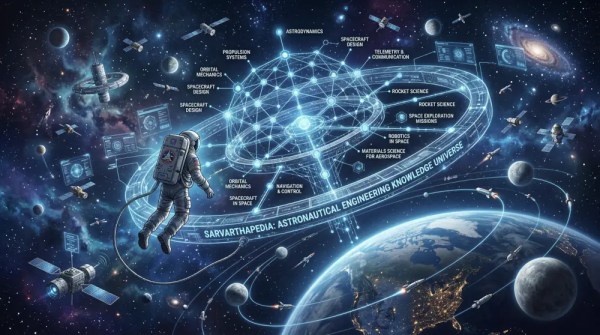
Sarvarthapedia Conceptual Core Node: Luiz Inácio Lula da Silva Barcelona Speech (2026)
Central Themes
- Global Crisis
- Inequality as Political Choice
- Anti-War Advocacy
- Progressive Mobilization
- Democratic Renewal
Cluster 1: Global Inequality and Economic Order
Core Concepts
- Wealth Concentration
- Meritocracy (Critique)
- Neoliberalism
- Tax Justice
- Labor Exploitation
Cross-References
- Links to Global South Politics → structural inequality, dependency
- Links to Neoliberalism Critique → austerity, privatization, crisis cycles
- Links to Democracy and Legitimacy → inequality undermines democratic trust
- Links to Digital Capitalism → algorithmic control and economic power
Cluster 2: War, Geopolitics, and Global Disorder
Core Concepts
- Militarism
- War Economy
- Geopolitical Conflict
- Humanitarian Crisis
- Anti-War Doctrine
Cross-References
- Gaza War → civilian impact, global outrage
- Links to U.S. Foreign Policy Criticism → interventionism, power asymmetry
- Links to Middle East Conflicts → Iraq, Libya, Iran narratives
- Links to Global Crisis Framework → war as systemic instability
Cluster 3: Global South and Structural Inequality
Core Concepts
- Global South Marginalization
- Debt Dependency
- Trade Inequality
- Resource Extraction
- Climate Injustice
Cross-References
- Links to Colonial Legacy Systems → historical exploitation patterns
- Links to Climate Politics → unequal responsibility and burden
- Links to International Trade Systems → tariffs, WTO imbalance
- Links to Development Economics → unequal growth structures
Cluster 4: Multilateralism and Global Governance
Core Concepts
- Multilateral Reform
- Global Institutions Legitimacy
- Rule-Based Order
- Sovereign Equality
Key Institutions
- United Nations
- UN Security Council
- World Bank
- IMF
- WTO
Cross-References
- Links to Post-World War II Order → institutional origins
- Links to Power Politics → veto system, elite dominance
- Links to Global Governance Crisis → paralysis and reform demands
Cluster 5: Democracy and Political Legitimacy
Core Concepts
- Democracy as Process
- Social Democracy
- Political Representation
- Institutional Trust
Cross-References
- Links to Economic Inequality → erosion of democratic systems
- Links to Far-Right Movements → populism, authoritarian risks
- Links to Social Justice → democracy beyond elections
- Links to Human Rights Frameworks → universal guarantees
Cluster 6: Progressive Politics and Ideological Conflict
Core Concepts
- Progressivism
- Left vs Right Ideology
- Anti-System Politics
- Political Coherence
Cross-References
- Links to Washington Consensus → ideological shift in left politics
- Links to Austerity Policies → contradiction in governance
- Links to Populism → reaction to unmet promises
- Links to Political Communication → narrative battles
Cluster 7: Information Warfare and Digital Society
Core Concepts
- Internet as Battlefield
- Disinformation
- Algorithmic Influence
- Media Power
Cross-References
- Links to Far-Right Mobilization → propaganda strategies
- Links to Democratic Discourse → erosion of truth
- Links to Digital Platforms → power concentration
- Links to Public Sphere Theory → transformation of debate spaces
Cluster 8: Social Justice and Human Conditions
Core Concepts
- Poverty
- Access to Healthcare
- Education Equality
- Gender Justice
- Racial Equality
Cross-References
- Links to Human Rights → universal declaration principles
- Links to Welfare State Models → policy frameworks
- Links to Labor Rights → dignity of work
- Links to Urban Inequality → lived experience of injustice
Cluster 9: Leadership and Political Narrative
Key Figures
- Luiz Inácio Lula da Silva
- Pedro Sánchez
Core Concepts
- Political Biography
- Worker-to-Leader Narrative
- Moral Authority
- Political Legitimacy
Cross-References
- Links to Class Mobility → symbolic representation
- Links to Democratic Participation → inclusion of working class
- Links to Leadership Ethics → character, dignity, accountability
Cluster 10: Global Progressive Mobilisation Framework
Core Node
- Global Progressive Mobilisation Summit
- Glossary of Diplomacy
Core Concepts
- Global Movement Building
- Collective Action
- Transnational Solidarity
- Continuous Mobilization
Cross-References
- Links to Internationalism → cross-border cooperation
- Links to Social Movements Theory → sustained activism
- Links to Democratic Renewal → long-term transformation
- Links to Global Forums → coordination of progressive agendas
Cluster 11: Philosophical Foundations
Core Concepts
- Equality vs Individualism
- Ethics of Responsibility
- Collective Good
- Political Morality
Cross-References
- Links to Enlightenment Ideals → liberty, equality, fraternity
- Links to Marxist Thought → class and inequality critique
- Links to Liberal Democracy → rights and freedoms
- Links to Moral Philosophy → justice and fairness
Network Integration
Primary Interconnections
- Inequality ↔ Democracy → legitimacy crisis
- War ↔ Global Governance → institutional failure
- Neoliberalism ↔ Social Justice → policy contradiction
- Digital Media ↔ Political Power → narrative control
- Global South ↔ Multilateralism → demand for equality
Also see
- The Language of Democracy, Diplomacy and India’s Unity
- In Defense of Democracy: The Fight Against Extremism: Speech by Uruguayan Prez Orsi
- Muslim-Majority Nations: Challenges to Democracy
- History of Parliamentary Democracy in India: Lecture by Pranab Mukherjee
- Democracy & the rule of law are integral parts of European identity: Stockholm Symposium on Democracy & the Rule of Law (22/06/2023)
- How British ‘Democracy’ Works in South Africa-Jerry Kirk
Systemic Insight
- The speech forms a unified conceptual network where economic inequality, geopolitical conflict, and institutional weakness are interdependent crises.
- The proposed solution connects progressive mobilization, democratic renewal, and global cooperation as mutually reinforcing pathways.