Baal the Storm Warrior: Mythology, History, and Biblical Conflict
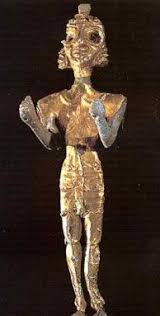
The figure of Baal (Sanskrit Bal: Powerful), often titled “the Rider upon the Clouds,” occupies a central and transformative place in the religious history of the ancient Near East, particularly between the third millennium BCE and the Iron Age (c. 1200–500 BCE). His identity evolved through processes of migration, syncretism, and theological conflict, beginning as a regional manifestation of earlier storm deities such as Hadad in Mesopotamia and eventually becoming the dominant divine figure in Canaan, a region encompassing modern Syria, Lebanon, Israel, and Palestine. The term “Baal” itself, meaning “Lord” or “Master,” was not originally a proper name but an honorific title denoting authority over land, people, and cosmic forces, indicating his role as a supreme deity of fertility, storms, and kingship.
The earliest antecedents of Baal can be traced to Akkadian and Sumerian traditions, where storm gods such as Adad (Hadad) or Ishkur governed seasonal rains. In the riverine civilizations of Mesopotamia, where agriculture depended primarily on the Tigris and Euphrates, such deities played a secondary role compared to river gods. However, when these traditions migrated westward into the Levant around c. 3000–2000 BCE, the ecological context transformed their significance. In Canaan, agricultural survival depended heavily on winter rainfall brought by Mediterranean storms, elevating the storm god from a minor figure to a central divine authority. By c. 1800–1500 BCE, Hadad had effectively transformed into Baal Hadad, eventually shortened to Baal, embodying cosmic sovereignty through weather control.
The most significant literary source for Baal’s mythology comes from the Ugaritic texts, discovered in 1928 CE at the archaeological site of Ugarit (modern Ras Shamra, Syria). These texts, dated to the 14th–13th centuries BCE, preserve the Baal Cycle, a series of poetic tablets written in the Ugaritic language, a Northwest Semitic tongue closely related to Hebrew. These tablets reveal a sophisticated mythological system in which Baal emerges as a young warrior deity who challenges and overthrows primordial forces of chaos, echoing broader Near Eastern mythic patterns.
Central to the Baal Cycle is his conflict with Yam, the god of the sea, representing chaos and disorder. This motif parallels other ancient myths, such as Marduk vs. Tiamat in Babylonian tradition. Baal’s victory over Yam establishes him as a champion of order, wielding divine weapons crafted by the artisan god Kothar-wa-Khasis. His triumph is not merely martial but cosmological, symbolizing the triumph of fertility over barrenness and civilization over chaos. This victory earns him kingship among the gods, though initially he lacks a palace, a symbolic marker of divine legitimacy.
The construction of Baal’s palace on Mount Zaphon (Jebel al-Aqra, near the modern Syria–Turkey border) is a crucial episode, reflecting the importance of sacred geography. Built of cedar from Lebanon, silver, gold, and lapis lazuli, the palace represents both divine authority and cosmic stability. The debate over whether the palace should include a window is deeply symbolic: the window allows Baal to unleash storms—thunder, lightning, and rain—upon the earth, reinforcing his identity as a storm deity whose voice is thunder and whose presence ensures agricultural fertility.
Another major mythological episode involves Baal’s confrontation with Mot, the god of death and sterility. Unlike his victory over Yam, Baal is defeated by Mot and descends into the underworld, resulting in drought and agricultural collapse. This narrative reflects the seasonal cycle of dry summers and fertile winters in the Levant. Baal’s sister and consort, Anat, a fierce warrior goddess, avenges him by violently destroying Mot—burning, grinding, and scattering his remains—thus restoring Baal to life. The cyclical struggle between Baal and Mot symbolizes the eternal rhythm of life, death, and rebirth, embedding agricultural realities into mythological structure.
By the late Bronze Age (c. 1200 BCE), Baal had become the most widely worshipped deity in Canaan, with local variations such as Baal of Tyre, Baal of Sidon, and others. His worship persisted even through the Bronze Age collapse, a period of widespread societal disruption across the eastern Mediterranean. However, during the early Iron Age (c. 1000 BCE), a new religious force emerged: the worship of Yahweh, initially a regional deity associated with the southern regions of Edom and Midian.
The interaction between Baal and Yahweh represents one of the most significant theological confrontations in history. Both were storm gods, sharing attributes such as control over thunder, lightning, and rain. Early Israelite texts, such as Psalm 29, contain language strikingly similar to Baal hymns, suggesting either shared tradition or direct adaptation. Over time, however, Israelite religion moved toward monolatry and eventually monotheism, necessitating the rejection and demonization of rival deities like Baal.
This conflict is vividly depicted in the biblical narrative of Elijah in 1 Kings 18 (c. 9th century BCE), where the prophet Elijah challenges the prophets of Baal on Mount Carmel. The story portrays Yahweh as the true god who answers with fire, while Baal remains silent. Such narratives were part of a broader ideological campaign to suppress Baal worship, especially during periods of religious reform in Judah and Israel.
Despite official condemnation, archaeological and textual evidence suggests that Baal worship persisted among common people and even within royal circles, such as during the reign of King Ahab (c. 874–853 BCE) and his Phoenician queen Jezebel, whose name itself references Baal. The coexistence and syncretism of Baal and Yahweh worship indicate that the distinction between them was not always clear to ancient populations.
Indra In Vedic Tradition
A compelling comparative dimension emerges when examining Baal alongside Indra from Vedic tradition (c. 4500–500 BCE, Indian subcontinent). Indra, like Baal, is a storm god and warrior, wielding the thunderbolt (Vajra) and defeating the serpent Vritra, who withholds waters from the world. This parallels Baal’s defeat of Yam and the sea monster Lotan (Leviathan). Both deities are associated with rain, fertility, kingship, and cosmic order, and both engage in battles against forces representing drought or chaos. The structural similarities suggest a shared Indo-European and Near Eastern mythological pattern, where storm gods function as protectors of life through the release of waters.
However, while Indra remained a prominent deity within the Vedic pantheon (Devata), later becoming integrated into Hindu cosmology, Baal’s trajectory diverged sharply due to the rise of monotheistic religions. Following the Babylonian Exile (586 BCE), Judaism consolidated its monotheistic framework, relegating Baal to a false god or idol. In later Christian and Islamic traditions, Baal underwent further transformation into a demonic figure, often identified with Beelzebub, the “Lord of the Flies,” and associated with Satanic hierarchies.
By the early centuries CE, texts such as the Testament of Solomon depict Baal (as Beelzebub) as a prince of demons, commanding legions and opposing divine authority. Medieval grimoires, including the Lesser Key of Solomon (17th century CE), further codified his role as a powerful infernal entity. This process of demonisation reflects a broader pattern in which former pagan gods were reinterpreted as malevolent spirits within monotheistic frameworks.
The historical transformation of Baal—from a life-giving storm deity to a demonised adversary of God—illustrates the dynamic nature of religious evolution. It underscores how theological dominance is often achieved not merely through belief but through cultural assimilation, reinterpretation, and suppression of rival traditions. Baal’s enduring presence in myth, scripture, and occult literature attests to his profound impact on the religious imagination of the ancient world.
In modern scholarship, particularly since the rediscovery of the Ugaritic texts, Baal has been reassessed not as a demonic figure but as a central deity of a sophisticated and deeply symbolic religious system. His myths reflect the environmental realities, social structures, and existential concerns of ancient Canaanite society. As the “Rider upon the Clouds,” Baal embodied the precarious balance between life and death, fertility and drought, making him indispensable to the people who depended on the rains he commanded.
Sarvarthapedia Conceptual Nod: Baal the Storm God
Structured, cross-referenced conceptual network for Sarvarthapedia centered on Baal. It functions like a “See also” knowledge web, grouping related concepts into clusters and linking them across themes.
CLUSTER 1: Core Identity and Titles
- Baal
See also: Lordship concept, Fertility deities, Storm gods, Divine kingship - Baal Hadad
See also: Hadad, Syncretism, Weather control - “Rider on the Clouds”
See also: Divine epithets, Storm symbolism, Sky gods - Lord or Master (Semitic title)
See also: Adon, Adonai, Sacred language
Cross-links:
- Baal vs Yam and Lotan
- Indra vs Vritra
- Yahweh vs Leviathan
- Cosmic God Vishnu
CLUSTER 2: Mythological Cycle and Narratives
- Baal Cycle
See also: Ugaritic literature, Myth cycles, Oral tradition - Conflict with Yam (Sea)
See also: Chaoskampf, Yam, Primordial chaos - Conflict with Mot (Death)
See also: Mot, Underworld myths, Seasonal death - Anat (warrior goddess)
See also: Divine siblings, War deities, Fertility and violence - Palace on Mount Zaphon
See also: Sacred mountains, Divine kingship, Temple symbolism
CLUSTER 3: Geography and Archaeology
- Ugarit
See also: Canaanite religion, Bronze Age cities, Archives - Canaan
See also: Levantine cultures, Agricultural societies - Mount Zaphon (Jebel al-Aqra)
See also: Divine dwelling places, North symbolism - Bronze Age collapse
See also: Cultural disruption, Religious continuity
CLUSTER 4: Comparative Mythology
- Indra
See also: Vritra myth, Thunder gods, Indo-European parallels - Zeus
See also: Olympian kingship, Thunderbolt symbolism - Marduk
See also: Tiamat, Creation myths - Chaoskampf (cosmic battle motif)
See also: Order vs chaos, Mythic archetypes
CLUSTER 5: Yahweh and Israelite Religion
- Yahweh
See also: Monotheism, Storm god traits, Divine assimilation - Elijah vs Baal (1 Kings 18)
See also: Prophetic tradition, Religious polemics - Psalm 29
See also: Hymns, Storm imagery, Literary adaptation - Jezebel and Ahab
See also: Phoenician influence, Royal religion - Monolatry to Monotheism
See also: Religious evolution, Biblical theology
CLUSTER 6: Agricultural and Natural Cycles
- Rain and fertility
See also: Seasonal cycles, Agrarian dependence - Drought and famine
See also: Mot symbolism, Environmental stress - Seasonal death and rebirth
See also: Resurrection myths, Cyclical time - Mediterranean climate system
See also: Winter storms, Ecology and religion
CLUSTER 7: Linguistic and Cultural Connections
- Ugaritic language
See also: Semitic languages, Hebrew parallels - Hebrew Bible terminology
See also: Baal as taboo word, Bosheth substitution - Adonai and Baal
See also: Titles of divinity, Linguistic overlap - Phoenician religion
See also: Maritime trade, Cultural diffusion - Indra
See also: Vedic hymns, Thunderbolt (Vajra), Rain-bringer
Cross-links: Baal (storm parallel), Yahweh (storm imagery), Chaoskampf motif
CLUSTER 8: Demonisation and Later Traditions
- Beelzebub
See also: Demonology, “Lord of the Flies” - Satan and fallen angels
See also: Dualism, Apocalyptic literature - Testament of Solomon
See also: Magical traditions, Demon control - Lesser Key of Solomon
See also: Occult literature, Spirit hierarchies - Medieval demonology
See also: Christian reinterpretation, Infernal catalogues
CLUSTER 9: Core Thematic Concepts
- Storm gods
See also: Weather control, Divine authority - Fertility and agriculture
See also: Life cycles, Sacred ecology - Death and resurrection
See also: Underworld journeys, Mythic renewal - Divine kingship
See also: Palace symbolism, Political theology - Syncretism
See also: Cultural blending, Religious adaptation
CLUSTER 10: Cross-Linking Summary
- Baal ↔ Yahweh: Shared storm attributes, theological rivalry
- Baal ↔ Indra: Storm warfare, dragon-slaying, rain-bringing
- Baal ↔ Marduk: Chaoskampf pattern, cosmic kingship
- Baal ↔ Mot: Death-rebirth cycle, agricultural symbolism
- Baal ↔ Ugarit: Primary textual source, historical grounding
- Baal ↔ Demonology: Transformation into Beelzebub
CLUSTER 11: New Testament Transformations
- Demonisation of Baal
See also: Beelzebub
Cross-links: Satanic hierarchy, Spiritual warfare - Gospel of Mark (3:22)
See also: Accusation against Jesus
Cross-links: Beelzebub as “prince of demons,” Baal reinterpretation - God the Father
See also: Monotheistic culmination
Cross-links: Yahweh continuity, rejection of Baal-type polytheism - Christ vs demons
See also: Exorcism narratives
Cross-links: Baal as demonic power in later theology
CLUSTER 12: Vedic Comparative Framework
- Indra vs Vritra
See also: Release of waters, Vishnu In Rigveda
Cross-links: Baal vs Yam, Yahweh vs sea monsters - Rain and fertility
See also: Monsoon cycles
Cross-links: Baal’s Mediterranean storms, Yahweh’s agricultural blessings - Divine kingship and warrior ethos
See also: Rigvedic hymns
Cross-links: Baal as king, Yahweh as divine king
This network forms an interconnected web where each node leads to multiple thematic, historical, and comparative pathways, enabling layered exploration of Baal’s role across mythology, religion, and cultural history.