Date: November 29/11/2024
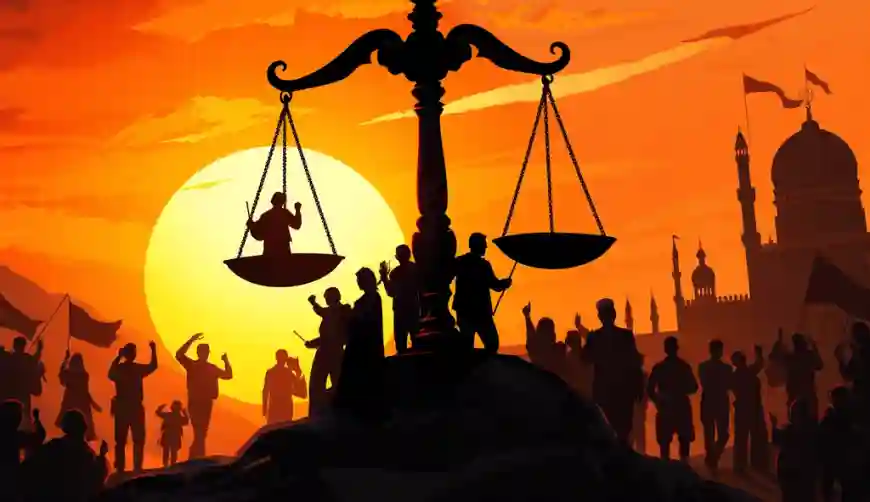
Why Has Democracy Struggled in Muslim-Majority Countries?
Muslim-Majority Nations: The challenges of establishing and sustaining democracy in Muslim-majority countries have sparked debates among political analysts, historians, and sociologists. While no single factor can explain the phenomenon, several interrelated causes contribute to the instability of democratic systems in these nations. Below are some key reasons, supported by real-world examples.
1. Historical Legacy of Authoritarianism
Many Muslim-majority nations emerged from colonial rule, where governance structures prioritized control over democratic participation. After independence, authoritarian leaders often consolidated power, suppressing democratic institutions.
- Example: In Egypt, after the fall of monarchy, successive regimes, including those of Gamal Abdel Nasser and Hosni Mubarak, relied on military-backed authoritarianism, stifling democratic development.
2. Political Islam and Power Struggles
The intersection of religion and politics can complicate democracy. Political Islamists often clash with secularists, leading to polarization and instability.
- Example: In Pakistan, the struggle between secular governance and Islamist movements has undermined democratic norms, contributing to military interventions and weak civilian governments.
3. Weak Democratic Institutions
In many Muslim-majority countries, institutions like independent judiciaries, free press, and transparent electoral systems are underdeveloped, making it easier for authoritarian leaders to dominate.
- Example: In Iraq, after the U.S. invasion, the absence of robust democratic institutions led to corruption, sectarian divisions, and violence, hindering democratic progress.
4. Economic Challenges
High levels of poverty, unemployment, and income inequality often shift public focus toward immediate survival rather than democratic participation.
- Example: In Sudan, economic hardship has fueled public dissatisfaction and frequent coups, preventing long-term democratic stability.
5. Influence of Foreign Powers
External powers often support authoritarian regimes in Muslim-majority countries to safeguard their interests, undermining grassroots democratic movements.
- Example: Saudi Arabia’s monarchy has received international backing despite its lack of democratic governance, primarily due to its oil resources and strategic importance.
6. Social Fragmentation
Ethnic, sectarian, and tribal divisions can make it difficult to build a consensus, which is crucial for democratic governance.
- Example: In Syria, the diverse sectarian makeup of the population has been exploited by authoritarian leaders to maintain power and suppress opposition.
7. Lack of Civic Education
Many citizens in these countries have limited exposure to democratic practices or the benefits of civic engagement, which can result in apathy or support for authoritarian leaders.
While democracy has faced significant obstacles in Muslim-majority countries, it is not an inevitable failure. Some nations, like Indonesia and Tunisia, have made strides toward democratic governance, showing that with the right conditions, democracy can thrive. Addressing economic disparities, strengthening institutions, and promoting inclusive governance are key steps to fostering democracy in these regions.
Why Has Democracy Struggled in Muslim-Majority Countries? Examples from Pakistan and Bangladesh
Democracy in Muslim-majority countries like Pakistan and Bangladesh has faced significant challenges. Both nations share a history of colonial rule, political instability, and economic struggles that have hindered the consolidation of democratic systems. Below, we explore their unique experiences to understand the broader trends.
Democratic Challenges in Pakistan
1. Military Intervention in Politics
Pakistan’s democracy has been repeatedly interrupted by military coups. Since its independence in 1947, the military has directly ruled the country for nearly half its history, sidelining civilian governments.
- Example: General Ayub Khan (1958–1969), General Zia-ul-Haq (1977–1988), and General Pervez Musharraf (1999–2008) all came to power through military coups. This frequent military interference has weakened democratic institutions and prevented civilian governments from gaining stability.
2. Weak Political Institutions
Pakistan’s judiciary, electoral system, and political parties often lack independence and transparency. Corruption and nepotism further erode public trust.
- Example: The ousting of elected Prime Ministers like Nawaz Sharif and Imran Khan highlights the fragility of civilian governments, often undermined by both internal corruption and external pressures from the military and judiciary.
3. Religious and Ethnic Divisions
Pakistan is home to diverse ethnic and religious groups, including Punjabis, Sindhis, Baloch, Pashtuns, and religious minorities. These divisions have been exploited for political gain, leading to unrest.
- Example: The Baloch separatist movement and tensions in Khyber Pakhtunkhwa have created instability, diverting focus from democratic governance.
4. External Influence
Pakistan’s strategic location has made it a focus of international interest, particularly from the United States and neighboring countries like India and China. This has often led to foreign interventions that prioritize security and economic interests over democracy.
- Example: During the Cold War, the U.S. supported military dictator General Zia-ul-Haq for his role in countering Soviet influence in Afghanistan, despite his authoritarian rule.
Democratic Challenges in Bangladesh
1. Legacy of Authoritarianism
After gaining independence from Pakistan in 1971, Bangladesh faced political turmoil. Military coups and authoritarian regimes dominated its early years.
- Example: Sheikh Mujibur Rahman, the nation’s founding leader, was assassinated in 1975, paving the way for military rulers like General Ziaur Rahman and General Hussain Muhammad Ershad.
2. Polarized Political Landscape
Bangladesh’s democracy has been marred by intense rivalry between its two dominant political parties: the Awami League (AL) and the Bangladesh Nationalist Party (BNP). Their confrontational politics often lead to gridlock, strikes, and violence.
- Example: The political feud between Sheikh Hasina (AL) and Khaleda Zia (BNP) has repeatedly escalated into street protests and election boycotts, undermining democratic processes.
3. Electoral Manipulation
Elections in Bangladesh have frequently been criticized for irregularities, including voter suppression and allegations of rigging.
- Example: The 2018 general election saw allegations of intimidation, voter fraud, and suppression of opposition voices, raising questions about the legitimacy of the results.
4. Economic Challenges
Poverty and unemployment remain significant issues, often leading to voter apathy and susceptibility to political patronage. Despite economic progress in recent years, inequality continues to affect democratic participation.
- Example: Many rural areas remain underdeveloped, making it easier for political parties to exploit local populations through patron-client systems.
5. Press Freedom and Human Rights
Restrictions on media and civil society have eroded democratic values in Bangladesh. Journalists and activists often face harassment, imprisonment, or worse.
- Example: The Digital Security Act of 2018 has been criticized for suppressing dissent, curbing press freedom, and stifling criticism of the government.
Common Themes Between Pakistan and Bangladesh
- Colonial Legacies: Both nations inherited governance systems designed for control, not democratic participation.
- Weak Institutions: Corruption and lack of institutional independence are major hurdles.
- Polarization: Political and ethnic divides weaken national unity and hinder democratic consolidation.
- External Influence: Both nations face geopolitical pressures that often prioritize security over democracy.
While Pakistan and Bangladesh have made strides toward democracy, persistent challenges such as political instability, institutional weakness, and social divides hinder progress. Addressing these issues requires strengthening democratic institutions, promoting civic education, and fostering inclusive governance.
The topic of migration and the growing Muslim population in European nations is a sensitive and complex issue. It is essential to approach it thoughtfully and distinguish between legitimate concerns about integration, security, and societal cohesion, versus stereotypes and discriminatory narratives that fuel division. Below, we explore some of the challenges raised in public discourse regarding the growing Muslim population in Europe, along with examples.
1. Social Integration Challenges
Large-scale migration, particularly from Muslim-majority countries, can sometimes lead to difficulties in cultural and social integration. Differences in values, customs, and religious practices may create tension with host communities if not addressed effectively.
- Example: In France, debates about wearing the hijab and niqab in public spaces have sparked controversy. The French government’s emphasis on secularism (laïcité) has led to bans on religious symbols in schools, which some Muslim communities perceive as discriminatory.
2. Strain on Public Services
An influx of migrants, including those from Muslim-majority countries, can strain public resources, especially in areas like housing, healthcare, and education. Overwhelmed systems may create resentment among local populations.
- Example: In Germany, the arrival of over one million refugees during the 2015-2016 migration crisis, many from Syria and Afghanistan, stretched public services and sparked debates about the country’s capacity to absorb migrants.
3. Concerns Over Radicalization and Security
Although the vast majority of Muslims in Europe are peaceful, isolated incidents of radicalization have raised concerns about extremism. This issue is often politicized, but it remains a challenge for authorities to address without stigmatizing entire communities.
- Example: The 2015 Paris attacks and the 2017 Manchester bombing were perpetrated by individuals linked to extremist ideologies, prompting debates about the role of cultural isolation and the radicalization of youth in certain communities.
4. Shifts in Demographics and Political Debates
The growing Muslim population has sometimes been framed as a demographic challenge, with fears that it may influence the cultural and religious identity of European nations. Such fears are often amplified by far-right political groups.
- Example: In Sweden, debates around immigration and cultural integration have influenced the rise of far-right parties like the Sweden Democrats, who campaign on anti-immigration platforms.
5. Parallel Societies and Segregation
In some cities, lack of integration has led to the creation of so-called “parallel societies,” where migrant communities remain isolated from mainstream society. This segregation can perpetuate economic disparity and social alienation.
- Example: In parts of Belgium, such as Molenbeek in Brussels, authorities have struggled with high unemployment and social exclusion, which are seen as contributing factors to radicalization and crime.
6. Cultural and Religious Tensions
Differences in cultural norms—such as views on gender equality, LGBTQ+ rights, and secular governance—have sometimes led to clashes. Governments and communities struggle to reconcile these differences while respecting individual freedoms.
- Example: In the United Kingdom, cases like the protests against LGBTQ+ education in Birmingham schools (2019) highlighted cultural tensions within diverse communities.
Addressing the Challenges
- Promoting Integration: Policymakers must invest in programs that facilitate language acquisition, education, and job training for migrants to ensure successful integration.
- Tackling Discrimination: Combatting Islamophobia and fostering mutual understanding are crucial to building cohesive societies.
- Community Engagement: Encouraging dialogue between communities can reduce tensions and promote shared values.
- Balanced Immigration Policies: Governments must balance humanitarian obligations with the practicalities of integrating migrants into society.
While the growing Muslim population in Europe presents challenges related to integration and societal cohesion, it is essential to address these issues through inclusive policies, education, and dialogue. Overgeneralization and fear-based rhetoric risk deepening divides, while constructive approaches can turn diversity into a strength.
The perception that Muslims in the USA are viewed with suspicion stems from a combination of historical events, media portrayals, and policy decisions. While many Americans recognize and respect the contributions of Muslims to society, certain factors have fueled negative stereotypes and mistrust. Below is an analysis of the reasons behind this perception and its impact on Muslim communities in the United States.
Reasons for Suspicion Toward Muslims in the USA
1. Impact of 9/11 and Subsequent Attacks
The terrorist attacks of September 11, 2001, profoundly shaped public attitudes toward Muslims in the USA. The perpetrators, who claimed to act in the name of Islam, left a lasting association between Islam and terrorism in the minds of many Americans.
- Example: Policies like the Patriot Act increased surveillance of Muslim communities, contributing to feelings of alienation and suspicion.
2. Media Representation
Media coverage often portrays Muslims in the context of extremism, terrorism, or conflict, reinforcing negative stereotypes. Such narratives overshadow the everyday lives and positive contributions of Muslim Americans.
- Example: Studies have shown that news about Muslims is disproportionately negative, with a focus on terrorism-related topics even though the vast majority of Muslims condemn such acts.
3. Rise of Islamophobia
Islamophobia, fueled by misinformation and fear, has grown in the USA. Public figures and political leaders have sometimes propagated anti-Muslim rhetoric, exacerbating suspicion.
- Example: Former President Donald Trump’s 2017 “Muslim Ban” targeted several Muslim-majority countries, sparking widespread criticism and protests. The policy reinforced the perception that Muslims were inherently linked to security threats.
4. Lack of Awareness About Islam
For many Americans, limited interaction with Muslims contributes to ignorance and stereotypes. Misunderstandings about Islamic practices, such as wearing the hijab or observing dietary restrictions, can lead to prejudice.
- Example: Surveys show that Americans who personally know a Muslim are less likely to hold negative views about Islam than those who do not.
5. Stereotyping in Counterterrorism Policies
Muslim communities are often disproportionately targeted by counterterrorism initiatives, fostering mistrust between these communities and law enforcement.
- Example: The NYPD’s surveillance program in the 2000s specifically monitored Muslim neighborhoods, mosques, and businesses, leading to accusations of racial profiling.
Effects on Muslim Communities in the USA
1. Discrimination and Hate Crimes
Muslims in the USA face higher rates of discrimination and hate crimes compared to other religious groups.
- Example: According to the FBI, hate crimes against Muslims spiked after 9/11 and surged again during the rise of anti-Muslim rhetoric in the 2010s.
2. Marginalization and Alienation
Suspicion and prejudice contribute to feelings of alienation among Muslim Americans, affecting their sense of belonging and participation in society.
- Example: Many Muslim students report experiencing bullying or exclusion in schools due to their faith.
3. Economic and Social Impacts
Discrimination can lead to workplace bias, housing inequality, and restricted opportunities for Muslim individuals and families.
- Example: Muslim women wearing hijabs often face challenges in employment due to visible markers of their faith.
Steps Toward Improving Perceptions
1. Education and Awareness
Promoting education about Islam and the diversity of Muslim communities can dispel myths and foster understanding.
- Example: Interfaith dialogues and cultural exchange programs help bridge gaps between Muslim and non-Muslim communities.
2. Media Responsibility
Encouraging balanced media representation of Muslims can challenge stereotypes and highlight positive contributions.
- Example: Programs showcasing Muslim professionals, artists, and community leaders counteract negative narratives.
3. Legislative Protections
Enforcing anti-discrimination laws ensures that Muslims are treated equally in all spheres of life.
- Example: Initiatives like the No Ban Act, introduced to prevent discriminatory travel bans, aim to protect Muslim communities.
4. Community Engagement
Muslim Americans actively participating in civic and political life can help challenge stereotypes and build trust.
- Example: Leaders like Congresswomen Ilhan Omar and Rashida Tlaib represent the growing political influence of Muslim Americans.
While Muslims in the USA have made significant contributions to the nation, persistent suspicion rooted in historical events, media narratives, and political rhetoric continues to challenge their full acceptance. Addressing this issue requires efforts at both the societal and policy levels to promote understanding, equity, and inclusion.
Bibliography
Books and Academic Articles
- Saeed, A. (2007). Islamophobia and Muslim Minorities: A Global Perspective. Brill Academic Publishers.
- Summary: This book examines the global phenomenon of Islamophobia, including its historical roots and manifestations in various countries. It highlights how fear and suspicion of Muslims have grown in Western societies, particularly after 9/11.
- Relevance: Offers a broad context for understanding Islamophobia, with a chapter dedicated to the U.S. experience.
- Bayoumi, M. (2008). How Does It Feel to Be a Problem?: Being Young and Arab in America. Penguin Books.
- Summary: This book provides personal narratives of Arab and Muslim Americans in the post-9/11 era, exploring themes of identity, discrimination, and resilience.
- Relevance: Illustrates the lived experiences of Muslim Americans facing suspicion and prejudice.
- Cainkar, L. (2009). Homeland Insecurity: The Arab American and Muslim American Experience After 9/11. Russell Sage Foundation.
- Summary: This research-driven book examines how Arab and Muslim Americans were surveilled, marginalized, and stereotyped following 9/11.
- Relevance: Details the societal and policy-driven causes of suspicion toward Muslims in the U.S.
- Gottschalk, P., & Greenberg, G. (2008). Islamophobia: Making Muslims the Enemy. Rowman & Littlefield Publishers.
- Summary: The authors trace the history of anti-Muslim sentiment in the United States, focusing on how political and media narratives have shaped public perceptions.
- Relevance: Explains how suspicion of Muslims has been constructed through cultural narratives.
- Lean, N. (2012). The Islamophobia Industry: How the Right Manufactures Fear of Muslims. Pluto Press.
- Summary: This book investigates the role of political and media actors in creating and sustaining Islamophobia in the United States.
- Relevance: Highlights the mechanisms behind anti-Muslim suspicion and propaganda.
- Cesari, J. (2006). When Islam and Democracy Meet: Muslims in Europe and the United States. Palgrave Macmillan.
- Summary: Cesari explores the integration challenges of Muslim communities in the West, contrasting experiences in Europe and the United States.
- Relevance: Offers insights into the challenges faced by Muslims in building trust and acceptance in the U.S.
- Kumar, D. (2012). Islamophobia and the Politics of Empire. Haymarket Books.
- Summary: Kumar argues that Islamophobia is tied to Western imperialism, examining its historical and contemporary contexts.
- Relevance: Provides a critical framework for understanding suspicion toward Muslims as part of larger geopolitical narratives.
Reports and Studies
- Pew Research Center (2017). Muslims and Islam: Key Findings in the U.S. and Around the World. Pew Research Center.
- Summary: This comprehensive report examines attitudes toward Muslims in the U.S., highlighting issues like discrimination, integration, and religious freedom.
- Relevance: Offers statistical insights into public perceptions and challenges faced by Muslims.
- Council on American-Islamic Relations (CAIR) (2019). Targeted: Islamophobia in the U.S. CAIR.
- Summary: This report analyzes Islamophobic incidents, hate crimes, and discriminatory policies affecting Muslim Americans.
- Relevance: Documents real-life examples of suspicion and hostility toward Muslims.
- Southern Poverty Law Center (SPLC) (2020). The Anti-Muslim Movement in the United States. SPLC.
- Summary: SPLC details organizations and individuals promoting anti-Muslim sentiment in the U.S., analyzing their influence on public discourse.
- Relevance: Identifies the drivers of Islamophobia and their impact on Muslim communities.
Media and Journalism
- Ali, W. (2018). Go Back to Where You Came From: The Backlash Against Immigration and the Fate of Western Democracy. St. Martin’s Press.
- Summary: This book examines the backlash against immigration in Western nations, with a focus on Muslim migrants in the U.S.
- Relevance: Connects the suspicion of Muslims to broader anxieties about immigration and national identity.
- Elkader, N. (2018). “Media Representations of Islam and Muslim Americans Post-9/11.” Journal of Islamic Studies.
- Summary: The article critiques how U.S. media has perpetuated stereotypes of Muslims as threats.
- Relevance: Explores the role of media in shaping public suspicion of Muslims.
- Hajjat, A., & Mohammed, M. (2013). Islamophobia in France and the United States: A Comparative Perspective. Routledge.
- Summary: This article compares how Islamophobia manifests in France and the U.S., focusing on policies and public attitudes.
- Relevance: Highlights differences and similarities in anti-Muslim sentiment across Western nations.
Documentaries and Visual Media
- The Feeling of Being Watched (2018), Directed by Assia Boundaoui.
- Summary: This documentary investigates FBI surveillance of a Muslim community in Chicago, shedding light on how suspicion affects everyday lives.
- Relevance: Offers a visual narrative of the consequences of being viewed with suspicion.
- Reel Bad Arabs: How Hollywood Vilifies a People (2006), Directed by Sut Jhally.
- Summary: Based on Jack Shaheen’s work, this documentary examines negative portrayals of Arabs and Muslims in Hollywood films.
- Relevance: Highlights the media’s role in perpetuating stereotypes.
Keywords: Democracy in Muslim-majority countries, Challenges of democracy in Islamic nations, Authoritarianism in the Muslim world, Political Islam and democracy, Democratic institutions in Muslim nations, Examples of failed democracies in Muslim countries, Foreign influence in Muslim governance, Democracy in Pakistan, Challenges to democracy in Bangladesh, Military intervention in politics, Authoritarianism in South Asia, Electoral irregularities in Bangladesh, Political instability in Pakistan, Democratic institutions in Muslim-majority countries, Muslim population in Europe, Integration challenges in Europe, Migration and public services in Europe, Radicalization and European security, Cultural diversity in European nations, Parallel societies in Europe, Muslim migration impact on Europe, Muslims in the USA, Islamophobia in America, Impact of 9/11 on Muslims, Media portrayal of Muslims, Discrimination against Muslims in the USA, Muslim contributions to American society, Muslim ban policy USA.
Read More:
- Muslim Civilization and Muslim Constructive Role In the Contemporary World Civilization
- Muslims for Secular Democracy: Founding Declaration (02/10/2003)
- Muslims in Britain – A discourse
- The Status of Non-Muslims Under Muslim Rule (Pact of Umar ibn Al-Khattāb-644)