Skip to content

ADVOCATETANMOY LAW LIBRARY

Research & Library Database

Primary Menu
  • News
  • Opinion
  • Countries198
    • National Constitutions: History, Purpose, and Key Aspects
  • Judgment
  • Book
  • Legal Brief
    • Legal Eagal
  • LearnToday
  • HLJ
    • Supreme Court Case Notes
    • Daily Digest
  • Sarvarthapedia
    • Sarvarthapedia (Core Areas)
    • Systemic-and-systematic
    • Volume One
12/04/2026
  • International

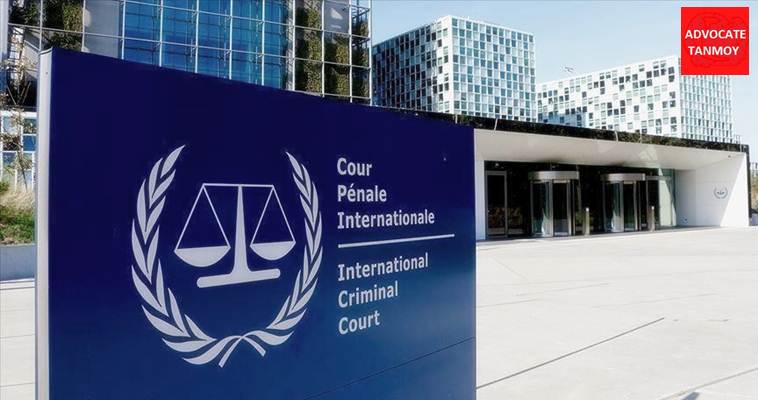
Difference Between ICJ from International Criminal Court and ad hoc international criminal tribunals?

The International Court of Justice has no jurisdiction to try individuals accused of war crimes or crimes against humanity. As it is not a criminal court, it does not have a prosecutor able to initiate proceedings.
advtanmoy 22/11/2019 2 minutes read

ยฉ Advocatetanmoy Law Library

  • Share on WhatsApp (Opens in new window) WhatsApp
  • Share on X (Opens in new window) X
  • Share on Facebook (Opens in new window) Facebook
  • Share on Telegram (Opens in new window) Telegram
ICC

Home ยป Law Library Updates ยป Sarvarthapedia ยป Law ยป International ยป Difference Between ICJ from International Criminal Court and ad hoc international criminal tribunals?

International Court of Justice(ICJ) is the principal judicial organ of the United Nations, established by the United Nations Charter.

Only sovereign states are eligible to sue before the Court in contentious cases. This Court is not works as a supreme court nor acts as a court of last appeal for individuals. It can, however, rule on the validity of arbitral awards.

ICJ has a twofold role: first, to settle, in accordance with international law, legal disputes between States submitted to it by them and, second, to give advisory opinions on legal matters referred to it by duly authorized United Nations organs and specialized agencies.

ICJ is not a Criminal Court

The International Court of Justice has no jurisdiction to try individuals accused of war crimes or crimes against humanity. As it is not a criminal court, it does not have a prosecutor able to initiate proceedings.

Read Next

  • Press statements following Russian-Vietnamese talks (2025)
  • Urgency in Diplomacy Amidst Russian Aggression: Zelenskyy
  • 15 Arab & Islamic countries condemn West Bank Annexation Bills 2025

This task is the preserve of national courts, the ad hoc criminal tribunals established by the United Nations (such as the International Residual Mechanism for Criminal Tribunals (IRMCT), mandated to take over residual functions from the International Criminal Tribunal for the former Yugoslavia (ICTY) and from the International Criminal Tribunal for Rwanda (ICTR)) or in co-operation with it (such as the Special Court for Sierra Leone and the Special Tribunal for Lebanon), and also of the International Criminal Court, set up under the Rome Statute.


Tags: ICJ

Post navigation

Previous: International Court of Justice
Next: ALL News Headlines 2019 November 22ND
Communism
Sarvarthapedia

Manifesto of the Communist Party 1848: History, Context, and Core Concepts

Arrest
Sarvarthapedia

Latin Maxims in Criminal Law: Meaning, Usage, and Courtroom Application

Abolition of Slave Trade Act 1807: Facts, Enforcement, and Historical Context

British Slavery and the Church of England: History, Theology, and the Codrington Estates

United States of America: History, Government, Economy, and Global Power

Biblical Basis for Slavery: Old and New Testament Laws, Narratives, and Interpretations

Rule of Law vs Rule by Law and Rule for Law: History, Meaning, and Global Evolution

IPS Cadre Strength 2025: State-wise Authorised Strength

Uric Acid: From 18th Century Discovery to Modern Medical Science

Christian Approaches to Interfaith Dialogue: Orthodox, Catholic, Protestant, and Pentecostal Views

Origin of Central Banking in India: From Hastings to RBI and the History of Preparatory Years (1773โ€“1934)

Howrah District Environment Plan: Waste Management, Water Quality & Wetland Conservation

Bharatiya Nyaya Sanhita 2023: Sections (1-358), Punishments, and Legal Framework

Bengali Food Culture: History, Traditions, and Class Influences

  • Sarvarthapedia

  • Delhi Law Digest

  • Howrah Law Journal

  • Amit Aryaย vs Kamlesh Kumari:ย Doctrine of merger
  • David Vs. Kuruppampady: SLP against rejecting review by HC (2020)
  • Nazim & Ors. v. State of Uttarakhand (2025 INSC 1184)
  • Geeta v. Ajay: Expense for daughter`s marriage allowed in favour of the wife
  • Ram v. Sukhram: Tribal women’s right in ancestral property [2025] 8 SCR 272
  • Naresh vs Aarti: Cheque Bouncing Complaint Filed by POA (02/01/2025)
  • Bharatiya Nagarik Suraksha Sanhita 2023 (BNSS)
  • Bharatiya Sakshya Adhiniyam 2023 (BSA): Indian Rules for Evidence
  • Bharatiya Nyaya Sanhita (BNS) 2023
  • The Code of Civil Procedure (CPC)
  • Supreme Court Daily Digest
  • U.S. Supreme Court Orders
  • U.k. Supreme Court Orders
United Kingdom, UK

Abolition of Slave Trade Act 1807: Facts, Enforcement, and Historical Context

British Slavery and the Church of England: History, Theology, and the Codrington Estates

British Slavery and the Church of England: History, Theology, and the Codrington Estates

USA, America

United States of America: History, Government, Economy, and Global Power

Biblical Basis for Slavery, english slave trade

Biblical Basis for Slavery: Old and New Testament Laws, Narratives, and Interpretations

2026 ยฉ Advocatetanmoy Law Library

  • About
  • Global Index
  • Judicial Examinations
  • Indian Statutes
  • Glossary
  • Legal Eagle
  • Subject Guide
  • Journal
  • SCCN
  • Constitutions
  • Legal Brief (SC)
  • MCQs (Indian Laws)
  • Sarvarthapedia (Articles)
  • Contact Us
  • Privacy Policy
  • FAQs
  • Library Updates