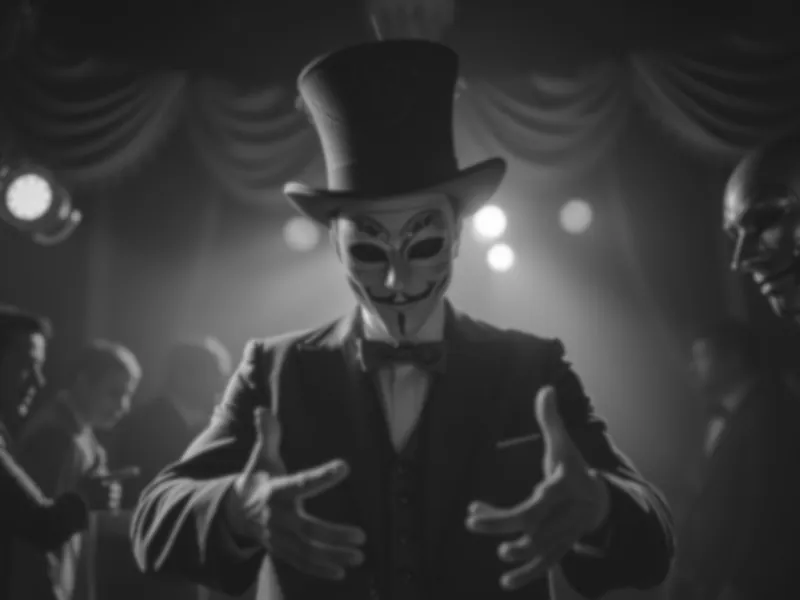
How political language, power structures, and public sentiment shape modern governance
Politics, that perennial masquerade of noble slogans and ignoble motives, slinks across the stage of human affairs like a carnival illusionist: forever conjuring crises, diagnosing them with theatrical incompetence, and prescribing remedies that would shame even the most fraudulent snake-oil merchant. It calls itself the “art of the possible,” yet in practice it is the craft of orchestrating trouble, declaring it omnipresent, misreading its every contour, and then applying curatives so catastrophically mismatched that one wonders whether the entire enterprise is a parody performed by the cosmos to amuse itself. Political language, that silken web of hypnotic euphemisms, exists precisely to lacquer the grotesque with respectability—an alchemy that turns lies into liturgy, misdeeds into mandates, and pure atmospheric vapors into pillars of supposed solidity.
The politician’s theatre begins with an act of immaculate pretense: to become master, he kneels as servant; to command, he feigns obedience; to plunder, he preaches sacrifice. And though we catalogue our problems with forensic clarity and rehearse the solutions—sustainable development, equitable systems, humane governance—the fulcrum that never quite shifts is political will, that elusive will-o’-the-wisp that flares up in speeches and evaporates in action. Meanwhile, the world pirouettes into absurdity as people increasingly take their comedians seriously and their politicians as punchlines, as though the great democratic joke has finally realized its own comedic timing.
One may ignore politics, but politics—vindictive, opportunistic, omnipresent—never returns the courtesy. Everything is amusing only when its claws grip someone else, and the political class has perfected the art of displacing consequences onto the unsuspecting. Politics becomes a delicate ballet of extracting votes from the poor and campaign funds from the wealthy, all while promising both groups protection from each other. And when the wise abstain from public life, they soon find themselves governed by those who have mistaken ambition for ability. Yet political will, that supposedly scarce resource, is as renewable as sunlight; it simply waits for a populace disciplined enough to demand its illumination.
Instead, politics degenerates into an elegant pantomime of interests draped in garments of “principles.” Public office becomes the showroom floor where private advantage is polished into public virtue. Truth, should it ever be injected into this machinery, would behave like a corrosive acid—dissolving the very gears that keep the spectacle turning. Public sentiment, that fickle giant, can carry a nation to triumph or immolate it in paralysis; and so rulers cultivate it with obsessive care, knowing that without its blessing, even their most meticulously engineered deceptions collapse like papier-mâché idols.
To be right when powerful men are wrong is perilous; to voice it is revolutionary; to persist is often fatal. Power, despite its pretty rhetoric, still sprouts from the barrel of a gun, and practical politics survives by ignoring every inconvenient fact that might threaten its preferred narrative. Whenever one finds oneself aligning with the majority, it becomes imperative to pause—to question whether one has joined a movement or merely drifted with a tide engineered by others. There is no independence in politics any more than there is in prison; both institutions impose their walls with equal indifference.
War and politics share a mirrored skeleton: one is bloodshed without ballots, the other ballots without bloodshed. Each feeds upon scoundrels, for laws aimed at villainy swiftly sharpen themselves against dissidents. When bad men combine, good men must conspire with equal fervor lest they be sacrificed one by one in a struggle whose contemptibility exceeds its tragedy. A politician, ever magnanimous, will lay down your life for his country. And the price of participating in politics has inflated so grotesquely that even losing requires a fortune.
Meanwhile, petty thieves are hanged while grand thieves are elected. The world possesses all the tools needed to confront its deepest injustices, including modern slavery; what it lacks is the will to wield them. Many romanticize the idea that political will rises from public will, but history bears the opposite signature: public will is sculpted—sometimes gently, sometimes brutally—by the ambitions of the political class and the financiers who underwrite its illusions.
Europe and America have encased their power structures in elaborate fiscal fortresses—contracts, shareholdings, institutional entanglements—so well fortified that shifts in political sentiment scarcely scratch their titanium surfaces. Free speech flourishes only because it cannot threaten the invisible architecture of control. Military asymmetries widen, technological gaps deepen, and even cooperation becomes a relic of a more naïve age.
Institutions like U.N. Women emerge as gestures toward justice, yet their existence reveals the very wound they seek to heal: the stubborn inertia of political commitment. Good governance demands a political process, yet the process itself is starved without the will to sustain it. Perhaps educating populations—not indoctrinating, not commanding, but illuminating—might cultivate a citizenry capable of compelling its leaders to behave as though leadership is a responsibility rather than a performance.
Politics, that ancient hydra, is inseparable from power, and humanity’s dream of a better world remains perpetually exiled to Utopia—a place that, by definition, exists nowhere. Under every ideology, man exploits man; only the direction of extraction shifts. Priests and politicians, those twin engines of human obedience, flap together as the two wings of the same predatory bird. In some nations, the priest dons a politician’s suit; in others, the politician cloaks himself as a priest. Both rely on a populace too afraid to question, too weary to dissent, too mesmerized by ritual to reclaim its freedom.
But nature crafted humans to be skeptical, not servile. Enjoy life, for if you do not, life itself will revolt against you. Walk without the borrowed crutches of priests or politicians, and you will find your destiny unscarred by their manipulations. In politics, everything matters, yet nothing is important, and the only unforgivable sin is surrendering your inherent freedom to those who feed on your obedience. There are no political facts—only interpretations, each crafted, each sharpened, each sold.
To live freely is your birthright; to sell that freedom to a priest or a politician is the only betrayal that cannot be absolved.
Tanmoy Bhattacharyya
December 6, 2025
