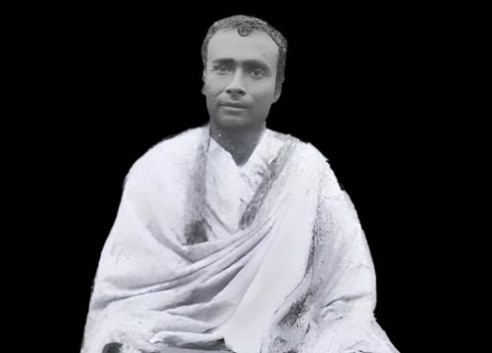
Legacy of Mahamahopadhyaya Biseswar Bhattacharyya
Mahamahopadhyaya Biseswar Bhattacharyya (Tarkaratna) was a notable Vedic Brahmin, born in 1869 in a culturally rich environment that valued scholarly pursuits. He received his education at home, nurtured by a family deeply immersed in the traditions of learning, and later advanced his studies at the prestigious institutions in Benares, known for their scholarly excellence. Hailing from a family in Backerganj, Eastern Bengal, which was renowned for its intellectual heritage, his grandfather and father were instrumental in establishing and maintaining Sanskrit seminaries (Vedic Pathsala) which was destroyed by the Backerganj Cyclone of 1876, fostering a legacy of education that would inspire many generations to come. Biseswar’s upbringing in such a scholarly household not only shaped his own academic path but also laid the foundation for his future contributions to the field of Vedic studies, promoting the rich heritage of Sanskrit literature and philosophy throughout his life.
Career and Contributions
In 1902, Vijay Chand Mahatab (1879-1941), the illustrious prince of Burdwan, made a notable decision to invite Biseswar from Varanasi, a city renowned for its rich cultural heritage, to teach at his prestigious Sanskrit School. This school, established with the intent of preserving and disseminating ancient Indian knowledge, was filled with Sanskrit scholars who were eager to learn and expand their understanding of the ancient texts. However, amidst this esteemed gathering of intellect, there were no Vedic Brahmins available to impart their invaluable knowledge of the Vedic scriptures and rituals, which are essential for a comprehensive education in Sanskrit. Recognizing this gap, Mahatab’s decision not only aimed to elevate the academic standards of his school but also to ensure that the teachings of the Veda were not lost to future generations, thereby enriching the educational landscape of his kingdom and fostering a deeper appreciation for the sacred traditions of Hindu philosophy.
Biseswar, having completed his Vedic studies under various esteemed teachers, was eager to showcase his expertise and embark on a journey of sharing knowledge with others. His proficiency in both spoken and written Sanskrit was remarkable, complemented by a deep understanding of English, which allowed him to communicate complex concepts with clarity to a diverse audience. Vijay Chand, a respected educated man of his own right, was particularly impressed by Biseswar’s comprehensive knowledge of the Shastras and Navya Naya, recognizing his ability to interpret ancient texts with a modern perspective. This impressive skill set, combined with Biseswar’s dedication to education and his commitment to promoting the cultural heritage of Sanskrit, ultimately led to his eventual appointment as the head of the Sanskrit School, where he could inspire a new generation of students and further elevate the standards of learning within the institution.
Biseswar Bhattacharyya was a distinguished Sanskrit scholar who made significant contributions to the field of ancient Indian literature and philosophy. He served as the Principal of the Burdwan Maharaja’s Sanskrit School, which is now known as Vijay Chatuspathi, where he nurtured countless students in the rich tradition of Sanskrit learning. Alongside his esteemed role as Principal, he also acted as Court Pundit to the noble Burdwan Maharaja, offering his profound knowledge and counsel on various matters of statecraft and culture. His dedication to the Sanskrit tradition and its preservation extended to his influential position as Secretary of the Sanskrit examinations conducted by the Government at Burdwan, where he played a pivotal role in establishing rigorous standards and ensuring the quality of education in Sanskrit studies, thereby promoting the study and understanding of this ancient language for future generations.
Legacy
Biseswar`s contributions to Sanskrit learning and education were widely recognized within scholarly circles, leading to his esteemed award of the title of Mahamahopadhyaya during the Coronation Durbar of 1911, a significant event that celebrated the British Empire’s presence in India and highlighted the achievements of eminent individuals within the society. Biseswar Bhattacharyya, a figure of great intellect and dedication, passed away in 1935 in Burdwan, a city that was flourishing at the time under the reign of King Vijay Chand Mahatab, who was known for his progressive policies and patronage of the arts. His legacy continues to inspire future generations of scholars and educators, ensuring that his impact on the educational landscape is remembered and revered.
In 1903, Biseswar Bhattacharyya advised Vijay Chand Mahatab to construct a monumental gate to commemorate his coronation and to invite Governor General Lord Curzon for its inauguration. This grand structure, which stands as a testament to architectural ingenuity and cultural pride, became known in English as the Curzon Gate and in Bengali as the Bijay Toran, symbolizing the cultural heritage and progressive spirit of the time. The gate was designed not only to mark a significant event in the history of the region but also to reflect the aspirations of the local populace, who were eager to showcase their identity and values in the face of colonial influence. With intricate craftsmanship and a blend of traditional and modern styles, the Curzon Gate attracted admiration from visitors and locals alike, serving as a constant reminder of the rich historical narrative and the hopes of a society poised for advancement, through education and unity, as it embraced the changes brought about by the 20th century.