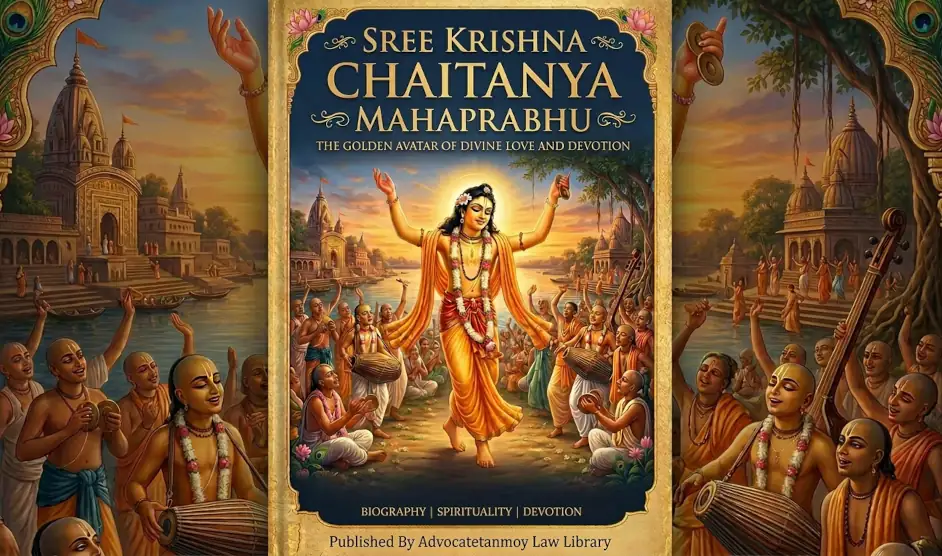
Encyclopedia of Chaitanya Mahaprabhu
Encyclopedia of Sanatan Dharma
Pre-Modern Bengali Literature (1000–1485 CE): History, Language, and Famous Writers of Gauravanga
Part I: The Rise of the Bengali Language, Education, and Early Literary Traditions in Gauravanga
The history of Bengali literature extends over more than a millennium and reflects the political, religious, linguistic, and cultural evolution of eastern India. The literary heritage of Gauravanga (Gauda or ancient Bengal) before the birth of Chaitanya Mahaprabhu in 1485 CE represents the formative stage of Bengali language and literature. Between approximately 1000 CE and 1485 CE, the Bengali language gradually emerged from the eastern branch of the Magadhi Apabhramsha and Abahattha, incorporating a substantial vocabulary from Sanskrit, Prakrit, indigenous Austroasiatic and Dravidian languages, and later Persian and Arabic. During this period, Bengali acquired a distinct literary identity while remaining grammatically fluid. The age is generally described as Pre-modern Bengali (1000–1485 CE), a period characterized by the growth of vernacular expression, regional literary traditions, religious poetry, and translations of Sanskrit epics for ordinary people.
The political history of Gauravanga profoundly influenced literary development. During the rule of the Pala dynasty (c. 750–1174 CE), Buddhism flourished alongside Sanskrit learning, while the later Sena dynasty (c. 1095–1230 CE), particularly under Vijaya Sena, Ballala Sena, and Lakshmana Sena, encouraged Brahmanical scholarship and Sanskrit literature. Their capital at Nabadwip (Nadia) became one of the foremost centres of learning in eastern India. After the conquest of Bengal by Muhammad Bakhtiyar Khalji in 1204 CE, political authority shifted to Muslim rulers, yet Sanskrit education continued, and Bengali gradually gained acceptance in literary and administrative life. Under the independent Bengal Sultanate during the fourteenth and fifteenth centuries, Hindu scholars and poets often received royal patronage, illustrating a remarkable coexistence of cultural traditions.
The literary production of pre-Chaitanya Bengal may broadly be classified into three principal genres: Mangalkavya, Dharmakavya, and translated literature. These genres collectively transformed sacred narratives into accessible vernacular compositions and established Bengali as a respected literary language. Mangalkavya celebrated regional deities such as Chandi, Manasa, Dharma Thakur, and later Krishna, combining mythology with descriptions of everyday rural society. Dharmakavya centred on religious philosophy, ethics, and devotional instruction, frequently drawing upon Buddhist, Shaiva, Vaishnava, and folk traditions. The third category, translated literature, adapted Sanskrit classics, including the Ramayana, Mahabharata, and Bhagavata Purana into Bengali, making them intelligible to the wider population beyond the circle of Sanskrit scholars.
The linguistic character of Pre-modern Bengali differed considerably from later standardized Bengali. The language exhibited flexible sentence structures, unstable plural forms, varying verb conjugations, and inconsistent orthography. Numerous words appeared in several phonetic variants within the same manuscript. Although Sanskrit exerted an overwhelming influence on vocabulary, native Bengali grammatical patterns remained dominant. Persian administrative terms began entering the language after the establishment of Muslim rule in the thirteenth century, especially in matters relating to governance, taxation, commerce, and law. This mixture produced a vibrant literary idiom capable of expressing both sacred and secular themes. By the fifteenth century, the foundations of the modern Bengali script had become recognizable, although spelling conventions were not yet fixed.
Education before Chaitanya reflected the intellectual diversity of Gauravanga. Primary instruction was offered in Pathshalas, where children learned reading, writing, arithmetic, and practical skills. Higher education took place in Tols, residential Sanskrit institutions devoted to grammar (Vyakarana), logic (Nyaya), law (Smriti), philosophy (Darshana), astronomy (Jyotisha), and ritual sciences. Among these centres, Nabadwip attained exceptional fame from the twelfth century onward. Scholars from Mithila, Kashi, Odisha, and Assam travelled there to study logic and jurisprudence. During the Sena period, Sanskrit remained the principal language of higher education, yet spoken Bengali increasingly became the medium through which teachers communicated religious ideas to common people. Following the establishment of Muslim rule, madrasas introduced instruction in Arabic and Persian, thereby broadening Bengal’s intellectual environment without displacing indigenous educational institutions.
The evolution of Bengali writing was closely associated with these educational centres. During the Sena age, the Bengali script gradually separated from eastern Nagari forms, and by the fourteenth and fifteenth centuries many features of the modern alphabet had emerged. Grammatical regularity also increased. Nouns, pronouns, verb endings, and particles assumed more recognizable forms, although regional variation remained substantial. The language spoken across Nadia, Burdwan, Howrah, and Gauda contributed significantly to the literary standard that later developed under Vaishnava influence.
The court of Lakshmana Sena (reigned c. 1178–1206 CE) occupies a distinguished position in Bengal’s literary history. His patronage attracted eminent Sanskrit poets, including Jayadeva, whose celebrated Gita Govinda, composed in the late twelfth century, exercised enormous influence on later Bengali devotional literature. Although written in Sanskrit, the lyrical depiction of the divine love between Radha and Krishna profoundly shaped Bengali Vaishnava poetry. Its emotional intensity, musical qualities, and theological symbolism later inspired poets such as Baru Chandidas and eventually the devotional movement led by Chaitanya Mahaprabhu. The popularity of the Gita Govinda also encouraged the performance of religious songs in eastern India, laying the foundations for the Bengali kirtan tradition.
Among the earliest Krishna narratives in Bengali tradition is the work attributed to Halayudha Mishra, whose Shri Krishna Vijaya, generally assigned to the thirteenth century, represents one of the earliest vernacular poetic treatments of Krishna’s heroic deeds and divine sports. Although surviving evidence remains limited and scholarly opinions differ concerning authorship and chronology, the work illustrates the growing effort to communicate Sanskrit Puranic traditions through Bengali verse. Its language exhibits strong Sanskrit influence while preserving regional expressions and oral narrative techniques. The poem demonstrates how Krishna devotion had already begun to enter Bengali literary culture before the rise of organized Gaudiya Vaishnavism.
One of the most influential literary achievements of medieval eastern India was the Kandali Ramayana, composed by Madhav Kandali during the fourteenth century under the patronage of King Mahamanikya of the Kachari kingdom in present-day Assam. Although primarily associated with Assamese literature, Kandali’s work occupies an important place in the literary history of greater Bengal because eastern Bengali and early Assamese shared many linguistic characteristics during this period. Kandali became the first poet to translate the Valmiki Ramayana into a regional eastern Indo-Aryan language. His rendering abandoned rigid Sanskrit expression in favour of clear and accessible narration. Indigenous customs, local geography, and popular idioms entered the epic, enabling ordinary listeners to identify with its characters. The translation significantly influenced later Bengali Ramayana literature and demonstrated that sacred Sanskrit texts could successfully be adapted into vernacular speech without sacrificing religious authority.
Another towering figure of pre-Chaitanya Bengali literature was Krittivasa Ojha, traditionally placed in the late fourteenth or early fifteenth century and associated with Phulia in present-day Nadia district. His celebrated Krittivasi Ramayana, often called the Sri Ram Panchali, transformed the Sanskrit epic into an enduring Bengali classic. Rather than producing a literal translation, Krittivasa reshaped the narrative according to Bengali social values, domestic customs, and ethical ideals. Characters speak in familiar language, village life receives vivid attention, and episodes acquire emotional warmth suited to local audiences. The poem also reflects stylistic features later associated with Mangalkavya, including rhythmic narration, devotional sentiment, and descriptive richness. For centuries, the Krittivasi Ramayana remained the most widely recited version of the Ramayana in Bengal and profoundly influenced Bengali religious life, folk theatre, manuscript illustration, and oral storytelling. Its success demonstrated that Bengali had matured into a literary language capable of expressing the grandeur of India’s greatest epic while preserving the cultural identity of Gauravanga.
Part II: Major Writers, Literary Classics, and the Cultural Legacy of Gauravanga
Certainly. Below is Part II, continuing directly from Part I in the same encyclopedic, historical, and continuous style without headings.
The devotional and literary transformation initiated by the translation of the Sanskrit epics reached a new stage in the fourteenth century with the emergence of Baru Chandidas, one of the earliest and most original lyric poets of Bengal. Although details of his life remain uncertain, he is generally associated with Birbhum in western Bengal and is believed to have flourished during the late fourteenth century. His celebrated work, Sri Krishna Kirtan, survives in a manuscript discovered in Bankura in the early twentieth century and is now regarded as one of the greatest monuments of pre-Chaitanya Bengali literature. The poem narrates the relationship between Radha and Krishna through a series of dramatic dialogues that combine earthly love with profound spiritual symbolism. Divided into episodes traditionally described as Vihara, Mana, and Dukkhavilasa, the work presents Radha not merely as a divine consort but as a psychologically complex human heroine whose emotions, separation, jealousy, and reconciliation are expressed in remarkably natural Bengali. Unlike later Vaishnava literature, which emphasized theological devotion, Sri Krishna Kirtan retains a vivid folk character, incorporating village customs, colloquial speech, and regional imagery. The work laid the literary and emotional foundation upon which the devotional poetry of the sixteenth century would later flourish.
Among the most distinguished poets immediately preceding Chaitanya Mahaprabhu was Maladhar Basu, honoured with the title Gunaraj Khan by Sultan Ruknuddin Barbak Shah of Bengal (reigned 1459–1474 CE). Maladhar Basu belonged to Kulinagram in present-day Purba Bardhaman district, and his monumental composition Sri Krishna Vijaya, completed before 1480 CE, is widely regarded as the first complete Krishna narrative in the Bengali language. Drawing principally upon the Tenth and Eleventh Books of the Srimad Bhagavata Purana, the poem presents the birth, childhood, youthful exploits, and divine mission of Krishna in language that ordinary Bengali readers and listeners could readily understand. The significance of Sri Krishna Vijaya extends beyond its literary merit. It illustrates the harmonious coexistence of Hindu literary activity under the patronage of the Bengal Sultanate and demonstrates that Bengali had become an accepted medium for religious exposition. The poem blends Sanskrit theological concepts with regional vocabulary, folk similes, and narrative techniques characteristic of eastern India. This synthesis of classical learning and vernacular expression made the work immensely popular and prepared the cultural atmosphere for the later expansion of Bengali Vaishnavism.
Maladhar Basu’s language also provides valuable evidence for the grammatical condition of Pre-modern Bengali. In one notable passage he writes:
“সাধু জনে পড়াব, কুদান নাহি নিব।
অল্পে তুষ্ট হইয়া নিজ জীবিকা করিব ॥৫৪১৫॥
বাণিজ্য, পঠন, দান—তিন কর্ম বৈশ্য।
কৃষি বাণিজ্যের हेतु রাখিল মনুষ্ঠ ॥৫৪১৬॥
ক্ষেত্র, সাহস হইল প্রধান সে কর্ম।
প্রজার পালন তার সমুচিত ধর্ম ॥৫৪১৭॥
স্বজন রাখিব চিত্তে, শত্রুর বিনাশ।
দান, যজ্ঞের তপস্যায় সতত অভিলাষ ॥৫৪১৮॥
শরণাগতরে পালিব, দূর্গতিতে দয়া।
অন্ত্রম করিব ক্ষেত্রী, ব্রাহ্মণ দেখিয়া ॥৫৪১৯॥
শূদ্রের সাধর্ম, তিন জাতির সেবন।
তা সভা তুষ্টিয়া, ধনে বঞ্চিব জীবন ॥৫৪২০॥
সংক্ষেপে কহিল চারি বর্ণের বিচার।
ইহাতে থাকেন যে ভক্ত আমার ॥৫৪২১॥
ব্রহ্মচারী, গৃহী, বানপ্রস্থ, সংন্যাস আশ্রম।
ক্রমে ক্রমে ব্রাহ্মণ করিব নিজ ধর্ম ॥৫৪২২॥
উপবীত দিনে দিব, যাব গঙ্গাপানে।
সঞ্জম করিয়া বেদ পড়িব ব্রাহ্মণে ॥৫৪২৩॥
গুরুপদ সেবিব, শিষ্য গুরুর সমানে।
গুরু যা বলিবে, তাহা পালন করিব যতনে ॥৫৪২৪॥
ত্রিসন্ধ্যা স্থানে করি, পবিত্র হইব।
গুরু আজ্ঞা লইয়া, ভিক্ষা মাগিয়া খাইব ॥৫৪২৫॥
হেন মতে বেদপাঠ করিব ব্রাহ্মচারি।
শ্রুতিদক্ষিণা দিয়া, বেদ সমাপ্ত করি ॥৫৪২৬॥ (শ্রীকৃষ্ণবিজয়, মালাধর বসু)
The verses continue by describing the traditional duties of the four varnas, the stages of life, respect for teachers, daily discipline, and scriptural learning. Their historical importance lies not merely in religious instruction but also in the language itself. The vocabulary combines Sanskrit-derived words, indigenous Bengali expressions, and grammatical forms that differ noticeably from modern standard Bengali. Verb endings, sentence construction, and orthography remain variable, reflecting a language still undergoing standardization. At the same time, the verses demonstrate that Bengali had become sufficiently mature to discuss ethics, social order, education, and philosophy in a sustained literary form. They therefore constitute valuable linguistic evidence for the evolution of Bengali before the Vaishnava movement.
Another important current in pre-Chaitanya literature was represented by Dharmakavya and Sahajiya traditions. Among the works frequently associated with this stream is Shunyapurana, attributed in several literary traditions to Hansdatta and generally assigned to the fourteenth century, although questions of authorship remain debated among historians. The text reflects the influence of Buddhist Sahajiya philosophy and popular religious beliefs that survived in rural Bengal long after institutional Buddhism had declined. It emphasizes spiritual realization through simplicity, inner experience, and ethical conduct rather than ritual formalism. Such literature preserved many indigenous religious concepts that later interacted with both Vaishnava and Baul traditions. The stress upon inward devotion and accessible language helped broaden the social base of Bengali religious literature beyond learned Sanskrit circles.
Religious poetry also flourished through the compositions of lesser-known poets traditionally remembered as Snandas and other regional authors of the fourteenth and fifteenth centuries. Their poems, composed in styles closely related to Mangalkavya, celebrated local deities, moral ideals, and devotional themes while preserving oral traditions of village society. Although many of these works survive only in fragmentary manuscripts, they reveal that literary activity was not confined to royal courts or famous scholars. Rural temples, monasteries, and household recitation created a vibrant manuscript culture in which Bengali gradually replaced Sanskrit as the preferred medium of communication with ordinary worshippers.
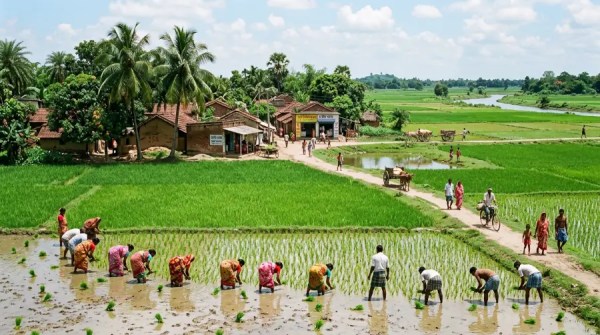
The development of Mangalkavya during the thirteenth to fifteenth centuries deserves particular attention because it represents the first sustained expression of Bengali social life in literature. While ostensibly celebrating the glory of deities such as Manasa, Chandi, and Dharma Thakur, these poems describe agriculture, river trade, family relationships, caste organization, festivals, occupations, and local geography with remarkable realism. Through these narratives, Bengali literature became rooted in the daily experiences of the people of Gauda, Rarh, Varendra, and Vanga. The literary language of Mangalkavya also influenced later narrative poetry, including translations of the epics and the devotional literature of the Vaishnava movement.
Educational life in Nabadwip continued to flourish throughout the fifteenth century. The town achieved renown as one of the greatest centres of Navya Nyaya or New Logic, attracting students from every part of eastern India. Scholars devoted themselves to grammar, jurisprudence, metaphysics, astronomy, and philosophy in Sanskrit, while Bengali increasingly functioned as the spoken language of instruction outside formal debate. The coexistence of Sanskrit scholarship with an expanding vernacular literary culture enabled Bengal to produce learned intellectuals who were equally capable of communicating religious ideas to ordinary people. This bilingual environment profoundly shaped the cultural atmosphere into which Chaitanya Mahaprabhu was born in 1486 CE.
Among the celebrated scholars associated with this intellectual tradition was Sarvabhauma Bhattacharya, born in Nabadwip during the fifteenth century. Although his surviving works are primarily in Sanskrit and belong to the fields of logic and Vedanta, his educational influence extended throughout Bengal. His generation inherited a Bengali language that had not yet attained complete grammatical regularity, but Pre-Chaitanya Bengali Literature: Language, Writers, and Literary Development in Gauravangaas increasingly employed in religious explanation and public discourse. Likewise, Advaita Acharya, born around 1434 CE at Nabagram in present-day Sylhet, preached in both Sanskrit and Bengali. While scriptural interpretation remained firmly rooted in Sanskrit, his use of Bengali in devotional instruction helped prepare the linguistic foundation upon which Chaitanya and later Vaishnava teachers would build a mass religious movement.
The transformation of Bengali into a literary language was also encouraged by political developments. During the rule of the independent Bengal Sultanate, particularly under rulers such as Jalaluddin Muhammad Shah (1415–1433 CE), Nasiruddin Mahmud Shah (1435–1459 CE), Ruknuddin Barbak Shah (1459–1474 CE), and Alauddin Husain Shah (1494–1519 CE), Bengali literature received indirect encouragement through a relatively tolerant cultural climate. Hindu poets composed vernacular works without abandoning Sanskrit learning, while Persian functioned as the principal administrative language. The interaction of Sanskrit, Bengali, Persian, and Arabic enriched the vocabulary of Bengali and gradually extended its use in commerce, administration, and public communication.
The literary world inherited by Chaitanya Mahaprabhu was therefore already remarkably sophisticated. The Sri Chaitanya Charitamrita, composed in the seventeenth century by Krishnadasa Kaviraja, refers repeatedly to authoritative scriptures such as the Srimad Bhagavata Purana, Gita Govinda, Ramayana, Mahabharata, Brihaddharma Purana, Brihannaradiya Purana, and Sri Krishna Vijaya. These texts constituted the intellectual and devotional foundation upon which Gaudiya Vaishnavism developed. Chaitanya did not create Bengali literary culture from nothing; rather, he inherited a mature tradition shaped by several centuries of linguistic evolution, translation, devotional poetry, and regional religious practice.
A comparison between Pre-modern Bengali (1000–1485 CE) and Modern Bengali (1486–1941 CE) illustrates the significance of this formative era. Pre-modern Bengali displayed flexible grammar, inconsistent spelling, and considerable regional variation, whereas the post-Chaitanya period witnessed increasing structural stability. Word order became more regular, verb conjugations acquired standardized forms, and plural endings gradually assumed their modern shape. The influence of Vaishnava literature, manuscript copying, later printing, and nineteenth-century grammatical scholarship ultimately produced the standardized literary Bengali associated with modern writers. Yet the essential vocabulary, narrative traditions, poetic metres, and devotional imagination of Bengali literature had already been established before 1485. The contributions of Halayudha Mishra, Madhav Kandali, Krittivasa Ojha, Baru Chandidas, Maladhar Basu, Hansdatta, and numerous anonymous poets collectively transformed Bengali from a regional spoken language into one of the great literary languages of South Asia. Their works preserved the historical memory, religious beliefs, ethical ideals, and cultural identity of Gauravanga, ensuring that when the Vaishnava renaissance emerged in the late fifteenth and early sixteenth centuries, it rested upon an already rich and deeply rooted literary civilization rather than an undeveloped vernacular tradition. Pre-Chaitanya Bengali Literature: Language, Writers, and Literary Development in Gauravanga
Sarvarthapedia Conceptual Network: Bengali Literature Before Chaitanya Mahaprabhu
Bengali Literature
- History of Bengali Literature
- Pre-modern Bengali (1000–1485 CE)
- Modern Bengali (1486–1941 CE)
- Medieval Bengali Literature
- Early Bengali Language
- Bengali Literary Tradition
- Bengali Script
- Bengali Grammar
- Vernacular Literature
- Bengali Manuscript Tradition
Historical Regions
Gauravanga (Gauda)
- Ancient Bengal
- Gauda Kingdom
- Varendra
- Rarh
- Vanga
- Nadia
- Burdwan
- Howrah
- Mithila
- Kamarupa
- Assam
Historical Periods
Pre-Chaitanya Bengal
- Pala Dynasty
- Sena Dynasty
- Bengal Sultanate
- Bakhtiyar Khalji’s Conquest of Bengal (1204 CE)
- Medieval Bengal
- Early Sultanate Bengal
- Cultural History of Bengal
Dynasties and Political Patronage
Pala Dynasty
- Mahayana Buddhism
- Sanskrit Learning
- Monastic Universities
- Eastern India
Sena Dynasty
- Vijaya Sena
- Ballala Sena
- Lakshmana Sena
- Court Literature
- Sanskrit Scholarship
- Jayadeva
Bengal Sultanate
- Jalaluddin Muhammad Shah
- Nasiruddin Mahmud Shah
- Ruknuddin Barbak Shah
- Alauddin Husain Shah
- Hindu-Muslim Cultural Exchange
- Persian Administration
Centres of Learning
Nabadwip
- Tol System of Education
- Pathshala
- Navya Nyaya
- Sanskrit Education
- Logic (Nyaya)
- Grammar (Vyakarana)
- Smriti
- Vedanta
- Astronomy (Jyotisha)
Medieval Education
- Sanskrit Learning
- Persian Education
- Arabic Education
- Madrasa
- Indigenous Education
Evolution of the Bengali Language
Origins of Bengali
- Magadhi Apabhramsha
- Abahattha
- Prakrit
- Sanskrit Influence
- Austroasiatic Influence
- Dravidian Influence
- Persian Loanwords
- Arabic Loanwords
Development of Bengali Script
- Eastern Nagari Script
- Medieval Bengali Alphabet
- Bengali Orthography
- Bengali Phonology
- Bengali Morphology
- Historical Linguistics
Literary Genres
Mangalkavya
- Chandi Mangal
- Manasa Mangal
- Dharma Mangal
- Krishna Narratives
- Folk Religion
- Medieval Bengali Poetry
Dharmakavya
- Buddhist Literature
- Sahajiya Tradition
- Shaiva Literature
- Vaishnava Devotion
- Religious Poetry
Translated Literature
- Bengali Ramayana
- Bengali Mahabharata
- Bhagavata Purana
- Sanskrit-to-Bengali Translation
- Epic Literature
Major Authors
Jayadeva
- Gita Govinda
- Lakshmana Sena
- Sanskrit Poetry
- Radha-Krishna Devotion
- Radha Tattva and Perversion
- Vaishnava Literature
Halayudha Mishra
- Shri Krishna Vijaya
- Early Krishna Poetry
- Sanskrit Influence
- Medieval Bengali Poetry
Madhav Kandali
- Kandali Ramayana
- Assamese Literature
- Valmiki Ramayana
- Vernacular Translation
- Eastern Indo-Aryan Languages
Krittivasa Ojha
- Krittivasi Ramayana
- Sri Ram Panchali
- Phulia
- Nadia
- Bengali Ramayana
- Folk Narrative Tradition
Baru Chandidas
- Sri Krishna Kirtan
- Radha-Krishna Literature
- Birbhum
- Bankura Manuscript
- Early Vaishnavism
- Medieval Love Poetry
Maladhar Basu
- Gunaraj Khan
- Sri Krishna Vijaya
- Bhagavata Purana
- Kulinagram
- Purba Bardhaman
- Bengal Sultanate Patronage
Hansdatta
- Shunyapurana
- Sahajiya Buddhism
- Dharmakavya
- Medieval Spiritual Literature
Snandas
- Religious Poetry
- Mangalkavya Tradition
- Rural Literary Culture
Religious Traditions
Vaishnavism
- Krishna Bhakti
- Gopi Prem In Bhagavat Kavya
- Krishna (Historical person)
- Bhagavata Purana Kavya
- Gita Govinda
- Sri Krishna Vijaya
- Sri Krishna Kirtan
- Gaudiya Vaishnavism
Buddhism
- Mahayana Buddhism
- Sahajiya Buddhism
- Shunyapurana
- Pala Dynasty
Shaivism
- Folk Shaivism
- Dharmakavya
- Medieval Bengal Religion
Major Literary Works
Gita Govinda
- Jayadeva
- Lakshmana Sena
- Radha-Krishna
- Sanskrit Lyric Poetry
- Bengali Kirtan
Sri Krishna Vijaya
- Halayudha Mishra
- Maladhar Basu
- Bhagavata Purana
- Krishna Literature
Sri Krishna Kirtan
- Baru Chandidas
- Radha
- Krishna
- Bengali Lyric Poetry
Kandali Ramayana
- Madhav Kandali
- Vernacular Ramayana
- Assamese-Bengali Literary Relations
Krittivasi Ramayana
- Krittivasa Ojha
- Ramayana Tradition
- Bengali Epic Literature
Shunyapurana
- Hansdatta
- Sahajiya Philosophy
- Buddhist Literature
Sacred Texts
Ramayana
- Valmiki
- Bengali Ramayana
- Kandali Ramayana
- Krittivasi Ramayana
Mahabharata
- Bengali Translation
- Epic Literature
- Medieval Bengal
Srimad Bhagavata Purana
- Krishna Bhakti
- Sri Krishna Vijaya
- Vaishnavism
Brihaddharma Purana
- Medieval Bengal
- Hindu Religious Literature
Brihannaradiya Purana
- Bhakti
- Vaishnava Tradition
Philosophical Disciplines
Nyaya
- Nyaya Sutra of Goutama
- Naya Kusumanjali of Udayana
- Navya Nyaya
- Nabadwip School
- Medieval Logic
Vedanta
- Sanskrit Scholarship
- Sarirak Bhashyam of Adi Sankara
- Sarvabhauma Bhattacharya
Sahajiya Philosophy
- Buddhism
- Baul Tradition (Post-Chaitanya)
- Shunyapurana
Influential Religious Figures
Advaita Acharya (Kamalaksha Bhattacharyya)
- Early Vaishnavism
- Bengali Preaching
- Sanskrit Learning
- Advaita Acharya (His Pre-Chaitanya Ministry)
Sarvabhauma Bhattacharya
- Navya Nyaya
- Vedanta
- Nabadwip
- Sanskrit Scholarship
Chaitanya Mahaprabhu and Culture
- Gaudiya Vaishnavism
- Bengali Bhakti Literature
- Sri Chaitanya Charitamrita
- Kirtan Movement
- Nabadwip
Later Literary Influence
Sri Chaitanya Charitamrita
- Krishnadasa Kaviraja
- Bhagavata Purana
- Gita Govinda
- Sri Krishna Vijaya
- Ramayana
- Mahabharata
- Gaudiya Theology
Modern Bengali Language
- Standard Bengali Grammar
- Bengali Renaissance
- Printing Culture
- Bengali Prose
- Literary Standardization
See Also
Related Sarvarthapedia Articles
- History of Bengal
- History of Bengali Language
- Bengali Script
- Medieval Indian Literature
- Sanskrit Literature
- Assamese Literature
- Gaudiya Vaishnavism
- Bhakti Movement
- Navya Nyaya
- Education in Medieval Bengal
- Bengal Sultanate
- Sena Dynasty
- Pala Dynasty
- Bengali Manuscripts
- Bengali Kirtan
- Ramayana in Regional Languages
- Krishna Literature
- Mangalkavya
- Dharmakavya
- Bengali Folk Religion
- Cultural History of Howrah