State of Orissa Vs. Mamata Sahoo & Ors-16/07/19
It was found that the respondents had violated the provisions under Sections 3(2), 5 and 29 of the PC and PNDT Act which is punishable under Sections 23 and 25 of the said Act. For violation of PC and PNDT Act and Rule, the authorized officer of the Collector-cum-District Appropriate Authority, Dhenkanal, seized the ultrasound machine and other equipments from the said clinic. For such violation, the registration of ultrasound clinic of the respondents has been suspended vide order of the Collector dated 18.06.2014. A complaint was filed against the accused-respondent under Section 28(2) of the PC and PNDT Act. The Trial Court took cognizance of offences punishable under Sections 3(2), 5, 29, 23 and 25 of the PC and PNDT Act and issued summons to the respondents.
Section 28(1)(a) of the PC and PNDT Act cognizance can be taken only on a complaint made by the Appropriate Authority concerned
ACTS: Sections 23 and 25 of the Pre-Conception and Pre-Natal Diagnostic Techniques (Prohibition of Sex Selection) Act, 1994 and Section 482 of the Cr.P.C
FROM: High Court of Orissa, Cuttack
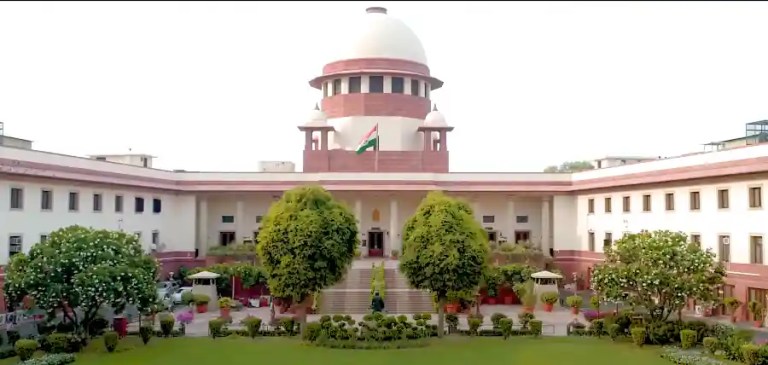
SUPREME COURT OF INDIA
State of Orissa Vs. Mamata Sahoo & Ors.
[Criminal Appeal Nos. 1055 of 2019 arising out of SLP (CRL.) Nos. 8124 of 2018]
BANUMATHI, J.:
1. Leave granted.
2. This appeal arises out of judgment and order dated 29.06.2017 passed by the High Court of Orissa, Cuttack, in CRLMC No.4845 of 2014 in and by which the High Court has quashed the summoning order issued against the respondents and also the complaint filed against them under Sections 23 and 25 of the Pre-Conception and Pre-Natal Diagnostic Techniques (Prohibition of Sex Selection) Act, 1994 (for short, “PC and PNDT Act”).
3. Briefly stated case of the prosecution is that on 28.05.2014 at 11:00 a.m., a joint inspection was conducted by the State and District team, Dhenkanal, in Ultrasound Unit of Shri Jagannath Hospital. It was found that the respondents had violated the provisions under Sections 3(2), 5 and 29 of the PC and PNDT Act which is punishable under Sections 23 and 25 of the said Act. For violation of PC and PNDT Act and Rule, the authorized officer of the Collector-cum-District Appropriate Authority, Dhenkanal, seized the ultrasound machine and other equipments from the said clinic. For such violation, the registration of ultrasound clinic of the respondents has been suspended vide order of the Collector dated 18.06.2014. A complaint was filed against the accused-respondent under Section 28(2) of the PC and PNDT Act. The Trial Court took cognizance of offences punishable under Sections 3(2), 5, 29, 23 and 25 of the PC and PNDT Act and issued summons to the respondents.
4. Aggrieved by the issuance of the summons, the respondents filed the quash petition before the High Court under Section 482 of the Cr.P.C. to quash the said proceedings initiated against them on the ground that
(i) Inspection was conducted by the Tehsildar on 28.05.2014 without any authorisation/authority;
(ii) The District Magistrate is an Appropriate Authority under the PC and PNDT Act and as per the Office Memorandum No.19077/H of the Health and Family Welfare Department dated 27.07.2007, the District Magistrate cannot delegate its authority under the PC and PNDT Act and, therefore, the entire proceedings is not sustainable in law.
5. The High Court quashed the proceedings initiated against the respondents on the ground that authorisation had not been granted by the District Magistrate-District Appropriate Authority, Dhenkanal, on 18.06.2014 for filing the complaint; but the inspection was conducted on 28.05.2014. The High Court held that on the date of inspection conducted by the Tehsildar, he had no authority to conduct the inspection. Referring to the Office Memorandum dated 27.07.2007, the High Court held that the District Magistrate-District Appropriate Authority may nominate the Executive Magistrate of the District only to assist him in monitoring and implementation of the PC and PNDT Act and cannot delegate the entire authority. On those findings, the High Court quashed the proceedings against the respondents as not sustainable in law.
6. We have heard Ms. Anindita Pujari, learned counsel appearing for the appellant-State and Mr. Manish Mohan, learned counsel appearing for the respondents and also perused the impugned judgment and the evidence/materials on record.
7. As per Section 28(1)(a) of the PC and PNDT Act cognizance can be taken only on a complaint made by the Appropriate Authority concerned.
Section 28(1)(a) thereof reads as under:
“28. Cognizance of offences.-
(1) No court shall take cognizance of an offence under this Act except on a complaint made by –
(a) the Appropriate Authority concerned, or any officer authorised in this behalf by the Central Government or State Government, as the case may be, or the Appropriate Authority;” As per Office Memorandum of the Health and Family Welfare Department dated 27.07.2007, the District Magistrate of each District is appointed as “District Appropriate Authority” for the each District under the PC and PNDT Act. As per the said Office Memorandum, the District Magistrate-District Appropriate Authority may nominate the Executive Magistrate of the District as his/her nominee to assist him/her in monitoring the implementation of the PC and PNDT Act as deemed necessary.
Additionally, Sub-Divisional Magistrate (Sub-Collector) of each Sub-Division is also appointed as an “Appropriate Authority” for the Sub-District/Sub-Division for strict implementation of the provisions under this Act. This is by virtue of the above Office Memorandum, the Executive Magistrate-Tehsildar has been nominated to assist the District Appropriate Authority-District Magistrate in monitoring the implementation of PC and PNDT Act. In the light of the above Office Memorandum, in our view, it cannot be said that the inspection conducted on 28.05.2014 is without authority/authorisation.
8. Ms. Anindita Pujari, learned counsel appearing for the appellant-State, has drawn our attention to Order No.388 dated 27.05.2014 as per which the Collector-District Magistrate-cum- District Appropriate Authority is said to have authorised the Tehsildar/Executive Magistrate, Dhenkanal, to inspect the clinic of the respondents on 28.05.2014 and to take appropriate legal action. It was pointed out that the said Order No.388 dated 27.05.2014 has also been referred to in the complaint filed before the Court of the Magistrate. It was submitted that the High Court did not keep in view this authorisation dated 27.05.2014 authorising the Tehsildar to make the inspection of the respondents’ hospital on 28.05.2014.
9. Mr. Manish Mohan, learned counsel appearing for the respondents, has submitted that absolutely there was no mention about the said Order dated 27.05.2014 in the counter filed by the Chief District Medical Officer, Dhenkanal, before the High Court. Mr. Manish Mohan has also raised doubts regarding the correctness of the said Order dated 27.05.2014 and submitted that the said order has not been shown to the respondents at the time of the inspection.
10. Order dated 27.05.2014 has been mentioned in the complaint itself. However, the said order has not been taken note of by the High Court as it was not mentioned in the counter. We are not inclined to go into the merits of the rival contentions raised by the parties. Suffice to note that it is for the Trial Court to examine the correctness of the said Order No.388 dated 27.05.2014
11. The High Court, in our considered view, did not properly appreciate the Office Memorandum dated 27.07.2007 and erred in quashing the proceedings initiated against the respondents and, therefore, the impugned order cannot be sustained. Accordingly, the impugned judgment of the High Court dated 29.06.2017 in CRLMC NO.4845 of 2014 is set aside and this appeal is allowed. Complaint Petition NO.2(C) C.C. Case No.43 of 2014 shall stand restored to the file of the Sub-Divisional Judicial Magistrate, Dhenkanal, who shall proceed with the matter in accordance with law.
12. We make it clear that we have not expressed any opinion on the merits of the matter.
J. (R. BANUMATHI)
J. (A.S. BOPANNA)
NEW DELHI,
JULY 16, 2019.
Tags: quashing prosecution