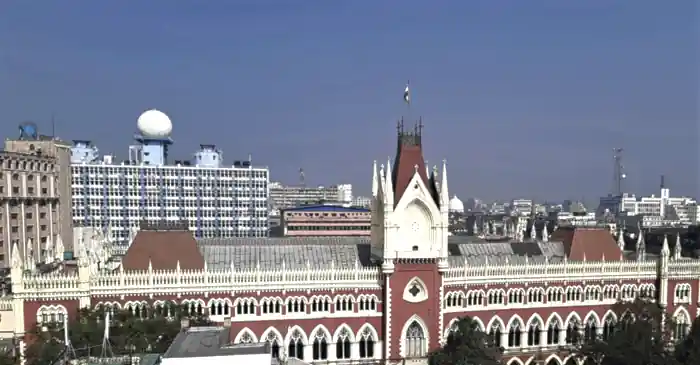
Calcutta HC Commercial Division Rules 2023: Transfer, Pleadings, Case Management
Extraordinary
Published by Authority
THURSDAY, NOVEMBER 23, 2023 [SAKA 1945]
PART I—Orders and Notifications by the Governor of West Bengal, the High Court, Government Treasury, etc.
HIGH COURT AT CALCUTTA
THE HIGH COURT AT CALCUTTA COMMERCIAL COURTS PRACTICE DIRECTIONS, 2021
(Under Section 18 of Act No. 4 of 2016)
No. 4187-G
NOTIFICATION
Dated, Calcutta, the 13th October, 2023.
In exercise of the powers conferred by Section 18 of the Commercial Courts Act, 2015 (Act No. 4 of 2016), the High Court at Calcutta hereby issues the following Practice Directions:—
PART I—PRELIMINARY
Chapter 1
1. Short title, extent, application and commencement—
(1) These Directions may be called THE HIGH COURT AT CALCUTTA COMMERCIAL COURTS PRACTICE DIRECTIONS, 2021.
(2) These Directions shall come into force from the date of their Notification in the Official Gazette.
(3) These Directions are issued in exercise of powers conferred under Section 18 of the Commercial Courts Act, 2015 to supplement the provisions of Chapter II of the Act and the Code of Civil Procedure, 1908 (5 of 1908) in so far as such provisions apply to the hearing of commercial disputes of or above the Specified Value as notified by the State Government from time to time in exercise of powers conferred by Sub-Section (1A) of Section 3 of the Act.
(4) Save as otherwise provided in the Act; in the Code of Civil Procedure, 1908 (5 of 1908), as amended by the Act and in these Directions, The Rules of the High Court at Calcutta (Original Side), The Appellate Side Rules of the High Court at Calcutta, The West Bengal Civil Rules and Orders and all other Rules made by the High Court at Calcutta from time to time for regulating the procedure for the hearing of different categories of commercial disputes shall apply mutatis mutandis to the Commercial Courts, Commercial Appellate Courts, Commercial Division and Commercial Appellate Division respectively in regard to the hearing of commercial disputes of or above the Specified Value as notified by the State Government from time to time in exercise of powers conferred by Sub-Section (1A) of Section 3 of the Act.
(5) In case of any conflict, inconsistency or repugnancy between these Directions and The Rules of the High Court at Calcutta (Original Side) or The Appellate Side Rules of the High Court at Calcutta or The West Bengal Civil Rules and Orders or any other Rules made by the High Court at Calcutta from time to time for regulating the procedure for the hearing of different categories of commercial disputes, the Directions herein contained shall prevail in relation to the procedure for the hearing of different categories of commercial disputes of or above the Specified Value.
(6) These Directions shall, unless expressly provided otherwise, apply to all commercial disputes before the Commercial Courts and Commercial Appellate Courts respectively in the State of West Bengal as well as the Commercial Division and Commercial Appellate Division respectively in the High Court in regard to the hearing of commercial disputes of or above the Specified Value as notified by the State Government.
Chapter 2
2. Definitions— In these Directions, unless the context otherwise requires:—
(1) “Act” means The Commercial Courts Act, 2015, as amended from time to time.
(2) “Code” means the Code of Civil Procedure, 1908 as amended by the Act.
(3) “Court” means the Commercial Division and the Commercial Appellate Division of the High Court at Calcutta and also the Commercial Courts and Commercial Appellate Courts at the District Level, as the case may be.
(4) “Competent Authority at District Level” means and includes any person authorized or designated by the District Court with the power to perform or discharge any of the duties as may be envisaged by the Act or in these Directions.
(5) “District Court” means the Court of the District Judge in the State of West Bengal as per the Bengal, Agra and Assam Civil Courts Act, 1887 and includes all principal civil courts of original jurisdiction in the different districts of West Bengal which are under the supervisory jurisdiction of the High Court.
(6) “High Court” means the High Court at Calcutta.
(7) “Registrar” means the Registrar, Commercial Courts Division of the High Court or such other person as may be authorized or designated by the High Court with the power to perform or discharge any of the duties of the Registrar as may be envisaged by the Act or in these Directions.
(8) “Registry” means the Office of the Registrar and includes any person or persons designated or authorized by the Registrar with the power to perform or discharge any of the duties as may be envisaged by the Act or in these Directions, so far it relates to the Commercial Division and the Commercial Appellate Division of the High Court.
(9) “State Government” means the Government of the State of West Bengal.
3. The words and expressions used and not defined in these Directions but defined in the Act or in the Code of Civil Procedure, 1908 (5 of 1908) or in the General Clauses Act, 1897 (10 of 1897) shall have the same meanings respectively assigned to them in the Act or in that Code or in that Act.
PART II—IDENTIFICATION AND TRANSFER OF PENDING COMMERCIAL DISPUTES
4. Transfer of Pending Cases—
(1) Every suit, appeal or other proceeding pending before any Civil Court as per the Bengal, Agra and Assam Civil Courts Act, 1887 or in the High Court immediately before the date of issuance of the appropriate Notification of the pecuniary value in terms of Section 3(1A) of the Act, being a suit, appeal or other proceeding the cause of action whereof is based and the valuation of the relief of which is such that it would have been, if it had been filed after the commencement of the Act, within the jurisdiction of the Commercial Division or Commercial Appellate Division in the High Court or within the jurisdiction of the Commercial Courts or Commercial Appellate Courts at the District Level, shall be transferred by the Registry to the Commercial Division or the Commercial Appellate Division in the High Court and/or by the Competent Authority at District Level to the Commercial Courts or Commercial Appellate Courts at the District Level, as the case may be.
(2) The above provision for transfer shall not be applicable to suits, appeals or other proceedings instituted before any Civil Court as per the Bengal, Agra and Assam Civil Courts Act, 1887 or in the High Court in its Ordinary Original Civil Jurisdiction after the date of issuance of the appropriate Notification of the pecuniary value in terms of Section 3(1A) of the Act.
5. Transfer of records—
(1) The Registry or the Competent Authority at District Level, as the case may be, will scrutinize the suits, appeals and other proceedings pending in the High Court or in the Courts subordinate to the High Court and shall identify the suits, appeals and other proceedings which relate to commercial disputes as defined in the Act and are of or above the Specified Value as notified by the State Government in exercise of powers conferred by Sub-Section (1A) of Section 3 of the Act.
(2) Upon such identification of the pending suits, appeals and other proceedings as defined in Clause 4(1) above, the Registry or the Competent Authority at District Level shall cause the transfer of all records of and relating to such identified suits, appeals and other proceedings to the Commercial Division or Commercial Appellate Division in the High Court or to the Commercial Courts or Commercial Appellate Courts at the District Level as the case may be.
PART III—PLEADINGS
6. Forms of Pleading—
(1) The pleadings before the Commercial Courts and the Commercial Division shall, as far as practicable, be as per Order VI of the Code of Civil Procedure, 1908 and shall in all cases, in addition thereto, state the following:—
(a) Whether the subject matter of the suit or proceeding falls within any one or more of the categories of commercial disputes specified in Section 2(1)(c) of the Act with a brief statement of the reasons leading to such classification.
(b) Whether the suit or proceeding falls under the first proviso or second proviso of Section 7 of the Act with a brief statement of the reasons to that effect.
(c) Whether the relief sought, as calculated in the manner provided in Section 12 of the Act, is of or above the Specified Value of the subject matter of the commercial dispute as notified by the State Government in exercise of powers conferred by Sub-Section (1A) of Section 3 of the Act with a brief statement of the reasons leading to such determination.
(d) In the case of a suit, whether the plaintiff has exhausted the remedy of pre-institution mediation in accordance with the Rules prescribed by the Central Government or that the suit contemplates any urgent interim relief by reason whereof, the plaintiff could not exhaust the remedy of pre-institution mediation with a brief statement of the reasons to that effect.
(e) In relation to an arbitration of a commercial dispute, whether the aggregate value of the claim and Counter-claim, if any, is of the specified value or above.
(f) Where the plaintiff seeks interest, a statement to that effect along with the details as required under Sub-Rules (2) and (3) of Order VII Rule 2A of the Code of Civil Procedure, 1908.
(g) Whether the suit or proceeding relates to any commercial dispute in respect of which the jurisdiction of the Civil Court is either expressly or impliedly barred under any other law for the time being in force.
7. Language—
(1) All pleadings filed before the Commercial Courts and the Commercial Division as well as all petitions, objections, affidavits, applications, memoranda of appeal or cross-objections and all other documents required to be filed in relation to matters before the Commercial Courts and Commercial Appellate Courts as well as the Commercial Division and Commercial Appellate Division of the High Court shall be in the English language.
(2) Documents in the vernacular enclosed with the pleadings or with petitions, objections, affidavits, applications, memoranda of appeal or cross-objections etc., as the case may be, shall be filed along with translated copies thereof which have been translated into English by an Official Translator/Interpreter of the High Court or the District Court, as the case may be.
PART IV—INSTITUTION
8. Leave of Court for institution of suits without exhausting the remedy of pre-institution mediation—
(1) In the case of a suit under the Act which contemplates any urgent interim relief by reason of which the plaintiff seeks to institute such suit without exhausting the remedy of pre-institution mediation in terms of Section 12A of the Act, the Court shall be empowered to receive, try and determine such suits only upon the leave of the Court having been first obtained.
(2) In the event of the Court not being satisfied that the suit contemplates any urgent relief which would justify the dispensation with the necessity of the plaintiff exhausting the remedy of Pre-Institution Mediation, the Court shall be entitled to return the plaint and direct the plaintiff to comply with the requirement of Pre-Institution Mediation in accordance with the provisions of Chapter IIIA of the Act prior to institution of the suit before this Court.
9. Suits, applications and other proceedings, improperly filed—
(1) The High Court or the District Court, as the case may be shall not, subsequent to the date of issuance of the appropriate Notification of the pecuniary value in terms of Section 3(1A) of the Act, receive, try or determine any suit involving a commercial dispute of and above the specified value if the same is filed in its Ordinary Original Civil Jurisdiction.
(2) In the event any suit or other proceeding involving a commercial dispute of and above the specified value is filed in its Ordinary Original Civil Jurisdiction subsequent to the date of issuance of the appropriate Notification of the pecuniary value in terms of Section 3(1A) of the Act, the High Court or the District Court, as the case may be, shall on an application of either party, return the plaint or the application to the plaintiff on principles pari materia with Order VII Rule 10 of the Code.
(3) The provisions of Chapter IIIA of the Act shall apply when the plaint, returned as above, is filed before the Commercial Court or the Commercial Division as the case may be.
(4) In the event of a suit or other proceeding which is barred in terms of Clause 9(1) above, if neither party applies for the plaint or application to be returned, the Court shall reject the plaint or application, as the case may be.
PART V—SERVICE OF PROCESSES BY COURIER, FAX AND ELECTRONIC MAIL SERVICE/SHORT MESSAGE SERVICE
Chapter 1
10. Extent—
(1) These Directions with regard to the service of Summons by Courier shall apply to the service required to be effected in terms of Order V Rule 9 of the Code.
(2) The Commercial Division or Commercial Appellate Division in the High Court or the Commercial Courts or Commercial Appellate Courts at the District Level may, on its own motion or on the application of a party, also direct service of diverse processes, notices, orders and directions of Court, as it deems fit, on parties by Courier, Fax or Electronic Mail/Short Message Service. These Directions shall apply in all such cases where service is to be so effected on the parties by Courier, Fax or Electronic Mail/Short Message Service.
11. Definitions— In these Directions, unless the context otherwise requires:—
(a) “Approved Courier” means the courier on the panel of Approved Couriers of the High Court.
(b) “Chief Justice” means the Chief Justice of the High Court.
(c) “Courier” means a proprietorship concern, firm, company or body corporate engaged in the business of delivering postal articles.
(d) “Electronic Mail/Short Message” means a store and forward method of composing, sending, storing and receiving messages in electronic form via a computer/mobile based communication mechanism.
(e) “Electronic Mail Service” means service of the processes or notices in a pre-designed template form by any available mode of electronic transmission, digitally signed by the Registrar or the Competent Authority at District Level, as the case may be or by any other person authorized in this behalf by the Court.
(f) “FAX” (a short form of facsimile) is the telephone transmission of scanned-in printed material (text or images) to a telephone number with a printer or any other output device.
(g) “Postal Article” includes the envelopes, packets, parcels containing summons, notices, documents or other communications of the Court handed over for service to the Approved Courier with the label “COURT SUMMONS”.
(h) “Proof of Delivery” means the report submitted by the Approved Courier, in a prescribed format of the service of summons or notices or any other communication of the Court and includes the reasons of non-delivery, if any.
(i) “Recommendation Committee” means the Committee constituted by the Chief Justice for preparing a panel of proposed Approved Couriers.
Chapter 2—Service through Courier
12. Preliminary—
(1) Service through Courier shall only be carried out through the instrumentality of an Approved Courier on the panel of Approved Couriers of the High Court.
(2) The fees for the service to be rendered by the Courier shall be as per the fee structure to be prescribed by the Registrar from time to time and the same shall be deposited in advance by the party with the Registry or the Competent Authority at District Level as the case may be.
(3) Any delay on the part of a party in depositing the prescribed fee with the Registry or the Competent Authority at District Level, as the case may be, shall be forthwith brought by the Registry or the Competent Authority at District Level to the notice of the court and the same shall be dealt with in such manner as the Court may direct.
13. Procedure for selecting an Approved Courier—
(1) The Recommendation Committee, constituted as mentioned hereinafter, will from time to time prepare a panel of Couriers who desire to be selected as Approved Couriers of the High Court or of the District Courts, as the case may be, on terms and conditions to be laid down and other directions and instructions as may be issued by the High Court from time to time.
(2) The Chief Justice may, from time to time, constitute the Recommendation Committee consisting of the Registrar, who will head the said committee and such other persons as the Chief Justice may deem fit and proper for preparing the proposed panel of Approved Couriers of the High Court and of the District Courts.
(3) The Recommendation Committee will prepare the proposed panel of the Approved couriers taking into consideration the following parameters:—
(a) Reputation of the courier;
(b) Past record of the courier;
(c) Structure of the organization of the courier and its network, including its financial capacity and infrastructure;
(d) The experience, wherewithal and capacity of the courier to provide the desired service;
(e) The fees including costs, charges and expenses intended to be levied by the courier for delivery of different types of documents/ goods entrusted to it for delivery;
(f) Willingness and ability of the courier to abide by the terms and conditions as laid down in these Directions and such criteria which may be laid down by the High Court from time to time.
(4) The Recommendation Committee, after preparing the proposed panel will place it before the Chief Justice for his/her consideration. The Chief Justice may examine the entire list of the applicants as well as the proposed panel of Approved Couriers and after examining the same, issue appropriate directions for notifying the final panel of selected Approved Couriers of the High Court or of the District Courts, as the case may be.
(5) The Chief Justice shall also issue appropriate directions notifying the rates to be charged by the approved couriers for delivery of diverse type of documents/ goods.
(6) Upon the final panel of selected Approved Couriers being notified, the Registrar will intimate all the Approved Couriers of their empanelment.
14. Agreements and Undertakings by the Courier—
(1) The Couriers on the panel shall each enter into an agreement in such form and on such terms as may be prescribed for acting as an Approved Courier. The agreement shall incorporate the following undertakings:—
(a) That the Approved Courier and/or its proprietor or directors or partners have not been convicted of any criminal offence.
(b) That the Approved Courier does not have an un-discharged decretal debt pending against its proprietor or directors or partners, or if it is a company or limited liability partnership had a corporate insolvency resolution process admitted against it.
(c) That the Approved Courier and/or its proprietor or directors or partners do not have any personal relationship with any of the members of the Recommendation Committee.
(d) That the Approved Courier will be solely responsible for the safety and security of the documents/ goods to be delivered by it.
(e) That the postal articles handed over to the Approved Courier will be handled only by its regular employees having reasonable knowledge of English language.
(f) That the approved Courier would design its ‘proof of delivery’ in the format approved by the Registrar.
(g) That the Approved Courier would necessarily furnish proof of delivery in all cases of served processes accompanied by legible signatures and the stamp/seal, if any, of the recipient with a statement of the authority of the recipient to receive the same on behalf of the addressee or of the return envelopes with a proper report in legible handwriting in case of un-served processes within a period of 30 days to the Registry or the Competent Authority at District Level, as the case may be. In case of refusal by the addressee to receive the postal article, the name and designation of the person refusing the article and his relationship with the addressee, shall be clearly mentioned on the un-served article.
(h) That the proof of delivery shall be supported by an affidavit of the person delivering the post.
15. Procedure for removing the Courier from the panel of Approved Couriers—
(1) The name of the Courier will be liable to be removed by the Court from the panel and the Registrar shall inform the said Courier accordingly on any one or more of the following grounds:—
(a) The Court which has issued the summons or any other notices or processes or on whose behalf the summons or notices or processes, as the case may be, has been issued, finds the person employed by the Courier to deliver the postal article which was entrusted to the courier to have filed a false affidavit or given a false report, as the case may be.
(b) It is found that the Courier is not providing the service up to the expectation of the litigants or of the advocates or of the Court.
(c) It is found that the Courier has otherwise been rendering deficient or unsatisfactory services.
(d) It is found that the Courier has made any misrepresentation or false statement in its application or as part of its undertakings in the agreement.
(2) In addition to the above, as soon as it comes to the knowledge of the Registrar that circumstances have arisen which makes a Courier liable to be removed from the panel of Approved Couriers, he will conduct a preliminary inquiry in this respect. If the Registrar, after such inquiry, comes to the conclusion that circumstances have arisen which makes the Courier liable to be removed from the panel of Approved Couriers, he will call for an explanation from the Courier as to why it should not be removed. The Registrar shall thereafter place his notice; the reply, if any, received from the Courier proposed to be removed along with his recommendations and all connected papers before the Chief Justice.
(3) The Chief Justice, after going through the recommendations of the Registrar; the reply, if any, submitted by the Courier and connected papers and on making such further inquiries as the Chief Justice may consider appropriate, may approve the recommendations of the Registrar for the removal of the Courier from the panel of Approved Couriers or pass such orders or give such directions as the Chief Justice may consider appropriate.
(4) In case the recommendation for the removal of a Courier from the panel of Approved Couriers is approved by the Chief Justice, the name of the Courier shall be removed from the panel of Approved Couriers and the Registrar shall inform the said Courier accordingly.
Chapter 3—Service by FAX
16. Procedure—
(1) A party desirous of effecting service by Fax shall provide the Fax Number of the other party whom it seeks to serve by Fax.
(2) The process, notice etc. being sent by Fax will bear the note that the same is being sent by Fax with or without documents. In case the documents are also being sent by Fax, the number of pages being sent shall also be mentioned on the process.
(3) In case a party is permitted to send the process, notice etc. by Fax, such party shall bear the cost of sending the process and the documents, if any, sent along with it. The party sending the process shall submit the receipt of having sent the Fax to the Court without any delay along with an affidavit in support of having sent the process by Fax.
(4) Where the process, notice etc. is to be sent with or without the documents by a facility provided by the Court, the party shall be asked to deposit fee at such rate as may be determined by the Registry or the Competent Authority at District Level, as the case may be.
Chapter 4—Service by ‘Electronic Mail Service’ or ‘Short Message Service’ or other electronic mode as may be available
17. Procedure—
(1) Parties desirous of sending the process or notice to the other party by Electronic Mail Service or Short Message Service shall at the time of filing, provide the electronic mail address or registered mobile number of the other party or a party whom it would like to serve by Electronic Mail Service or Short Message Service, in the dedicated portal or at the E-facilitation centre of the Court. The serving party shall file an affidavit in Court stating on oath that the electronic mail address or registered mobile number of the other party given by him is correct to the best of his knowledge.
(2) Where the other party is a company, partnership, body corporate or other legal entity required by Law to maintain an e-mail address under the Law under which it is registered or incorporated or under any other applicable taxation statute, such entity shall be required to accept electronic service of processes via the electronic mail service on such registered e-mail address and it shall not be necessary for the party desiring to serve by e-mail to file an affidavit but only to furnish the official or registered e-mail address of the other party.
(3) Where the other party has a website or portal on which a contact e-mail address is furnished, that e-mail address may, with the leave of Court, be used for the electronic mail service.
(4) The process, digitally signed by the Registrar or the Competent Authority at District Level, as the case may be, will be sent at the given electronic mail address or registered mobile number of the other party by using the pre-designed templates, designed having regard to the formats provided in Appendix B of the Code of Civil Procedure, 1908 or in the form as may be prescribed from time to time, with or without the scanned images of the documents. The bouncing of mail or non-delivery of the Short Message Service shall not constitute valid service.
(5) The process would be sent by Electronic Mail Service or Short Message Service only after the party has deposited the prescribed fee at such rate and within such time as may be determined by the Registrar or the Competent Authority at District Level, as the case may be.
18. Protocol—
(1) The parties shall comply with and follow the following protocol for service of electronic processes:—
(a) GENERATION OF PROCESS—
i. The parties shall mention their email addresses in a separate document to be filed along with the plaint or petition or memorandum of appeal, as the case may be.
ii. No email address shall be mentioned in the cause title of a plaint or petition or memorandum of appeal.
iii. The party desirous of serving processes or notices by electronic mail service shall provide all documents which are required to be sent with such processes or notices in Portable Document Format (PDF) or deposit in the Court, fees at the rate which may be prescribed by the Registry or the Competent Authority at District Level for scanning of the required documents.
iv. On production of the receipt, the Registry or the Competent Authority at District level, as the case may be shall send the documents to the Scanning Section of the concerned Court for scanning.
v. The Scanning Section shall, after scanning the documents in PDF, send the same to the concerned Court through Local Area Network/ Internet.
vi. The Registry or the Competent Authority at District Level, as the case may be shall generate the processes or notices, as the case may be, through the Case Information System (CIS) software using the requisite credentials.
(2) The Court shall accept no responsibility for any loss, damage, claim, expense, cost or liability whatsoever (including in contract, tort including negligence, pursuant to statute and otherwise) arising in respect of or in connection with the service of the electronic process.
(3) No suit, prosecution or other legal proceeding shall lie against the Court or any officer of the Court or any other person exercising any powers or discharging any functions or performing any duties under or by the order of the Court, for non-delivery, insufficient or failure of service or incorrect service of electronic process for any reason whatsoever.
Chapter 5—Miscellaneous
19. Summons to witnesses— The provisions of these Directions shall also apply mutatis mutandis to Summons to give evidence or to produce documents or for other purposes as may be directed by the Commercial Courts, Commercial Appellate Courts, Commercial Division and Commercial Appellate Division.
20. Notices or other communication during the proceedings— The Commercial Courts, Commercial Appellate Courts, Commercial Division and Commercial Appellate Division may also direct that a notice or any other communication to any of the parties to the suit or proceeding before it, be sent by Courier, Fax or Electronic Mail Service or Short Message Service in such other manner and in such form as it may consider appropriate.
21. Parties may voluntarily apply to be served by Fax or Electronic Mail Service— Any of the parties to the suit or proceeding, may file an application in writing giving its Fax number or the electronic mail address or registered mobile number, or all of the above with the request that it may be served with the notices of the Court or any other communications by Fax or at the designated electronic mail address or by Short Message Service. Any notice or communication sent at such number or address will constitute a valid service of such notice or the communication on such party.
22. Saving of the powers of the Court— Nothing in these Directions shall be deemed to limit or restrict or otherwise affect the power of the Commercial Courts, Commercial Appellate Courts, Commercial Division and Commercial Appellate Division relating to service of summons or notices or other communications as given in the Code or any other law for the time being in force.
PART VI—AVAILING SERVICES OF EXPERTS/COMMISSIONERS
Chapter 1
23. Extent— The Commercial Division or the Commercial Appellate Division in the High Court and the Commercial Courts or the Commercial Appellate Courts at the District Level may, on its own motion or on the application of a party, appoint Commissioners for carrying out specific commissions as contemplated under Order XXVI of the Code of Civil Procedure 1908 or Experts as defined in the Indian Evidence Act 1872 or Special Officers for such tasks as it may deem fit and proper for elucidating any matter in dispute in the suit or other proceeding.
24. Definitions— In these Directions, unless the context otherwise requires:—
(a) “Approved Experts” means and includes Experts such as Handwriting Expert; Engineer; Surveyor; Valuer; Chartered Accountant as defined hereinbelow on the panel of Approved Experts of the High Court or such other person as may be appointed by the Court from time to time.
(b) “Chief Justice” means the Chief Justice of the High Court.
(c) “Handwriting expert” means and includes a person who has or an organization which comprises of or employs persons who have completed a certified course in Graphology/Forensic Science from a recognized institution or has/have experience of working as a forensic expert with particular reference to examination and analysis of questioned documents, and handwriting and signature analysis with at least 10 years of experience in the field.
(d) “Engineer” means a person who has acquired or an organization which comprises of or employs persons who have acquired a Bachelors degree in Engineering from a recognized University with at least 10 years of experience in the field.
(e) “Surveyor” means a person who has acquired or an organization which comprises of or employs persons who have acquired a Bachelors degree in civil engineering or surveying or a diploma in land surveying or in a related field from any institution recognised by the State Government with at least 10 years of experience in the field.
(f) “Valuer” means a person or organization which comprises of or employs Persons involved in the valuation of land and building/real estate or valuation of plant and machinery or valuation of securities and financial assets and includes the following:—
(i) Valuer of land and building/real estate means a person having a Bachelor’s degree in Civil Engineering/Architecture/ Town Planning or equivalent with a minimum of 10 years of experience in the field.
(ii) Valuer of Security and Financial Assets means a Member of the Institute of Chartered Accountants of India or a Member of Institute of Company Secretaries of India or a Member of the Institute of Cost Accountants of India or a person holding the post graduate degree of Master of Business Administration or who has done Post Graduate Diploma in Business Management, with a minimum of 10 years of work experience as a Valuer of Security and Financial Assets.
(iii) Valuer of Plant and Machinery is a person who is a Graduate in Mechanical or Electrical or Electronic or Instrumentation or Production or Chemical or Textiles or Leather or Metallurgical or Aeronautical Engineering or any other subject related to the subject matter under inquiry, or is a Graduate in Valuation of Plant and Machinery or equivalent with a minimum experience of 10 years in the field.
(g) “Chartered Accountant” means a person who has or an organization which comprises of or employs persons who have cleared the Chartered Accountancy Examination and have been enrolled as a member of the ICAI (Institute of Chartered Accountants of India) with a minimum experience of 10 years in the field.
(h) “Recommendation Committee” means the Committee constituted by the Chief Justice for preparing the panel of Approved Experts.
Chapter 2—Services of Approved Experts/ Commissioners
25. Preliminary—
(1) Experts/Commissioners may be appointed by the Court either from the panel of Approved Experts/ Commissioners appointed in terms of these Directions or such other persons of its choice as the Court may in its discretion appoint as Experts/Commissioners.
(2) The fees for the service to be rendered by the Experts/ Commissioners shall be as per the fee structure to be prescribed by the Registrar from time to time and the same shall be deposited in advance by the party with the Registry or the Competent Authority at District Level as the case may be.
(3) Any delay on the part of a party in depositing the prescribed fee for the service to be rendered by the Experts/ Commissioners with the Registry or the Competent Authority at District Level, as the case may be, shall be forthwith brought by the Registry or the Competent Authority at District Level to the notice of the Court and the same shall be dealt with in such manner as the Court may direct.
26. Procedure for selecting an Approved Expert/Commissioner—
(1) The Registrar shall, from time to time, invite applicants who desire to be selected as Approved Experts/ Commissioners of the Court on the terms and conditions laid down and other directions and instructions to be issued by the High Court from time to time.
(2) The Chief Justice will constitute a Recommendation Committee consisting of the Registrar, who will head the said Committee and such other persons as the Chief Justice may deem fit and proper for preparing the proposed panel of Approved Experts/Commissioners.
(3) The Recommendation Committee will prepare the proposed panel of Approved Experts/Commissioners taking into consideration the following parameters:—
(a) Reputation and educational qualifications of the Expert/Commissioner;
(b) Past record of the Expert/Commissioner;
(c) The experience, wherewithal and capability of the Expert/Commissioner to provide the desired service;
(d) The fees including costs, charges and expenses intended to be levied by the Expert/Commissioner for providing his services;
(e) Willingness and ability to abide by the terms and conditions as laid down in these Directions and such criteria which may be laid down by the High Court from time to time.
(4) The Recommendation Committee, after preparing the proposed panel will place it before the Chief Justice for his consideration. The Chief Justice may examine the entire list of the applicants as well as the proposed panel of Approved Experts/Commissioners and after examining the same, issue appropriate directions for notifying the final panel of selected Approved Experts/Commissioners of the Court.
(5) The Chief Justice shall also issue appropriate directions notifying the rates to be charged by the Approved Experts/Commissioners for providing their services.
(6) Upon the final panel of selected Approved Experts/ Commissioners being notified, the Registrar will intimate all the Approved Experts/Commissioners of their empanelment.
27. Agreements and Undertakings by the Experts—
(1) The Approved Experts/Commissioners shall each enter into an agreement in such form and on such terms as may be prescribed for acting as an Approved Expert/ Commissioner. The agreement shall incorporate the following undertakings:—
(a) That the Approved Expert/Commissioner or any person in management and administration of the Expert/ Commissioner has not been convicted of any criminal offence or found guilty of any misdemeanour or misconduct or act involving moral turpitude by any institution of which he or any person in management and administration of the Expert/ Commissioner is a member.
(b) That the Approved Expert/Commissioner does not have an un-discharged decretal debt pending against him, or if it is a company or limited liability partnership had a corporate insolvency resolution process admitted against it.
(c) That the Approved Expert/Commissioner or any person in management and administration of the Expert/ Commissioner does not have any personal relationship with any of the members of the Recommendation Committee.
28. Procedure for removing the Expert from the panel of Approved Experts—
(1) The name of the Expert/Commissioner will be liable to be removed from the panel by the Court and the Registrar shall inform the said Expert/Commissioner accordingly if:—
(a) The Court finds that the Expert /Commissioner has made false Statements or has given a false report with regard to the subject matter under inquiry.
(b) It is found that the Expert is not providing the service up to the expectation of the Court.
(c) It is found that the Expert has otherwise been rendering deficient or unsatisfactory services.
(d) It is found that the Expert has made any misrepresentation or false statement in its application or as part of its undertakings in the agreement.
(2) In addition to the above, as soon as it comes to the knowledge of the Registrar that circumstances have arisen which makes an Expert/ Commissioner liable to be removed from the panel of Approved Experts/ Commissioners, he will conduct an inquiry in this respect. If the Registrar, after such inquiry, comes to the conclusion that circumstances have arisen which makes the Expert/ Commissioner liable to be removed from the panel of Approved Experts/Commissioners, he will call for an explanation from the Expert/ Commissioner as to why he should not be removed. The Registrar shall thereafter place the reply, if any, received from the Expert/ Commissioner proposed to be removed along with his recommendations and all connected papers before the Chief Justice.
(3) The Chief Justice, after going through the recommendations of the Registrar; the reply, if any, submitted by the Expert and connected papers and on making such further inquiries as the Chief Justice may consider appropriate, may approve the recommendations of the Registrar for the removal of the Expert/Commissioner from the panel of Approved Experts/Commissioners or pass such orders or give such directions as the Chief Justice may consider appropriate.
(4) In case the recommendation for the removal of an Expert/ Commissioner from the panel of Approved Experts/ Commissioners is approved by the Chief Justice, the name of the Expert/ Commissioner shall be removed from the panel of Approved Experts/ Commissioners and the Registrar shall inform the said Expert/ Commissioner accordingly.
PART VII—APPEALS TO THE COMMERCIAL APPELLATE COURTS AND COMMERCIAL APPELLATE DIVISION IN THE HIGH COURT
29. Procedure to be followed in regard to Appeals before the Commercial Appellate Courts and Commercial Appellate Division—
(1) All appeals before the Commercial Appellate Court from the decree or order of a Commercial Court below the Level of a District Judge shall follow the procedure laid down in Order XLI of the Code of Civil Procedure read with the West Bengal Civil Rules and Orders.
(2) All appeals before the Commercial Appellate Division of the High Court from the decree or order of a Commercial Court at the Level of a District Judge shall follow the procedure laid down in The Appellate Side Rules of the High Court at Calcutta read with Order XLI of the Code of Civil Procedure.
(3) All appeals before the Commercial Appellate Division of the High Court from the decree or order of the Commercial Division shall follow the procedure laid down in The Rules of the High Court at Calcutta (Original Side) read with Order XLI of the Code of Civil Procedure.
PART VIII—COMPUTERIZED LISTING OF THE CAUSE LIST OF THE COMMERCIAL DIVISION, COMMERCIAL APPELLATE DIVISION OF THE HIGH COURT AND COMMERCIAL COURTS AND COMMERCIAL APPELLATE COURTS AT DISTRICT LEVEL
30. Procedure to be followed for Computerized Listing of the Cause List—
(1) Save as otherwise provided hereinafter, The Rules of the High Court at Calcutta (Original Side), the Appellate Side Rules of the High Court at Calcutta and all other Rules relating to Computerized Listing, as may be applicable, shall apply mutatis mutandis to the Commercial Division and the Commercial Appellate Division of the High Court as well as the Commercial Courts and Commercial Appellate Courts, as the case may be.
(2) The Computer Codes assigned to each of the case types in relation to the Commercial Division and Commercial Appellate Division in the High Court shall be as follows:—
**CS (Com)** - Civil Suit (Commercial)
**AP (Com)** - Arbitration Petition (Commercial)
**AO (Com)** - Appeal from Orders (Commercial)
**AD (Com)** - Appeal from Decrees (Commercial)
**AS (Com)** - Admiralty Suits
**IP (Com)** - Intellectual Property Matters
**EC (Com)** - Execution Case (Commercial)
**GA (Com)** - General Application (Commercial)
**CC (Com)** - Contempt Case (Commercial)
(3) The Computer Codes assigned to each of the case types in relation to Commercial Courts and Commercial Appellate Courts at District Level shall be as follows:—
**TS (Com)** - Title Suit (Commercial)
**MS (Com)** - Money Suit (Commercial)
**Misc. Case (Com)** - Miscellaneous Cases (Commercial)
**Misc. Arb (Com)** - Miscellaneous Arbitration (Commercial)
**TEX (Com)** - Title Execution (Commercial)
**MiscEx (Com)** - Miscellaneous Execution (Commercial)
**TA (Com)** - Title Appeal (Commercial)
**MiscA (Com)** - Miscellaneous Appeal (Commercial)
**MEX (Com)** - Money Execution (Commercial)
(4) The Computer Codes assigned to each of the Intellectual Property case types in relation to the Commercial Division and Commercial Appellate Division in the High Court shall be as follows:—
**APPEALS—**
**IPD - TMA** - Appeals under the Trade Marks Act, 1999
**IPD - CRA** - Appeals under the Copyright Act, 1957
**IPD - PTA** - Appeals under the Patents Act, 1970
**IPD - GIA** - Appeals under the GI of Goods (Registration and Protection) Act, 1999
**IPD - PVA** - Appeals under the Plant Varieties and Farmers Right Act, 2001
**IPD - SCD** - Appeals under the Semiconductor Integrated Circuits Layout-Designs Act, 2000
**IPD - AID** - Appeals under the Designs Act, 2000
**IPD - ITA** - Appeals under the Information Technology Act, 2000

**ORIGINAL APPLICATIONS/PETITIONS—**
**IPD - ATM** - Application under section 47, 57, 125 of Trade Marks Act, 1999
**IPD - CR** - Application under section 50 of the Copyright Act, 1957
**IPD - PAT** - Application under section 58/64/71/103 of the Patents Act, 1970
**IPD - GI** - Application under section 27/58 of Geographical Indications of Goods (Registration and Protection) Act, 1999
**IPD - IT** - Application under section 46(1A) of the Information Technology Act, 2000
PART IX—CASE MANAGEMENT
31. Protocol for conducting case management hearing—
(1) In case of all suits, immediately upon all parties having filed their respective affidavits of admission of denial of documents, the Registrar or the Competent Authority at District Level, as the case may be, shall bring such fact to the notice of the Commercial Court or the Commercial Division in the High Court.
(2) The Commercial Court or the Commercial Division in the High Court shall thereupon fix a date for holding the first case management hearing. Such hearing shall be held not later than four weeks from the date of filing of the affidavits of admission or denial of documents by all parties.
(3) The parties to the suit may also, after all parties have filed their respective affidavits of admission or denial of documents, apply to the Commercial Court or the Commercial Division in the High Court to fix a date for holding the first case management hearing.
(4) At the first case management hearing or on such other day thereafter as the Court deems fit and proper, the Court may, if it thinks fit, frame a schedule for the purposes mentioned in Order XV-A Rule 2 of the Code such that while fixing dates or setting timelines for the said purpose, the arguments are closed not later than 6 months from the date of the first case management hearing.
(5) The Commercial Court or the Commercial Division, as the case may be shall hold Case Management Hearing for all Commercial cases and their Cause List will have a section of cases listed for “Case Management Hearing”.
By order of the High Court,
Sd/-
CHAITALI CHATTERJEE (DAS)
Registrar General