
a great deal has been made of the industrial development of Germany, and although her imports exceed...
Selective Reading
Selective reading is a strategic approach to extracting relevant information from texts, widely practiced in academic and research contexts since the rise of formal education systems in ancient libraries such as the Library of Alexandria (3rd century BCE). It involves techniques such as skimming, scanning, and critical filtering, allowing readers to focus on key ideas rather than on entire texts. The method was emphasized by scholars such as Francis Bacon (1561–1626), who advocated reading “by parts” for efficiency, and later systematized in modern pedagogy by educators like Mortimer J. Adler in How to Read a Book (1940, USA). Selective reading is essential in fields such as law, science, and journalism, especially with the expansion of print culture after the invention of the printing press (c. 1450, Mainz, Germany). It is now integral to digital literacy in the 21st century, aiding navigation of vast online databases, encyclopedias, and academic archives across global institutions.

This was a curious honour for someone even Narasimha Rao privately considered a ‘praise addict’ who was...
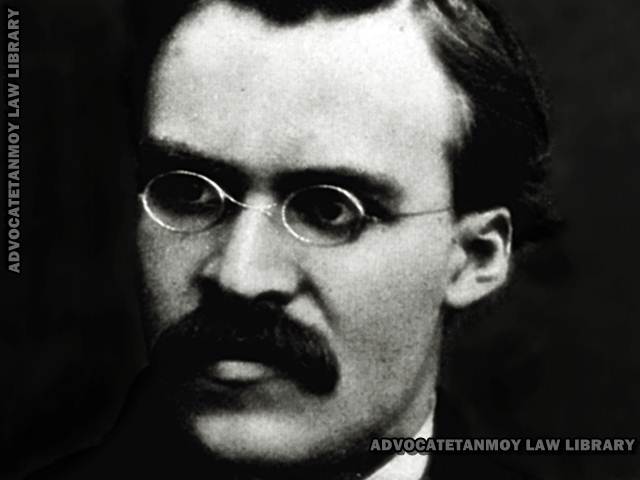
That idea—"the wrong-doer deserves punishment because he might have acted otherwise," in spite of the fact that...
The most civilized nations of modern Europe issued from the woods of Germany; and in the rude...

The emergence of Islamic law outside the traditional sphere of family law was not confined to the...

I am using the term knowledge in its widest possible sense; and the question is, what subjects...

The common proverbial maxims of prudence, being founded in universal experience, are perhaps the best general rules...

Historically law in the second sense precedes these juristic concepts which we reach by analysis and postulate...

Failure to produce “public bad” is equivalent to the creation of “public good.” And the failure to...

The Mahomedans started the Khilafat movement in 1919. The objective of the movement was two-fold: to preserve...
In the government of a land there are three parts, viz. laws, fit officers and a faithful...
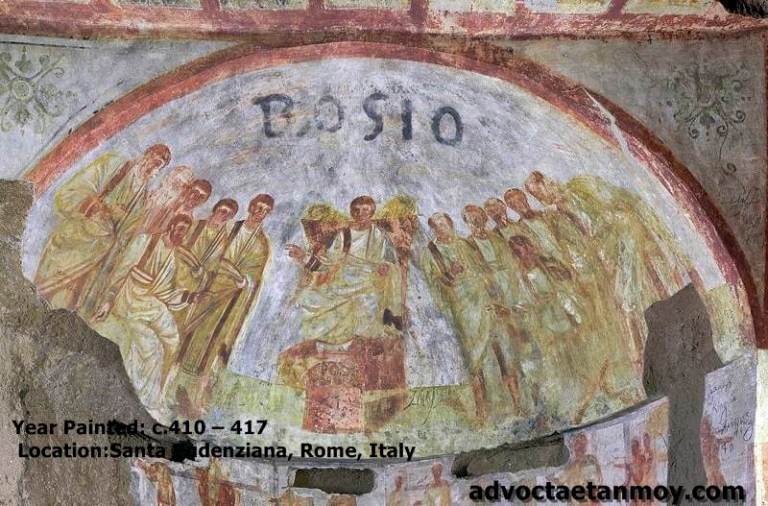
The origin of the Gospels has proved a Serbonian bog, in which many writers who have attempted...
As a slave is a particular species of property, let us by all means inquire into the...
The sixth edition of the “Organon” as left by Hahnemann ready for publication, was found to be...