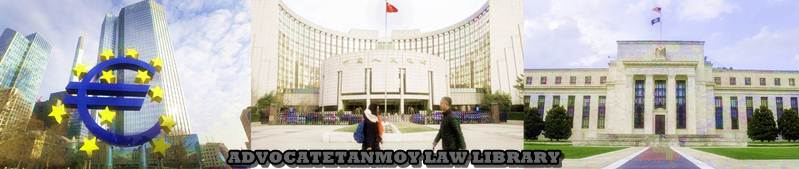
The key existential question is: Will the worldwide effort contain the mortality and morbidity as also the macroeconomic consequences of COVID-19?
Select Central Banks in Response to COVID-19 Outbreak
Central Bank
Measures
People’s Bank of China
1.7 trillion yuan of liquidity injected on February 3 and 4
Rate on 200 billion yuan worth of one-year medium-term lending facility loans to financial institutions lowered by 10 bps to 3.15 per cent on February 17
1-year Loan Prime Rate lowered by 10 bps to 4.05 per cent effective February 20, 2020; 5-year LPR lowered by 5 bps to 4.75 per cent
Reduction in reserve requirement ratio for select banks
7-day reverse repo rate lowered by 20 bps to 2.2 per cent on March 30
Federal Reserve
Target range of the federal funds rate lowered by 50 bps on March 3 and a further 100 bps on March 16 to 0-0.25 per cent
Unlimited asset purchases, commercial mortgage-backed securities included in the asset purchase programme
Lowering of primary credit rate to 0.25 per cent
Banks allowed to use capital and liquidity buffers for lending
Reserve requirement reduced to 0 per cent from March 26
Additional repo operations
Primary Dealer Credit Facility established
Commercial Paper Funding Facility established
Money Market Mutual Fund Liquidity Facility established
Term Asset-Backed Securities Loan Facility established
Primary Market Corporate Credit Facility and the Secondary Market Corporate Credit Facility established to support credit to large employers
The existing dollar liquidity swap line arrangements with five central banks (EU, UK, Japan, Canada and Switzerland) made lower cost, with more frequent and longer-term operations
Temporary swap lines with central banks of Australia, Brazil, Denmark, South Korea, Mexico, Norway, New Zealand, Singapore and Sweden established
Temporary repurchase agreement facility for foreign and international monetary authorities (FIMA Repo Facility) established to help support the smooth functioning of financial markets, including the US Treasury market
European Central Bank
Additional longer-term refinancing operations (LTROs) to provide immediate liquidity support to the euro area financial system till June 2020
More favourable terms under TLTRO III from June 2020 to June 2021, to support bank lending to those affected most by the spread of COVID-19
Additional net asset purchases of €120 billion until end 2020
Banks allowed to use capital and liquidity buffers, including Pillar 2 Guidance
€750 billion Pandemic Emergency Purchase Programme (PEPP) to be conducted until end-2020 in a flexible manner, to include purchase of Greek government debt
Non-financial commercial paper included in asset purchases
Collateral standards eased for ECB’s refinancing operations
Bank of England
Bank Rate reduced in two steps of 50 bps and 15 bps to all-time low of 0.1 per cent on March 19
Additional purchases of £200 billion to be done in 2020
A new Term Funding Scheme with additional incentives for Small and Medium-sized Enterprises introduced
Counter-cyclical capital buffer rate reduced to 0 per cent of banks’ exposures to UK borrowers effective March 11.
Supervisory guidance on dividends and other distributions issued
Other supervisory and prudential policy measures including cancellation of annual stress test of banks in 2020
Covid Corporate Financing Facility launched, in association with the Government
Contingent Term Repo Facility activated
Bank of Japan
Provide loans against corporate debt as collateral at 0 per cent with maturity up to one year
Additional 2 trillion yen purchases of commercial paper and corporate bonds
Double the annual pace of purchases of exchange traded funds and J-REITs
Bank of Korea
Base Rate lowered by 50 bps to 0.75 per cent on March 17
Interest rate on the Bank Intermediated Lending Support Facility reduced to 0.25 per cent and the ceiling on the facility increased by 5 trillion won
Collateral for open market operations broadened
Unlimited liquidity through weekly 91-day repo auctions
Forex market stability rules eased
Bank Indonesia
Policy rate lowered by 25 bps each in February and March to 4.5 per cent effective March 19, 2020
Daily repo auctions of 12-month tenor introduced
Frequency of forex swap auctions increased
Triple intervention policy intensified to minimize the risk of increasing rupiah exchange rate volatility
Forex reserve requirement for commercial banks halved to 4 per cent effective March 16, 2020
Rupiah reserve requirement lowered by 50 bps for banks financing export-import activity, MSMEs and other priority sectors effective April 1, 2020
Range of underlying transactions available to foreign investors expanded to provide alternative hedging instruments against rupiah holdings
Reserve Bank of Australia
Cash rate target reduced in two steps of 25 bps each to a further all-time low of 0.25 per cent with effect from March 20
Target set for the yield on 3-year government bonds of around 0.25 per cent, to be achieved through secondary market purchases
Term funding facility for the banking system, with particular support for credit to small and medium-sized businesses instituted
Exchange settlement balances to be remunerated at 10 bps
Bank of Canada
Reduced key rate in three steps of 50 bps each to 0.25 per cent in March
Announced purchase of government securities, minimum purchase of $5 billion per week
Bankers’ Acceptance Purchase Facility launched
Provincial Money Market Purchase announced
Standing Term Liquidity Facility established
Commercial Paper Purchase Program launched
Sources: Websites of central banks;
References:
IMF (2020), https://www.imf.org/en/News/Articles/2020/03/23/pr2098-imf-managing-directorstatement-following-a-g20-ministerial-call-on-the-coronavirus-emergency.
World Bank (2020), “East Asia and Pacific in the Time of COVID-19”, East Asia and Pacific Economic Update, April.