Skip to content

ADVOCATETANMOY LAW LIBRARY

Research & Library Database

Primary Menu
  • News
  • Opinion
  • Countries198
    • National Constitutions: History, Purpose, and Key Aspects
  • Judgment
  • Book
  • Legal Brief
    • Legal Eagal
  • LearnToday
  • HLJ
    • Supreme Court Case Notes
    • Daily Digest
  • Sarvarthapedia
    • Sarvarthapedia (Core Areas)
    • Systemic-and-systematic
    • Volume One
05/04/2026

Frequently Asked Questions on SARS-CoV-2 Variant-Omicron-3/12/2021

on Spike gene may decrease the efficacy of existing vaccines. However, vaccine protection is also by antibodies as well as by cellular immunity, which is expected to be relatively better preserved. Hence vaccines are expected to still offer protection against severe disease and, vaccination with the available vaccines is crucial. If eligible, but not vaccinated, one should get vaccinated.
advtanmoy 04/12/2021 4 minutes read

ยฉ Advocatetanmoy Law Library

  • Share on WhatsApp (Opens in new window) WhatsApp
  • Share on X (Opens in new window) X
  • Share on Facebook (Opens in new window) Facebook
  • Share on Telegram (Opens in new window) Telegram
covid-19-1

Home ยป Law Library Updates ยป Frequently Asked Questions on SARS-CoV-2 Variant-Omicron-3/12/2021

Update on COVID19-Omicron Variant

Frequently Asked Questions on SARS-CoV-2 Variant-Omicron

DATE: 03 DEC 2021

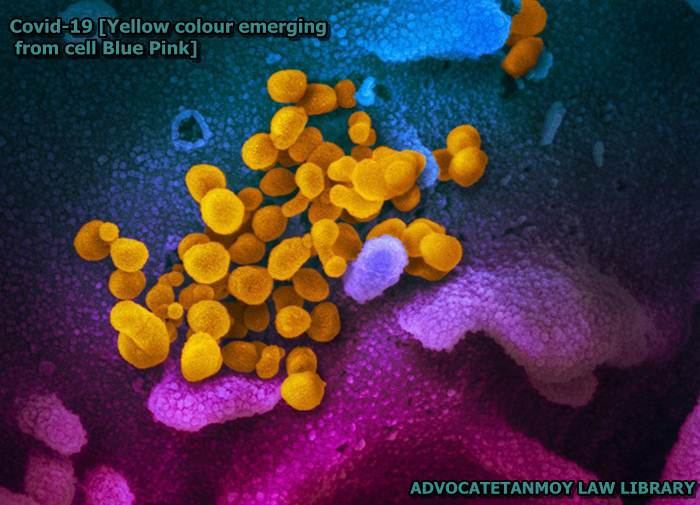
The Union Ministry of Health and Family Welfare has issued answers to Frequently Asked Questions (FAQs) on the new variant of COVID19, classified as Omicron (B.1.1.529) by the WHO on 26th November 2021.

These FAQs have been uploaded on Ministry of Health website:

Read Next

  • Supreme Court Daily Digest (April 4th, 2026): Arbitration, Sanction for prosecution, Oral inquiry, Cancellation of bail
  • Art 72 of the COI: Presidential Power of Pardon, Remission and Commutation
  • UK Will Not Enter Middle East War Amid Rising Energy Concerns: Keir Starmer

https://www.mohfw.gov.in/pdf/FAQsonOmicron.pdf

What is Omicron and what makes it a variant of concern (VoC)?

It is a new variant of SARS-CoV-2 that has recently been reported from South Africa on 24th November 2021 called as B.1.1.529 or Omicron (based on Greek alphabets like alpha, beta, delta etc). This variant has shown a very large number of mutations, especially more than 30 on the viral spike protein, which is the key target of the immune response.

Given the collection of mutations in Omicron, which earlier individually have been associated with increased infectivity and/or immune evasion, and the sudden rise in number of positive cases in South Africa, World Health Organization has declared Omicron as a Variant of Concern (VoC).

Can the currently used diagnostics methods, detect Omicron?

Read Next

  • Supreme Court Daily Digest (April 4th, 2026): Arbitration, Sanction for prosecution, Oral inquiry, Cancellation of bail
  • Art 72 of the COI: Presidential Power of Pardon, Remission and Commutation
  • UK Will Not Enter Middle East War Amid Rising Energy Concerns: Keir Starmer

The most accepted and commonly used method of diagnostic for SARS-CoV- 2 Variant is RT-PCR method. This method detects specific genes in the virus, such as Spike (S), Enveloped (E) and Nucleocapsid (N) etc to confirm the presence of virus. However, in case of Omicron, as the S gene is heavily mutated, some of the primers may lead to results indicating absence of the S gene (called as S gene drop out). This particular S gene drop out along with the detection of other viral genes could be used a diagnostic feature of Omicron. However, for final confirmation of the omicron variant genomic sequencing is required.

How concerned should we be about the new VoC?

WHO declares a variant as a VoC after the assessment when there is an increase in transmissibility or detrimental change in COVID-19 epidemiology; OR increase in virulence or change in clinical disease presentation; OR decrease in the effectiveness of public health and social measures or available diagnostics, vaccines, therapeutics. (Source: WHO)

Read Next

  • Supreme Court Daily Digest (April 4th, 2026): Arbitration, Sanction for prosecution, Oral inquiry, Cancellation of bail
  • Art 72 of the COI: Presidential Power of Pardon, Remission and Commutation
  • UK Will Not Enter Middle East War Amid Rising Energy Concerns: Keir Starmer

It is important to highlight that Omicron has been declared VoC based on the observed mutations, their predicted features of increased transmission and immune evasion, and preliminary evidence of detrimental change in COVID-19 epidemiology, such as increased reinfections. The definitive evidence for increased remission and immune evasion is awaited.

What precautions should we take?

The precautions and steps to be taken remain same as before. It is essential to mask yourself properly, take both doses of vaccines (if not yet vaccinated), maintain social distancing and maintain good ventilation to the maximum possible.

Will there be a third wave?

Omicron cases are increasingly being reported from countries outside of South Africa and given its characteristics, it is likely to spread to more countries including India. However, the scale and magnitude of rise in cases and most importantly the severity of disease that will be caused is still not clear. Further, given the fast pace of vaccination in India and high exposure to delta variant as evidenced by high seropositivity, the severity of the disease is anticipated to be low. However, scientific evidence is still evolving.

Will the existing vaccines work against Omicron?

While there is no evidence to suggest that existing vaccines do not work on Omicron, some of the mutations reported on Spike gene may decrease the efficacy of existing vaccines. However, vaccine protection is also by antibodies as well as by cellular immunity, which is expected to be relatively better preserved. Hence vaccines are expected to still offer protection against severe disease and, vaccination with the available vaccines is crucial. If eligible, but not vaccinated, one should get vaccinated.

How is India responding?

The Indian government is monitoring the situation closely and is issuing suitable guidelines from time to time. Meanwhile, the scientific and medical community is geared up for developing and deploying diagnostics, carrying out genomic surveillance, generating evidence about viral and epidemiologic characteristics, and development of therapeutics.

Why do variants occur?

Variants are normal part of evolution and as long as the virus is able to infect, replicate and transmit, they will continue to evolve. Further, not all variants are dangerous and most often than not, we donโ€™t notice them. Only when they are more infectious or can reinfect people etc they gain prominence. The most important step to avoid generation of variants is to reduce the number of infections.


Tags: COVID-19 FAQs Health & Public Welfare

Post navigation

Previous: UK G7 Presidency Statement: Digital and Tech-30/11/2021
Next: Dietrich Bonhoeffer’s life and times
Arrest
Sarvarthapedia

Latin Maxims in Criminal Law: Meaning, Usage, and Courtroom Application

Sarvarthapedia
Sarvarthapedia

Research Methodology and Investigation: Concepts, Frameworks, and Emerging Trends

Rule of Law vs Rule by Law and Rule for Law: History, Meaning, and Global Evolution

IPS Cadre Strength 2025: State-wise Authorised Strength

Uric Acid: From 18th Century Discovery to Modern Medical Science

Christian Approaches to Interfaith Dialogue: Orthodox, Catholic, Protestant, and Pentecostal Views

Origin of Central Banking in India: From Hastings to RBI and the History of Preparatory Years (1773โ€“1934)

Howrah District Environment Plan: Waste Management, Water Quality & Wetland Conservation

Bharatiya Nyaya Sanhita 2023: Sections (1-358), Punishments, and Legal Framework

Bengali Food Culture: History, Traditions, and Class Influences

West Bengal Court-Fees Act, 1970: Fees, Schedules, and Procedures

WB Land Reforms Tribunal Act 1997: History, Features, Provisions, Structure, Powers and Functions

Civil Procedure Law of the Democratic People’s Republic of Korea (1976)

Knowledge Management in the Modern Era: From History to Digital Transformation

  • Sarvarthapedia

  • Delhi Law Digest

  • Howrah Law Journal

  • Amit Aryaย vs Kamlesh Kumari:ย Doctrine of merger
  • David Vs. Kuruppampady: SLP against rejecting review by HC (2020)
  • Nazim & Ors. v. State of Uttarakhand (2025 INSC 1184)
  • Geeta v. Ajay: Expense for daughter`s marriage allowed in favour of the wife
  • Ram v. Sukhram: Tribal women’s right in ancestral property [2025] 8 SCR 272
  • Naresh vs Aarti: Cheque Bouncing Complaint Filed by POA (02/01/2025)
  • Bharatiya Nagarik Suraksha Sanhita 2023 (BNSS)
  • Bharatiya Sakshya Adhiniyam 2023 (BSA): Indian Rules for Evidence
  • Bharatiya Nyaya Sanhita (BNS) 2023
  • The Code of Civil Procedure (CPC)
  • Supreme Court Daily Digest
  • U.S. Supreme Court Orders
  • U.k. Supreme Court Orders
Sarvarthapedia, Law and Legal Materials

Rule of Law vs Rule by Law and Rule for Law: History, Meaning, and Global Evolution

Indian Government

IPS Cadre Strength 2025: State-wise Authorised Strength

Sarvarthapedia

Uric Acid: From 18th Century Discovery to Modern Medical Science

Christian Education

Christian Approaches to Interfaith Dialogue: Orthodox, Catholic, Protestant, and Pentecostal Views

2026 ยฉ Advocatetanmoy Law Library

  • About
  • Global Index
  • Judicial Examinations
  • Indian Statutes
  • Glossary
  • Legal Eagle
  • Subject Guide
  • Journal
  • SCCN
  • Constitutions
  • Legal Brief (SC)
  • MCQs (Indian Laws)
  • Sarvarthapedia (Articles)
  • Contact Us
  • Privacy Policy
  • FAQs
  • Library Updates