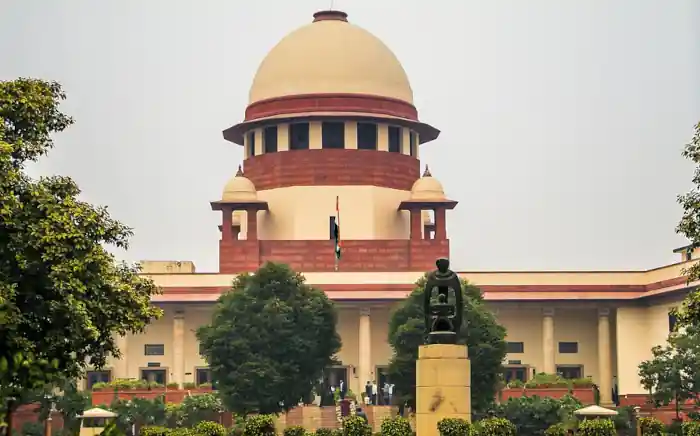
Supreme Court of India
The Presiding Judge would be accountable if he failed to dispose of an execution petition within six months
Periyammal (Dead) Through LRs & Ors. v. V. Rajamani & Anr. (2025 INSC 329)
SLP (C) Nos. 8490, 8491 & 8492 of 2020
SUPREME COURT OF INDIA
6th March 2025.
This judgment of the Supreme Court of India in Periyammal (Dead) Through LRs & Ors. v. V. Rajamani & Anr. (2025 INSC 329), delivered on 6 March 2025 by Justices J.B. Pardiwala and Pankaj Mithal, dealt with execution proceedings relating to the delivery of possession of property. The appellants, being the legal heirs of Periyammal, had challenged the orders of the Executing Court and the High Court.
The Supreme Court allowed the appeals and set aside both the High Court judgment and the Executing Court’s order. It directed the Executing Court to ensure that vacant and peaceful possession of the suit property is handed over to the appellants within two months, with police aid if necessary.
Before concluding the matter, the Court recorded its serious concern about the long and inordinate delays across the country in the disposal of execution petitions. To address this systemic issue, it revisited and reiterated the binding directions earlier issued in Rahul S. Shah v. Jinendra Kumar Gandhi (2021). Among these directions, the Court emphasized that execution proceedings must be completed within six months from the date of filing, that frivolous objections must be dealt with firmly, that defendants in money suits may be required to disclose assets on oath, that police assistance can be sought when necessary, and that Judicial Academies must train court staff in execution procedures.
The Court directed all High Courts to collect information from their respective district judiciary on the pendency of execution petitions. Once collected, each High Court is to issue an administrative order or circular directing the disposal of such petitions within six months, with presiding officers made accountable for delay. The collected data and compliance figures must then be forwarded to the Supreme Court Registry. The matter will be listed again after seven months to review compliance with these directions.
In the result, the Supreme Court not only granted relief to the appellants but also reinforced the need for the timely and effective execution of decrees, holding that unnecessary delay will no longer be tolerated in civil proceedings.