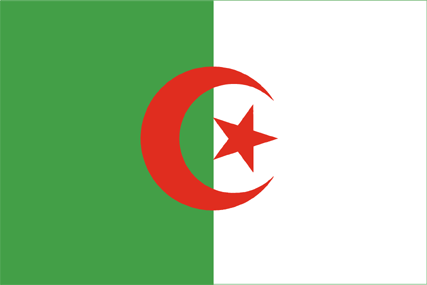
Being at the heart of great events witnessed by the Mediterranean area throughout history, Algeria has found...
Algeria
Algeria’s history reflects layers of conquest and empire, from the ancient Numidians and Phoenicians to the Carthaginians, Romans, Vandals, Byzantines, and numerous Arab and Amazigh dynasties, followed later by Spanish and Ottoman rule. Under the Ottomans, Barbary corsairs preyed on Mediterranean shipping until France captured Algiers in 1830 and spent the 19th century subduing the territory—often brutally. A long war for independence ended with Algerian sovereignty in 1962. The National Liberation Front (FLN), founded in 1954, dominated politics for decades, but its appeal has waned among younger Algerians. After unrest in 1988, a multiparty system emerged, yet the army canceled elections in 1991 after the Islamic Salvation Front (FIS) surged, triggering a devastating conflict from 1992–98 that killed over 100,000 people. The government ultimately prevailed, the FIS was banned, and its armed wing dissolved in 2000. Abdelaziz Bouteflika became president in 1999 with military backing and won several reelections before mass protests forced his 2019 resignation. Later that year, former prime minister Abdelmadjid Tebboune won the presidency. Constitutional and electoral reforms followed, including open-list voting but the removal of parliamentary gender quotas, contributing to sharply lower female representation. Recent elections and referenda have been marked by historically low turnout.
The purpose of this Regulation is to define the principle of the convertibility of the national currency...