Taranath Bhattacharyya (Tarkavachaspati): From Sanskrit College to Global Recognition
Sarvarthapedia (Twelve Core Areas)
Taranath Tarkavachaspati (1812–1885): Vachaspatyam Creator and Oriental Scholar
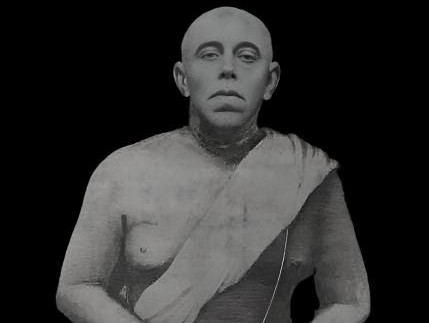
Taranath Bhattacharyya (तारानाथ भट्टाचार्य तर्कवाचस्पति), known widely in scholarly circles as Taranath Tarkavachaspati, was born on 4 November 1812 in the Burdwan district of present-day West Bengal, then under British India, and died on 20 June 1885. His life, stretching across the formative decades of nineteenth-century intellectual Bengal, unfolded against the backdrop of colonial transformation, the rise of modern education, and renewed engagement with classical Sanskrit learning. In that century, few figures embodied such a sustained and disciplined commitment to oriental scholarship, and his name became synonymous with erudition, philological precision, and intellectual independence.
The lineage from which Taranath emerged was deeply rooted in Sanskritic learning and ritual tradition. His grandfather, Ramram Tarkasiddhantha, belonging to the Shunak Gotra (शुनक गोत्र), originally resided in the village of Baichandi in the Barisal district of eastern Bengal (now in Bangladesh). This ancestral line had long been associated with the teaching of Sanskrit, and their reputation for scriptural mastery extended across regions. The family’s migration to Kalna, in the Burdwan region, was shaped by a significant cultural encounter: during the reign of Tilak Chandra Bahadur, whose court became a celebrated centre of intellectual congregation, Ramram Tarkasiddhantha participated in scholarly assemblies that drew pundits from diverse parts of India. Impressed by his learning, the Maharaja granted him land at Shyamraipara in Kalna, establishing a permanent base for the family. There, he came to be locally known as “Bangal Bhattacharya,” a title reflecting both regional identity and scholarly prestige.
Taranath’s father, Ramaram, the youngest son of Tarkasiddhantha, inherited this intellectual legacy and expanded it through deep engagement with Sanskrit literature, especially the works of Kalidasa. His immersion in classical poetry earned him recognition and honorific distinction, and his household became an environment saturated with textual study and interpretative discourse. This atmosphere shaped the formative years of Taranath, instilling in him a reverence for learning and a disciplined approach to scholarship that would define his entire life.
From an early age, Taranath Tarkavachaspati displayed extraordinary aptitude in the Sastras. His intellectual pursuits were not confined to a single domain; rather, he mastered language, astrology, philosophy, and Hindu law, achieving a breadth rarely matched by his contemporaries in Bengal. Anecdotal accounts describe him reading while walking through crowded streets, wholly absorbed in manuscripts—an image that became emblematic of his lifelong dedication to knowledge. His education reached its classical culmination in Benares (Varanasi), one of the foremost centres of Sanskrit learning, where he studied Vedanta and the grammatical system of Panini under the guidance of the respected scholar Biswampa Swami.
By the time he reached maturity, Taranath had achieved fluency in Bengali, Hindustani, and Sanskrit, navigating each language with such finesse that observers often found it difficult to determine his linguistic origin. This multilingual competence was not merely ornamental; it allowed him to engage across communities, bridging scholarly traditions and vernacular discourse. His reputation grew steadily, attracting students, seekers, and intellectuals who recognized in him a rare combination of precision and philosophical depth.
A significant institutional milestone occurred on 23 January 1845, when Taranath was appointed as a Professor of Sanskrit at the prestigious Sanskrit College. Beginning with a salary of Rs. 90, later increased to Rs. 150, he quickly rose to prominence within the institution. His teaching style emphasized clarity, textual fidelity, and rigorous interpretation, and he became known for his ability to illuminate complex grammatical and philosophical issues. Over nearly three decades, he trained numerous students who would carry forward the traditions of Sanskrit scholarship. He retired in 1874, after which he devoted himself almost entirely to scriptural study, religious observance, and intellectual exchange.
Parallel to his academic career, Taranath Tarkavachaspati engaged in a series of entrepreneurial ventures that reveal a less conventional dimension of his personality. In Ambicagram, he opened a cloth shop, incurring a significant loss of Rs. 5000, which he regarded not as failure but as instruction. He later established a goldsmith’s shop in Kalna, crafting ornaments that gained local patronage. Another cloth enterprise in Suri near Birbhum combined trade with agricultural employment, providing livelihood to peasants. These activities reflected his broader socio-economic philosophy: he believed that trade and agriculture formed the foundation of national wealth, and he argued that even traditionally scholarly communities, particularly Brahmins, should engage in commerce to ensure prosperity and social resilience.
Although he lacked formal training in English, his insights into sociology and political economy impressed several European scholars, who sought his perspectives during their visits. His intellectual independence allowed him to form views that diverged from both orthodox conservatism and emerging reformist trends. Notably, he supported Ishwar Chandra Vidyasagar in advocating widow remarriage, participating in debates that challenged entrenched customs. At the same time, he opposed Vidyasagar’s position on polygamy, arguing that scriptural interpretations required greater nuance and could not be simplified into rigid prohibitions. These debates positioned him within the broader currents of the Bengal Renaissance, where tradition and reform were in constant negotiation.
The conferment of the title “Tarkavachaspati” in 1836 by Sanskrit College marked formal recognition of his scholarly authority. His early publication, “Dhaturupa” (1826 Samvat), along with his commentary “Sarala” on the grammatical classic Siddhanta Kaumudi, established his reputation as a formidable grammarian. His commentarial work extended to classical poetry and drama, where he combined philological precision with interpretative clarity, making difficult texts accessible to students.
His most enduring contribution remains the monumental “Vachaspatyam” (Bachaspatyabhidhan), published in 1874 with support from the Education Department. This comprehensive Sanskrit dictionary represented years of painstaking compilation and became an indispensable resource for scholars. It attracted attention not only within India but also internationally, drawing students from China, Japan, and Burma, as well as European orientalists who visited him to consult on linguistic and textual matters. The work stands as a testament to nineteenth-century lexicographical scholarship, bridging traditional knowledge systems with emerging academic methodologies.
Other notable works attributed to Taranath Tarkavachaspati include “Shabdastomamahanidhi” (1869–70), another lexicographical endeavor; “Shabdartha Ratna” (1852); treatises addressing polygamy and widow remarriage; and compilations such as “Gaya Mahatmyam,” traditionally associated with Vyasa. These writings collectively illustrate his engagement with grammar, law, social issues, and religious literature, revealing a scholar deeply embedded in both textual tradition and contemporary debate.
Despite his intellectual stature, Taranath faced persistent financial challenges, often exacerbated by misplaced trust in associates. Nevertheless, the recognition brought by his publications gradually alleviated these difficulties, allowing him to continue his work without severe constraint. His later years were marked by intense study, reflection, and dialogue with visiting scholars, maintaining his role as a living repository of Sanskrit knowledge.
He passed away in June 1885, leaving behind a legacy that extended through both his writings and his intellectual lineage. His son, Jīvānanda Vidyāsāgara Bhattacharyya, continued the family tradition as a noted Oriental scholar, ensuring continuity of the scholarly heritage.
In historical perspective, Taranath Tarkavachaspati occupies a distinctive position within nineteenth-century Indian intellectual history. His life intersected with the institutionalization of Sanskrit education, the emergence of modern philology, and debates on social reform. Unlike many contemporaries who aligned themselves wholly with either orthodox or reformist positions, he maintained a critical independence, grounded in rigorous textual analysis. His contributions to lexicography, particularly through Vachaspatyam, remain foundational, preserving linguistic knowledge that continues to support scholarship in Sanskrit studies.
Core Knowledge Web: Taranath Bhattacharyya (Tarkavachaspati)
This conceptual network situates Taranath Bhattacharyya (तारानाथ भट्टाचार्य तर्कवाचस्पति) within an interconnected web of Sanskrit scholarship, intellectual history, lexicography, social reform, and economic thought, forming a Sarvarthapedia-style cross-referenced system.
Cluster: Intellectual Lineage and Family Tradition
Ramram Tarkasiddhantha (Grandfather)
See also: Shunak Gotra, Baichandi (Barisal), Kalna Scholarly Settlements
Conceptual link: Vedic scholarship traditions, migration of knowledge centers
Ramaram Bhattacharya (Father)
See also: Kalidasa Studies, Classical Sanskrit Poetry, Household Pedagogy
Conceptual link: Formation of literary environment, intergenerational transmission of Sastra learning
Bangal Bhattacharya Identity
See also: Regional Scholarly Titles, Bengal Intellectual Culture
Conceptual link: Localization of pan-Indian Sanskrit identity
Cluster: Education and Scholarly Formation
Benares (Varanasi) Learning Tradition
See also: Vedanta, Paninian Grammar, Guru-Shishya Parampara
Conceptual link: Classical centers of higher Sanskrit education
Panini and Grammatical Tradition
See also: Ashtadhyayi, Vyakarana, Siddhanta Kaumudi
Conceptual link: Foundation of linguistic analysis and philology
Multilingual Competence
See also: Bengali Language, Hindustani Language, Sanskrit Language
Conceptual link: Interface between classical and vernacular discourse
Cluster: Institutional Career
Sanskrit College (Kolkata)
See also: Colonial Education System, Orientalism, Academic Sanskrit Studies
Conceptual link: Institutionalization of traditional knowledge under colonial rule
Professorship (1845–1874)
See also: Pedagogical Methods, Textual Interpretation, Scholarly Authority
Conceptual link: Transmission of structured Sanskrit education
Title: Tarkavachaspati (1836)
See also: Academic Honors, Scholarly Recognition Systems
Conceptual link: Validation of logical and philosophical expertise
Cluster: Lexicography and Literary Contributions
Vachaspatyam (Bachaspatyabhidhan)
See also: Sanskrit Dictionaries, Lexicography, Philological Compilation
Conceptual link: Systematization of semantic knowledge in Sanskrit
Shabdastomamahanidhi (1869–70)
See also: Lexical Aggregation, Word Systems
Conceptual link: Expansion of vocabulary classification traditions
Shabdartha Ratna (1852)
See also: Semantic Interpretation, Glossarial Traditions
Conceptual link: Bridging meaning and usage
Siddhanta Kaumudi – Sarala Commentary
See also: Grammar Pedagogy, Simplification of Complex Texts
Conceptual link: Democratization of advanced grammatical knowledge
Dhaturupa
See also: Verb Roots, Morphology in Sanskrit
Conceptual link: Structural foundation of linguistic formation
Cluster: Social Reform and Intellectual Debate
Widow Remarriage Debate
See also: Ishwar Chandra Vidyasagar, Hindu Social Reform, Sastra Interpretation
Conceptual link: Application of scriptural reasoning to social policy
Polygamy Debate
See also: Dharmashastra, Interpretative Pluralism
Conceptual link: Conflict between textual orthodoxy and reformist critique
Bengal Renaissance Context
See also: 19th Century Intellectual Movements, Colonial Modernity
Conceptual link: Interaction of tradition and reform
Cluster: Economic Thought and Practical Life
Trade as National Wealth
See also: Political Economy, Colonial Trade Systems, Indigenous Enterprise
Conceptual link: Reinterpretation of economic roles within caste structures
Agriculture and Rural Economy
See also: Peasant Labor Systems, Local Production Models
Conceptual link: Integration of knowledge and livelihood
Business Ventures (Ambicagram, Kalna, Suri)
See also: Entrepreneurship in 19th Century Bengal, Artisan Economy
Conceptual link: Scholar as economic participant
Cluster: Cultural and Intellectual Networks
Maharaja Tilak Chandra Bahadur’s Court
See also: Scholarly Assemblies, Patronage Systems
Conceptual link: Royal support for knowledge exchange
International Scholarly Exchange
See also: European Orientalists, Asian Students (China, Japan, Burma)
Conceptual link: Global circulation of Sanskrit knowledge
Oral and Manuscript Culture
See also: Traditional Learning Methods, Textual Preservation
Conceptual link: Transition from manuscript to print culture
Cluster: Philosophical and Scriptural Engagement
Vedanta Philosophy
See also: Advaita Vedanta, Metaphysics, Spiritual Knowledge
Conceptual link: Inquiry into ultimate reality
Dharmashastra and Hindu Law
See also: Social Norms, Religious Codes
Conceptual link: Regulation of societal conduct through texts
Gaya Mahatmyam
See also: Vyasa Tradition, Pilgrimage Texts
Conceptual link: Sacred geography and religious narratives
Cluster: Legacy and Continuity
Jivananda Vidyasagara Bhattacharyya
See also: Oriental Scholarship Continuation, Family Intellectual Legacy
Conceptual link: Transmission of scholarly heritage
Influence on Sanskrit Studies
See also: Modern Indology, Textual Criticism
Conceptual link: Foundation for academic Sanskrit research
Lexicographical Heritage
See also: Dictionary Traditions in India, Language Preservation
Conceptual link: Sustaining linguistic continuity
Cluster: Conceptual Interlinks
Lexicography ↔ Grammar ↔ Rigveda (ऋग्वेदः, ऋक्, ऋच्)
Connection: Vachaspatyam builds upon Paninian structure
Tradition ↔ Reform
Connection: Engagement with Vidyasagar debates
Scholarship ↔ Economy
Connection: Advocacy of trade alongside Sastra learning
Local ↔ Global Knowledge
Connection: Movement from Kalna and Benares to international recognition
Manuscript Culture ↔ Print Modernity
Connection: Transition embodied in published dictionaries and commentaries
Cluster: Chronological Anchors
1812 – Birth in Burdwan
See also: Colonial Bengal Society
1836 – Title “Tarkavachaspati”
See also: Academic Recognition Systems
1845 – Appointment at Sanskrit College
See also: Institutional Scholarship
1874 – Publication of Vachaspatyam and Retirement
See also: Lexicographical Milestone
1885 – Death and Legacy Formation
See also: End of Classical Scholar Era Transition
This Sarvarthapedia network presents Taranath Tarkavachaspati not as an isolated figure but as a node within a dense intellectual ecosystem, where language, philosophy, economy, and society intersect, enabling multidirectional exploration across related domains.
Read also:
- Encyclopedia of Ancient and Modern India
- Raja Radhakanta Deb: A Legacy of Educational Reform
- Encyclopedia of Sanatan Dharma