Skip to content

ADVOCATETANMOY LAW LIBRARY

Research & Library Database

Primary Menu
  • News
  • Opinion
  • Countries198
    • National Constitutions: History, Purpose, and Key Aspects
  • Judgment
  • Book
  • Legal Brief
    • Legal Eagal
  • LearnToday
  • HLJ
    • Supreme Court Case Notes
    • Daily Digest
  • Sarvarthapedia
    • Sarvarthapedia (Core Areas)
    • Systemic-and-systematic
    • Volume One
07/04/2026
  • National

History of the Court of Appeal

Original jurisdiction was primarily civil. It did not gain jurisdiction over criminal appeals until the Court of Criminal Appealโ€™s jurisdiction was transferred to it under the Criminal Appeal Act 1966.
advtanmoy 02/08/2021 3 minutes read

ยฉ Advocatetanmoy Law Library

  • Share on WhatsApp (Opens in new window) WhatsApp
  • Share on X (Opens in new window) X
  • Share on Facebook (Opens in new window) Facebook
  • Share on Telegram (Opens in new window) Telegram
Court of Appeal

Home ยป Law Library Updates ยป Sarvarthapedia ยป National ยป History of the Court of Appeal

Court of Appeal

Court of Appeal

The Court of Appeal was created formally in 1875. Find out how it evolved โ€“ and continues to do so today.

The Court of Appeal of England and Wales was created in 1875, and is split into two permanent Divisions, the Civil Division (which hears family cases as well as a range of civil appeals) and the Criminal Division, which hears appeals against criminal convictions and sentences.

Read Next

  • China’s Diplomatic Strategies: A 2024 Perspective (Wang Yi’s speech)
  • National Home of the Jewish People: Legal Basis of Israel, Immigration, and Nationality Law
  • Campus Anti-Semitism: Trump’s EO Adopting Additional Measures

Evolution of the court

Before 1875 there had been various courts which heard appeals on different aspects of the law, such as the Court of Exchequer Chamber. A growth in the number and complexity of cases, following the Industrial Revolution, led to the appointment of a Royal Commission, the Judicature Commission, which was required to examine the operation of the justice system and make recommendations for its reform. Its first report, issued in 1869, recommended the replacement of the existing courts with a new Supreme Court of Judicature, which was to be formed of a High Court and a Court of Appeal. Its recommendations were implemented by the Judicature Acts 1873 โ€“ 1875.

Following reforms contained in the Constitutional Reform Act 2005, the Court of Appeal is now one of the Senior Courts of England and Wales.

Where does it sit and what cases does it deal with?

The Court of Appealโ€™s original jurisdiction was primarily civil. It did not gain jurisdiction over criminal appeals until the Court of Criminal Appealโ€™s jurisdiction was transferred to it under the Criminal Appeal Act 1966.

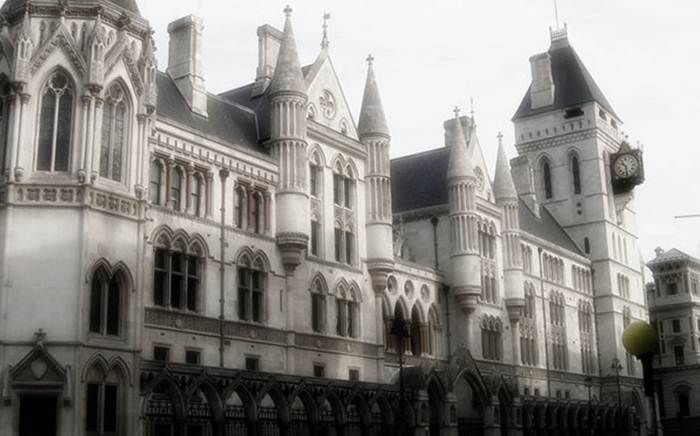
At the time it was created it sat at both Westminster Hall and in Lincolnโ€™s Inn. Since the opening of the Royal Courts of Justice in 1882 it has been based there. On a number of occasions it does however sit outside London, and the Civil Division normally sits in Cardiff for two weeks each year.

Read Next

  • China’s Diplomatic Strategies: A 2024 Perspective (Wang Yi’s speech)
  • National Home of the Jewish People: Legal Basis of Israel, Immigration, and Nationality Law
  • Campus Anti-Semitism: Trump’s EO Adopting Additional Measures

Who sits in the Court of Appeal?

The Court is constituted of the Lord Chief Justice, Master of the Rolls and Heads of Division (President of the Queenโ€™s Bench Division, President of the Family Division and Chancellor of the High Court), and 38 Lord and Lady Justices of Appeal.

The Lord Chief Justice is the President of the Criminal Division, while the Master of the Rolls is the President of the Civil Division. Normally one of the Lord or Lady Justices is appointed as Vice-President of the Criminal Division, while another is appointed Vice-President of the Civil Division.

In addition to these, permanent, judges of the Court, High Court judges and some senior Circuit Judges are authorised to sit in the Criminal Division, while a more limited number of High Court judges are authorised to sit in the Civil Division.

Read Next

  • China’s Diplomatic Strategies: A 2024 Perspective (Wang Yi’s speech)
  • National Home of the Jewish People: Legal Basis of Israel, Immigration, and Nationality Law
  • Campus Anti-Semitism: Trump’s EO Adopting Additional Measures

Retired Lord and Lady Justices can also hear cases in either Division, as can serving Justices of the UK Supreme Court appointed from England and Wales. Normally three Lord or Lady Justices sit on an appeal, although a single Lord or Lady Justice usually hears applications for permission to appeal.

Televising the court

Broadcasting of cases was permitted in October 2013.


Crown Copyright

Tags: Courts and Tribunals UK

Post navigation

Previous: เฆ‰เฆจเงเฆจเฆฏเฆผเฆจเง‡เฆฐ เฆญเฆพเฆ™เฆพ เฆ•เฆพเฆเฆธเฆฐ เฆ–เฆพเฆจ-เฆฌเฆพเฆœเง‡, เฆ•เฆพเฆเฆ‡ เฆจเฆพ เฆจเฆพ เฆ•เฆพเฆเฆ‡ เฆจเฆพ เฆจเฆพ เฆจเฆพ
Next: Family Court in UK
Communism
Sarvarthapedia

Manifesto of the Communist Party 1848: History, Context, and Core Concepts

Arrest
Sarvarthapedia

Latin Maxims in Criminal Law: Meaning, Usage, and Courtroom Application

Abolition of Slave Trade Act 1807: Facts, Enforcement, and Historical Context

British Slavery and the Church of England: History, Theology, and the Codrington Estates

United States of America: History, Government, Economy, and Global Power

Biblical Basis for Slavery: Old and New Testament Laws, Narratives, and Interpretations

Rule of Law vs Rule by Law and Rule for Law: History, Meaning, and Global Evolution

IPS Cadre Strength 2025: State-wise Authorised Strength

Uric Acid: From 18th Century Discovery to Modern Medical Science

Christian Approaches to Interfaith Dialogue: Orthodox, Catholic, Protestant, and Pentecostal Views

Origin of Central Banking in India: From Hastings to RBI and the History of Preparatory Years (1773โ€“1934)

Howrah District Environment Plan: Waste Management, Water Quality & Wetland Conservation

Bharatiya Nyaya Sanhita 2023: Sections (1-358), Punishments, and Legal Framework

Bengali Food Culture: History, Traditions, and Class Influences

  • Sarvarthapedia

  • Delhi Law Digest

  • Howrah Law Journal

  • Amit Aryaย vs Kamlesh Kumari:ย Doctrine of merger
  • David Vs. Kuruppampady: SLP against rejecting review by HC (2020)
  • Nazim & Ors. v. State of Uttarakhand (2025 INSC 1184)
  • Geeta v. Ajay: Expense for daughter`s marriage allowed in favour of the wife
  • Ram v. Sukhram: Tribal women’s right in ancestral property [2025] 8 SCR 272
  • Naresh vs Aarti: Cheque Bouncing Complaint Filed by POA (02/01/2025)
  • Bharatiya Nagarik Suraksha Sanhita 2023 (BNSS)
  • Bharatiya Sakshya Adhiniyam 2023 (BSA): Indian Rules for Evidence
  • Bharatiya Nyaya Sanhita (BNS) 2023
  • The Code of Civil Procedure (CPC)
  • Supreme Court Daily Digest
  • U.S. Supreme Court Orders
  • U.k. Supreme Court Orders
United Kingdom, UK

Abolition of Slave Trade Act 1807: Facts, Enforcement, and Historical Context

British Slavery and the Church of England: History, Theology, and the Codrington Estates

British Slavery and the Church of England: History, Theology, and the Codrington Estates

USA, America

United States of America: History, Government, Economy, and Global Power

Biblical Basis for Slavery, english slave trade

Biblical Basis for Slavery: Old and New Testament Laws, Narratives, and Interpretations

2026 ยฉ Advocatetanmoy Law Library

  • About
  • Global Index
  • Judicial Examinations
  • Indian Statutes
  • Glossary
  • Legal Eagle
  • Subject Guide
  • Journal
  • SCCN
  • Constitutions
  • Legal Brief (SC)
  • MCQs (Indian Laws)
  • Sarvarthapedia (Articles)
  • Contact Us
  • Privacy Policy
  • FAQs
  • Library Updates